
I didn’t mean too, but I almost killed two teenagers on separate occasions.
The first time was during the afternoon, just after school hours. I was coming to the corner of our street when a teenage girl (young woman?) came straight through a give-way sign on my left without stopping or slowing down. She was going at least 25km/h (in my estimation) and when I stopped to avoid running her down, she turned, smiled, waved, and kept going down the road on the wrong side of the street.
Soon after, again approaching home, there were two teenage boys (definitely not young men) occupying both sides of the street. They were trying out their tricks – wheel stands and the like. I realised, almost too late, that the one on my side did not see me coming up the other way (yes, I drive a smaller quiet car). Thankfully, when I slowed and sounded the horn, he managed to ground both wheels and at the last moment swerve out of the way.
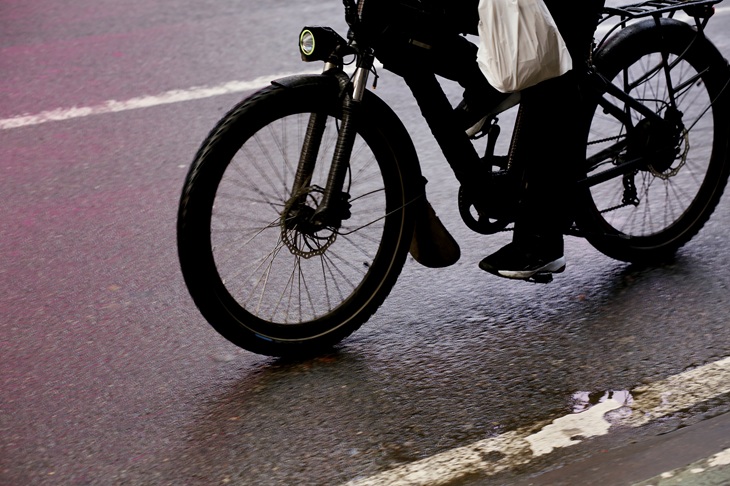
And what were these teenagers riding? Powerful e-bikes.
To be fair, it is not only the young ones.
Whilst riding my pushbike (that term has increased meaning of late) along the wonderful walking and riding track near where we live, I was almost taken out by someone of about my vintage (yes, 70+). He was coming around a corner, riding two-abreast, and talking so much to his friend that if I had not rung my bell, which is apparently a lost art to the modern rider, his heavy e-bike would have made a mess of me and my manual bike.
So it was with some encouragement that I heard announcements about intervention for the vagrant breaking of e-bike rules in NSW. But honestly, I am not convinced for at least two reasons…
Firstly, the idea of confiscating and breaking up offenders’ bikes is a very limited type of intervention. Meanwhile, the whole state is getting three machines to test the engine size. Hardly enough. Also, the police are reportedly wary of trying to slow down and catch offending riders. And there has been no education campaign followed up by targeted increased and unpredictable police presence. Without such measures, I know the streets near where I live will not be safer – and because of that wonderful walking and riding track near us, we see lots of e-bikes’ use and abuse shared spaces.
Yes, I am more than happy to accept good use of these apparently convenient devices. But like all tools that provide increased freedom in a diverse society, we need safety boundaries so that people can continue to walk and ride on streets without fear of harassment or harm. I would have confidence in those civic guardrails being in place if I saw police in various modes being around where the e-bikes were.
Secondly, we adults need to step up to the plate and not be intimidated into silence on one hand, and also to not be selfish and impatient on the other hand. I recently followed my dear departed mother’s example and initiated a chat with one young man doing wheelies on an e-bike down the footpath of our shopping centre. The first interaction was brief and probably sounded a bit sharp. But when I came across the young fella a bit later on, we resumed our conversation, and I explained that at 70 years of age, my reflexes were not what they once were, and similarly, my actions may not be as predictable as they once were – and that I, of course, would be the loser if he couldn’t predict my more aged actions.
The next time I saw him with a couple of mates, he introduced me as being ‘okay’ to them. We now wave (in that young blokey understated way) as we safely pass each other while out and about.
And then there is our inherent impatience and aggressiveness as Australian drivers almost anywhere. This was highlighted to me once when driving home from Sydney airport after being in India. The traffic in any of their cities is one of the wonders of the world. I developed an ‘amoeba’ theory to explain it. For example, when you are in a group of other cars (they travel in groups, not in lanes) and you come to an intersection, you encounter at least one other group cutting across your path. But in an amazing act of apparent serendipity, you can arrive at the other side of the crossing intact, and still in your group. Of course, if you ever reach 40km/h in such circumstances, that would be a ‘moment’.
When I compared that to what I experienced on our roads heading north, I was saddened. I routinely drive in the outside (slow) lane because I only drive at the maximum speed limit. It never ceases to astound me how on NSW roads, how easily frustrated, angry, and aggressive drivers are when they are limited to doing the maximum speed limit. In my simple way of thinking, why do people become angry because someone is impeding them from breaking the law? It seems the larrikin in us is determined to apply the law only as we see fit in our cars. Increasingly, I see this with truck drivers as well as people in the bigger kinds of cars.
That is why I never understood the complaints about the lack of warnings before mobile speed cameras in NSW. The government were accused of only being interested in the money and not safety. Rubbish. Obviously, none of those commentators had ever done any basic social psychology or applied law research.
Put simply, people become more wary, and are likely to modify their behaviour, when negative consequences (those things we used to call punishments) occur intermittently – that is, without warning. We are not talking about anything unjust – we are describing simply not knowing when we will be caught.
I saw this living in Vancouver BC decades ago. I had to learn a new level of caution in my driving thanks to my friends who were locals. They taught me and I saw firsthand that you literally never knew where the next policeman, speed camera in hand, might appear. It worked.
It is not as though we do not have warnings – the speed signs on our roads are ubiquitous. But no, we need warnings even for fixed speed cameras, let alone mobile ones!
So, let’s face it. Why do we expect young ones who can get their hands on these freedom machines to act any differently to the adults in their worlds – that is, to get away with whatever they can, because they will make up their own minds when the law (speed and safety limits) will apply to them?
So, sadly, I see these so-called strong announcements as yet more media spin that fills the air, like gas escaping from a lost balloon.