
Growing up as a Harry Potter fan, I still have vivid memories of reading the first book in the series as a child.
It was years before the movie adaptation was made, but even before then, my 10-year-old brain could easily picture what the boy wizard looked like just from the book’s verbal descriptions of his appearance – messy dark hair, round glasses and lightning bolt scar.
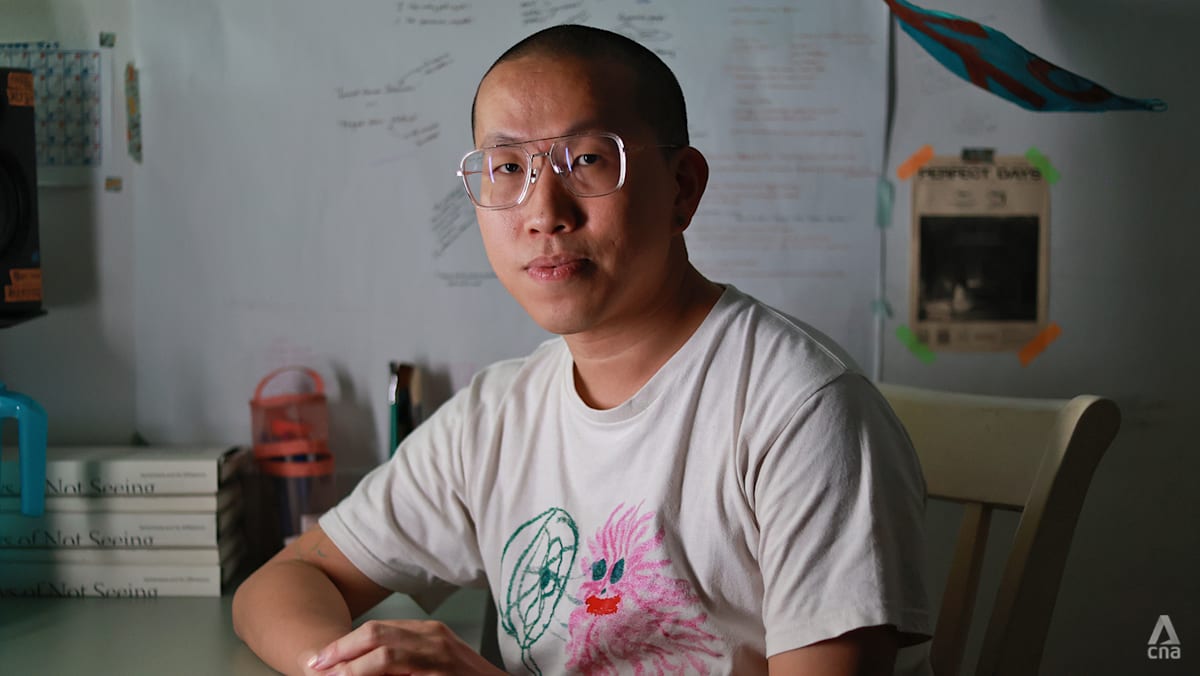
Therefore, as I was preparing to meet Singaporean artist Jevon Chandra, I found myself struggling to understand, even just in theory, the possibility of a person not possessing this same capability.
For much of his life, Mr Chandra had assumed that when other people said they could see images in their minds, they were merely using a figure of speech – much like how we say “I see what you mean” or “I see where you’re coming from” to convey that we understand what was being said and know that it does not refer to actual sight.
“It never occurred to me that they could literally see things in their minds,” he told me as we settled into conversation at his family’s flat in Jurong East.
This is because the 34-year-old lives with aphantasia, where he has a neurological characteristic sometimes described as being blind in the mind’s eye.
People with aphantasia are unable to form mental images. They cannot picture faces, places or objects, even ones that are deeply familiar to them.
The irony of Mr Chandra having such a particular experience is undeniable, given that he works as an artist.
Like me, he had spent most of his life unaware of aphantasia. He only realised he had this condition by accident five years ago, while scrolling through online forum Reddit.
A post there caught his attention, bearing simple instructions: Close your eyes. Imagine a red star. Then out of six images, choose the one that looks closest to what you saw in your mind.
Among the images given, the sixth image was a “very vivid red star” and the first image was “basically nothing”, he recalled.