
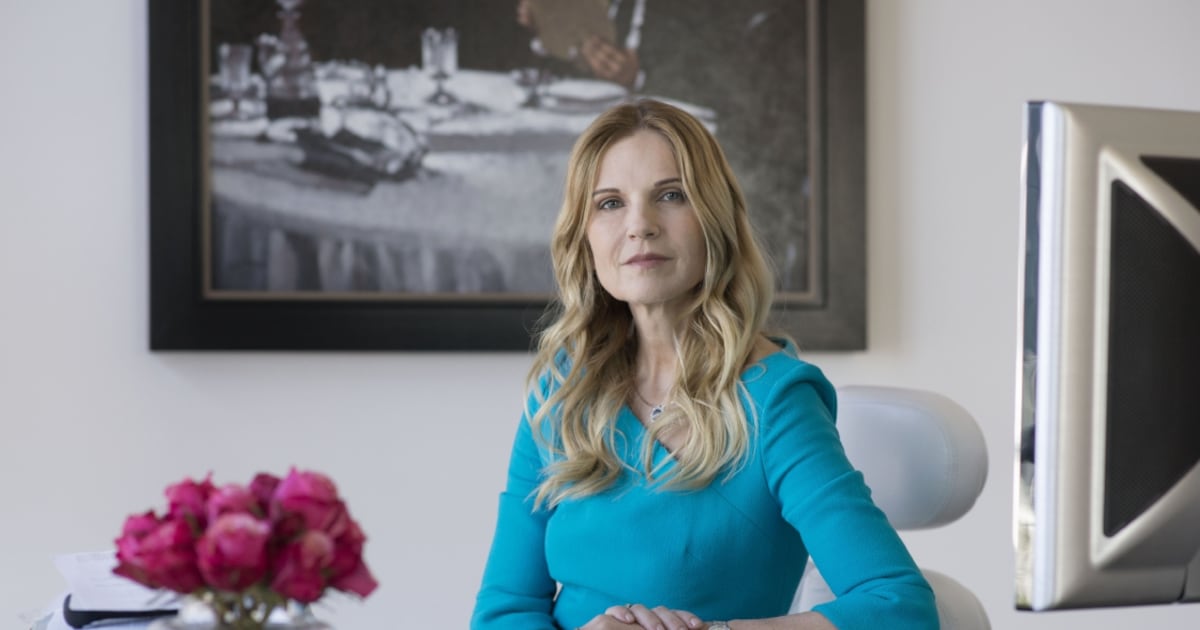
Magda Wierzycka, founder and CEO of Sygnia, South Africa’s second-largest asset management company, is set to launch a venture capital fund dedicated to investing in South African entrepreneurs who are building AI-based architecture.
“We have the same intellectual capital in South Africa that is available in the UK or US, but what we are missing is the structured capital behind it,” she says. “And so we are currently allowing founders of AI start-ups to leave South Africa and take their intellectual property with them.”
Wierzycka has just moved back to South Africa from the UK, where she ran a venture capital business investing in start-ups for six years. The launch of the new fund will be announced tomorrow.
‘Agentic economy’
“South Africans are building things here, inventing concepts, but don’t have capital behind them, so they make their proposals to offshore venture capital funds. Of course, it’s an American fund; they’ve got nothing to lose. They will put $500,000 into the company, and suddenly they have the company.”
Wierzycka says AI and the world around it is moving so fast “that we are now really moving into this agentic economy, which is actually quite scary”.
“I was in Davos [for the World Economic Forum] and the next big thing apart from Donald Trump was AI, and it was an eye-opener. I only had one thought in my mind, and that was a big, giant delete button. Delete the whole lot; this is not heading in a good direction for humanity.”
We have the same intellectual capital in South Africa that is available in the EU or US. But unless someone takes deliberate action to support that intellectual capital with money, then all we are doing is we are exporting our best software engineers, and we’ll land up importing the systems that will actually drive our economy going forward.
— Magda Wierzycka, founder and CEO of Sygnia
The dangers and disadvantages of AI far outweigh the advantages to humanity, she says.
“We’re building this agentic economy where effectively AI agents will take over running most of the tasks that we are used to performing ourselves.”
But as much as she might want to press “delete” and say “no” to these AI companies, it’s not going to happen.
“So we are launching a venture capital fund. I look at what is happening in the US, in the UK, and all these countries are throwing money at AI innovation.
“We have the same intellectual capital in South Africa that is available in the EU or US. But unless someone takes deliberate action to support that intellectual capital with money, then all we are doing is we are exporting our best software engineers, and we’ll land up importing the systems that will actually drive our economy going forward.”
She adds that when she says Sygnia is going to invest in start-ups, that’s exactly what she means. Three people in a room with a good idea and technical skills, who need corporate support to build their businesses around the intellectual property that they own.
“Things that they are already building but have no idea how to tap into company markets where they can make money out of it.”
Between what she learnt from scratch investing in start-up businesses in the UK and what Sygnia knows about technology, they’ve always been at the leading edge of innovation, she says.
The idea is to put some of their own money behind the venture capital fund, find the entrepreneurs and open the fund to institutional investors in South Africa.
“We’re going to run a very structured national competition where we want the founders of these small businesses to compete, obviously in a very private, NDA [nondisclosure agreement] space, with ideas and with technical talent, and we will select from those ideas.”
No time to waste
She believes there’s no shortage of talent in South Africa. “We’ve got some of the leading universities: Stellenbosch University, University of Cape Town, Wits, University of Pretoria.”
There’s no time to waste, she says. She wants the fund up and running, seeded with capital, within the next six months.
“It’s not just about throwing money at these start-ups. We will show the founders how to become companies, how to get the proper licensing, how to market themselves, how to turn the concepts they have into tangible propositions. We bring business experience skills to the table, they bring their ideas and innovation.”
Once they’ve set it up and seeded it with capital, they will market the fund to institutional investors in South Africa.
She wants a regulatory guideline which, if necessary, forces pension funds to invest 0.5% of their assets into venture funds which drive this kind of innovation. “That’s Mickey Mouse money with potential for huge returns.”
How is institutional investment in this venture capital fund going to move the needle on our unemployment crisis?
AI is going to lead to massive labour displacement. Massive. But it’s going to happen in white-collar jobs. There’s a difference between robotics in manufacturing and AI-driven technologies which are being implemented within the legal profession, accounting profession, finance and so on.
— Magda Wierzycka
This is why after walking out of Davos she wanted to press a massive delete button, she says.
“AI is going to lead to massive labour displacement. Massive. But it’s going to happen in white-collar jobs. There’s a difference between robotics in manufacturing and AI-driven technologies which are being implemented within the legal profession, accounting profession, finance and so on.”
So she’s asking institutions to invest in something that will lead to a white-collar jobs bloodbath and put their own employees on the street?
“Yes and no. That investment is happening globally. I’m just asking South Africa not to be left behind.
“The truth is you need government in this instance because there are not a lot of solutions to the fact that this is happening, present tense, other than regulation and legislation.”
Otherwise you have AI concentrated in the hands of eight people who own Meta, Google, OpenAI, Nvidia, Microsoft etc, making decisions on behalf of 8-billion people who did not give them a mandate to do what they’re doing or build what they’re building, she says.
“South Africa cannot be left behind. We cannot be in a state where we become even more dependent on the world for importing technology that we should be building ourselves.”
In terms of job displacement, people will have to learn new skills, reskill themselves and then adapt and adopt.
“There are so many opportunities, and South Africa is nowhere. AI is a necessity. It’s not a case of ‘should we be doing it?’ We must be doing it.”
It’s about being part of the global conversation, she says. “Making ourselves relevant on the global stage, attracting international investment. Otherwise we’ll just be importing technology and paying in dollars.”
Business Times