
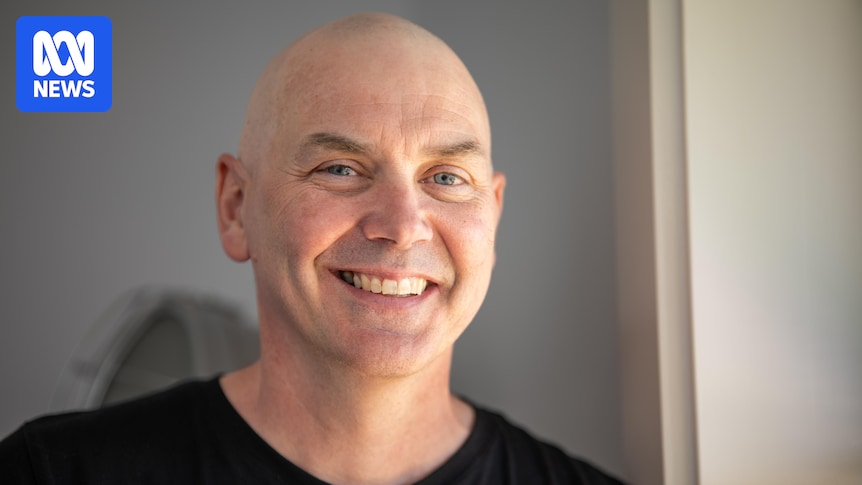
It was early October 2025 when 49-year-old Ben Whitehead had a sudden change in his health.
“In a matter of weeks, I went from someone that could run 130 kilometres a week down to someone that struggled to mow a lawn,” he said.
Ever since, Ben’s journey with a rare and debilitating cancer diagnosis has led him interstate and to novel treatments.
Through his journey, which he has documented on social media, he has done everything he can to keep his positivity and push on, despite the odds against him.
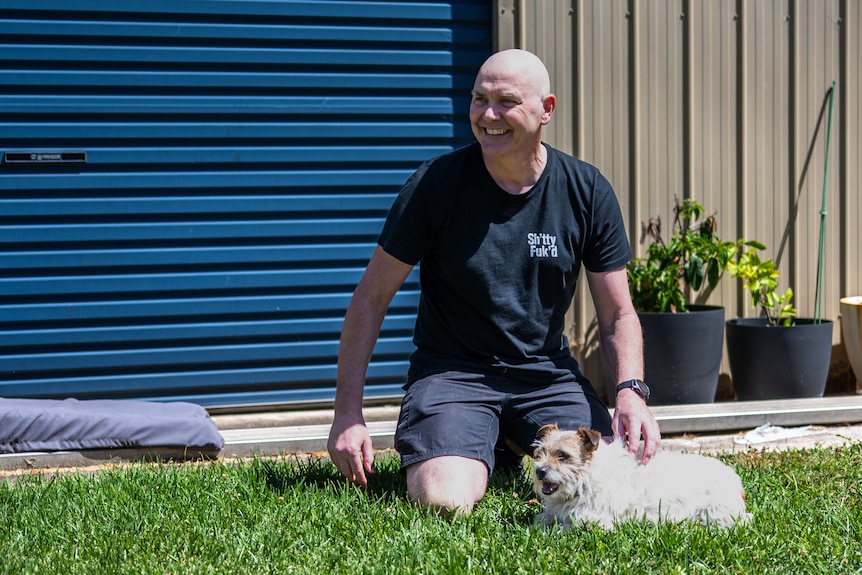
Ben Whitehead has documented his journey on a Facebook page, even making a T-shirt bearing the page’s name. (ABC South East SA: Josh Brine)
A fateful hospital visit
Following an ambulance trip to the local hospital at Mount Gambier, in South Australia’s south-east, preliminary testing discovered Ben had cancer.
At the time, he was encouraged to go to Flinders Medical Centre in Adelaide, almost five hours away by car, for more scans and a formal diagnosis.
“It was going to take at least three weeks to actually see a specialist and that didn’t mean I was going to be treated,” he said.
After encouragement from a family member, Ben travelled to the Peter MacCallum Cancer Centre in Melbourne where he was told he had stage 4 peripheral T-cell lymphoma.
“Basically, when I actually got to Melbourne, I was borderline on my last couple of breaths,” he said.
“In an awful situation, I was very lucky to go down the path that I did to get where I was.”
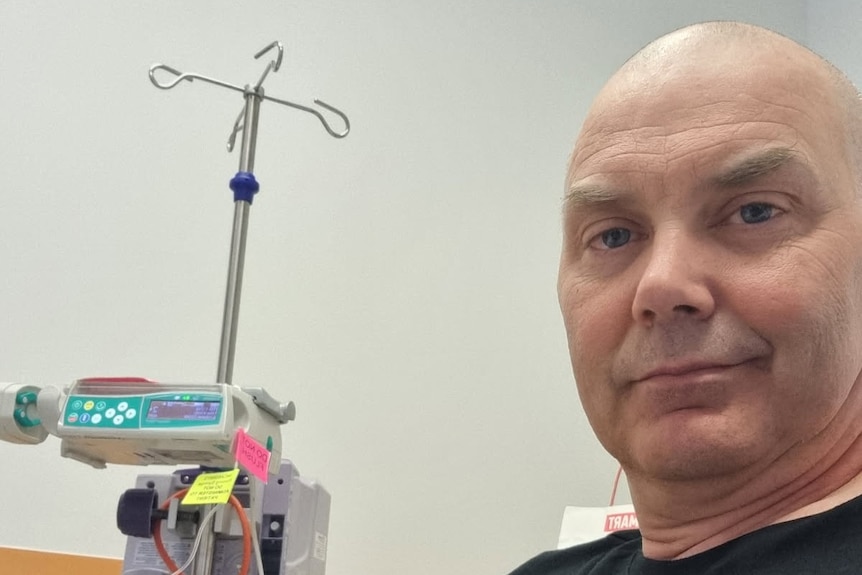
Ben Whitehead has tried multiple treatment options for his cancer. (Supplied: Ben Whitehead)
Ben was initially given three months to live, with his strain of cancer one the doctors “hadn’t seen before”.
“Their way of explaining it to me was [it was as] if my T-cell lymphoma caught T-cell lymphoma, that’s how rare it is,” Ben said.
Ben’s clinician in Melbourne, Philip Thompson, said the cancer was both making Ben feel generally unwell and in pain.
“If you can imagine something growing within a confined space it can start pressing on other things around and causing pain,” Dr Thompson said.
“At baseline, [T-cell lymphoma] is much harder to treat than B-cell lymphomas.
“The majority of people with T-cell lymphoma eventually die from their disease.”
Ben Whitehead named his Facebook page after his poor prognosis. (ABC South East SA: Josh Brine)
Starting an ‘unknown chapter’
In the months following his diagnosis, two different types of chemotherapy were unsuccessful and Ben’s prognosis was not improving.
A day of phone calls back and forth with his doctor later, Ben was encouraged to sign on for phase one of a clinical trial.
“They were left with no other choice … the weird bit is, I’m number one in the world on this trial,” he said.
“Now, it’s great to be a guinea pig, but there is the possibility the goo goes in your arm and that could be the end of you.
“That’s your decision. You’ve got to be willing to be that number one.”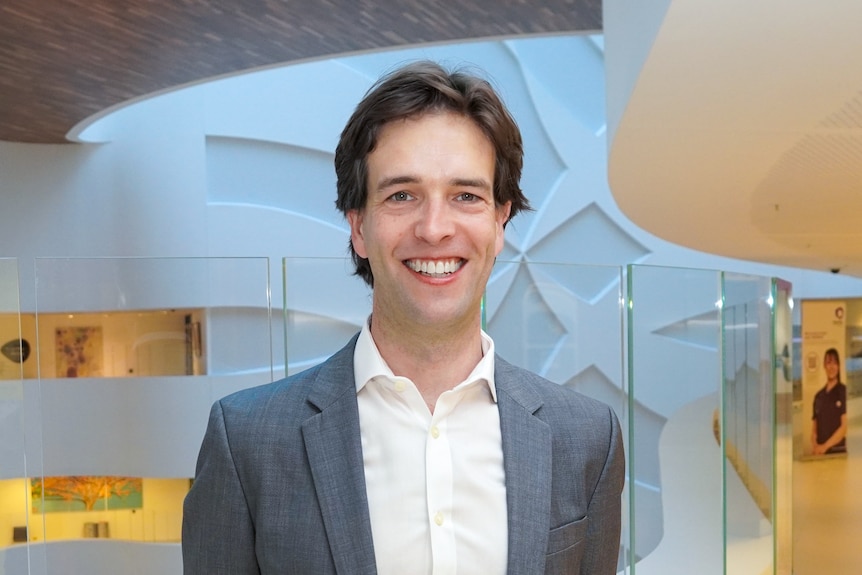
Philip Thompson is a clinical haematologist at the Peter MacCallum Cancer Centre. (Supplied: Peter MacCallum Cancer Centre)
Dr Thompson said without patients like Ben, who were willing to take part in clinical trials, it would be impossible to make advancements in treatment.
“It does take a lot of courage to commit to going on a clinical trial,” he said.
“You have to be willing to take a step into the unknown and place your trust in the people who are advising you.”
Unfortunately, as of last week, Ben is no longer part of the clinical trial, after a PET scan found new nodules growing.
“It’s showing that this gremlin is just adapting with everything we’re throwing at it,” he said.
“There may be another trial to go down, I’m just waiting for that phone call.
“It’s another unknown chapter in the journey.”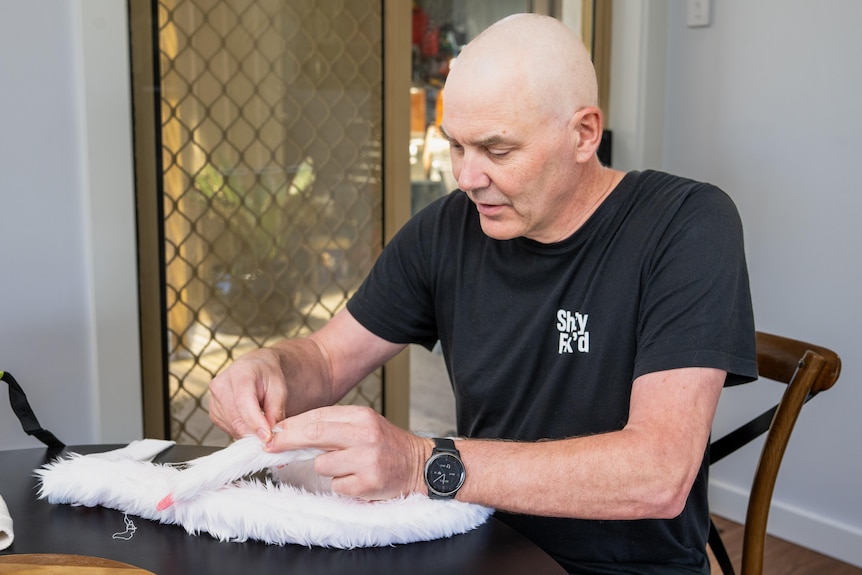
Ben Whitehead making some repairs to his fake mouse tail, used for practical jokes. (ABC South East SA: Josh Brine)
Keeping positive in dark times
In an effort to stay optimistic and bring others along on his journey, Ben has taken to documenting his treatment on Facebook.
“I would spend eight or nine hours on the phone each day just keeping people updated,” he said.
“But in a sense, when people get cancer … and they go away for treatment, most of their family and friends won’t see them until they’ve come back home.
“I just thought, ‘Well, let’s document this and we’ll put it out there’.
“Whatever outcome it is, just be raw. Just let it rip.”
A big part of that journey has also been practical jokes with hospital staff.
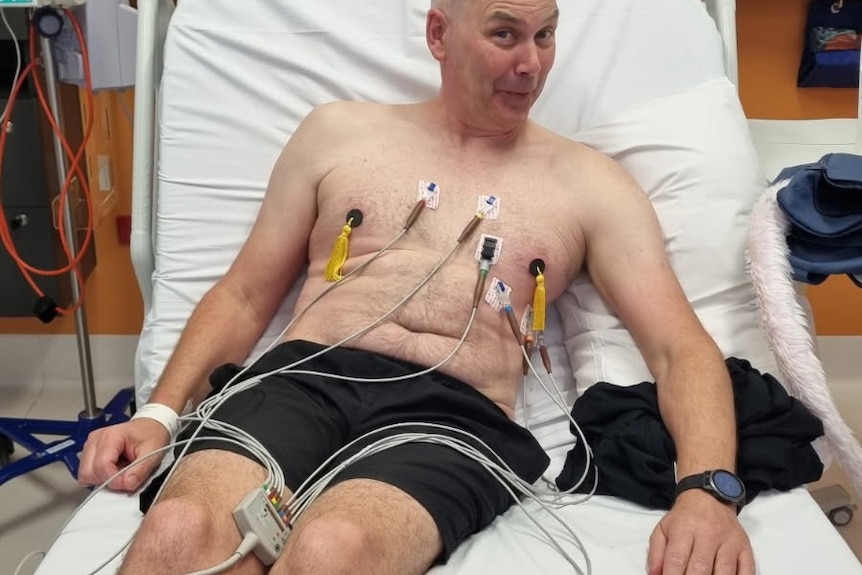
Ben Whitehead surprised hospital staff with his nipple tassels. (Supplied: Ben Whitehead)
“I’ve gone in for the check-up and the nurse has come over and gone, ‘How have you gone?'” Ben said.
“As I’ve stood up, I’ve flicked out a mouse tail that I’ve made out of a pool noodle and some fur and she’s cracked up laughing.
“Then I was in seeing my main doctor, and I had a monitor on at the time, just where they were checking my heart rate.
“I’ve taken my shirt off and I actually had nipple tassels on.
“You’ve gotta have the sense of humour for what’s going on.”
He urged people not to “leave things unchecked”.
“If you think you’ve got something, there’s a good chance it could be, because our bodies know what’s going on,” Ben said.
“We’ve just got to listen to them.”