
After a family member dies in custody, after the autopsy and the funeral, after the police investigation and the inquest – if they occur – and after you decide to sue the Victorian government, you may find yourself in front of a medical panel explaining how the death affected you.
It is a labyrinthine process and it is getting even more complicated.
The independent medical panels assess the extent of a person’s psychological or physical injury, including if they have a legal claim against the Victorian government or its entities, such as Victorian police, or a public hospital or prison.
But the panel is beset with delays, stretching on for an average of 10 months after a referral for some injuries.
And ever more people – including children – are being referred, in what critics say is a bid for the government to avoid paying compensation at a cost of retraumatising those who have taken them to court.
The panel, made up of independent medical experts, assess whether a mental injury that forms part of a compensation claim is as severe as they say, and whether it meets the threshold for a civil case to continue. They only intervene if this is in dispute, which typically occurs when a defendant disagrees about the damages in a civil case.
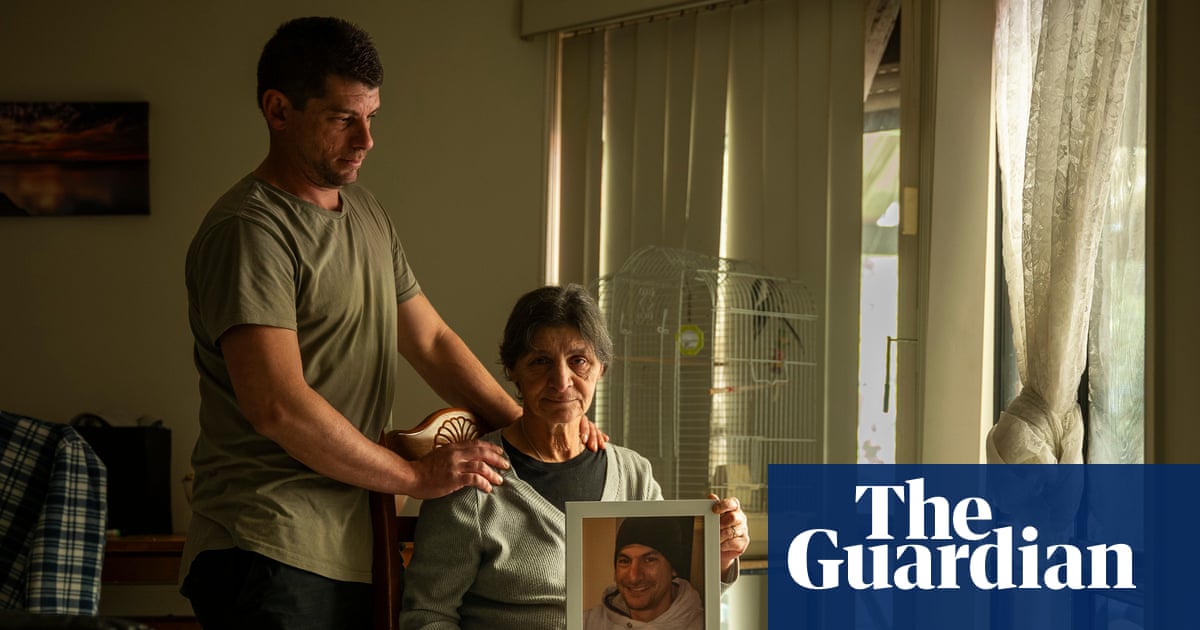
Medical panel hearings can have a six month wait time. Gary Culleton, Darren’s twin brother, said the lengthy process constantly created reasons for his grief to resurface. Photograph: Sean Davey/The Guardian
Any family member – including children – involved in the civil case then have to front the panel, and the court process is delayed until they do so.
“Of course I want it to end,” says Mary Culleton, who attended a medical panel hearing after her son Darren died in custody.
“It brings everything back to that day, what happened to him.”
Darren Culleton, 30, died after self-harming in the back of a police divisional van in 2021.
A coroner found in 2023 that his death in custody “was a preventable tragedy” that “devastated his family but also affected those who were responsible for his welfare”.
“The inquest was a challenging and distressing process for both family and the witnesses,” coroner David Ryan wrote in his inquest findings.
“The hospital staff and police officers who came into contact with Darren … were motivated to assist and look after him and they did not foresee that he would harm himself in the way that he did.
“Nevertheless, a number of risks crystallised while Darren was in police custody which, combined with communication problems, lack of training and an absence of policy, led to an unfortunate confluence of circumstances that ultimately led to Darren’s death.”
Sign up: AU Breaking News email
According to an email sent to lawyers on 23 December 2025 and seen by Guardian Australia, the panel says the average delay after a referral is nine to 10 months for a psychological injury or eight to 10 months for a physical or psychological injury.
Another email from September sent by associate professor Peter Gibbons, the convener of Medical Panels, confirmed that in the previous 12-18 months it “experienced a continued increase in referral numbers” that had “resulted in significant increase in demand for panel hearings”.
Gibbons also noted in his email that at that time the longest wait was six months, suggesting delays increased significantly towards the end of 2025.
Gary Culleton, Darren’s twin brother, said the lengthy process constantly created reasons for his grief to resurface.
Multiple delays between the inquest, filing his civil case, and the medical panel hearing meant he had to reread details about the death.
He also had to support his parents and siblings, who were also going through the extended panels process.
“Bringing up things after such a long delay, you forget a lot of major key points,” Gary said.
“The way I deal with a lot of my things, I just do my best to forget about it, which I’ve done a lot with Darren … things I’ve worked really hard to block out, I just forget about them.
“I’ve already dealt with the drama of it, but then have to just relive it all again.”
Referrals have become ‘indiscriminate’
Other families recently referred to the panel include relatives of Joshua Kerr, a 32-year-old Gunaikurnai and Yorta Yorta man who died of methamphetamine toxicity in Port Phillip Prison in 2022.
Kerr said “I’m dying” and “I need some help, please” through an intercom to prison staff while in an observation cell. But because of security concerns he was not given medical assistance until eight minutes after he collapsed motionless on the floor.
Inquest findings delivered in 2024 found the death was preventable. Ryan, who also presided over Kerr’s inquest, found correctional and medical staff who came in contact with Kerr on the day he died were responsible for his safety but failed to properly communicate. It was an ongoing issue at the prison that had been identified in an inquest two years earlier.
Mary’s shrine to her son Darren at her home in Melbourne. Photograph: Sean Davey/The Guardian
Aunty Donnas Kerr, Josh’s mother and a member of the Stolen Generations, is one of six family members referred to the panel, along with his two children, who were 12 and 15 when he died.
Jeremy King, from Robinson Gill, which is representing the Culletons and Josh Kerr’s family, says requesting medical panels referrals is a deliberate tactic.
“We find that defendants indiscriminately refer all plaintiffs, including children, mothers and vulnerable Aboriginal Elders, to the medical panel as it is a cheap and easy way of significantly reducing the quantum of their claim,” he said.
Medical panels did not answer questions about how many referrals it received, why delays had increased in recent months, how long it currently took to get to hearing, and how it worked to avoid retraumatising the family members of people who died in custody.
“We understand the importance of providing hearings in a timely manner and the impact of delays on injured Victorians and claimants, that’s why Medical Panels is working to reduce processing timelines through recruitment of additional specialists like psychiatrists, expanding resources and increasing the number of panel hearings held per week,” a Victorian government spokesperson said.
In Australia, the crisis support service Lifeline is 13 11 14. The Indigenous crisis hotline is 13 YARN, 13 92 76
The headline on this story was amended on 23 February 2026 to correct Darren Culleton’s name.