
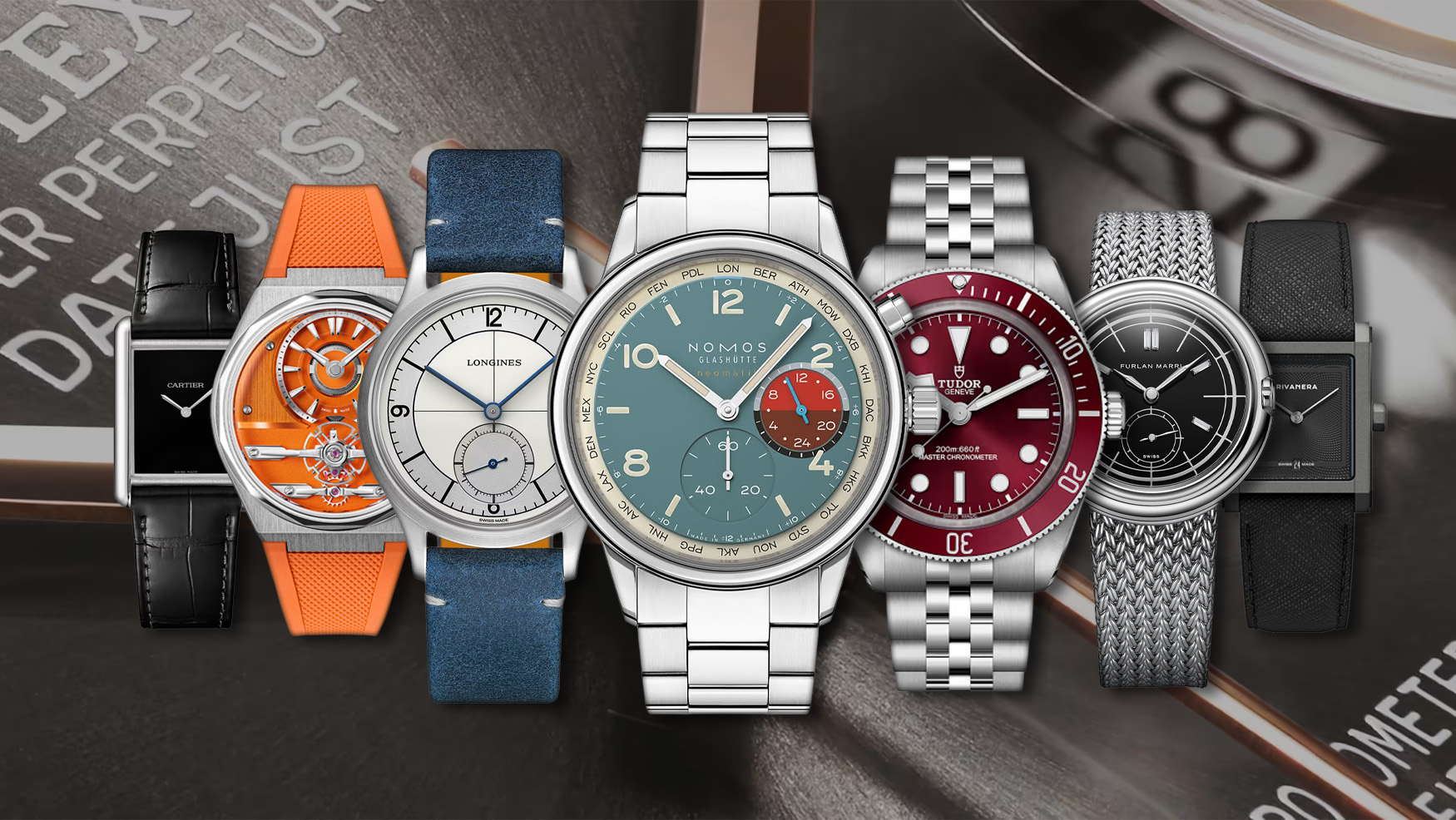
Our frequent NYC-based contributor Andrew O’Connor recently penned a fun article making the case for quantity over “quality”, where he demonstrated how you could build a variety of compelling three-watch collections for the price of a two-tone Rolex Datejust 36… Which got us thinking, and also a little jealous. The whole team wanted to have a go at putting together their own affordable three-watch collections! The rules of the challenge were simple: pick three watches, each watch had to be US$5,000 or less, and no doubling-up on brands (you can’t have three Tudors – we’ve already done that challenge…) You’ll see that each of our writers ended up with a very different trio of timepieces.
Jamie’s picks: Nomos, Grand Seiko, Christopher Ward
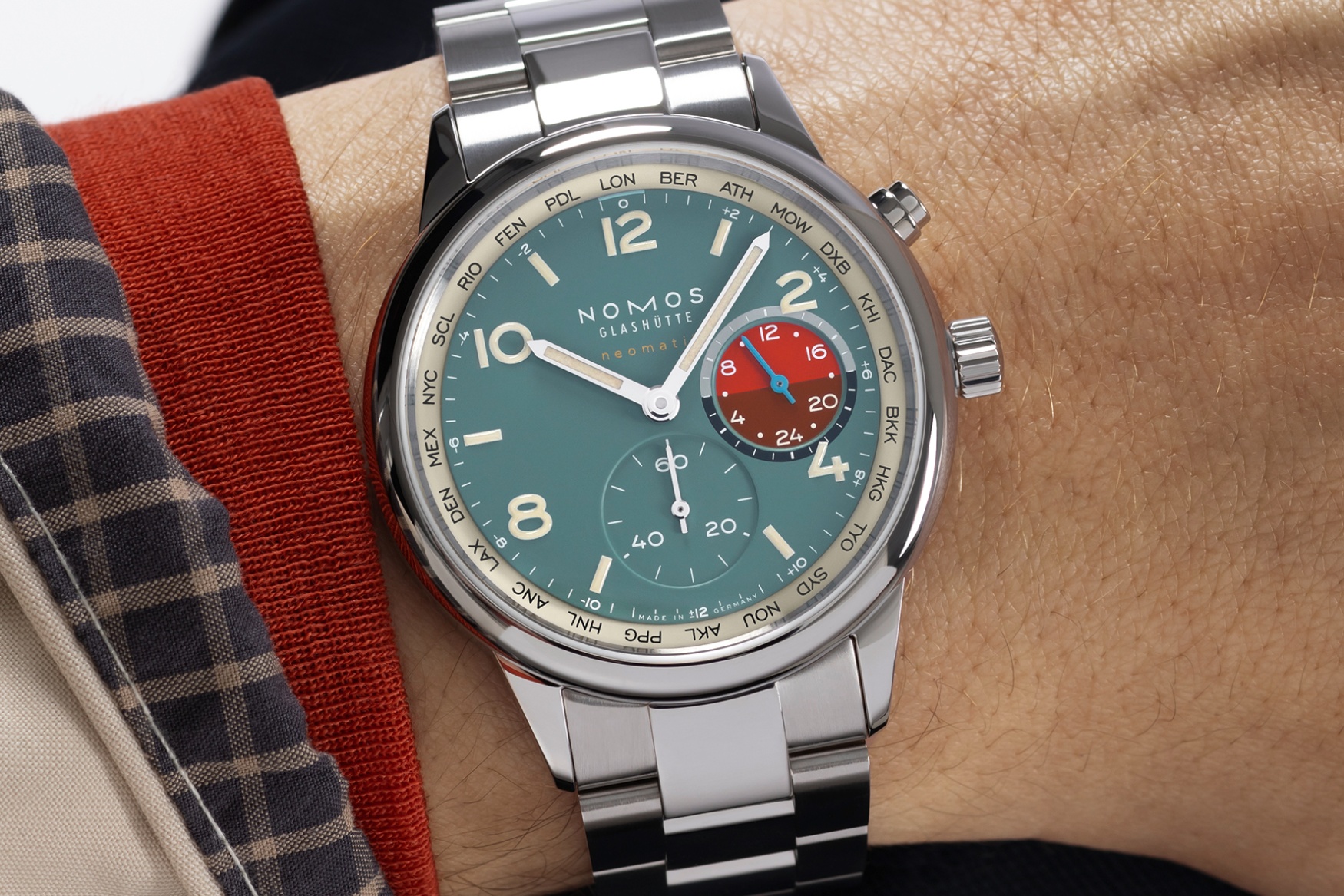
For my first watch, I wanted something robust, sporty and featuring a travel time complication: world timers, dual time watches, GMTs, I love them all, and I couldn’t have a collection without one. Borna called the Nomos Club Sport neomatik World Timer his favourite watch of 2025, and I’m also very fond of it. Not only is its namesake complication elegantly executed and easy to use, but it’s also rated to 100 metres of water-resistance – meaning you could feasibly swim with it, especially if you have it on a bracelet. Beyond that, it’s an extremely clean design, with a nicely finished in-house movement, and is available in a wide variety of colours. Simply put, it’s a lot of bang for one’s buck.
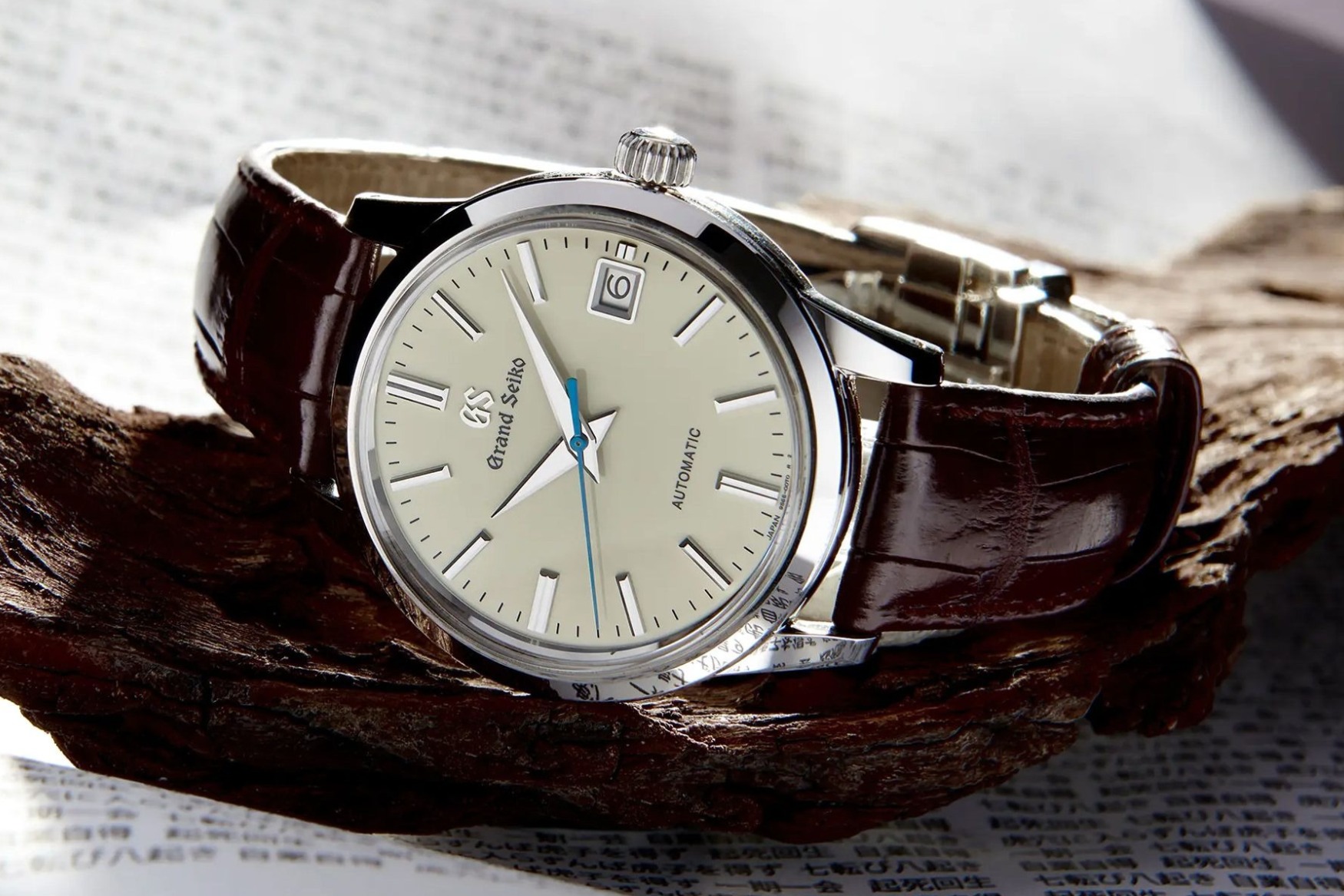
Next up, I’d want a dress watch, and would you believe that in 2026, you’re able to get a mechanical Grand Seiko for less than US$5,000? Meet the SBGR261, one of the Japanese brand’s lesser-known Elegance Collection references that proves that if you look beyond your White Birches, Snowflakes and Omiwataris, you’ll find some hidden gems within the voluminous GS catalogue. It offers a vintage Calatrava-esque ivory dial and an automatically-wound 3-day in-house movement in a 39.5mm case, as well as everything you’d expect from GS: Zaratsu polished lugs, dauphine hands, and +5/-3 seconds per day accuracy. What more could you want?
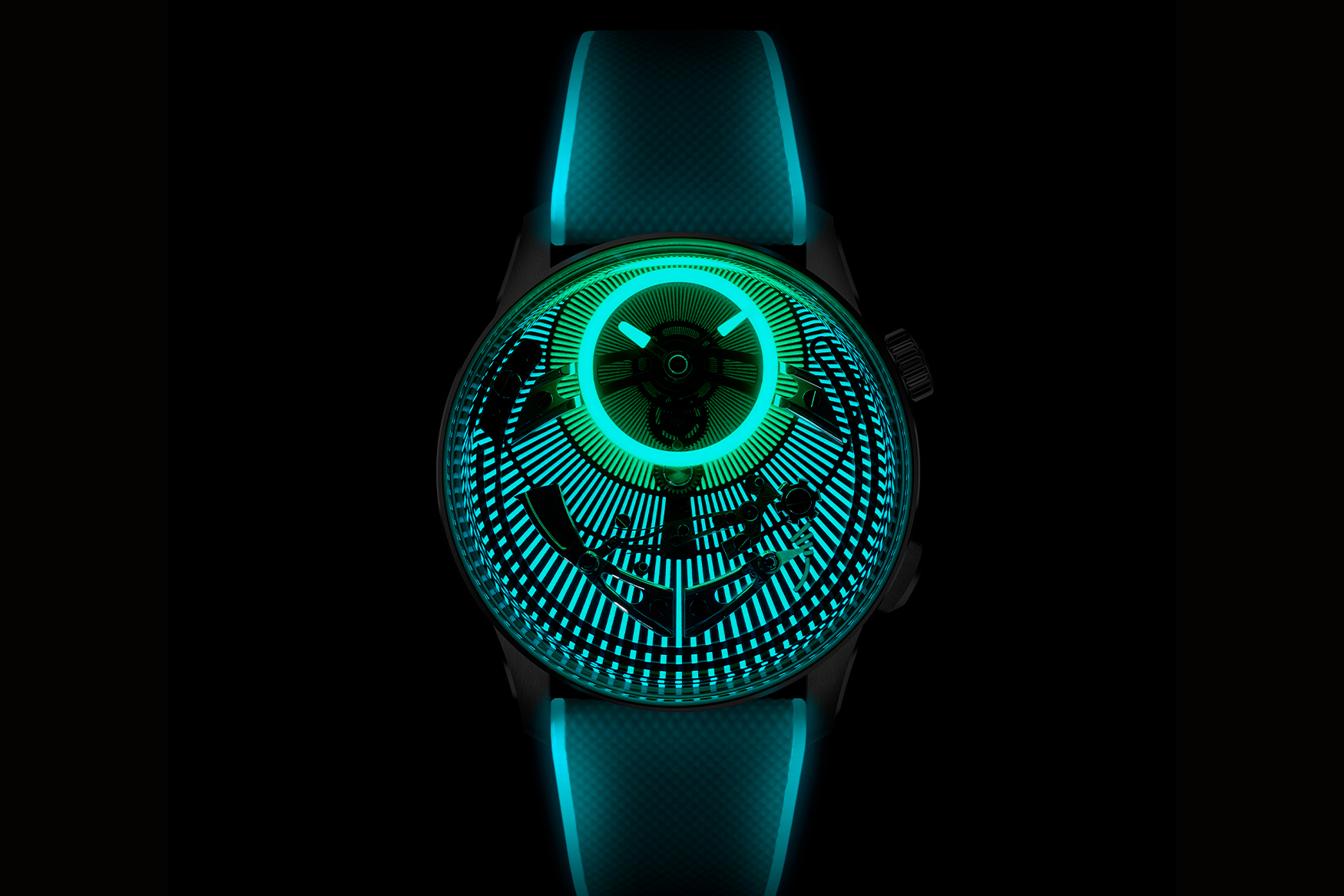
Last but not least, I’d want a bit of a statement piece in my three-watch collection, and for less than US$5,000, you’d be hard-pressed to beat the Christopher Ward C1 Bel Canto Lumière for pure wow factor. This affordable sonnerie au passage is head-turning in any guise, but add a boatload of lume – specifically, thick blocks of Globolight on its hands and subdial plus acres of Super-LumiNova across its main dial and strap – and you get a watch that truly stuns when the lights are off. As gauche as it is to say, the Bel Canto Lumière looks like a watch over 10 times its price point, but that’s kind of the point of this challenge.
Pietro’s picks: Cartier, Anoma, Longines
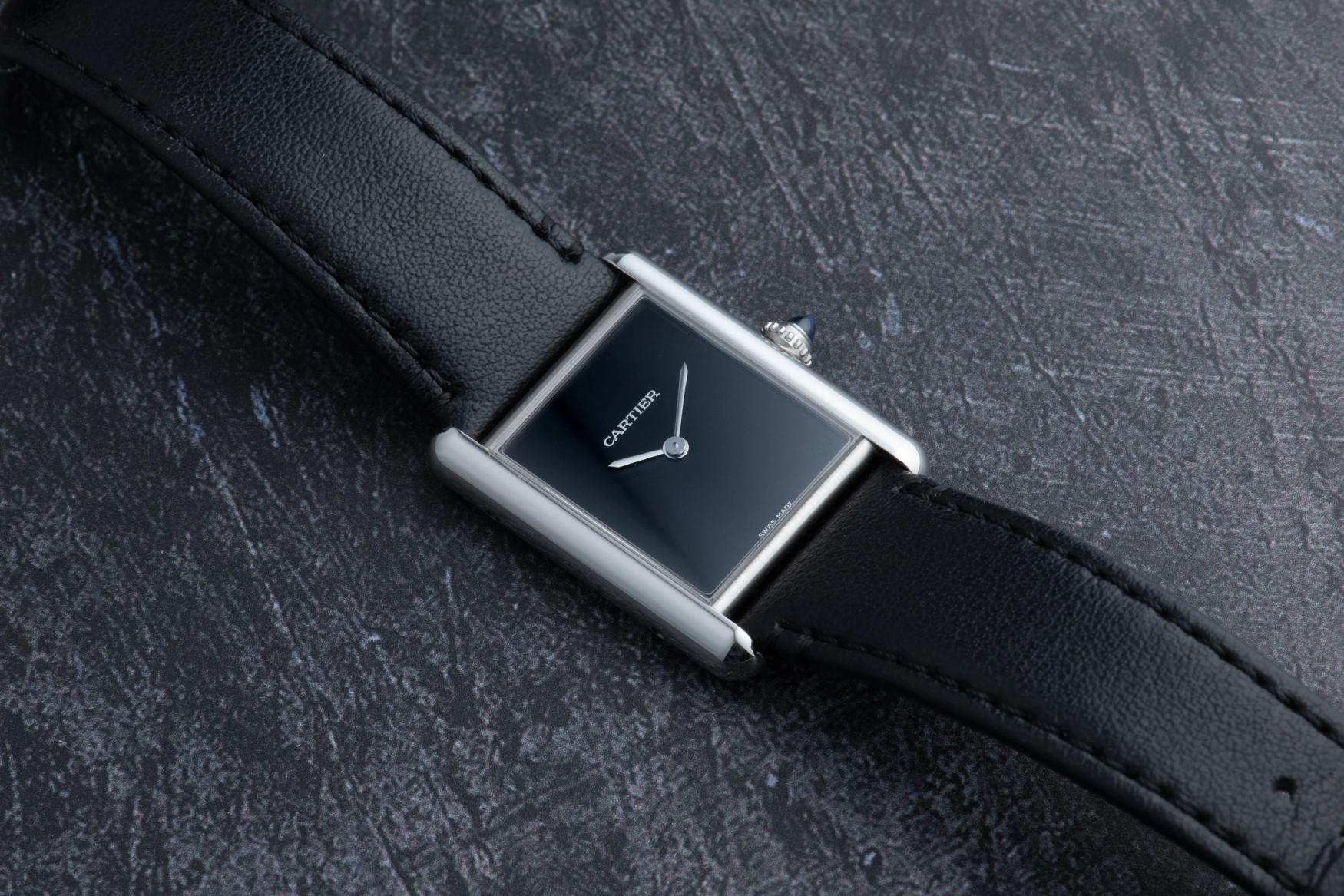 This will not be a balanced collection: on the contrary, it will tend towards dressier timepieces. You don’t necessarily have to wear them with a suit, but they give you that option, as well as with jeans and a T-shirt. When I read that the brief was to stay under US$5,000, I immediately knew that my first pick was going to be the Cartier Tank Must. Personally, I think the black dial is the way to go, but the classic white with the SolarBeat movement is an equally valid option; it’s just a matter of taste. It was introduced in 2022 and has been part of the regular collection ever since. You get an iconic model with a dial that makes a statement. It is the same size as the more expensive Tank Louis, but without a second hand, it is impossible to tell that it is a quartz watch. I considered buying it for quite some time before deciding on its bigger brother.
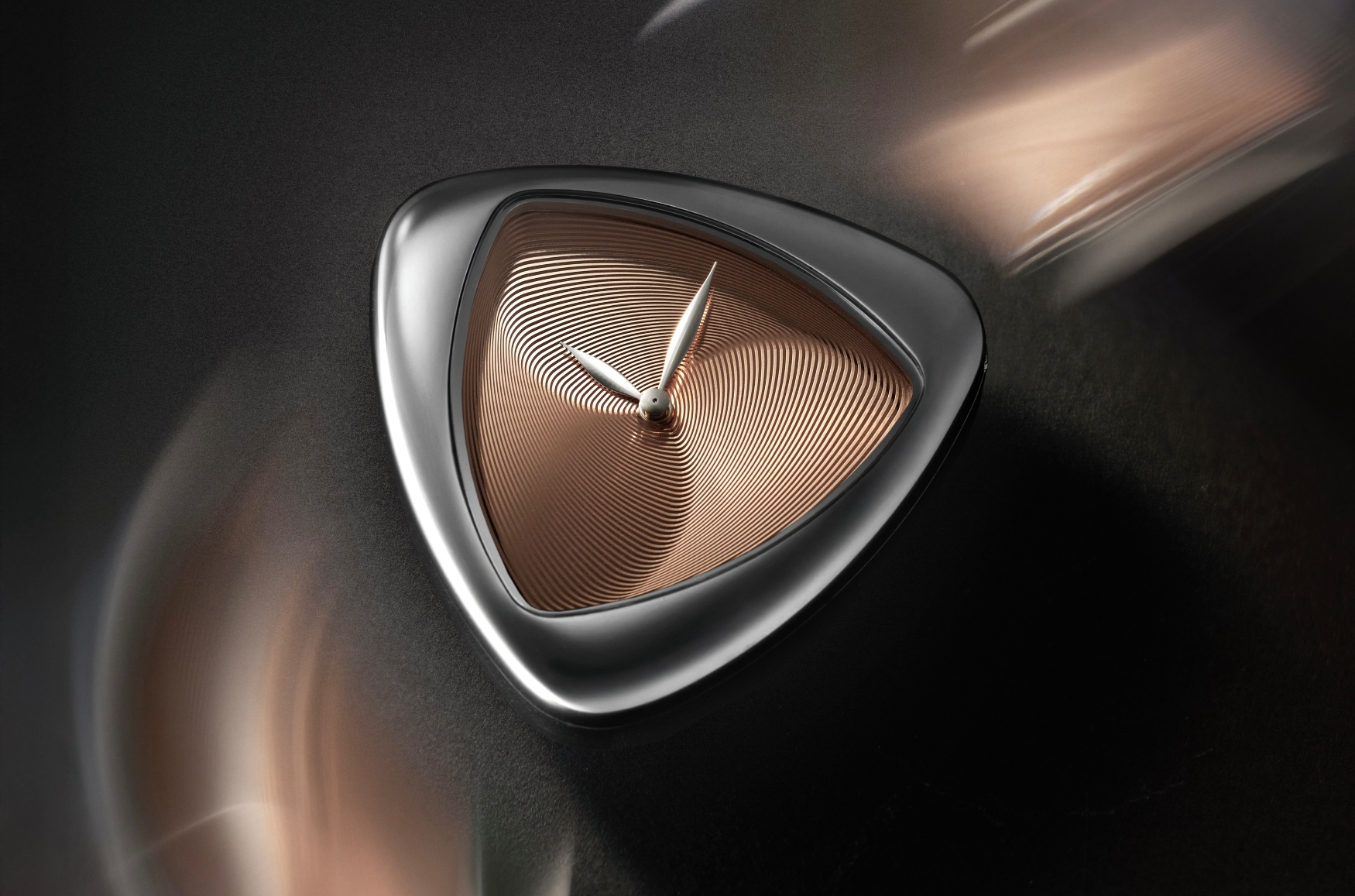
I might have opted for an established brand for my first choice, but I am now turning to a very promising young brand for my second choice. I met Matteo from Anoma before the launch of his first model, and it’s one of the very instances where the product is as convincing as the person explaining it. The A1 Optical is the most conceptual release of the brand (yet), and it’s what I think embodies the brand’s philosophy the most. It’s a uniquely sculptural watch with character in abundance. It is a watch you notice from across the room, and as you come closer to it, it draws you in with carefully curated details, inviting you to start conversations about it. From the reflections on the ridges of the dial to the particular choice of stainless steel for a slightly different shine than usual, every aspect works as well by itself as it does together with the rest.
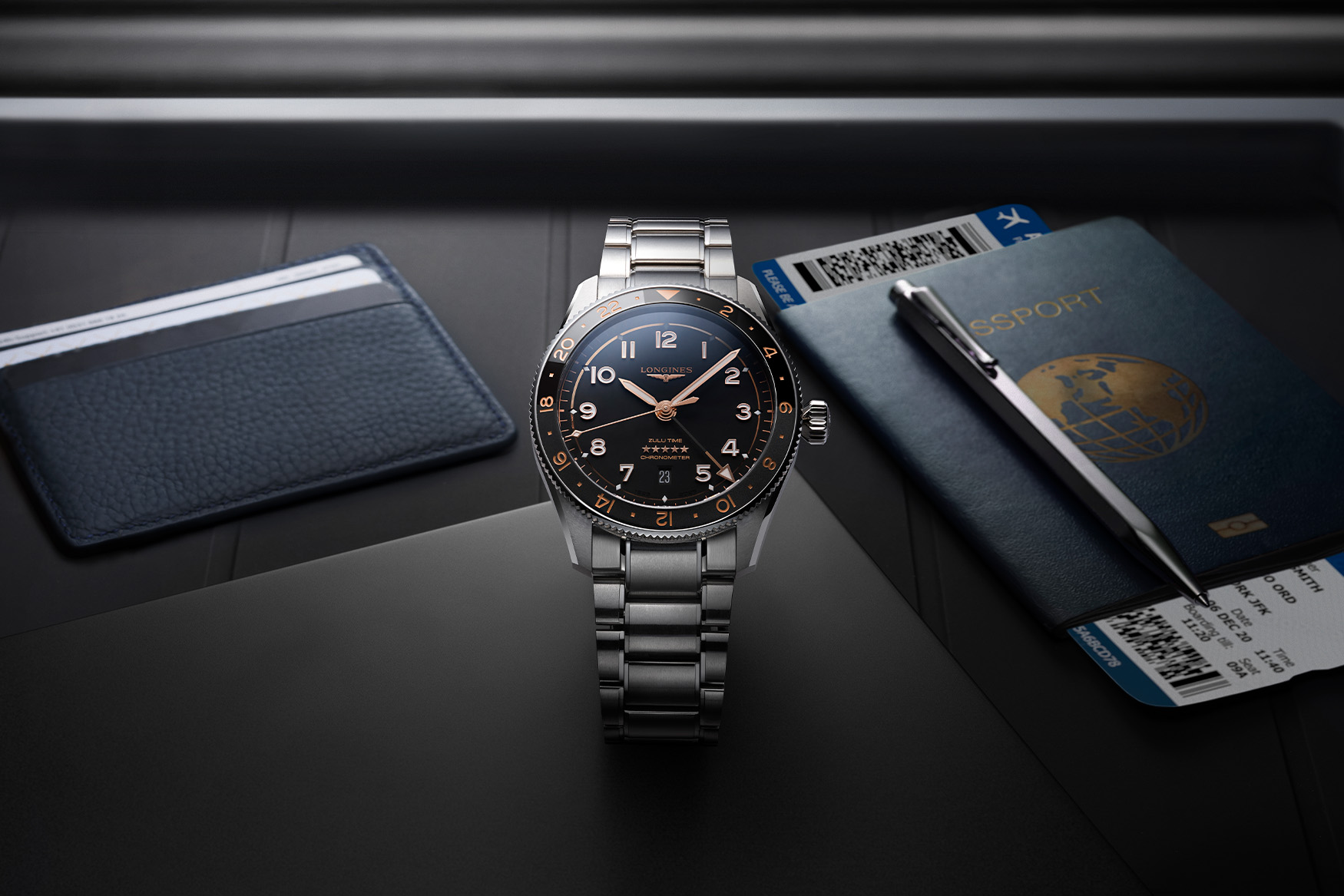
To round off this three-watch selection, you’ll need an all-rounder, something that you can bash around and not worry too much about. The Longines Spirit Zulu Time gives you exactly that freedom. The 39mm size makes it legible but not bulky, and the 100 metres water resistance guarantees it will endure almost every activity except deep diving. In addition, you get a useful complication that not only looks pretty, but has real-world applications. While there are several iterations available: on stainless steel bracelets, fabric or leather straps and in a multitude of colours, in my opinion, there’s one that just plays in a different league. Introduced last year to mark the 100th anniversary of the first Longines dual time zones, the black and grey colourway with rose gold accents is just sexy, adding a bit of refinement to an already very capable tool watch.
Jason’s picks: Tudor, Oris, Sinn
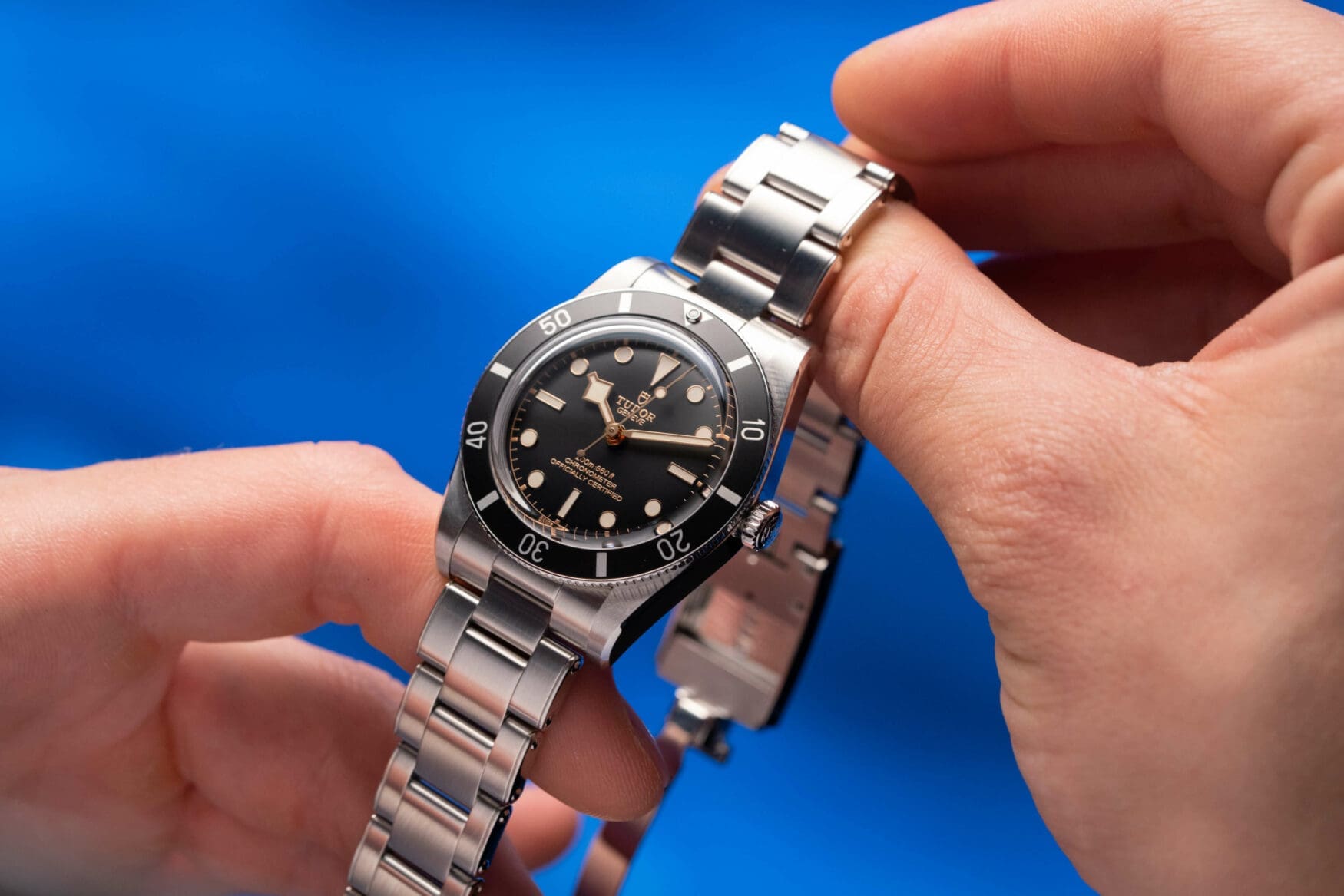
Similar to Pietro, I’ve gravitated towards three dive/tool watches for my trio. The Tudor Black Bay 54 is one of those rare watches that transcends its price bracket. At 37mm across and just 11.2mm thick, it nails the kind of proportions enthusiasts talk about but seldom encounter in the wild. On the wrist, it feels compact without being small, substantial without being heavy. Yet this isn’t a nostalgia piece playing dress-up — it delivers proper tool-watch credibility with 200 metres of water resistance, a screw-down crown, a domed sapphire crystal and a confident unidirectional bezel. Inside, the COSC-certified manufacture calibre MT5400 brings a 70-hour power reserve, meaning it behaves like a reliable daily companion rather than a watch that constantly demands attention. The T-fit clasp, offering on-the-fly micro-adjustment, is the kind of practical detail that quietly reinforces how well thought out the package is.
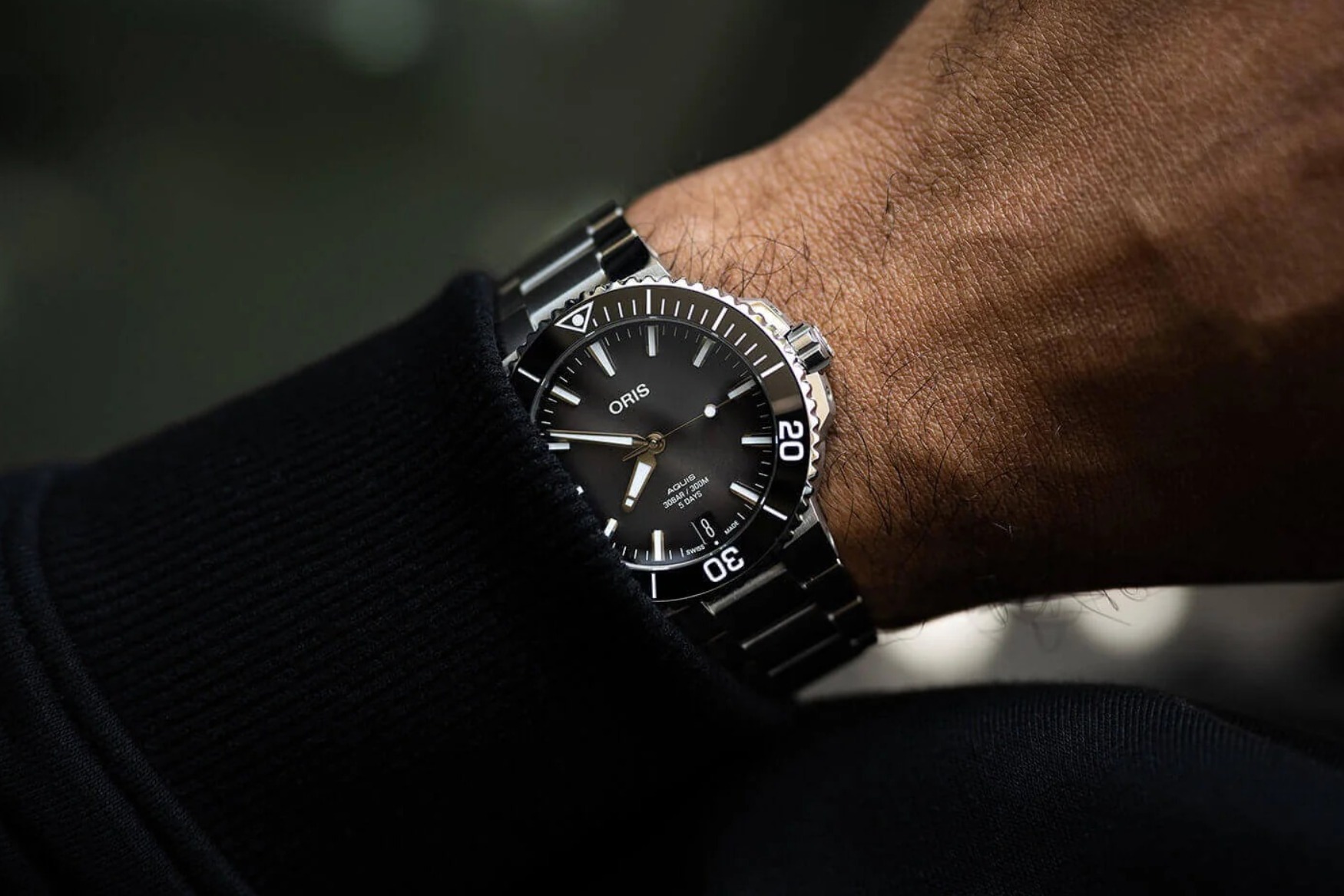
The Oris Aquis Date 41.5 leans into modern dive watch sensibilities with conviction. Rated to 300 metres and built around a multi-piece stainless steel case topped with a ceramic minutes-scale bezel insert, it feels engineered for real-world use — from desk to dive boat. The domed sapphire crystal with internal anti-reflective coating keeps legibility sharp, while the screwed, see-through caseback adds a welcome dose of mechanical theatre. Powering it is the Calibre 400, arguably the headline act here, delivering a substantial 120-hour power reserve and positioning the Aquis as more than just a capable diver. With 22mm lug spacing, it’s also versatile — easily shifting character between bracelet, rubber or leather depending on the day.
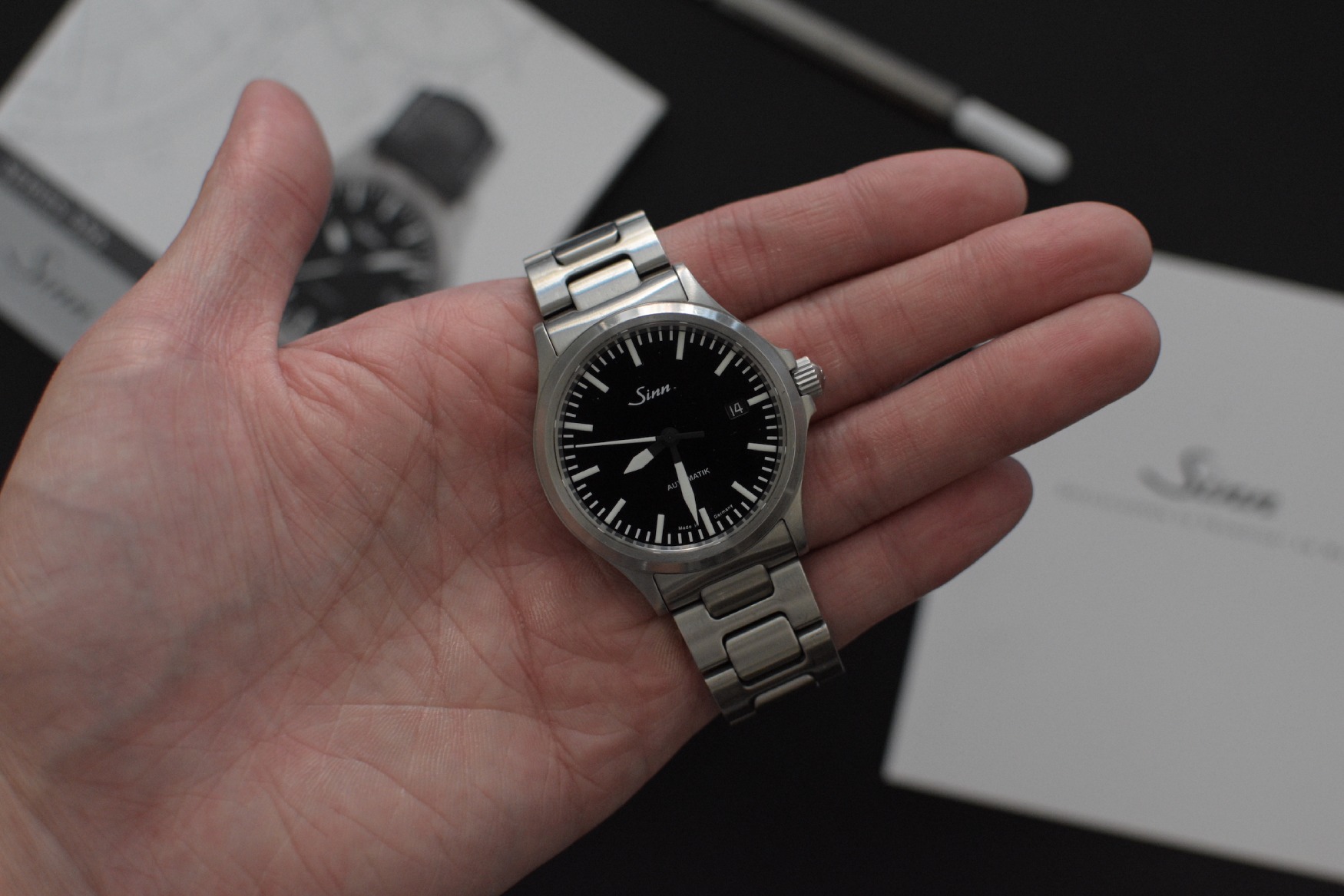 Image courtesy of SIXIW
The Sinn 556 I takes a different approach, focusing on fundamentals rather than flair. Its restrained dial, crisp legibility and absence of unnecessary embellishment make it one of the cleanest everyday watches in its segment. At 38.5mm in diameter and 11mm thick, it sits squarely in the daily-wear sweet spot, but the build spec is more serious than its minimalist aesthetic suggests. With 200 metres of water resistance, a screw-down crown and sapphire crystals front and back, it’s properly robust. The Sellita SW200-1 movement with hacking seconds ensures straightforward servicing, while compliance with DIN 8309 anti-magnetic standards adds another layer of reassurance. As a simple time-and-date piece, it’s the kind of watch you can rotate straps on endlessly — or leave on its bracelet and simply forget, which is arguably the highest compliment for a true all-rounder.
Tom’s picks: Longines, Christopher Ward, Ōtsuka Lōtec
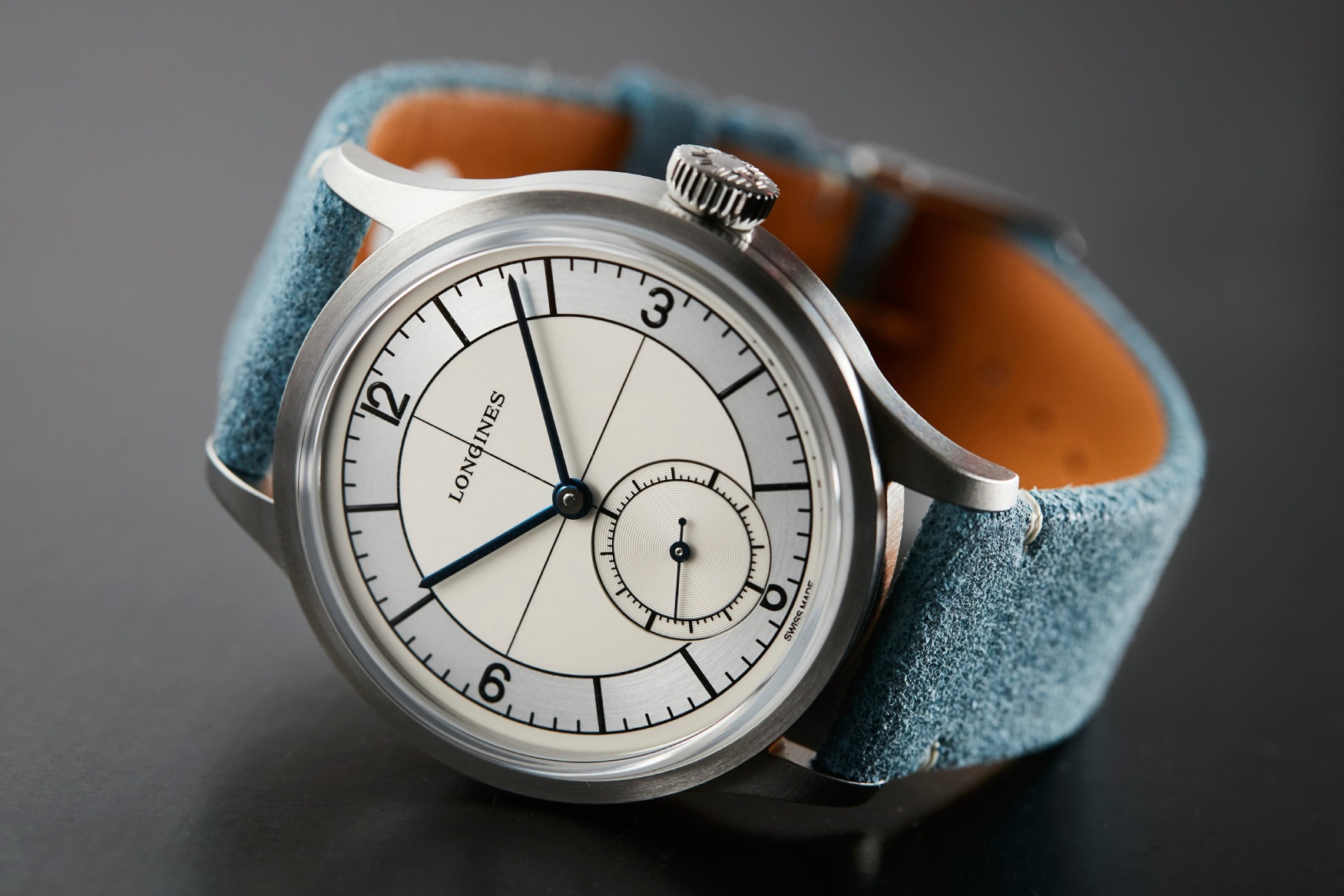
The Longines Heritage Classic is one of those watches that has always slipped my grasp. It’s been around for a while now, and around the time of its release in 2019, it became hugely popular thanks to that gorgeous heritage-inspired, ultra-legible sector dial. While trends have shifted slightly a few years later, I still think this is a stunning, timeless pick. The proportions are just right, and the details, such as the blued hands, finish things off beautifully. It’s a watch with bags of character, and a total connoisseur’s choice.
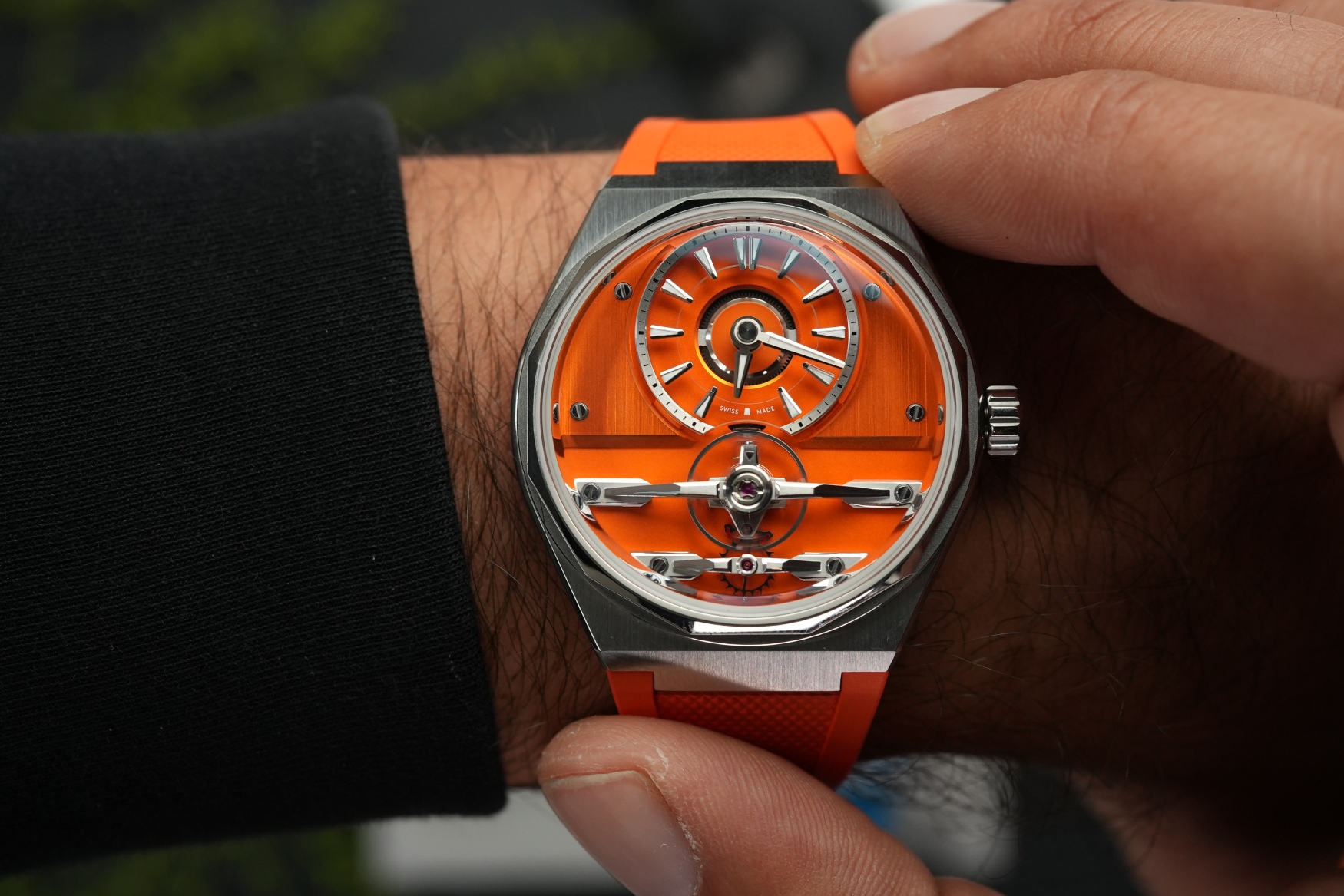
If it’s value for money you’re looking for, then you don’t need to look much further than Christopher Ward. As a package, the C12 Loco is probably one of the best value propositions out there, offering bespoke in-house watchmaking and complex movement architecture for a fraction of what it would cost elsewhere. It leans hard into that integrated bracelet design that’s become so popular in recent years, which suits the almost futuristic look. The real highlight, however, is the exposed free-sprung balance and escapement, set apart from the rest of the movement and built up front for all to see. Having spent some time with the Loco last year, I can say that it’s a fantastic daily, a conversation starter, and quite simply a joy to wear.
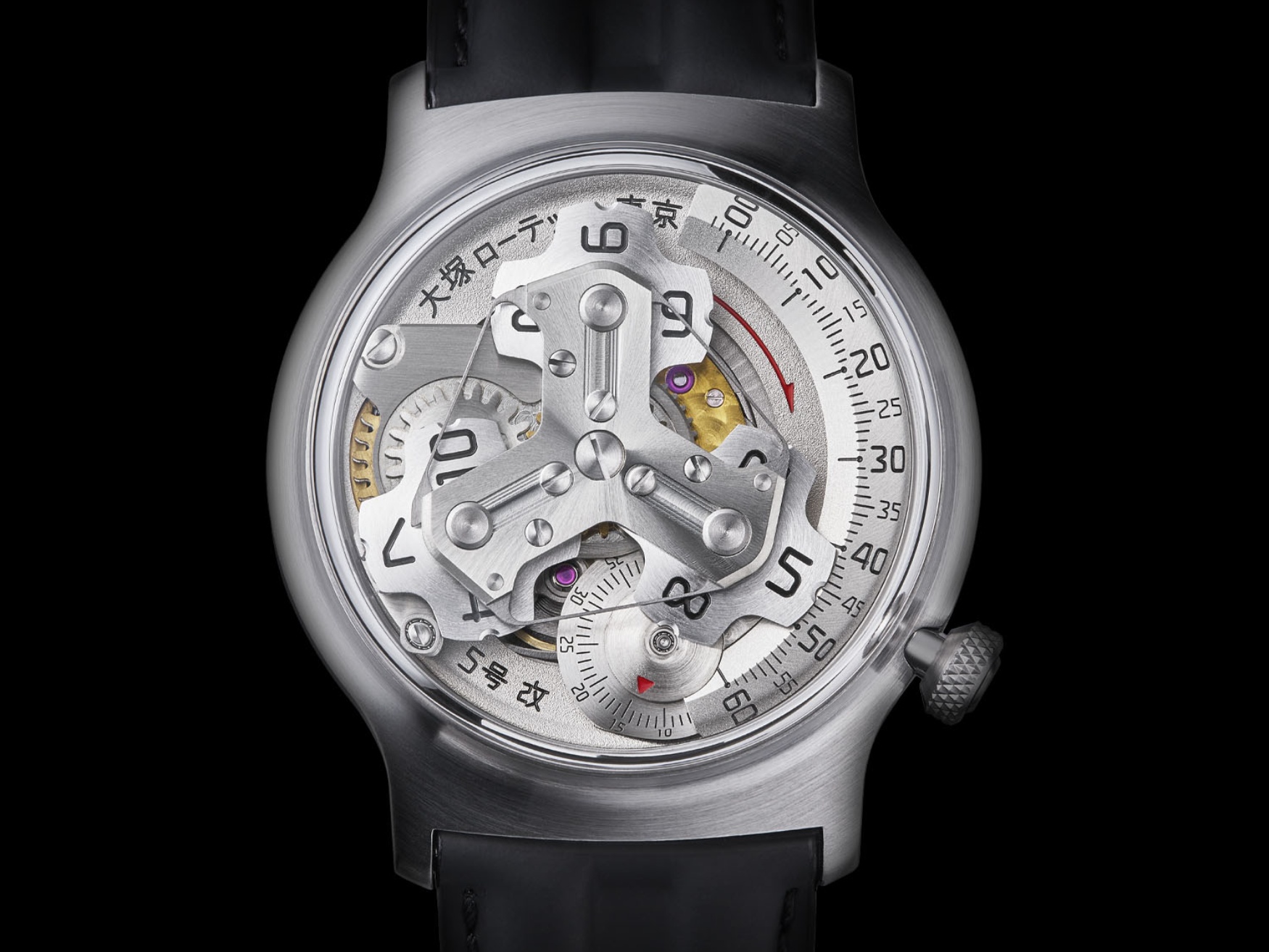
It would be easy to say I’m picking this watch simply for its desirability or impossibility to obtain; hype is certainly a driver in the watch industry these days. However, I try to look at things for what they are, and the truth is, the Ōtsuka Lōtec No. 5 Kai is highly desirable for a reason. It looks brutal and mechanical, more like a machine than most other watches, and it’s a great example of modern Japanese artisanal watchmaking at its core. Ōtsuka Lōtec watches are unique and beautifully made, and yes, a lot is going on at the front, but that’s the point; it’s exciting and dramatic, and for the money (if you can get one at retail), I don’t think much else comes close.
Andrew O’Connor’s picks: Isotope, SpaceOne, Formex
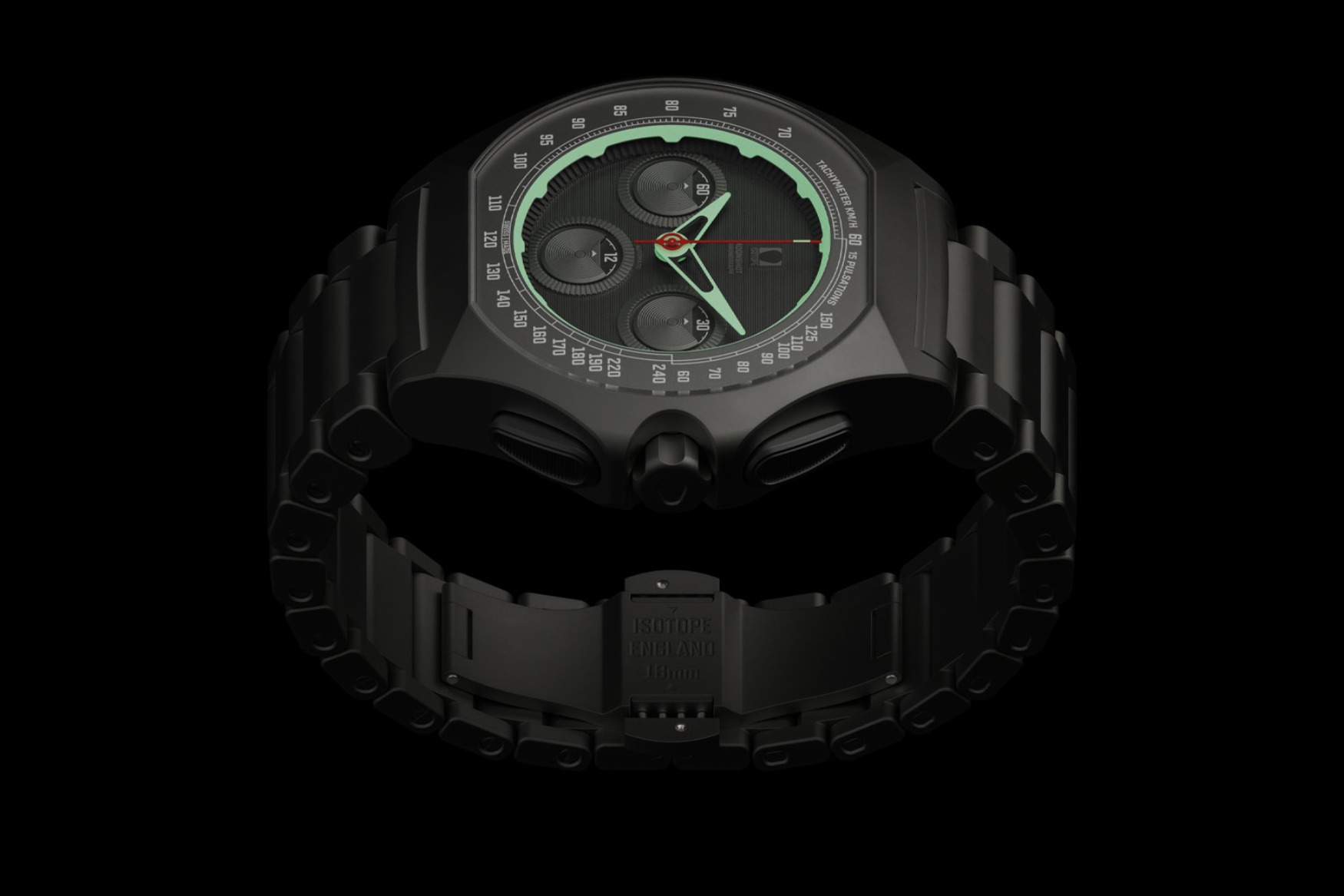
I could’ve easily picked three watches from the list I made for building an entire collection for the price of a two-tone Datejust, but mixing things up can be fun, and that list leaned more into mostly traditional designs. For this, I thought I’d lean into my soft spot for modern designs and different materials, while maintaining some well-rounded practicality with a chronograph, a world timer, and a general all-rounder.
The Isotope Moonshot Stealth offers a creative take on a three-register chronograph, giving me the feeling of a modern reinterpretation of the blacked-out IWC Porsche Design chronographs from the 1980s. Clad in DLC-coated grade 5 titanium for the case and integrated bracelet, the case measures 41mm wide, 15mm thick, and 49.5mm lug-to-lug. The chronograph functions are displayed via rotating discs for each sub-dial, revealing the indicated elapsed time while covering the rest of the sub-dial. The lume is also quite fun, with the skeletonised hands and perimeter of the dial given ample SuperLuminova treatment. Powering the chronograph is either a Valjoux 7753 or Landeron 73 in elaboré or top-decorated spec, both of which offer 44 hours of power reserve. With sapphire crystals front and back, 100 meters of water resistance, and a screw-down crown, all of the practical features are there as well. There’s an additional rubber strap to boot!
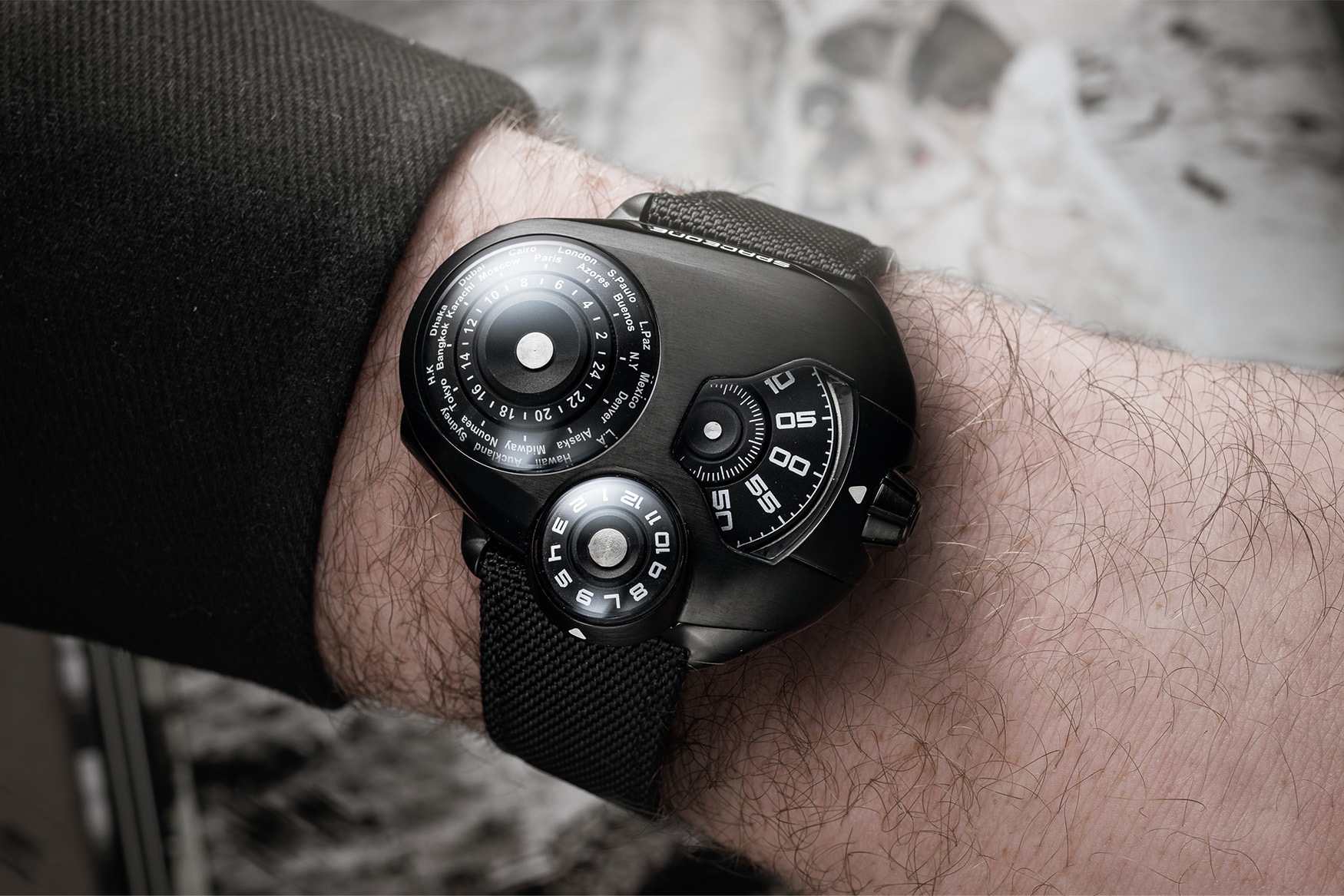
The SpaceOne Worldtimer is a watch that I keep coming back to. It brings avant-garde design in a wearable, accessible package, and still maintains a functional, relatively easy-to-read world time function once you wrap your head around it. With a well-finished brushed and polished grade 5 titanium case, sapphire crystals covering the displays, and an in-house-developed world-time complication built on top of a Soprod P024, I think there is a lot of value on hand for the money. Don’t let the 52.7mm wide case scare you, as it measures 41.9mm lug-to-lug, making it very wearable. You definitely have to be into quirky modern designs to be into this, but if you are, the SpaceOne Worldtimer is a good one.
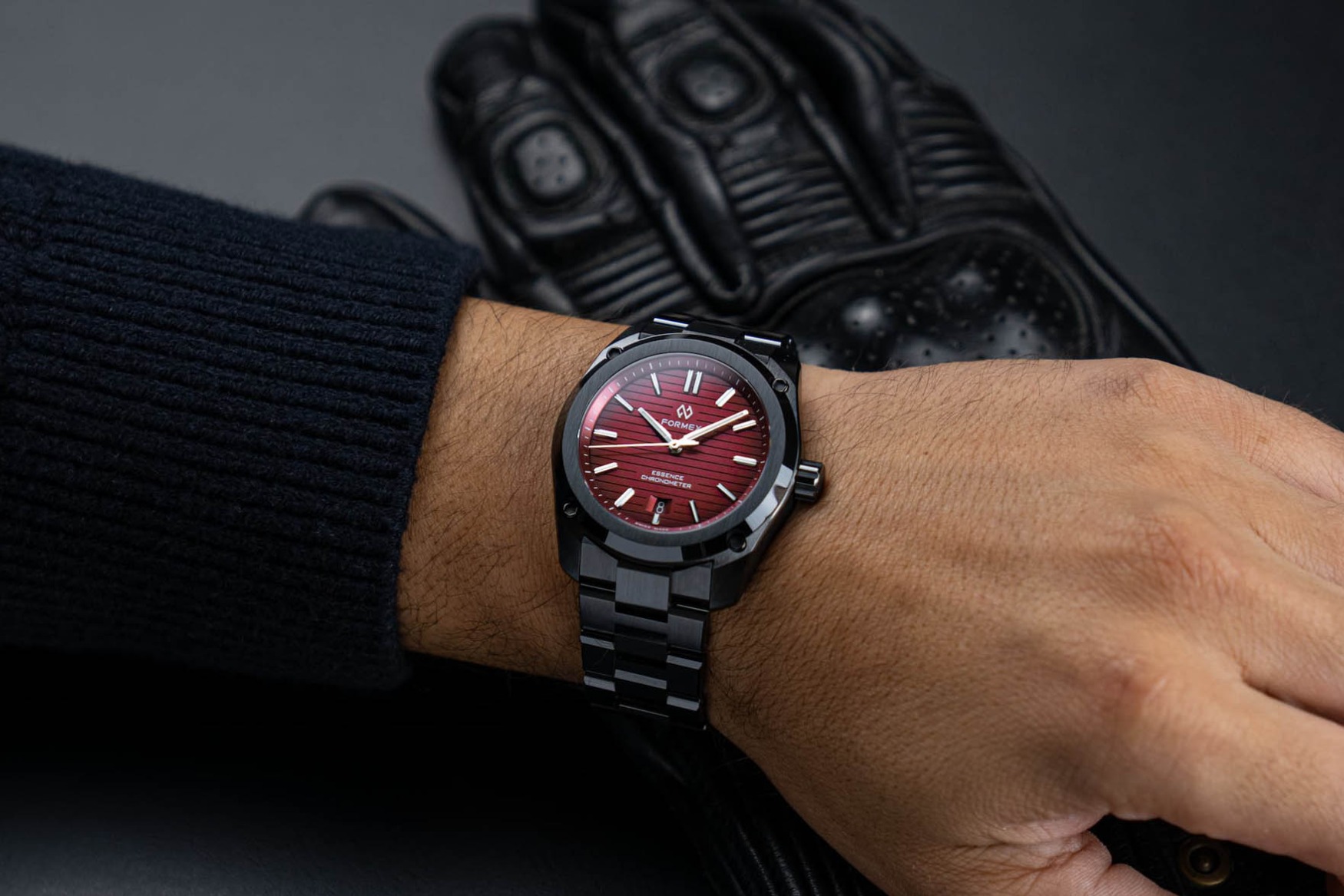
With two quirky executions of complications, it makes sense to round out this three-watch collection with something slightly more practical. The Formex Essence Ceramica Gamaret takes the brand’s winning Essence formula of a durable all-rounder with trademark case-suspension system, and puts it in a ceramic case with a fully ceramic bracelet and micro-adjustable ceramic clasp. With crisp finishing, 100 meters of water resistance, and the adjustable ceramic clasp, Formex is definitely punching up with the Essence Ceramica. While there are slightly more restrained dial choices, I’m a sucker for black and red. The lumed hands, indices, and a colour-matched date window add the practical functionality you need with a solid daily. Inside is the Soprod Newton P092, a COSC-certified automatic movement with laser-engraved and brushed finishes, a custom skeletonised rotor, galvanic black gold treatment, and 44 hours of power reserve. The quintessential GADA characteristics are not lost on the Formex Essence Ceramica; they’re just served with a hefty helping of personality.
Zach’s picks: Tudor, echo/neutra, Furlan Marri
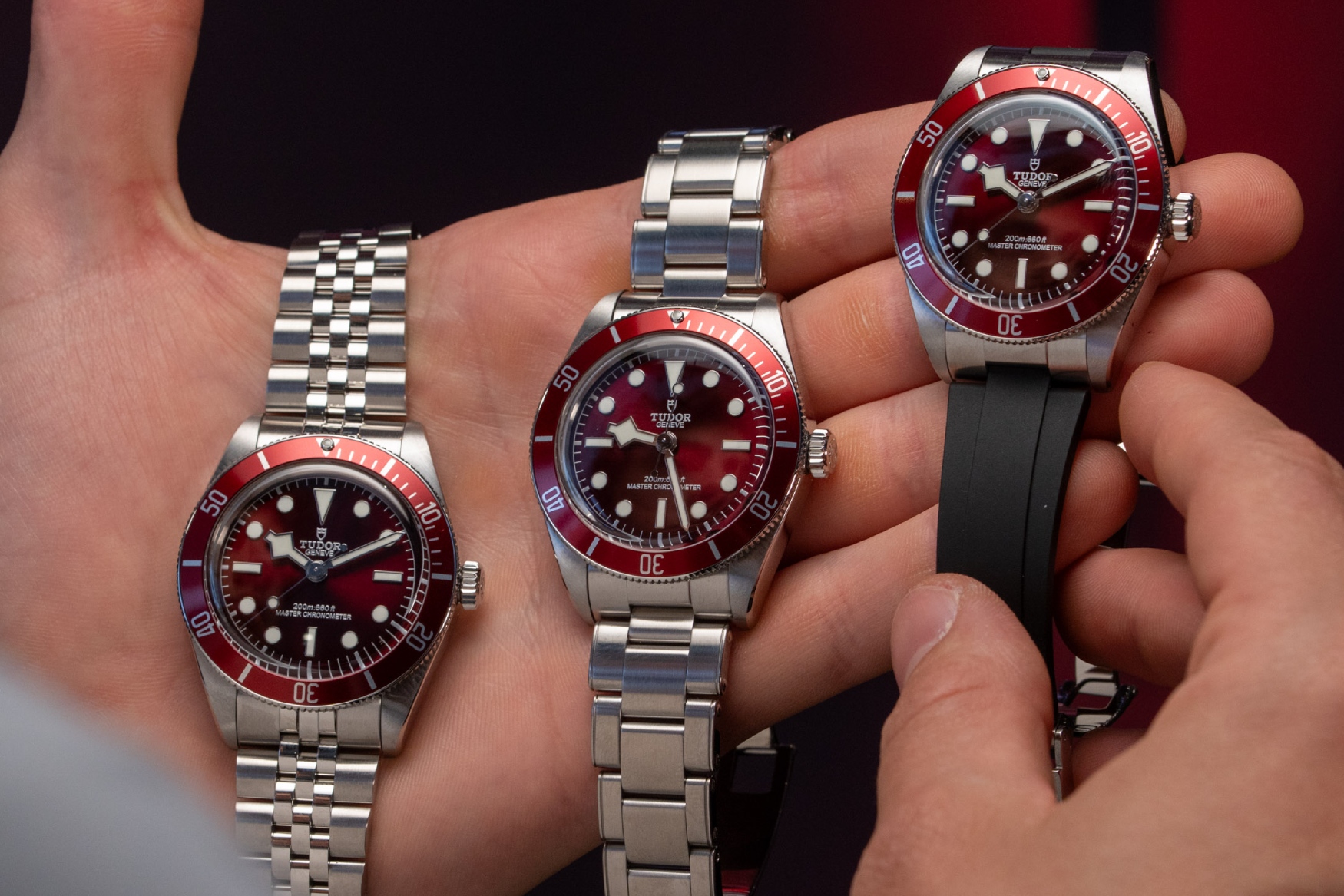
If you ask me what the best watch you can buy for under US$5,000 is, the first brand that comes to mind is Tudor. Whether a Black Bay or an FXD GMT Zulu Time, there are ample rock-solid choices. My first Tudor pick would honestly be the BB54, but for the sake of variety within this list, and my hypothetical three-watch collection, I am going to opt to bring in some colour with the Black Bay 58 Burgundy. The vibrant red dial and bezel will really pop against my typically darker wardrobe and signature rose-lensed shades, while also bringing needed robustness within the context of my picks. Between a wrist-flattering 39mm case, 200-metre depth rating, Master Chronometer-certified 70-hour automatic manufacture calibre, T-fit micro-adjust bracelet, and Wilsdorf pedigree, it’s just a sure winner for me at US$5,050 (yes, I am cheating by US$50, sue me – but on rubber, it’s under US$5k).
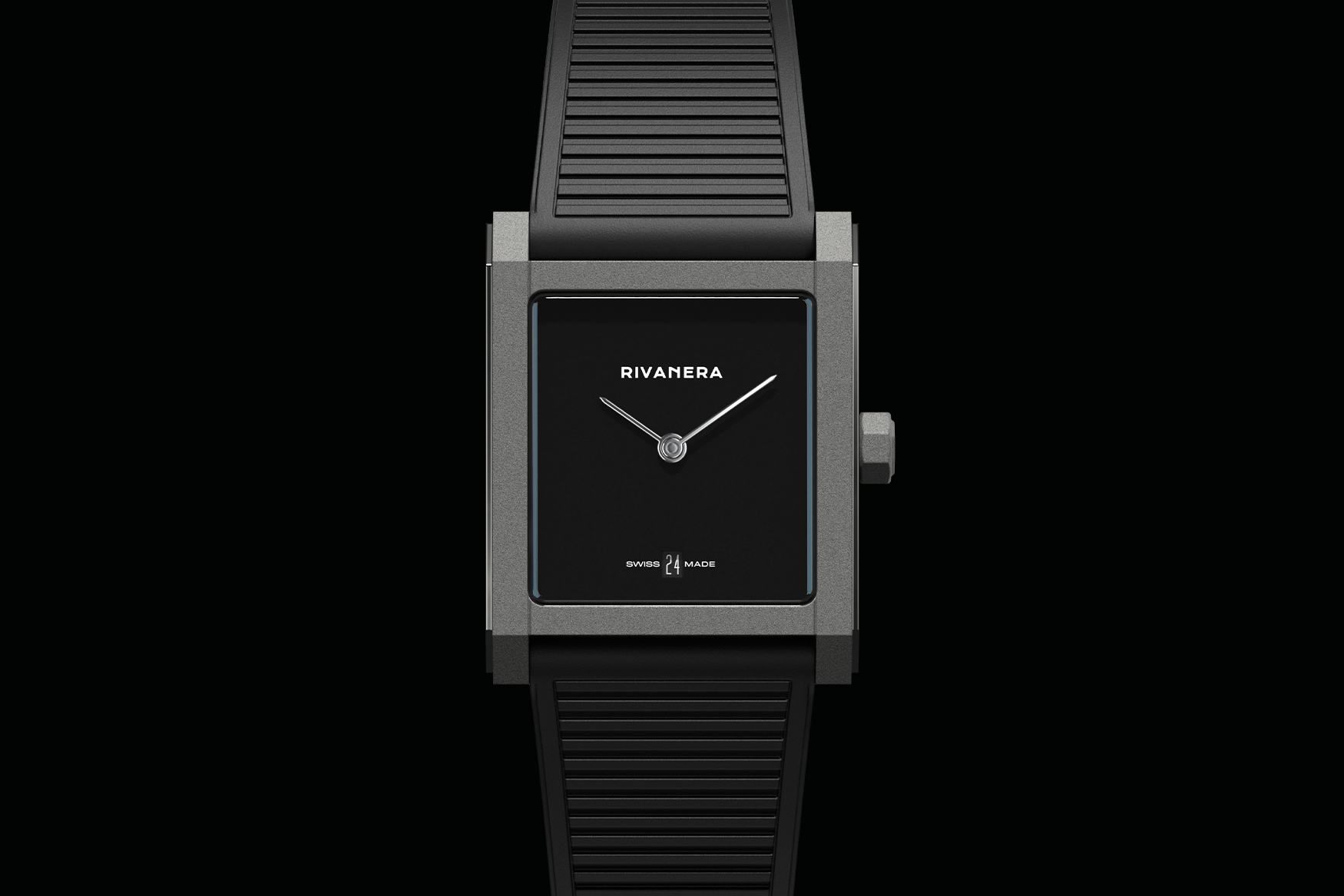
With colour and daily-wearer spec sorted, I would then want to bring something in that could serve as a dress watch that, again, matches my style. The inaugural echo/neutra Rivanera immediately caught my eye upon its release, but the Tank Normale-like profile of the sequel, the Rivanera Piccolo, is better suited for my smaller wrist. I really dig the monochromatic vibes and the modern twist on an iconic, century-old silhouette. The atypical usage of lightweight titanium for this shape and style of design, and the manner in which it is finished, just looks superb. All this for US$1,980.
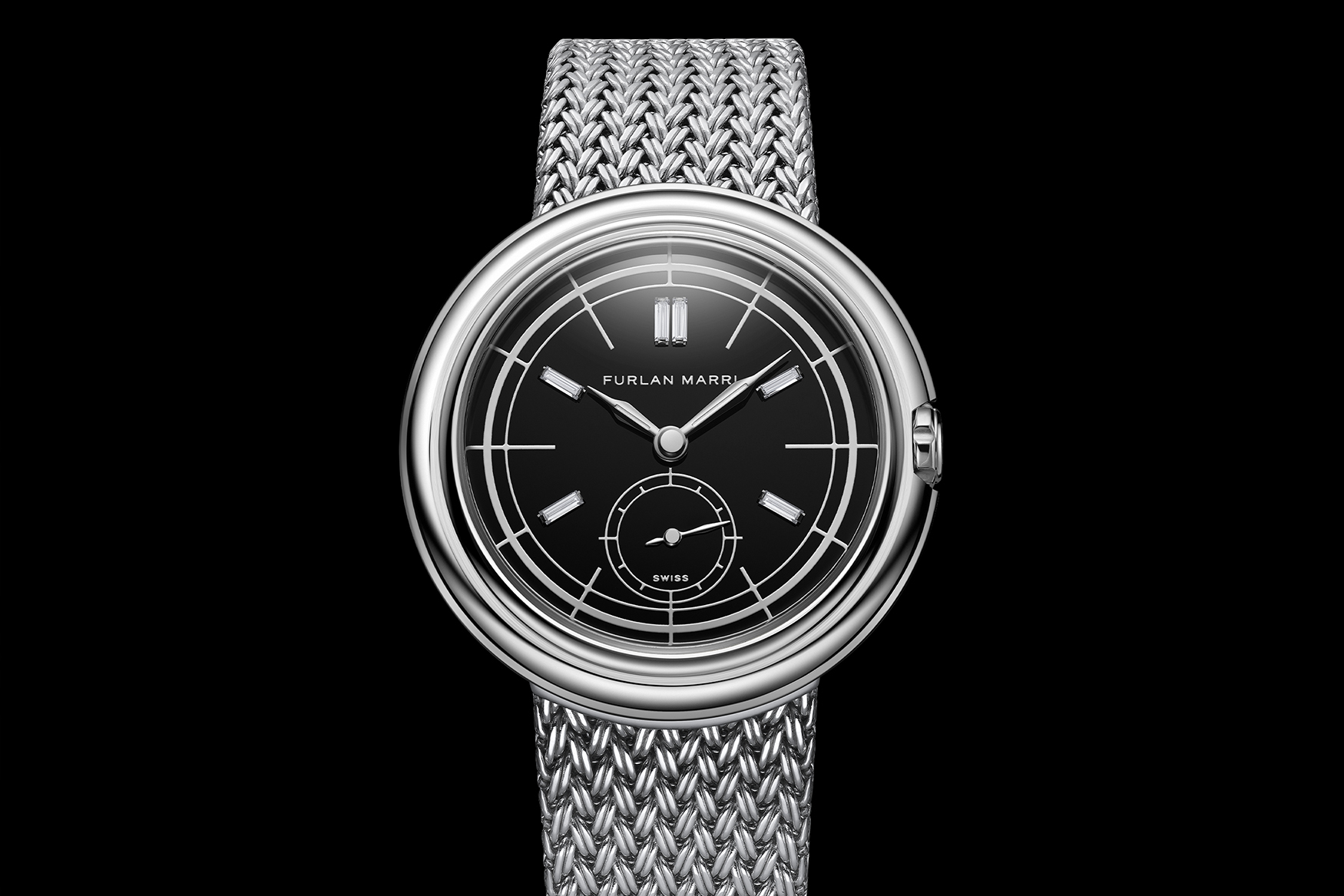
Finally, to split the difference, I am going to go with what I know: a Furlan Marri Disco Volante Onyx Diamonds. This is a watch that means a lot to me: for my 5th anniversary with Time+Tide, Andrew and the team presented me with one. The onyx dial is a nice, deep black, and the lab-grown diamond indices work very well against the backdrop. It also doesn’t hurt that I found symbolism in the fact that 5 of the hours are indicated by diamonds (signalling the 5th anniversary in my mind). But in terms of the appeal beyond its personal significance, the sizing of the watch is excellent – not too firmly vintage or modern in presence. The ability to quickly swap between the Milanese bracelet and leather strap is an added plus in regard to versatility.
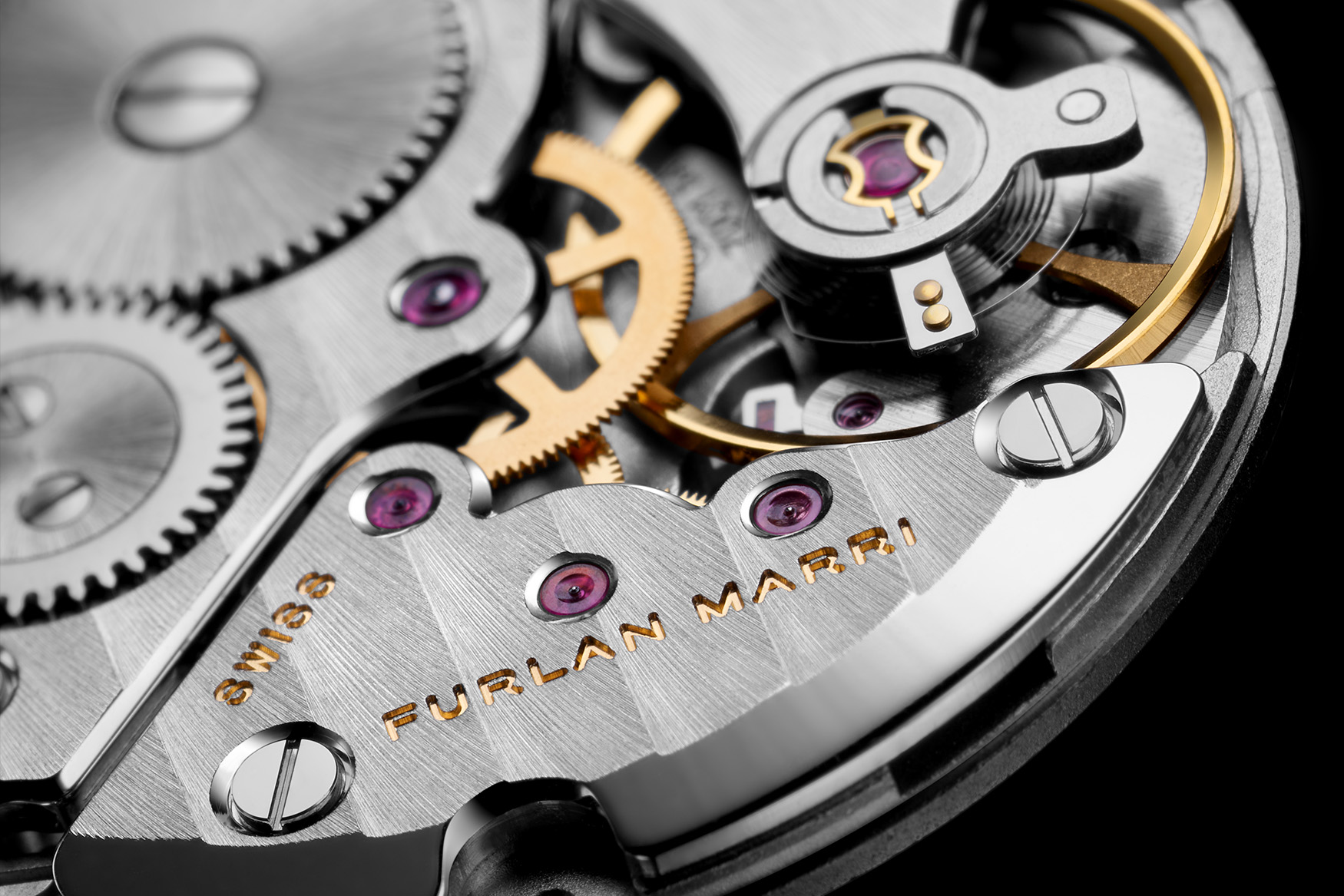
The biggest surprise, however, comes through via the exhibition caseback. When I first read that the ETA/Peseux 7001 handwound movement inside the watch is hand-finished, I was very sceptical. However, despite being a sub-US$5,000 watch with a stone dial and lab-grown diamond indices, the bevelling on the bridges of the movement is exceptional, especially at its price.
Borna’s picks: RZE, Universal Genève, Omega
Call it bending the rules, I call it being technically correct and potentially intelectually superior. For any challenge like this constrained by budget, I am not not going to pick vintage and pre-owned. We’re in the real world, people, where cost of a cost of living crisis is running rampant, and thus I will not use this purely theoretical, fun challenge for a smidge of escapism and instead will approach it from a purely practical perspective that also suits my personal narrative. With that in mind, my three-watch collection had to actually be versatile enough to match any given condition, which meant I couldn’t just pick three rare (but potentially fragile) vintage stunners as much as that might be the best use of your cash if you want to mask your lack of personality with interesting watches. Definitely not projecting.
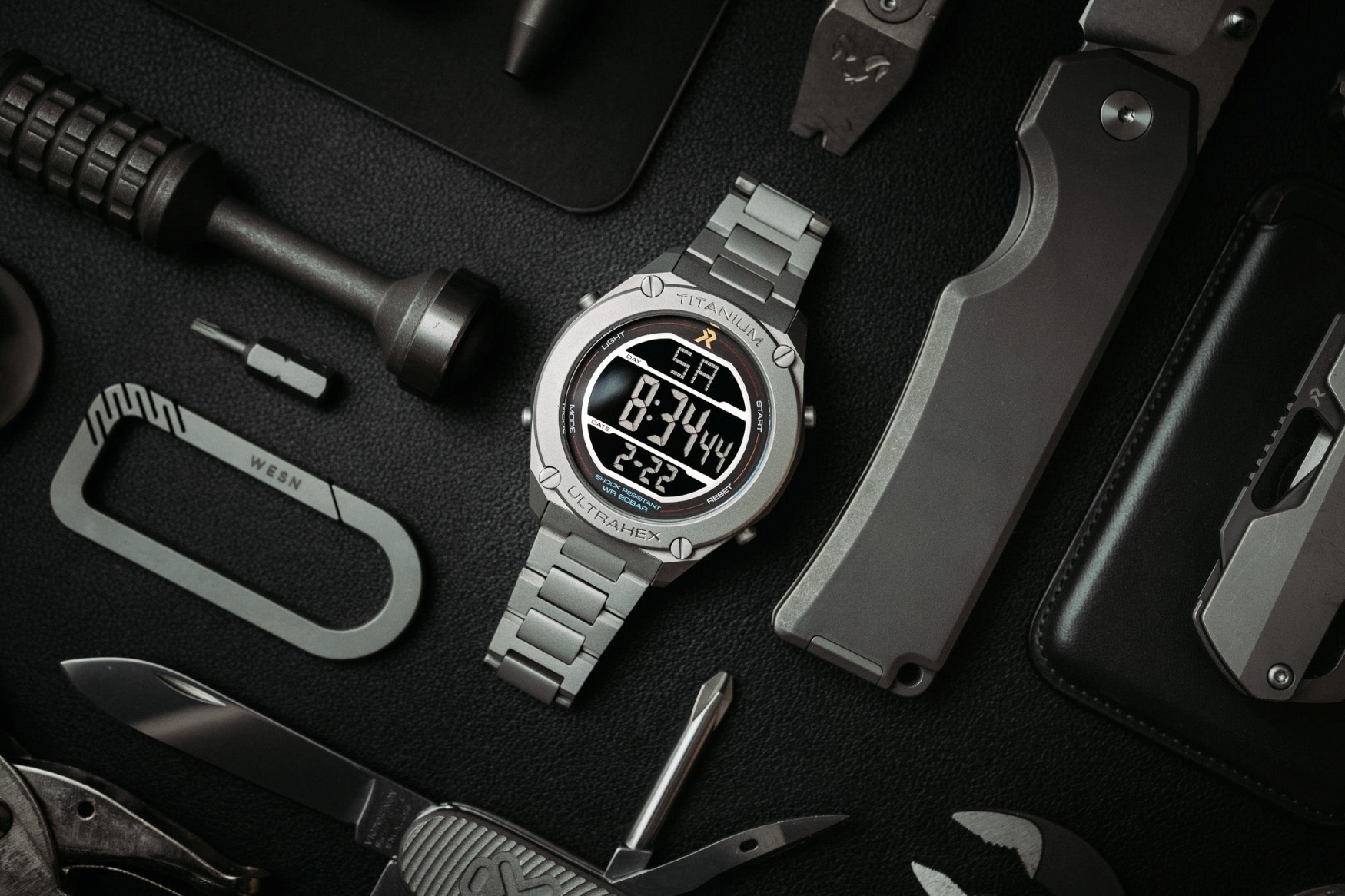
Alas, I have picked one new watch, and despite having been blessed by the Editorial Bank of T+T with a bunch of cash to splash, I’ll only be using X% of my US$5,000 budget (that’s US$279 or $435 Aussie pesos if you can’t be bothered doing the math) to pick up an RZE UTD-8000 in resplendent yellow. I’m not being frugal just for the sake of it, either. I could’ve easily picked the most expensive metal G-Shock instead as the beater of the triad, but seeing the RZE being flung across a room, smashed against a concrete floor, and coming out without as much as a scratch shocked me. I can’t wait for mine to arrive, and I’m already planning to accidentally get into scraps with doorknobs. And win.
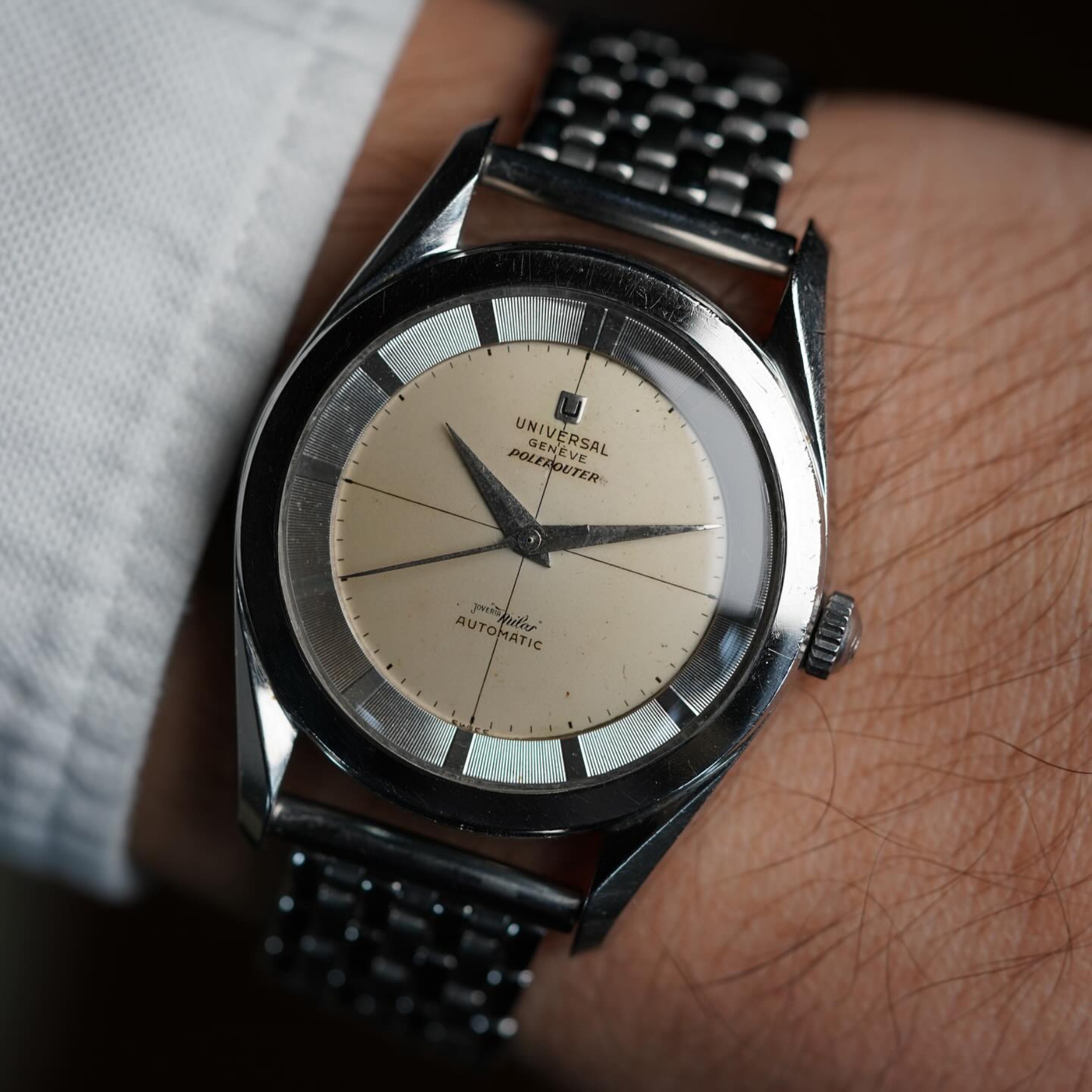 The Polerouter that Will Smith wore at the Grammys last year. Image courtesy of Eric Wind
Okay, we’re back on track. Having gone on record several times saying that the Polerouter is, in my opinion, the most beautiful watch ever made, how could I not pick it? Not only does it fill the special-occasion role in the usual dress-daily-beater trifecta, but it also serves as that one watch in your collection that’s just a bit more special. There are many variants out there, and for US$5,000, I advise you to get the best, cleanest one you can afford. If you’re lucky, you may even find a solid gold example – now that’d be really special.
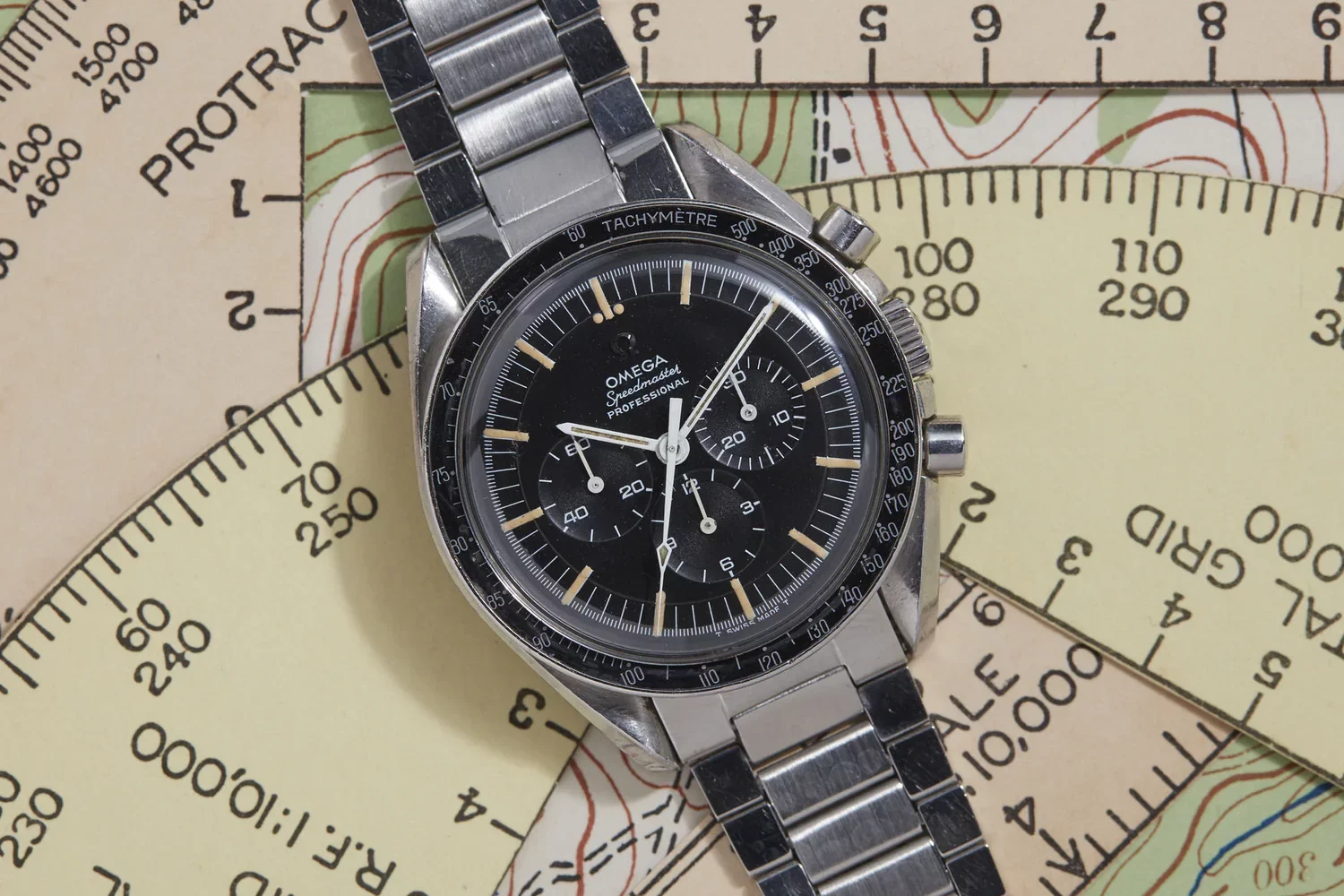 Image courtesy of Analog/Shift
My first two choices for this challenge were immediately clear. The Polerouter was first, I knew I’d want something G-Shock adjacent next (just shows how much rent-free space those take up in my mind), but what to pick for the third? How about an all-time classic, perhaps the most historically significant watch of all time, and one whose history is intertwined with one of humanity’s greatest feats? It could only be an Omega Speedmaster. There are numerous options out there, and while you’re probably going to miss out on all the pre-Professionals (if you get one, well done and screw you), I’d focus on trying to score a ref. 145.012, which is the most affordable way to get a 321 calibre, and with all the NASA pedigree you’d ever want.