
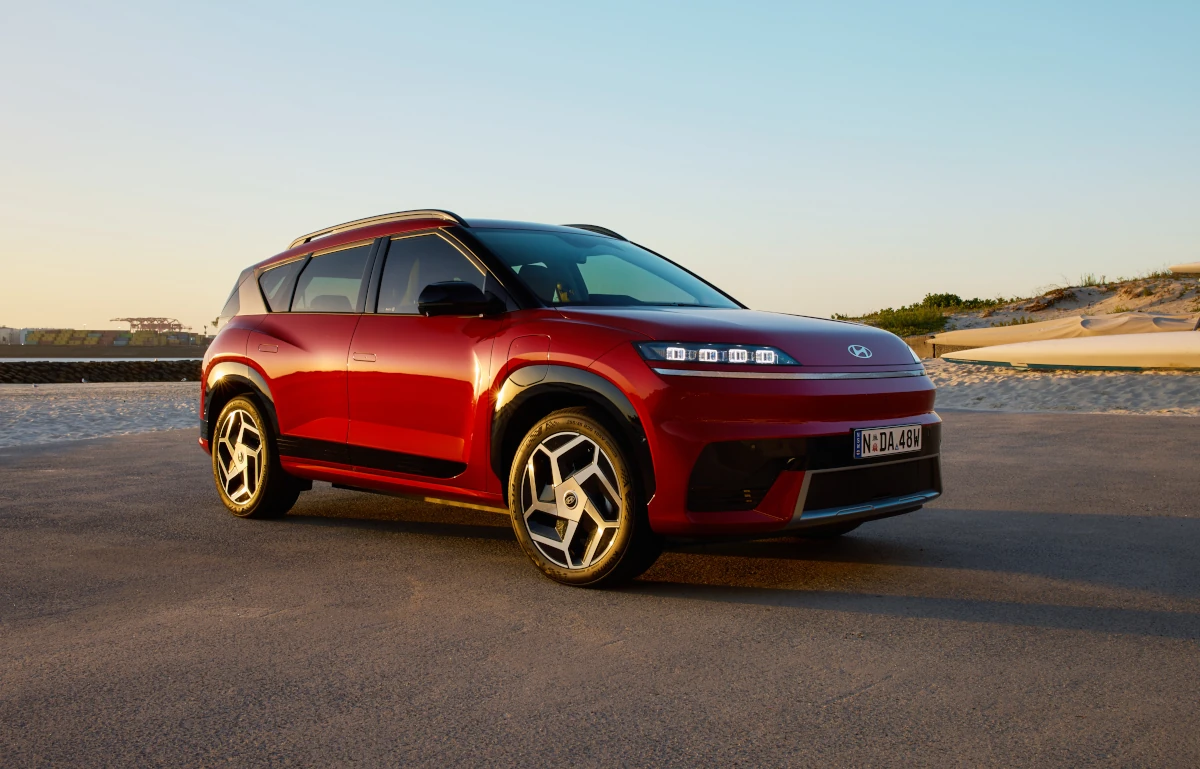
South Korean carmaker Hyundai has confirmed a second, entry level Elexio variant will be joining their Australian lineup during the second quarter of 2026. Elexio is Hyundai’s newest vehicle to join their growing EV portfolio, now available in a single Elite variant for $59,990 driveaway.
The Elexio is entering the most crowded segment of the EV market, with over a dozen medium SUV competitors in the same price range, including the top selling BYD Sealion 7, Zeekr 7X, Tesla Model Y and Kia EV5. Elexio is also up against significantly cheaper models from Chinese brands such as Geely and Leapmotor.
Hyundai describes the Elexio as a family-focused, futuristic car packed with smart features. Size wise, it slots in between Kona Electric and Ioniq 5. “Designed for modern Australian families, Elexio delivers the ideal balance of size, space, efficiency and outstanding value,” said Hyundai Motor Company Australia Chief Operating Officer, Gavin Donaldson.
While speaking to media during the Elexio launch event, Donaldson indicated it could potentially become Hyundai’s best selling EV, “There’s an opportunity for Elexio to be our top seller, there’s also an opportunity for Kona EV, but ideally this should be our top seller.”
Key specifications shared across both variants include an 88 kWh LFP battery from BYD, using their well-known blade technology, and a front-wheel drive setup providing 160 kW and 310 Nm. WLTP range for the Elexio Elite is 546 km, rising to 562 km for the new base variant riding on smaller 18-inch wheels compared to 20-inch wheels on the Elite.
Built upon a 400 V version of the E-GMP platform, charging speeds for Elexio are slower than Ioniq EVs based on 800 V systems. Hyundai quotes a 10 – 80 % charge time of 38 minutes when plugged into a 150 kW DC charger, although they confirmed maximum charging speed tops out at roughly 120 kW.
The Elexio also features a 16 A vehicle to load (V2L) socket in the boot, capable of powering loads of up to 3.5 kW. Unfortunately vehicle to grid (V2G) will not be available on the Elexio. This is reserved for the flagship Ioniq 9 only, currently undergoing detailed testing by Hyundai to evaluate safety and reliability with various bi-directional charging equipment.
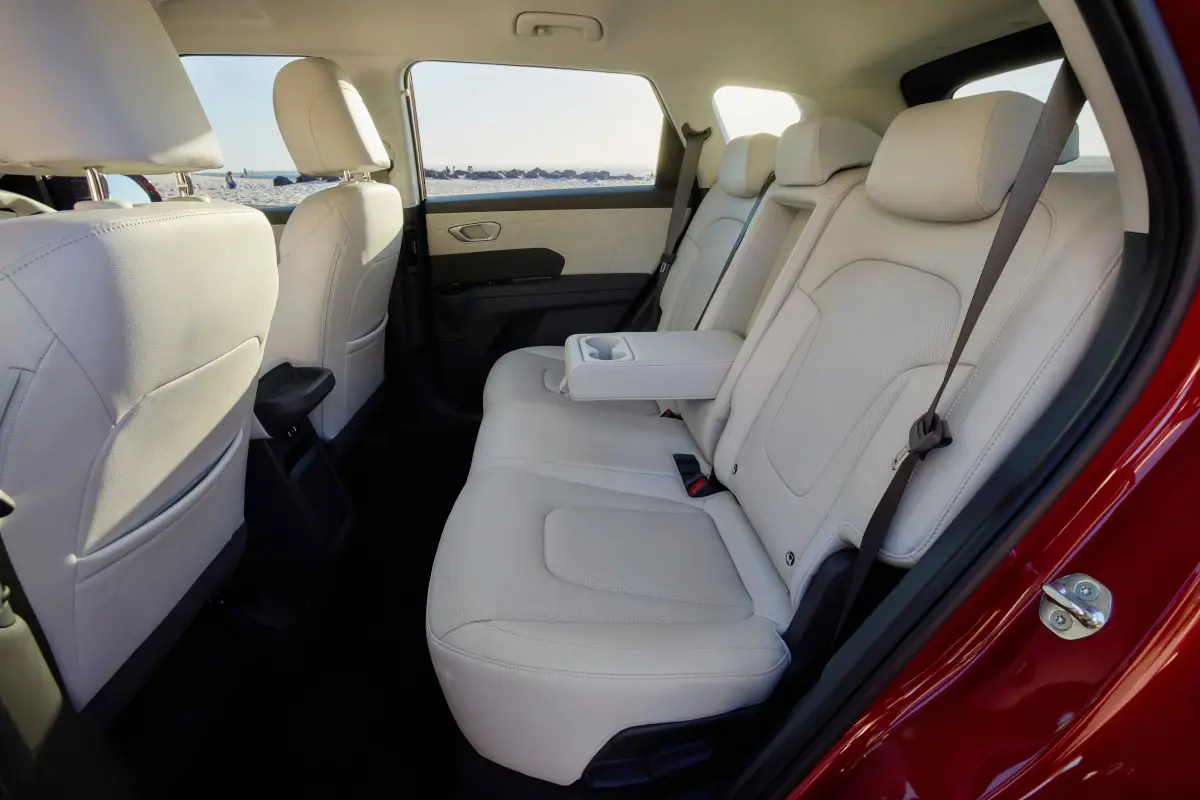 Rear seats in the Hyundai Elexio Elite. Source: Hyundai Australia
Elexio is the first passenger vehicle for the Australian market that is manufactured in China, sourced through their Beijing Hyundai 50/50 joint venture with BAIC Motor. The Hyundai Mighty electric truck was the brand’s first Australian vehicle of any type sourced from China when it arrived here back in 2023.
As Joshua Hill reported in November 2025, the Elexio is the first vehicle announced as part of Hyundai’s ‘In China, For China, To Global’ new energy vehicle (NEV) strategy, so we will most likely see more EVs from Hyundai made in China arriving here in the future.
To ensure the vehicle is well matched for Australia’s uniquely challenging roads, Elexio underwent a local ride and handling program to develop bespoke Australian suspension and steering tunes. Hyundai says this results in “A superb blend of comfort, stability, refinement and handling.”
Exterior styling for Elexio is somewhat of a departure from the rest of Hyundai’s EV lineup, traditionally showcasing signature pixel design patterns throughout their front and rear lighting elements.
In contrast, the pixel theme can only be spotted on the Elexio rear horizontal light bar. Overall, the Elexio has a more mainstream appearance, which Hyundai is hoping will give it broader market appeal than vehicles like the Ioniq 5.
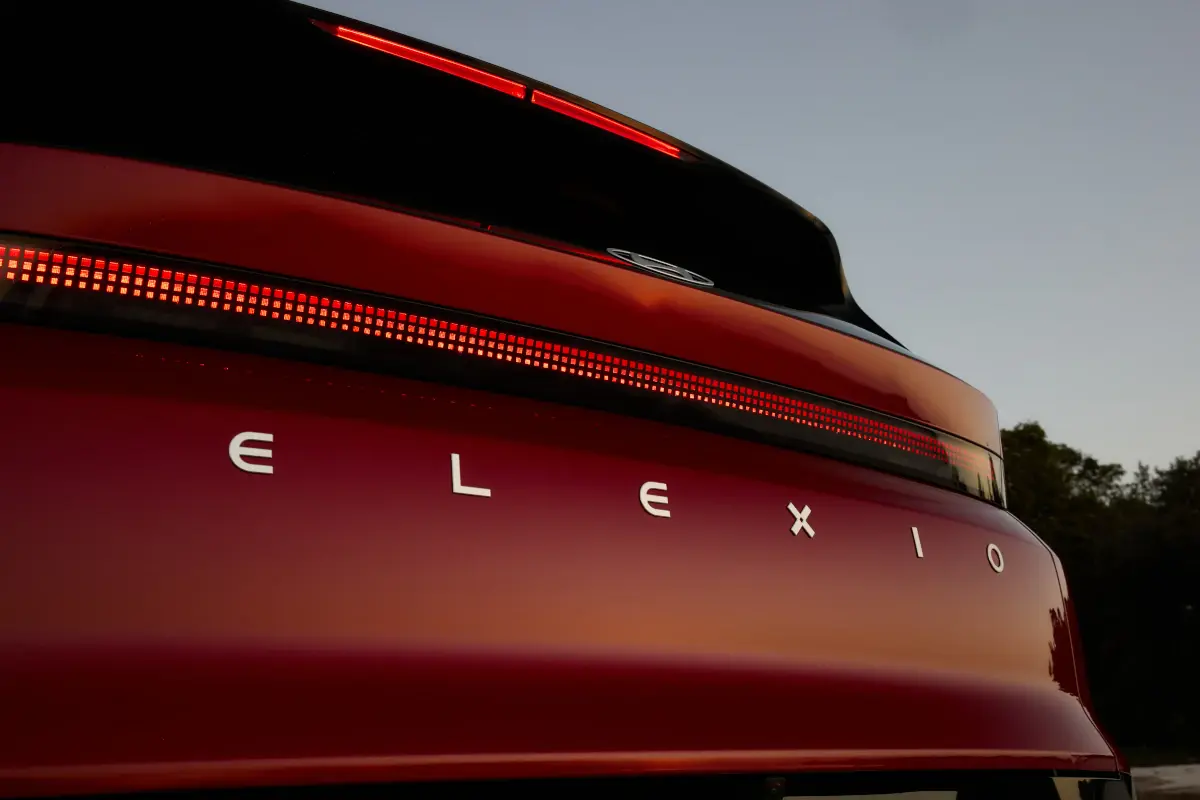 Rear light bar on the Elexio showing pixel design pattern. Source: Hyundai Australia
Five exterior colours are available to order, Crystal White as standard, or optional mica premium paint for $750 in a choice of Medium Grey, Pebble Blue, Phantom Black and Dragon Red pictured above.
Elexio’s interior styling is a mixture of futuristic and minimalist approaches according to Hyundai, incorporating richly tactile materials throughout the Elite variant cabin. These include leather appointed seats with heating and ventilation in the front row, as well as a heated leather steering wheel and synthetic suede dashboard.
The upcoming base Elexio variant primarily differs in terms of seating material and convenience, as it will come with cloth seats instead of leather, and no seat heating, ventilation or memory functions. A single wireless phone charging pad instead of 2 and a manual tailgate round out the specification sheet differences.
Boot space measures 506 L, expanding to 1,540 L with the 60/40 rear seats folded flat. A shallow recess underneath the boot floor provides room for charging cables, while there is no additional storage space under the bonnet.
For smaller items, the Elexio cabin includes a number of handy storage areas including shelves on the passenger side of the dashboard, lower centre console, rear of the centre console, cup holders on the rear door armrests and a rear lower draw compartment.
Another first for Elexio is the debut of a next generation Android Automotive based Connect-C infotainment system, taking advantage of an enormous 27-inch panoramic wide-screen display. This may take some adjustment, located more towards the passenger, though key driver information is shown in a panel on the right-hand section of the screen.
A new generation projector-based head-up display provides key information to the driver in place of a traditional instrument cluster. Vehicle speed, remaining range, gear selected and speed limit are displayed in the driver’s line of sight, along with configurable views for maps, media or turn by turn directions.
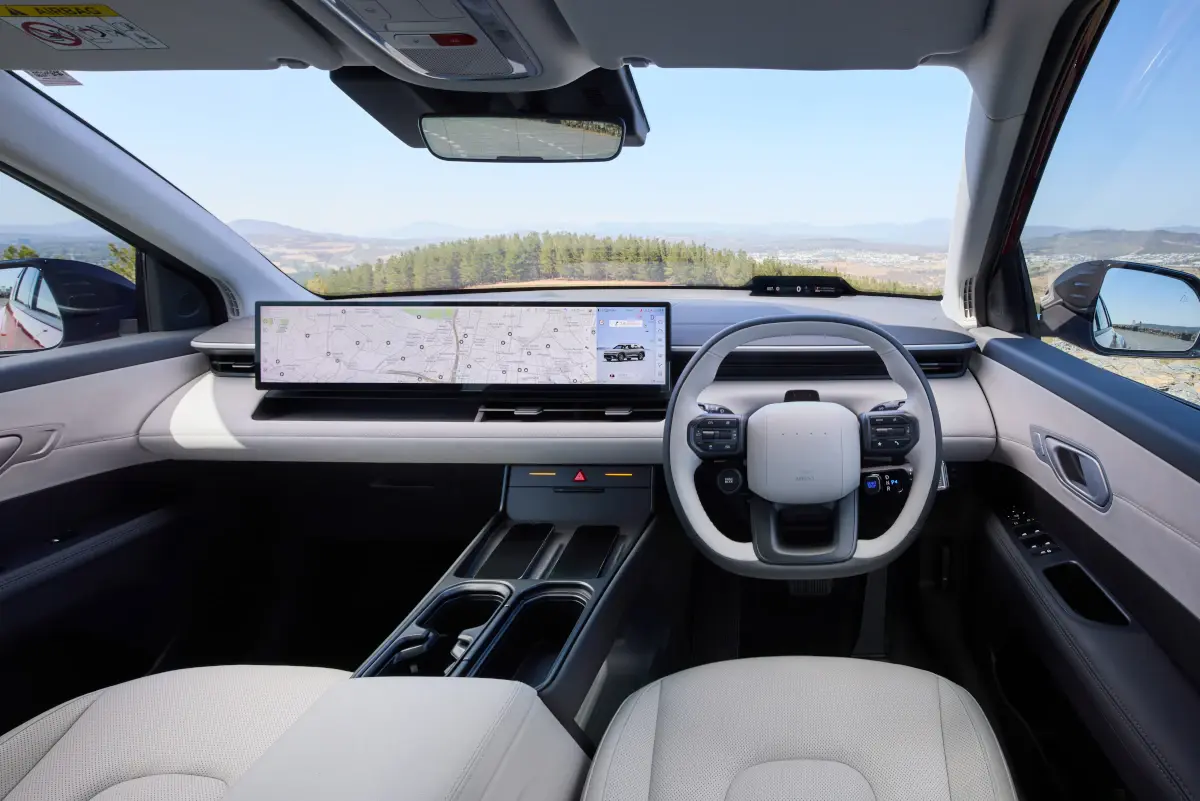 Hyundai Elexio Elite front dash and screens. Source: Hyundai Australia
Hyundai Bluelink connectivity is included with Elexio, as well as over the air updates and Hyundai Digital Key 2.0 Touch, which turns smartphones enabled with NFC technology into additional keys to lock/unlock and start the vehicle. Unfortunately Elexio misses out on the more advanced touchless version of digital key based on ultra wideband technology.
Being a family-focused SUV, the Elexio has strong safety credentials, fitted with 9 airbags and a long list of advanced driver assistance systems. The vehicle has now been awarded a 5-star ANCAP safety rating, scoring an average of 84 across the four categories tested, including scores of 88 and 86 for adult and child occupant protection respectively.
Elexio Elite is now on sale at Hyundai dealers, with the first customer deliveries expected to take place in the next week or two. The launch offer of $59,990 driveaway for this variant is available until March 30th 2026, after which pricing will revert to $61,990 plus on-road costs.
The current driveaway offer for Elexio Elite represents a significant saving of roughly $7,500 according to the car price calculator on Hyundai’s website. When the base Elexio variant joins the lineup during the second quarter of 2026, it will start at $58,990 plus on-road costs.
Our first impressions after spending time with the Elexio during the media launch event will be published in an upcoming test drive report at the end of this week.

Tim has 20 years experience in the IT industry including 14 years as a network engineer and site reliability engineer at Google Australia. He is an EV and renewable energy enthusiast who is most passionate about helping people understand and adopt these technologies.