
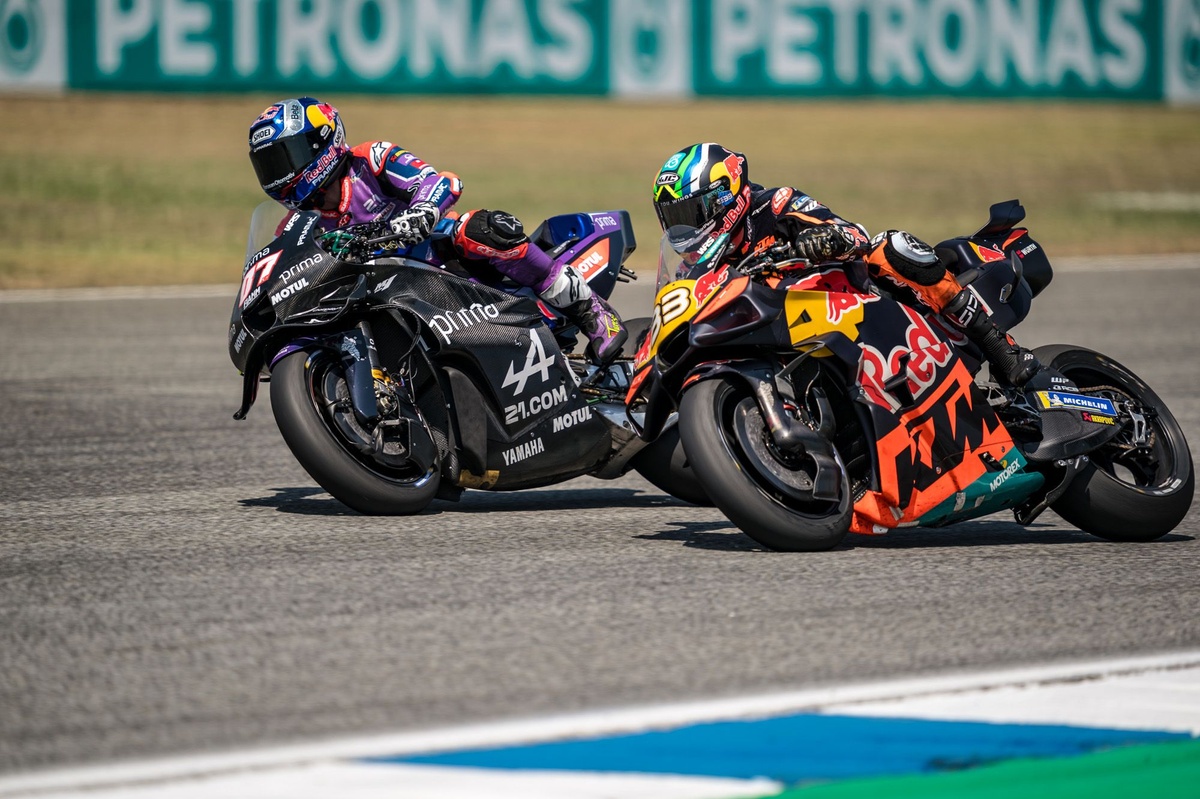
Pre-season for the 2026 MotoGP campaign wrapped up over the weekend with two days of testing in Buriram. With manufacturers having already introduced the bulk of their new developments at the Sepang test earlier this month, the focus shifted to incremental updates, locking in aero specification and set-up work for the Thailand Grand Prix.
A clear order has now begun to form, with manufacturers having a better understanding of the strengths and weaknesses of their 2026 bikes. Of course, Buriram’s start/stop track layout isn’t the most representative yardstick for a 22-round campaign, but the trends were strong enough to provide a somewhat clear picture of the forthcoming season.
Ducati and Aprilia are miles clear
The law of diminishing returns seemed to have had little effect on MotoGP’s two Italian manufacturers, who have pulled away from their rivals.
It was already clear in Sepang that both Ducati and Aprilia had made tangible steps forward with their 2026 bikes, but the real scale of their advantage has only become evident now. Whether it was one-lap pace or race simulation, Ducati and Aprilia were in their own league, and it appears rival manufacturers have accepted that they are out of reach.
All Ducati riders seem confident heading into the new season. Even Franco Morbidelli, riding last year’s GP25, spoke of finding four tenths over the winter. This kind of confidence is impressive, given the specific demands of each rider in its roster. Alex Marquez, for instance, has long decided to stay on his 2024-spec aero package, while the likes of Marc Marquez and Francesco Bagnaia were still deliberating their options in Buriram, acknowledging that the 2026 version was faster if unproven.
It wasn’t a flawless weekend for Ducati, however, and some riders feel there are still details to iron out ahead of the Thailand opener. For Bagnaia, the main concern is inconsistent braking feel, while Alex Marquez admitted he has had to adjust his riding style on corner entry to fully exploit the GP26.
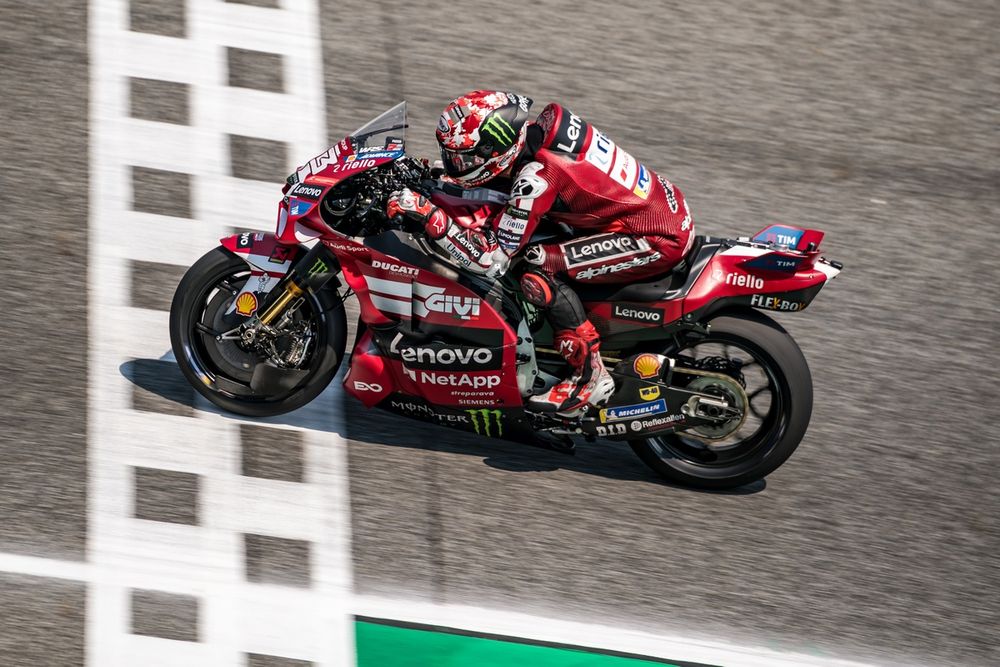
Ducati is strong, but there are still concerns
Photo by: Steve Wobser / Getty Images
Aprilia, meanwhile, looks ready to challenge from round one, rather than joining the battle midway through the campaign. Alex Marquez feels Ducati should already be prepared to lose some races to Noale, and instead focus on making up ground elsewhere. Aprilia has managed to improve the RS-GP everywhere, but one area that has caught its rivals’ attention is the bike’s superior speed on corner entry.
Aprilia will also derive encouragement from the fact that both Ai Ogura and Jorge Martin are now back in the game, and it can cut its reliance on Marco Bezzecchi. Even Raul Fernandez, who was feeling uncomfortable with the new package in Sepang, seems to have got the hang of the RS-GP26.
Ogura was easily among the fastest riders over long runs, along with Bezzecchi, but it’s hard to derive a direct comparison with the Ducatis; Marc Marquez’s race simulation was thwarted due to a crash, while Bagnaia completed his long run on Saturday, when track conditions were presumably inferior.
Martin back to full fitness, but Marquez’s situation more complicated
After two new surgeries over the winter break, you could have been forgiven for assuming that Martin was going to face a slow start to pre-season testing. But even after missing three days of running in Sepang, the Spaniard quickly dispelled all doubts about his physical fitness at Buriram.
Marc Marquez’s situation is more nuanced. The seven-time MotoGP champion is still figuring out his new ceiling after a crash in Indonesia cut short his 2025 campaign and sidelined him from a MotoGP bike for five months
The world champion was also able to quickly find his feet on the RS-GP – a bike he never fully mastered during his disrupted 2025 campaign. In fact, Martin sounded more assured than at any stage last year, and believes he can finally unlock his full potential as the season progresses.
That said, he is aware that he is not close to returning to winning ways just yet. But his early target of top-six finishes, against a strengthened Ducati line-up, puts him on the right trajectory.
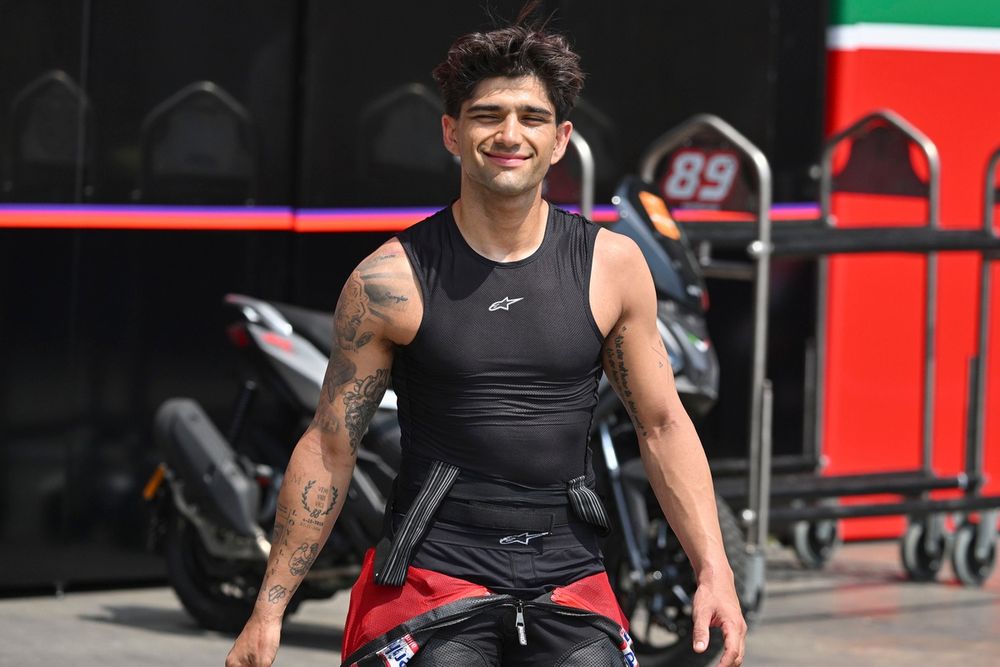
Martin looks set to bounce back from his horror 2025
Photo by: Gold and Goose Photography / LAT Images / via Getty Images
Marc Marquez’s situation is more nuanced. The seven-time MotoGP champion is still figuring out his new ceiling after a crash in Indonesia cut short his 2025 campaign and sidelined him from a MotoGP bike for five months. A stomach bug during the Buriram weekend only added to his woes. The Spaniard suffered three crashes across the two days, all of which he pinned down to lapses in concentration. The last of his crashes interrupted his race simulation, which he had begun while already feeling tired.
Even so, Marquez’s underlying pace was strong and his feedback on the 2026 Ducati mirrored that of his peers. He remains the outright favourite for both victory in Thailand and the 2026 title.
KTM improving but it’s in no man’s land
KTM has made clear steps forward with the RC16, but it now finds itself even further behind Ducati and Aprilia this season. Pedro Acosta described the 2026 KTM as “promising”, reporting the bike was feeling faster and easier to ride. More importantly, he felt KTM had finally made progress in fixing its tyre wear issues.
If other KTM riders felt the same, the Austrian manufacturer could have been encouraged. However, Acosta’s feedback was something of an outlier, with the rest of the squad reporting different issues.
Maverick Vinales will definitely be one of KTM’s strongest riders this year, but he felt he wasted a lot of time re-evaluating the same components he initially tried at Sepang. This left him with little time to complete his own preparations for the new season – including getting the hang of the electronics package. He also struggled to use the rear tyre to stop the bike, leading to severe tyre wear issues. While his sprint simulation was respectable, his tyre was “cooked” when he tried to replicate a full grand prix distance.
The situation was worse for Vinales’ Tech3 team-mate Enea Bastianini, who had to revert to his base set-up after “nothing worked” for him at Buriram. Binder was having a tough outing too, until a late set-up change transformed his test and allowed him to go “so much quicker than he has been in a long time”. Still, he has a lot of work to do to close the gap to his team-mate Acosta and Vinales.
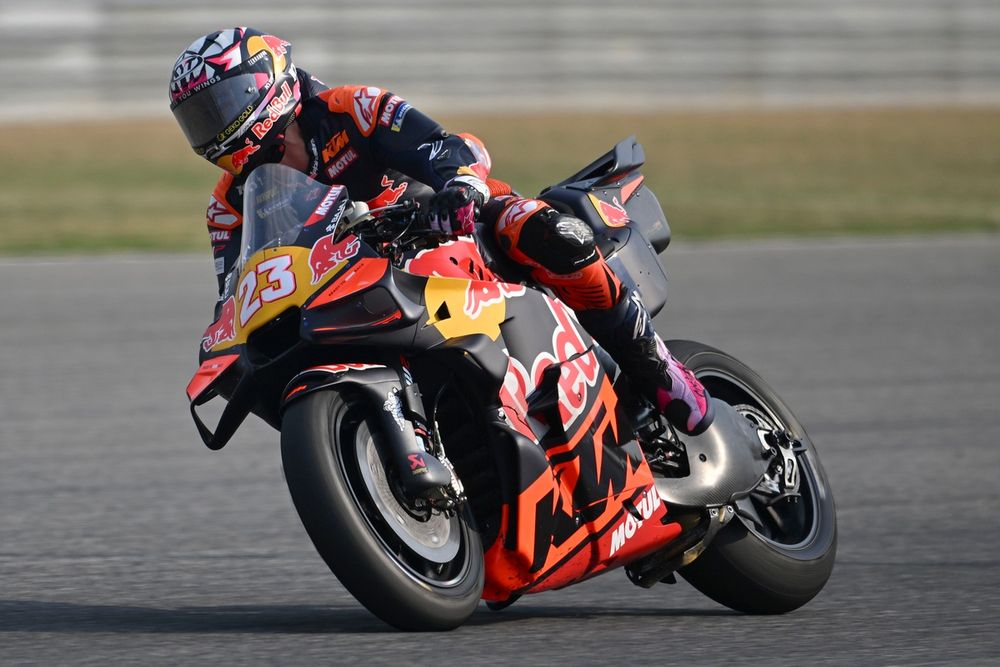
KTM is firmly in the midfield
Photo by: Gold and Goose Photography / LAT Images / via Getty Images
Buriram has never been KTM’s best track, and with ambient temperature expected to peak at 34C at Buriram, the RC16s won’t be troubling the frontrunners this weekend.
Honda still can’t fix an underlying issue
While Honda seemed upbeat after its performance in Sepang, a track where it carries out many of its private tests, Buriram provided a sterner reality check.
Make no mistake: Honda made noticeable gains over the winter. The engine now delivers more torque, the aero package is more aggressive, and the improved top speed should aid overtaking under braking. Yet, with KTM and other rivals improving, Honda’s overall position has little changed from last year.
The scale of challenge Yamaha faces this year is daunting, as the Buriram test exposed just how far behind the Japanese marque is with the development of its 2026 MotoGP bike
Joan Mir explained how the RC213V was getting bogged down by the exact same grip issues as last year, which are going to be exacerbated when Moto2 and Moto3 leave marbles on track during the race weekend.
This, chiefly, is the bike’s biggest weakness now, and it also affects riders in the early acceleration phase. Mir suggested that only a “revolution” in the area could address the problem – but a solution of this scale is unlikely to arrive before 2027.
Compared to the factory riders, Johann Zarco remained more optimistic in the outright potential of the RC213V. However, the Frenchman struggled to extract the maximum out of his bike in Buriram, even if he drew encouragement from the fact that he and LCR know what direction they need to take.
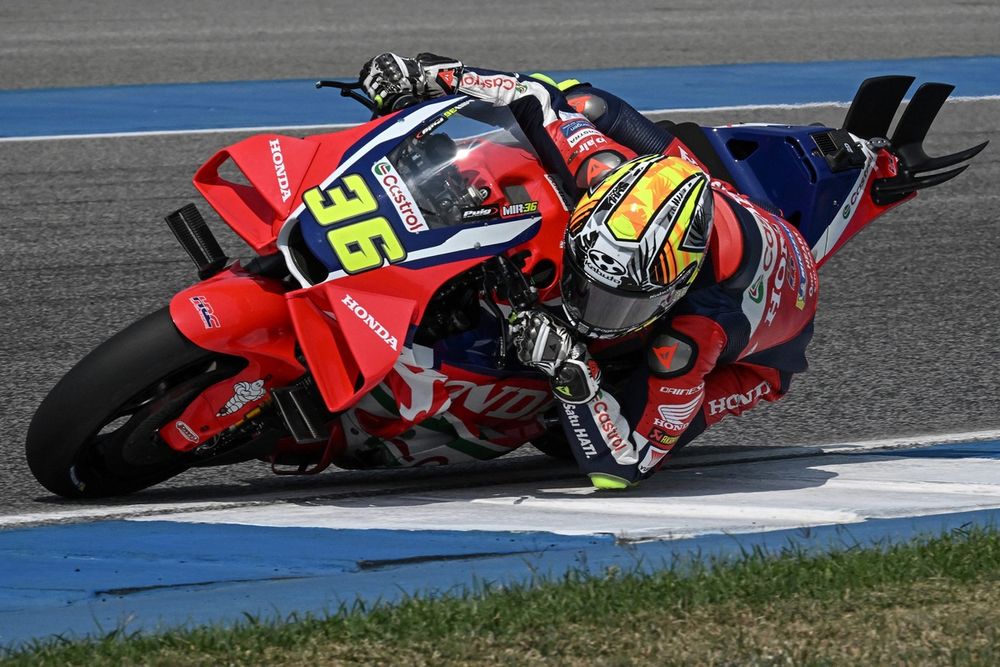
Honda is still expected to be the fourth-best manufacturer
Photo by: Lillian Suwanrumpha / AFP via Getty Images
Yamaha’s struggles are worse than previously thought
The scale of challenge Yamaha faces this year is daunting, as the Buriram test exposed just how far behind the Japanese marque is with the development of its 2026 MotoGP bike.
Riders were unanimous in their claim that the new V4-powered M1 is not ready – and won’t be for several months. Turning the package competitive could take much longer, and the first half of the season would certainly be an extended testing programme for Yamaha.
The frustration was most evident in Fabio Quartararo’s body language, with the 2021 world champion caught showing the middle finger to his bike on Saturday.
Yamaha had to redesign the entire bike around the V4 motor and that has fundamentally altered the bike. Some of the strong points of the M1 haven’t carried over to the new version, and it struggles in virtually every area. While the bike is still faster than its predecessor over a single lap, riders are particularly concerned that Yamaha has actually gone backwards over long runs.
The V4 engine will remain underpowered until an upgrade arrives at an unspecified point in the season, while other areas of the bike also require significant refinement.
Much of the development workload now rests on Jack Miller, but Yamaha’s 2026 woes have compounded the struggles of his new team-mate Toprak Razgatlioglu, who has already been finding it hard to adapt to his new environment in MotoGP.
Read Also:
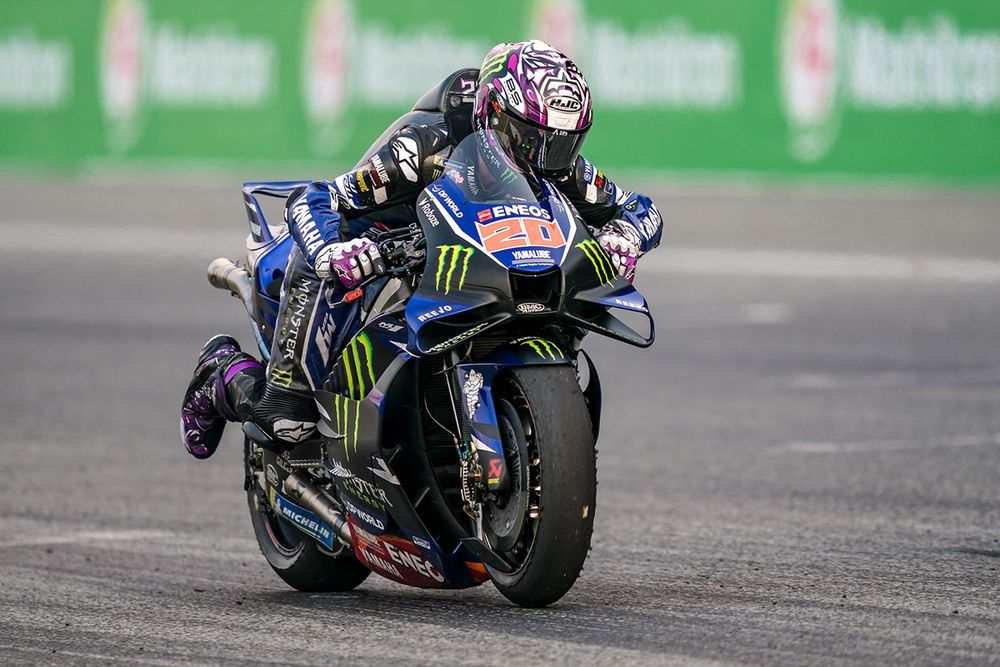
Yamaha is firmly rooted to the back
Photo by: Steve Wobser / Getty Images
We want to hear from you!
Let us know what you would like to see from us in the future.
– The Autosport.com Team