
February 24, 2026 — 11:55am
Save
You have reached your maximum number of saved items.
Remove items from your saved list to add more.
Save this article for later
Add articles to your saved list and come back to them anytime.
Got it
AAA
Key pointsJamal Rifi has revealed he has a passport for a 35th Australian linked to ISIS: Yusuf Zahab, a Sydney man missing from Syrian custody.A mission to rescue 34 women and children failed after the Syrian government blocked the convoy’s departure on February 16.Rifi claims Prime Minister Anthony Albanese’s hostile rhetoric led Syrian officials to fear the group would be left stranded.While the government maintains strong opposition to the return, Rifi argues bringing the cohort home would ensure long-term national security.
The Sydney doctor trying to repatriate the 34 Australian women and children associated with Islamic State has revealed he also took a 35th passport with him to Syria – for a young male prisoner, Yusuf Zahab.
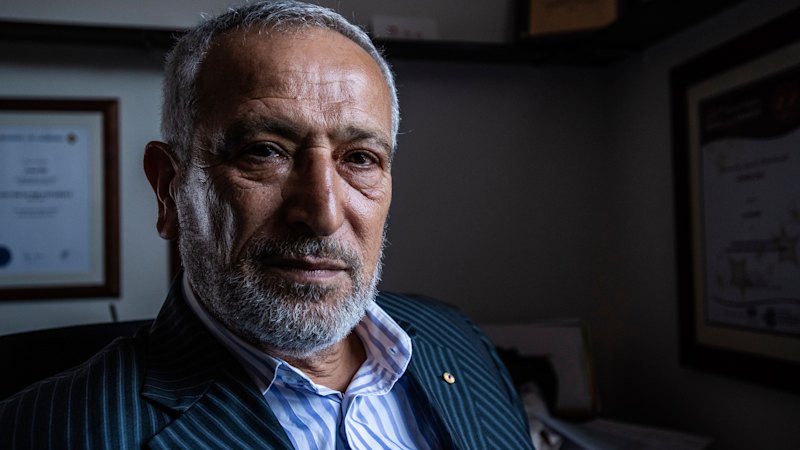
Dr Jamal Rifi, a medical doctor and friend of Home Affairs Minister Tony Burke, has spoken up for the first time from an undisclosed location in the Middle East, telling this masthead he was “shattered” that his mission had not succeeded.
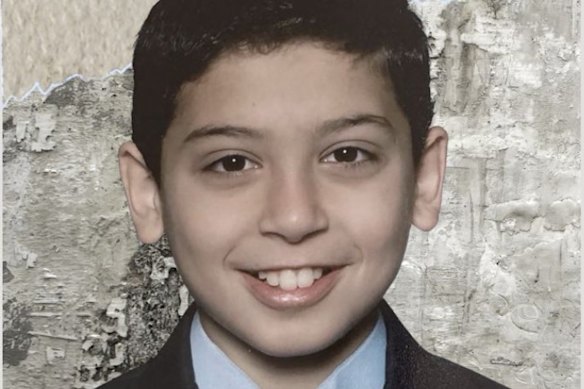 Yusuf Zahab in a school photograph from Sydney, Australia, before he was taken to Islamic State (ISIS) territory as a child. This photograph was produced as part of the SBS Dateline program “Finding Yusuf”.SBS
Of Yusuf, who was taken to Syria by his parents when he was a 12-year-old schoolboy, Rifi confirmed, “we do have a passport for him”. However, the now 23-year-old was no longer in the Syrian men’s prison where he had been locked up.
“We went for 35, including a minor who was taken from his mother and put in adult prison – Yusuf,” Rifi said.
“We couldn’t find him. We searched for him and then later on it came to us that he was in Iraq.“
Yusuf’s presence in Iraq has not been officially confirmed.
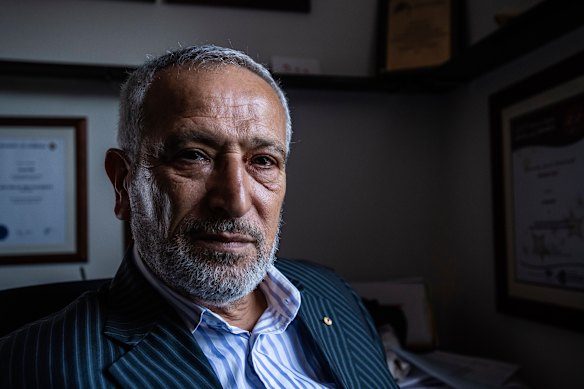 Jamal Rifi.SMH
Fearing the chaotic political situation in Syria, the American military has paid for Iraq to take more than 5000 former Islamic State-related prisoners out of the country. This includes 13 Australians. Rifi said Yusuf was one of them.
Asked if he regretted anything about his so-far unsuccessful mission, Rifi said: “I’d do it 1000 times.
“I don’t regret, but I regret we had to take them out and put them back in [the camp]. I regret not being able to free Yusuf to return to his mother … The children shouldn’t suffer from the sins of fathers or mothers and Australian children shouldn’t live in such an environment for any length of time. And they’ve been there seven years.”
Rifi said he and family members had tried to do “everything by the book,” having communicated with the International Committee for the Red Cross.
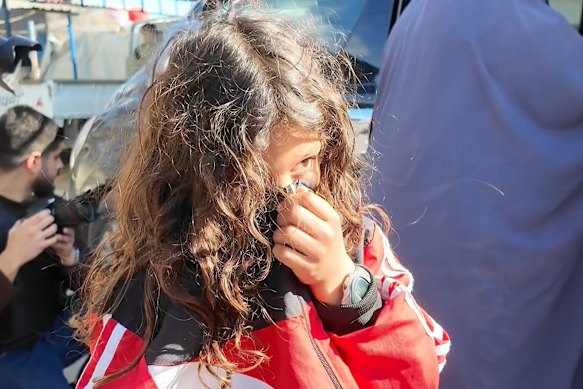 An Australian child shields their face as the group prepared to leave the al-Roj camp last Monday.
“The only obstacle was we didn’t have anything from the Australian government,” he said.
On the day of the departure, February 16, Rifi said the premature media release by officials at al-Roj camp about the family repatriation had angered the Syrian regime in Damascus, prompting them to turn the convoy around 50 kilometres from the camp.
However, he confirmed the strong rhetoric of Prime Minister Anthony Albanese since then had prompted the Syrian government to refuse their travel to Australia.
“We’re making some inroads, but the biggest obstacle is the prime minister’s statements,” Rifi said. “The Syrian side is asking if he doesn’t want them, we don’t have anything from them, why should we help them?”
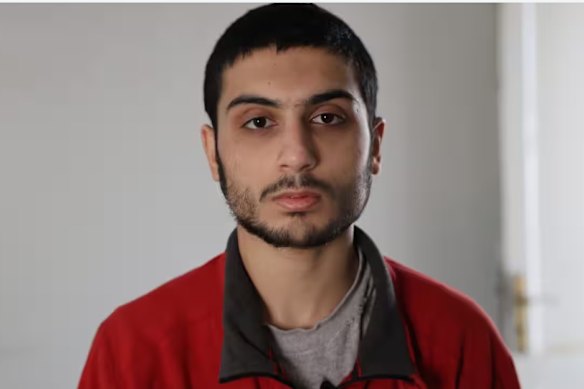 Yusuf Zahab, when he was being interviewed by SBS Dateline in a Syrian prison in 2024. He has since been moved to Iraq.SBSOn the ground
Rifi said the Syrians feared the Australian government would not accept the women and children, and they would be stuck in a third country.
“They were concerned the stopover country might not let them in because of all the negative statements that were happening in Australia. They didn’t want them to get stuck forever,” Rifi said.
Albanese has said during multiple interviews in the past week that the government would not repatriate the families, and that he has “nothing but contempt” for the women who took their children into Islamic State territory.
He has also said that, if they do manage to make it back, the fact they were citizens and were travelling on Australian passports meant the government would have to accept them.
Rifi confirmed that apart from issuing passports, no Australian government representative had made any effort to help.
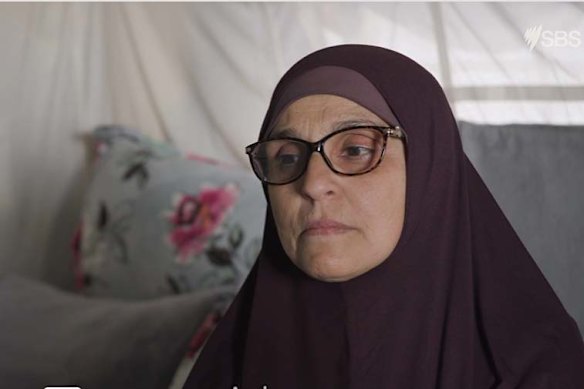 Yusuf’s mother Aminah Zahab is among the 11 women at al-Roj camp. She was interviewed by SBS Dateline in 2024.SBS
“If we had a piece of paper from the government they would have been home by now,” he said. “But there has been no support, no paper, no phone calls. Nothing. They said they got there on their own, had to get themselves home.”
Passports had been granted to the women, children and Yusuf Zahab. The process had taken months, he said, and they had only picked them up in recent weeks.
Related Article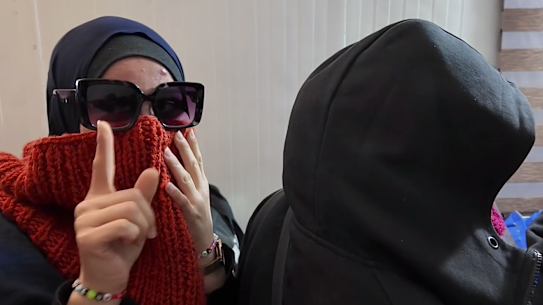
“Before that we had to apply for citizenship by descent for the children,” Rifi said.
Uncertain futures
Yusuf was taken from Bankstown into Syria by his parents, Aminah and Hicham Zahab, to join two older brothers. Aminah has since said her older sons tricked her.
When interviewed in 2024 by the SBS Dateline program, Yusuf said that, as a child “I didn’t even know what ISIS is. I didn’t even know Syria and Iraq exists in my life.” While living in the so-called caliphate, he said he had stayed mostly at home, playing PlayStation and watching movies on a laptop.
Rifi confirmed that the events of 2022 – when four women and 13 children were returned to western Sydney, prompting a backlash from a number of local mayors – had hardened the attitude of the government against the families.
“It was not based on anything but politics,” he said.
Rifi still had hope that the family repatriation would succeed, but he also feared the internal politics of Syria might change things. The camp is in a portion of Syria controlled by an autonomous Kurdish authority, and the interim Syrian government is hoping to bring it all under the control of Damascus.
“The camp is going to shut down,” Rifi said.
Asked when, he said: “Things are so fluid. It changes by the minute. I know that [Syrian] president Ahmed Al Sharaa had representative today with SDF [Kurdish forces] leadership in Damascus, they are talking about reintegration. Things might be faster than we expect.”
Human Rights Watch is concerned that the closure of the al-Roj camp could expose 2000 women and children to “serious risks, including trafficking, exploitation, and recruitment by armed groups”.
“Unless there is evidence they have committed a crime, all residents regardless of nationality need to be given support to return, reintegrate, rehabilitate, and rebuild their lives,” the organisation said.
Asked about his relationship with Burke, Rifi said the minister had not been aware of his mission to Syria.
“We are friends, [but] I wouldn’t do him any favours. He does what he needs to do as a minister, and I do what I need to do as a human.”
Coalition policy
Rifi also commented on the opposition’s proposal to jail those assisting IS women and children to return. He agreed that he would likely be captured by the policy.
“It’s going through a race to the bottom,” he said. “It’s dog-whistling policies.”
Taylor told Sky News on Monday night that there was a “real risk” that the Australians in Syria had been radicalised, arguing that his proposed laws should be tested as a matter of national security.
“Bringing these people to Australia will be bringing back people with links to ISIS. That is not acceptable,” he said.
ASIO and the US military have both expressed the opinion that the women and children are not a significant threat now, but that if they are left in the camps, some might be re-radicalised against Australia and the West.
Albanese said on Tuesday that every attempt had been made to make Australia’s counterterrorism laws as strong as possible while remaining constitutional.
“The full force of the law has been implemented to the extent that we can,” the prime minister told ABC Radio National, dismissing the Coalition’s proposal as unworkable.
Professor of international law at ANU, Donald Rothwell, said the Coalition’s proposal was unlikely to face a constitutional challenge because it would probably operate under the same mechanism that allowed the government to prohibit financing terrorism.
He said unintended consequences were a greater risk, as complexity around defining terror hotspots could mean innocent Australians got caught up. Rothwell also noted the legislation was extremely unlikely to pass.
Asked about the prospect of returns to Victoria Premier Jacinta Allan said state officials were talking to their commonwealth counterparts, and her government would look at it “through the framework of community safety coming first”.
“But when it comes to talking about the children of these individuals. We do have to give special consideration of the wellbeing of those children. The education, their health care.”
With Liam Mannix
Cut through the noise of federal politics with news, views and expert analysis. Subscribers can sign up to our weekly Inside Politics newsletter.
Save
You have reached your maximum number of saved items.
Remove items from your saved list to add more.
 Michael Bachelard is a senior writer and former deputy editor and investigations editor of The Age. He has worked in Canberra, Melbourne and Jakarta, has written two books and won multiple awards for journalism, including the Gold Walkley.Connect via X or email.
 Brittany Busch is a federal politics reporter for The Age and Sydney Morning Herald.Connect via email.From our partners