
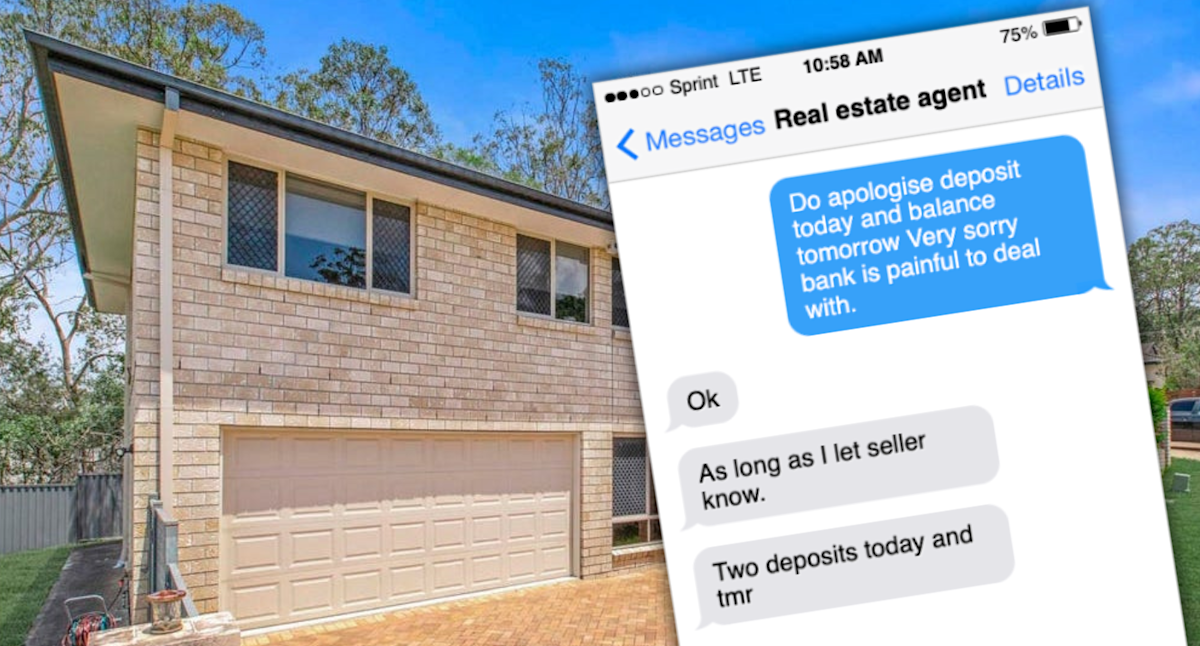
 The Queensland man had hoped to purchase a house in Shailer Park and had texted the real estate agent regarding payment of the deposit. (Source: Realestate.com.au/Yahoo Finance)
Australian property buyers are being urged to understand their contractual obligations after a Queensland man lost his entire $98,500 house deposit due to one costly mistake. When you buy a property, the deposit is typically due on the day you sign the contract.
In a Supreme Court of Queensland decision, buyer Stephen Gary Evans was ordered to forfeit his $98,500 deposit to the vendor Yea Lan Jan after he paid it two days late. The parties had entered into a residential property sale contract, which required a 10 per cent deposit to be paid when the contract was signed by both parties.
Innova Legal principal solicitor Fadi Chahine told Yahoo Finance it was a “harsh outcome” for the buyer, but legally, the vendor was within their rights under the contract.
RELATED
“It’s a common legal principle, but it’s not a very common outcome. A lot of vendors don’t pursue it, even though they’ve got a right to under the contract. So it’s a pretty unique case,” he said.
Chahine said each state had their own standard set of contracts for property transfers and contracts could also have special conditions.
The case serves as a warning to other buyers to make sure they don’t make the same mistake.
“Every contract is unique, make sure you’re across every deadline and obligation that you have under the contract because breaching one of those can result in something like this,” Chahine said.
“Vendors usually have a right to enforce termination for a breach of an essential term under a contract, which is what happened here.”
Do you have a story to share? Contact tamika.seeto@yahooinc.com
Evans and Jan entered into a contract for the sale of a property at Shailer Park, with a purchase price of $985,000 and a deposit of $98,500.
Both parties signed the contract on January 22, 2024 at different times. The deal was confirmed the following morning on January 23, when the real estate agent sent an email to both parties and their lawyers confirming the property was under contract and requesting the buyer pay the 10 per cent deposit that day.
But Evans did not transfer the deposit that day. His bank informed him that afternoon, he would need to come into a branch if he wanted to increase his transfer limit from the $50,000 threshold. He told the court he didn’t have enough time to do it that day, so he did not transfer any money.
Story Continues
 The Shailer Park house at the centre of the dispute. (Source: Realestate.com.au)
The following morning, January 24, Evans transferred $45,000 into the real estate agent’s trust account. He then sent a text to the agent apologising for the delay and stated the balance would be paid the next day as the bank was being “painful to deal with”.
The agent replied, acknowledging the message writing: “OK. As long as I let seller know. Two deposits today and tmr”.
Evans didn’t hear anything further from the agent and the building and pest inspection started that afternoon.
The next day, January 25, Evans transferred $40,000 and $10,000 into the agent’s trust account and got his brother to transfer the remaining outstanding amount of $3,500.
Three days later on January 28, the agent told Evans via text that Jan did not want to sell the house to him and was going to cancel the contract.
On January 29, Jan’s solicitors informed Evan’s solicitors that she had terminated the contract because Evans had failed to pay the deposit by the due date in accordance with the contract.
Evans took the matter to the Supreme Court to try and force the property sale to go ahead.
There was no dispute over the fact that Evans breached the contract by not paying the deposit by January 23.
The court found the real estate agent did not have the authority to change the contract terms, so the original deadline still stood.
Jan told the court she never authorised the agent to agree to any extension of time for the payment of the deposit. She also said the agent did not ask her to agree to an extension.
The court also rejected Evans’ argument that the “deposit” related to funds paid by January 23, so the funds transferred on January 24 and 25 didn’t fall under this.
The court found Jan was allowed to keep the deposit as the contract had been validly terminated due to Evan’s failure to meet the deposit deadline.
The case shows the importance of engaging a lawyer before you sign a contract to make sure you fully understand your obligations. You can also get your lawyer to negotiate an extension if needed.
“It’s good to get a lawyer engaged early because then that would avoid all of this happening,” Chanine told Yahoo Finance.
“You would know when your timeframes are and if you need more time, it could be negotiated before you even sign the contract so that way you’ve got more time to do it.”
The case also shows buyers can’t rely on statements made by the selling agent, with Chanine recommending buyers get their lawyer to speak to the vendor’s lawyer if they need an extension.
While it varies state to state and by contract, generally, Chanine said you have to pay the deposit on the day you sign the contract. Some contracts will give three days, or a cooling-off period.
Chanine said showing a payment or transfer remittance was usually sufficient and the funds don’t have to have been cleared.
“More practically for deposit payments, because deposits of 10 per cent are usually $100,000 or more, there are bank transfer limits, which is the issue that happened in this case,” he said.
If you have a few days to make the payment, Chanine recommended paying the instalments early before the due date falls.
You can also call the bank in advance and see if you can increase the limit, or go into the bank physically to make large transfers.
Get the latest Yahoo Finance news – follow us on Facebook, LinkedIn and Instagram.