
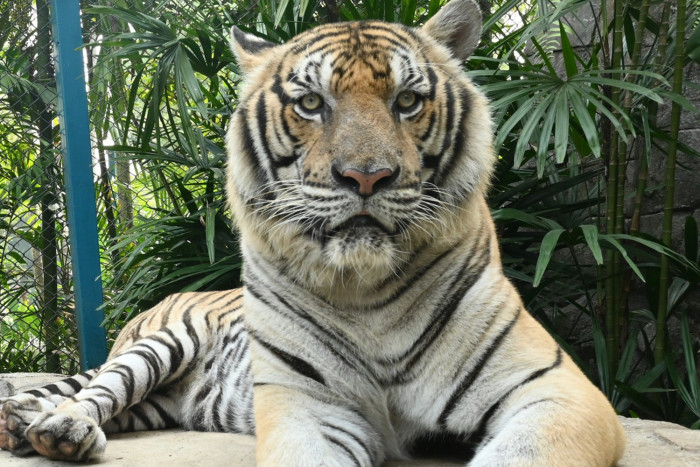
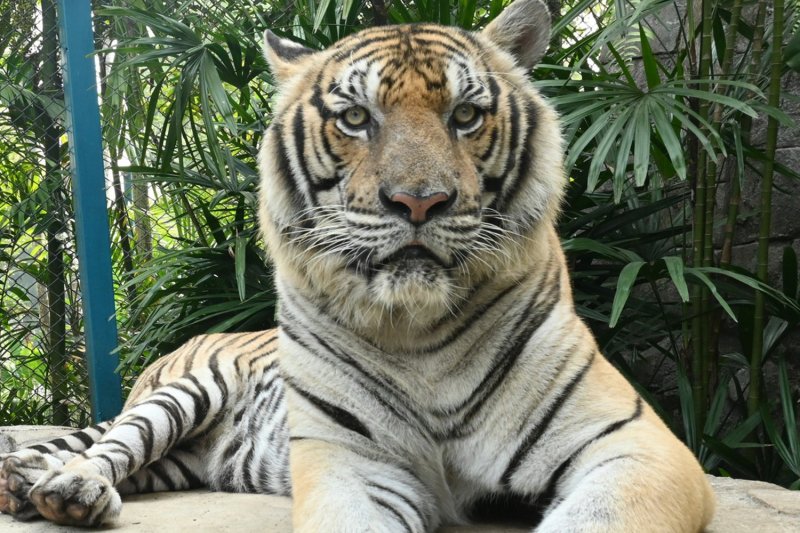
A regal resident of the Tiger Kingdom tourist attraction in Mae Rim district, Chiang Mai, where visitors were allowed to touch and take photos with the big cats. (Photo: Tiger Kingdom Chiang Mai Facebook)
The deaths of 72 tigers at a tourist attraction in Chiang Mai last week have been called into question, with the source of the virus and bacteria blamed for the fatalities yet to be clearly identified.
The chief suspect is the raw chicken meat supplied by a private farm and fed to all tigers kept at the two Tiger Kingdom facilities in the northern province, in Mae Rim and Mae Taeng districts.
The disposal process for all the tiger carcasses had been completed, Kritsayam Kongsatree, director of Conservation Area Management Region 16, said on Monday.
Initially the carcasses were incinerated, but there were too few cremation facilities available and this was later changed to burial, Mr Kritsayam said.
No skins or teeth were taken for sale, he said, and each burial site was marked with the tiger’s identification number for any future reference.
Disinfectants were applied following scientific protocols. Officials who had contact with the dead animals had shown no signs of illness, the director said.
On Saturday, the Provincial Livestock Office said the carcasses were found to be infected with canine distemper virus, complicated by Mycoplasma bacteria. Feline parvovirus was also earlier said to be present.
Agencies responsible for disease investigation, however, have not clarified where the pathogens originated.
This has led to public speculation about whether the outbreak may have come from shared food sources rather than the diseases, or whether the stated causes of death are even accurate. (continues below)

The sign at the entrance of the Tiger Kingdom, on Mae Rim Road in Chiang Mai, which is currently closed after mass tiger deaths there. (Photo: Panumate Tanraksa)
An early assumption, before laboratory results, focused on avian influenza potentially present in the raw chicken meat, but the results showed no genetic material detected in the meat samples.
On Sunday, Wisit Arsaithamkul, a veterinarian who said he was part of the team handling the tiger deaths, took to Facebook to comment on the issue, saying he was troubled by the disease surveillance and epidemiological management systems at the site.
He briefly recounted the incident and offered several observations.
The necropsies of the first few tigers, conducted within one to two days after symptoms appeared, did not reveal any severe lesions, he said. At that stage, possible causes included viral infection, toxins or bacteria.
“But when examining how tigers in Mae Rim and Mae Taeng, separated by 30 kilometres, could fall ill and die with identical symptoms, the likely factor pointed to their food source.
“Among more than 200 tigers in both locations that consumed this food, nearly all showed symptoms, except for just three cubs that were still nursing,” Mr Wisit said.
Tiger illnesses and deaths continued to increase while laboratory results were still pending, he said.
“When results confirmed the presence of the specific virus, necropsies for tigers that died later were no longer performed, to minimise the risk,” the vet said.
Addressing the current public debate, he said, “I admit that we cannot allow the country to risk the loss of livestock animals worth tens of billions just to protect a few hundred million baht worth of tigers.
“However, sweeping critical issues under the rug and failing to learn from the disease surveillance and epidemiology system will prevent any improvement in the industry.”
He also suggested that the real cause may have escaped scrutiny and continued to cause harm.
The site remains closed to the public.
Tiger Kingdom in Chiang Mai is operated by Khum Sue Trakarn Ltd, which also manages Tiger Kingdom Phuket and three Tiger Park attractions — two in Phuket and one in Pattaya.
The company was established with the stated aim to focus on the breeding and conservation of Indochinese tigers, often partnering with local zoos for animal exchange.
There were 246 tigers at the Chiang Mai facilities. By Feb 18, a total of 72 had reportedly died, the largest mass death of tigers on record.