
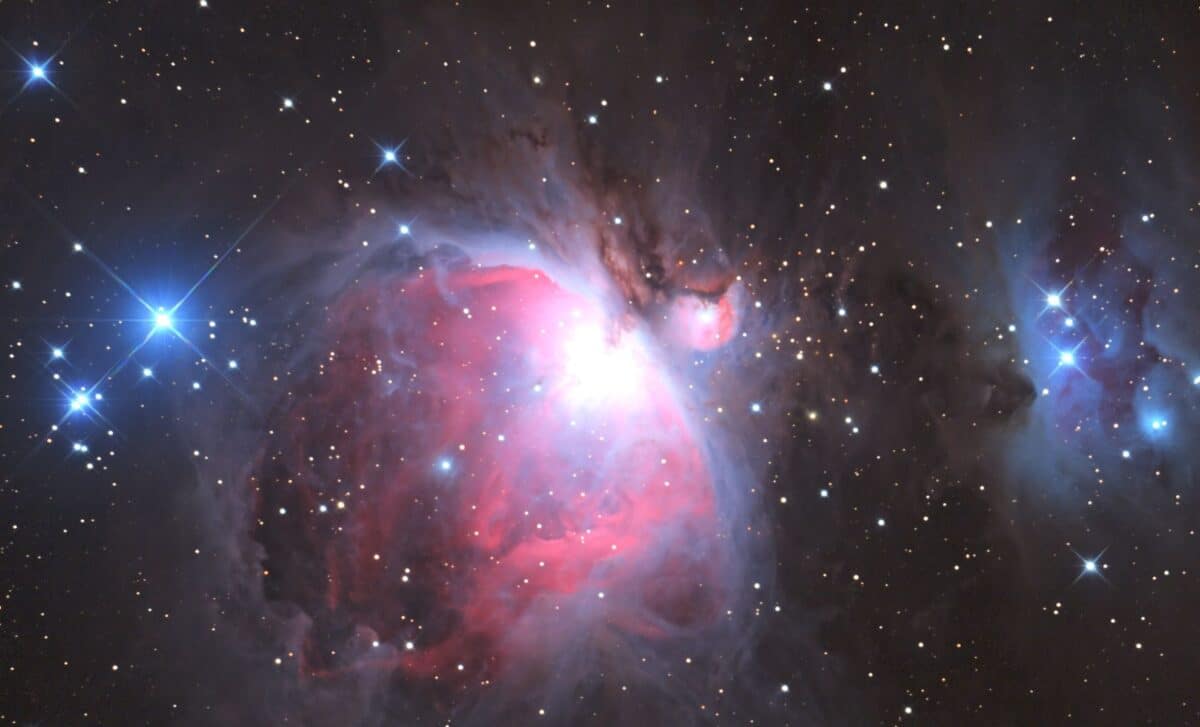
Astronomers have uncovered a hidden population of dusty, star-forming galaxies formed just one billion years after the Big Bang. This discovery, made possible through advanced technologies like the James Webb Space Telescope (JWST) and ALMA, suggests a new understanding of galaxy evolution, potentially rewriting a key chapter of cosmic history.
The international team of astronomers, led by researchers from the University of Massachusetts Amherst, identified these distant galaxies at the very edge of the observable universe. Their findings, published in The Astrophysical Journal Letters, have profound implications for how we understand the early universe and the timeline of galaxy formation.
A Breakthrough in Detecting Dusty Galaxies
Galaxies shrouded in cosmic dust have long been elusive to astronomers, primarily because the dust absorbs much of the light emitted by stars, making these systems difficult to detect with traditional telescopes. The newly discovered galaxies were formed just one billion years after the Big Bang, challenging earlier models that suggested star formation occurred more slowly in the universe’s early years.
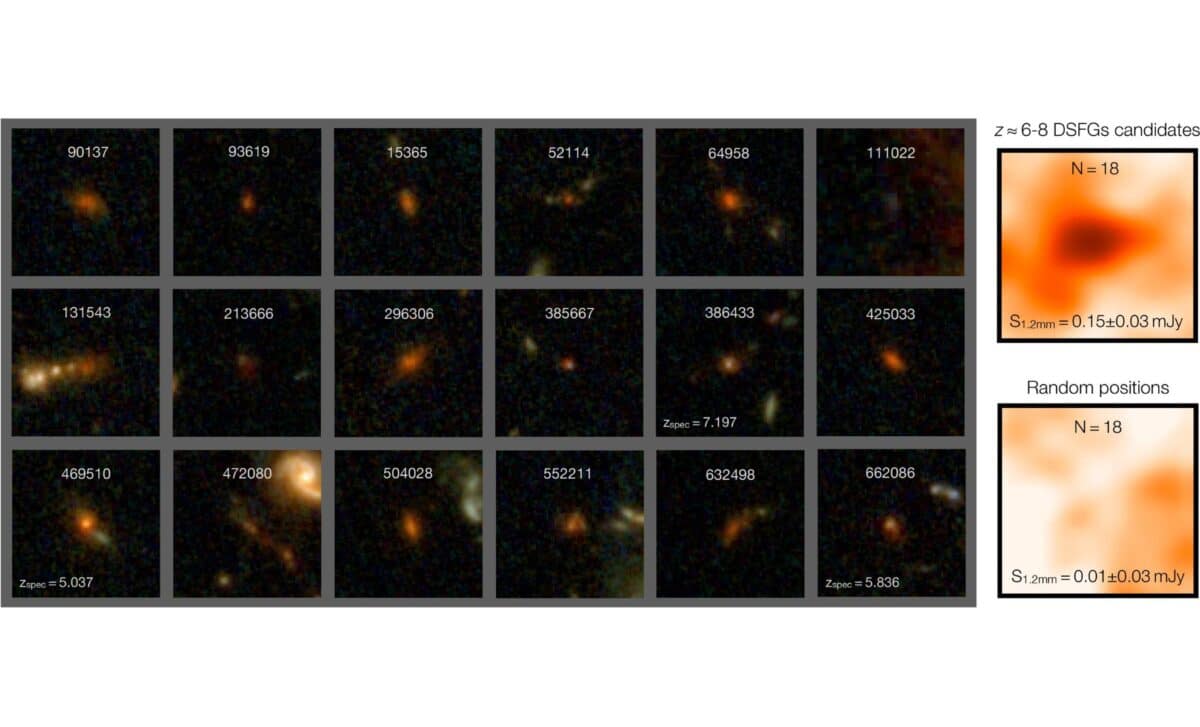 Stacking of CHAMPS 1.2 mm Data Reveals Dust-Enshrouded Galaxies at z ≈ 6–8 ©The Astrophysical Journal Letters
Thanks to the combination of ALMA’s submillimeter observations and JWST’s infrared capabilities, the team was able to detect these galaxies, which would have remained invisible to earlier telescopes relying on UV and visible light.
The researchers used ALMA to identify approximately 400 bright, dust-rich galaxies. They then turned to JWST to analyze the near-infrared data, pinpointing about70 faint candidates at the farthest reaches of the observable universe. These findings help fill a gap in understanding the evolution of galaxies, offering a glimpse into a transitional stage between young, star-forming systems and older, quiescent galaxies that had ceased producing stars.
Redefining the Cosmic Timeline
The discovery has significant implications for the way we think about cosmic evolution. According to Jorge Zavala, assistant professor of astronomy at UMass Amherst and lead author of the study, the newly identified galaxies might serve as a link between two previously known groups of galaxies: the ultrabright, star-forming galaxies that formed shortly after the Big Bang, and the more massive, “dead” galaxies that stopped forming stars roughly two billion years later. This suggests a possible new model for galaxy evolution, where these dusty galaxies play a key role in bridging the gap.
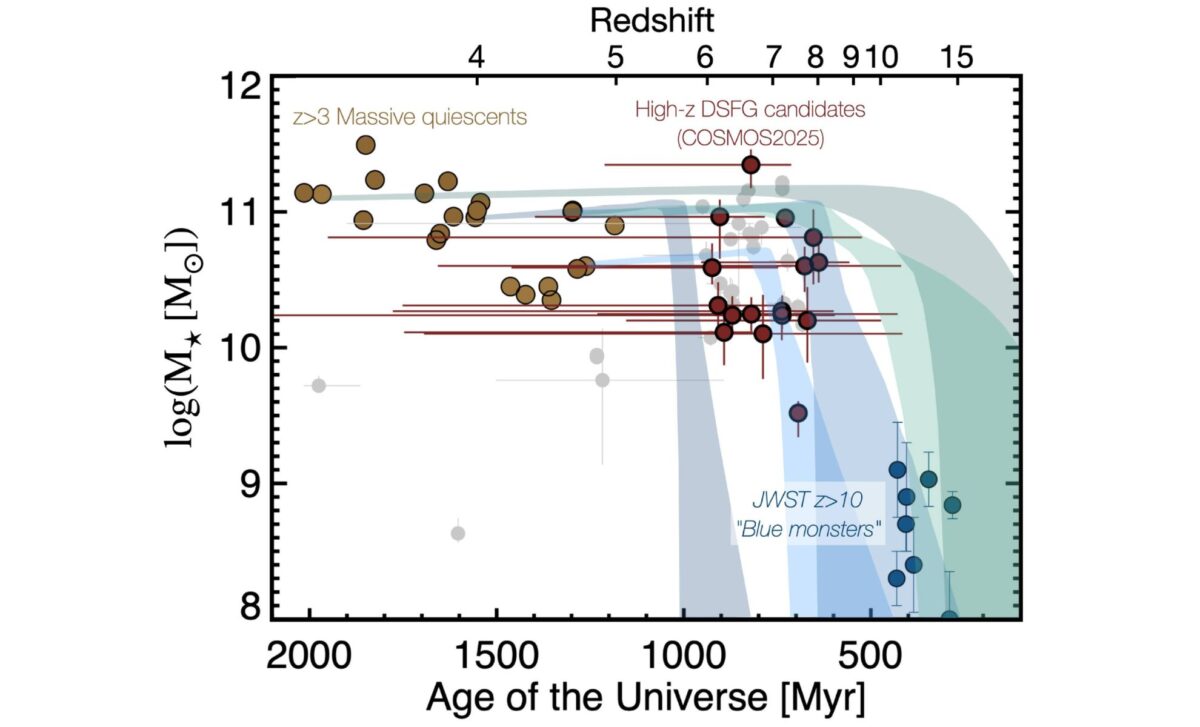 Stellar Masses vs. Redshift: Evolutionary Link Between z > 10 JWST Galaxies, z ≈ 6 DSFGs, and z ≈ 3–5 Quiescent Galaxies©The Astrophysical Journal Letters
The researchers also noted that the dusty galaxies they discovered were much older than expected, revealing that intense star formation was happening much earlier than current models predict. The dusty nature of these galaxies, which prevents them from being detected in visible light, offers new clues about the universe’s early environment and challenges established ideas about star formation and dust in the young cosmos.
The Technological Edge of JWST and ALMA
The success of this discovery owes much to the sophisticated instruments used, particularly ALMA and JWST. ALMA’s ability to detect submillimeter wavelengths allowed the team to study galaxies that are rich in dust, which absorbs and re-emits radiation as infrared light. The team’s use of JWST’s infrared capabilities provided a clearer picture of these galaxies by detecting faint signals previously hidden by the dust.
This combination of ALMA and JWST marks a significant leap in our ability to explore the farthest reaches of the universe. It underscores the critical role that new technologies play in advancing our understanding of the cosmos, pushing the boundaries of what we know about the early universe and galaxy formation. These observations will likely open the door for further discoveries that will reshape our understanding of the cosmic timeline.