
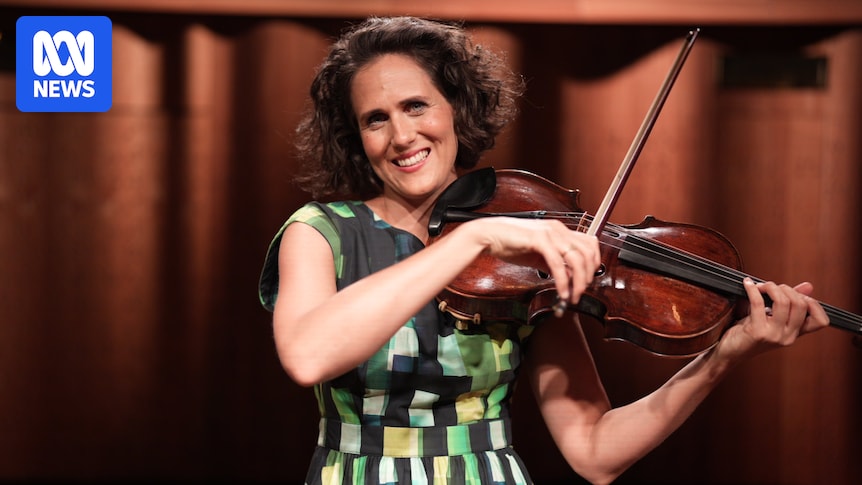
It took five years for Stefanie Farrands to find exactly what she had been looking for.
The search took her across the world, into multiple concert halls, and trialling countless instruments — before finally striking a chord.
She had discovered an incredibly rare, 416-year-old viola.
“I laid it on my collarbone, and the way that it resonated, I just burst into tears. I couldn’t believe this instrument would form such a strong bond with me,” she said.
Ms Farrands, appointed principal viola of the Australian Chamber Orchestra in 2020, was entering the next phase of her musical journey when she made the discovery in New York.
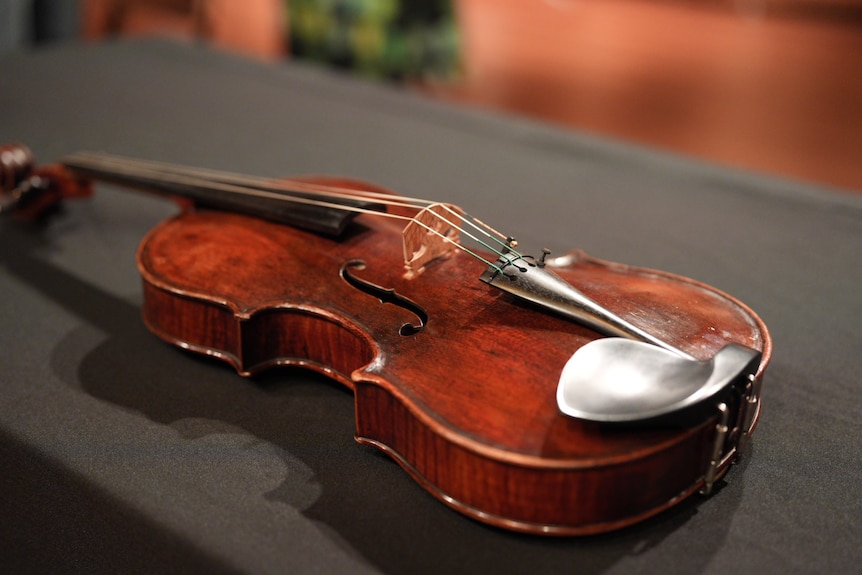
The viola has a “mysterious and dark” sound, Ms Farrands says. (ABC News: Abubakr Sajid)
The instrument is believed to be one of the finest tenor violas in existence and the only surviving example of its kind.
It was made in 1610 by the famed Italian luthier Giovanni Paolo Maggini, and his work is highly sought after for its exceptional quality.
“I didn’t know what I was missing before it reached my hands … and this to me felt like I was holding hands with something incredibly special,” Ms Farrands said.
“The sound is mysterious and dark, these instruments are much like humans in terms of complexity, how it looks is almost how it sounds — I would say dark chocolate, caramel, red wine.”
The viola was acquired under the Australian Chamber Orchestra’s unique instrument fund.

The viola was made in 1610 by a famed Italian luthier. (ABC News: Abubakr Sajid)
The fund — in its 15th year — invests in rare, historic musical instruments from the ‘Golden Age’, crafted between the 16th and 18th centuries.
The orchestra owns some of the instruments, others are loaned by philanthropists.
It is the first viola to be purchased by the instrument fund at a cost of over $3 million.
“We actually sold another instrument to be able to buy this instrument,” Fiona McLeod, the Australian Chamber Orchestra’s chief financial officer, said.
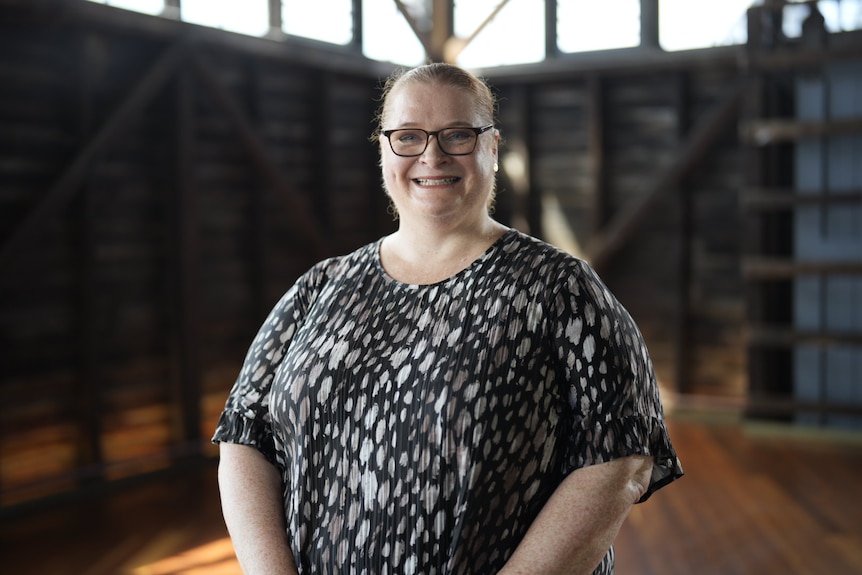
Fiona McLeod says a lot of work went into verifying the instrument. (ABC News: Abubakr Sajid)
Once purchased, the instrument underwent an extensive due diligence process — including a CT scan — to confirm its authenticity, and to ensure it was ready to play on stage with the orchestra.
“Not only do the orchestra test it, and blind test it, in so many circumstances and fall in love,” Ms McLeod said.
“We also do a lot of work behind the scenes to test the history, to verify the age of the instrument because it’s gone through many owners in its 400 years.”
It boasts an intriguing provenance starting with distinguished British violinist and composer Henry Holmes before being sold by British firm W.E Hill & Sons to an amateur musician.
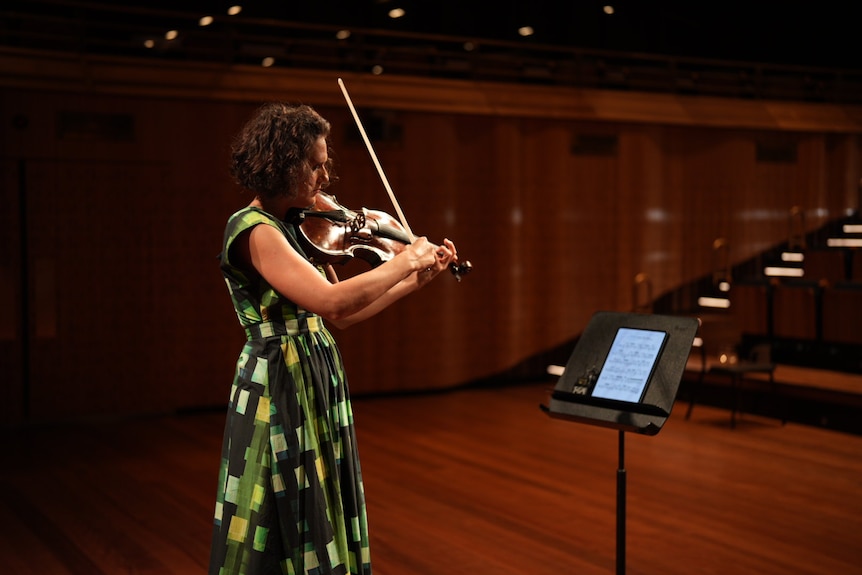
The viola is the first to be purchased by the orchestra’s instrument fund. (ABC News: Abubakr Sajid)
It resurfaced in the late 1920s through the Rudolph Wurlitzer Company, finally resting with a US collector.
The viola joins a collection of other Golden Age instruments at the Australian Chamber Orchestra, including two Stradivarius violins, a 450-year-old double bass and Richard Tognetti’s 1744 Giuseppe Guarneri del Gesu violin.
The musicians playing instruments from history
Ms McLeod said the instrument gave the orchestra “an exquisite, unique sound,” while allowing audiences to experience it as a living work of art.
“They actually add value and longevity to the instrument by using it, unlike a piece of artwork which you put up in a gallery and people can look at,” she said.
For Ms Farrands, it has been “the greatest privilege of her life” to be able to play.
“It pushes me to my limits, and it tests me every time I walk on stage,” she said.
“It’s a transcendent experience to be able to play this instrument; it’s truly changed my life, and I can’t explain how much I can express myself with such an array of colours and sounds.
“I would describe it as if I were an artist and I had a palette of colours, I’ve been given access to 100 greens, and 100 blues, and 100 oranges — and with that I can weave any phrase or song.”