
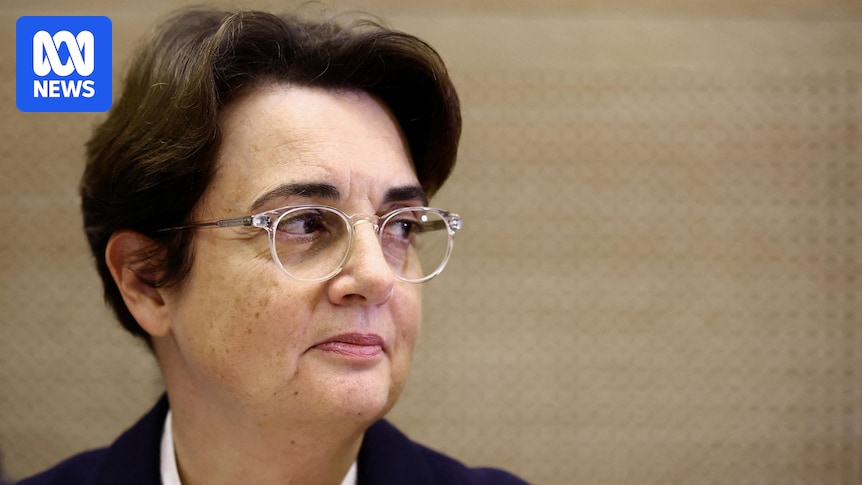
The Louvre Museum’s director has resigned, ending months of questions in France’s cultural world over why no top official had stepped down after the October crown jewels theft.
Laurence des Cars’s departure on Tuesday closed a bruising chapter for the world’s biggest museum. It came as the Louvre faces a widening narrative of an institution spiralling out of control.
In the last year alone, the museum has endured the high-profile jewels theft from the Apollo Gallery, water leaks that damaged priceless books, multiple staff walkouts and a wildcat strike over poor working conditions, mass tourism and understaffing.
That scrutiny intensified again in recent weeks, when French authorities revealed a suspected decade-long ticket fraud scheme — carried out under their noses — linked to the museum that investigators say may have cost the Louvre 10 million euros ($11.8 million).
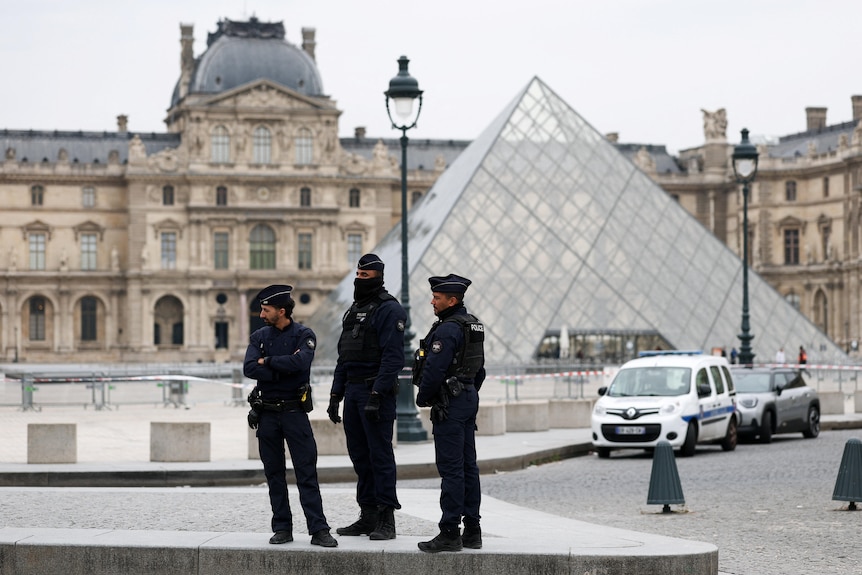
Police officers stand near the pyramid of the Louvre museum after high-profile jewels were stolen from the Apollo Gallery. (Reuters: Gonzalo Fuentes)
President Emmanuel Macron accepted Ms des Cars’s resignation as “an act of responsibility” at a moment when the Louvre needed “calm” and new momentum for security upgrades, modernisation and other major projects, according to a statement from his office.
Mr Macron wanted to give Ms des Cars a new mission during France’s presidency of the Group of Seven leading industrialised nations, focused on cooperation among major museums, the statement said.
For many in France’s cultural world, the resignation answers months of head scratching over why no top official had fallen after the heist — a daylight robbery that many saw as the most humiliating breach of French heritage security in living memory.
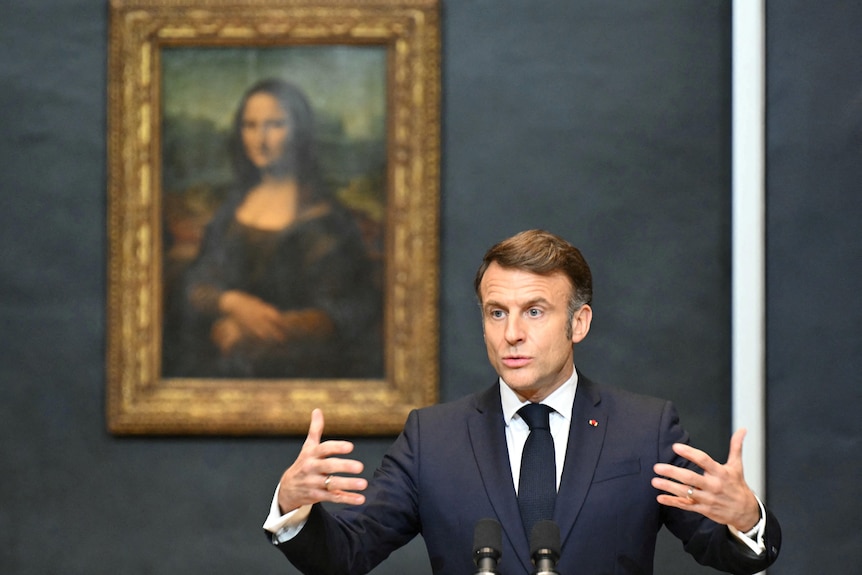
Emmanuel Macron says Laurence des Cars’s resignation is an “act of responsibility”. (Reuters: Bertrand Guay/File)
Stolen pieces remain missing
Thieves took less than 8 minutes in October to steal crown jewels valued at 88 million euros ($102 million) from the Louvre in a weekend operation that stunned visitors, exposed glaring vulnerabilities and left one of France’s most symbolically charged collections in criminal hands.
What we know about the Louvre jewellery heist
Several suspects were later arrested, but the stolen pieces remain missing.
Ms des Cars, one of the most prominent museum directors in Europe, had reportedly offered to resign on the day of the robbery, but it was initially refused by the culture minister.
In remarks after the theft, she described the moment as a “tragic, brutal, violent reality” for the Louvre and said that, as the person in charge, it had felt right to offer her resignation.
She had led the Louvre since 2021, taking over one of the global museum world’s most prestigious jobs at a time when the museum was still navigating the aftershocks of the pandemic and the return of mass tourism.
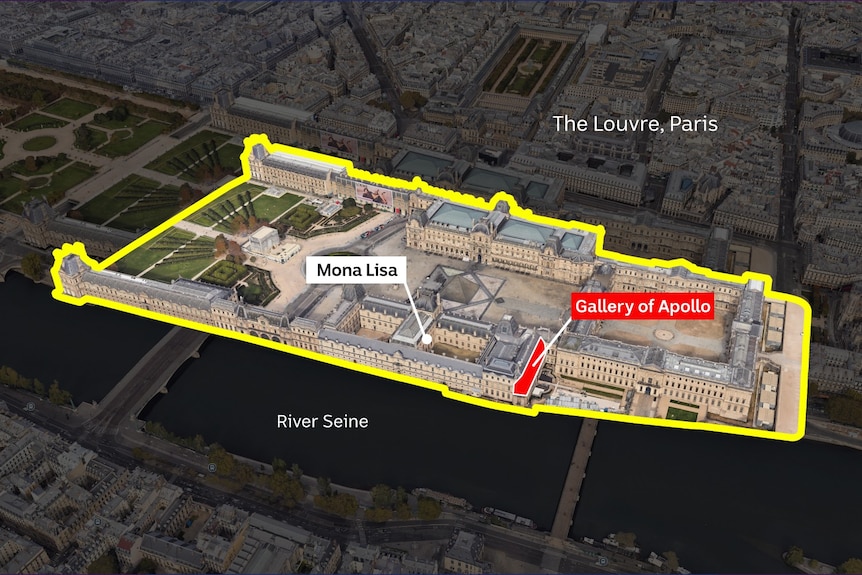
The Louvre Palace in Paris. (ABC: Graphics)
A multifaceted crisis
The resignation announcement is the latest in a string of blows for the crumbling former royal palace, amid growing complaints that the museum’s infrastructure and staffing have not kept pace with the crowds pouring through its galleries.
In June, a wildcat strike by front-of-house staff and security workers forced the Louvre to halt operations, stranding thousands of visitors outside the glass pyramid and underscoring the depth of anger among employees over overcrowding, understaffing and what unions called untenable working conditions.
Loading…
Workers said that the pressure of daily visitor flows — particularly around the Mona Lisa — had become unmanageable and that promised reforms were arriving too slowly.
The resignation came at an especially punishing moment, less than two weeks after French authorities revealed the separate ticket fraud scheme.
That case widened scrutiny beyond the jewels robbery and toward the museum’s day-to-day controls.
Reusing same tickets up to 20 times a day
Prosecutors say tour guides are suspected of reusing the same tickets up to 20 times a day to bring in different visitor groups, at times allegedly with the help of Louvre employees, in a system investigators believe operated for a decade.
In a rare interview just days ago with The Associated Press after the fraud case was made public, the Louvre’s general administrator, Kim Pham, said that fraud at an institution the size of the Louvre was “statistically inevitable”.
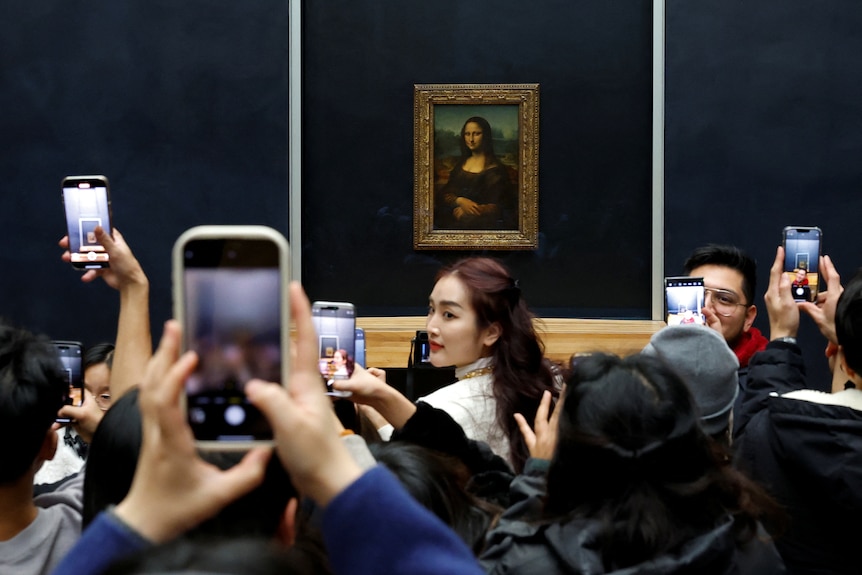
The Louvre limits entries to a maximum of 30,000 visitors per day. (Reuters: Gonzalo Fuentes)
He argued that the museum’s sheer scale — millions of visitors, multiple checkpoints and a sprawling historic complex — made it uniquely exposed.
But he also acknowledged shortcomings and said that the museum had tightened validation checks and increased controls.
A new political weight to fix the iconic museum
The succession of crises has put new political weight on a project Mr Macron has heavily championed: the Louvre’s sweeping overhaul plan, branded the “Louvre New Renaissance”.
Unveiled by Mr Macron in January 2025, the renovation, which could take up to a decade, aims to modernise a museum widely seen as overstretched and physically worn down by mass tourism.
The plan includes a new entrance near the Seine River to ease pressure on I.M. Pei’s pyramid, new underground spaces and a dedicated room for the Mona Lisa with timed access — all intended to improve crowd flow and reduce the daily crush that has become a symbol of the Louvre’s success and its dysfunction.
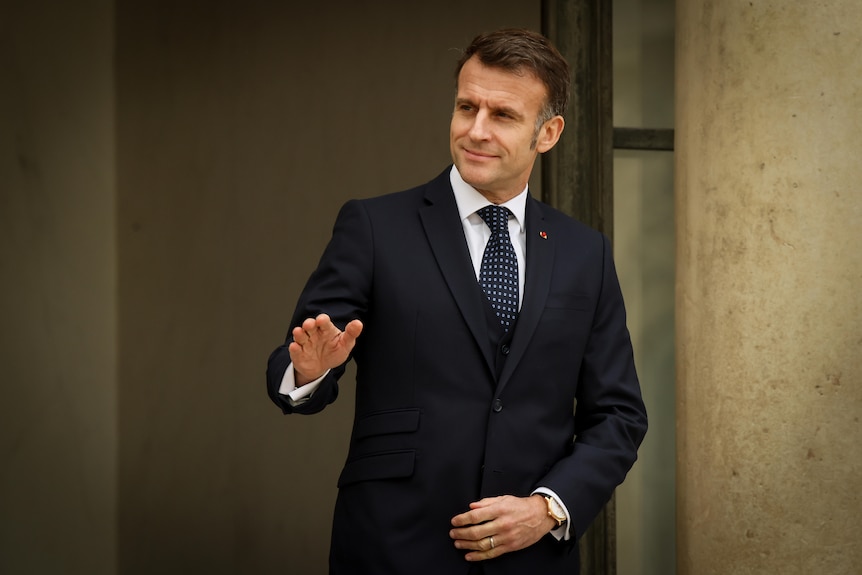
Emmanuel Macron wishes to give Laurence des Cars a new, international, role. (AP)
The project is expected to cost about 700 million to 800 million euros ($1,168 million to $1.335 million), with funding from ticket revenue, state support, donations and Louvre Abu Dhabi-related income.
Mr Macron has framed the overhaul as a national priority, comparing its ambition to other landmark French restoration efforts and casting it as part of a broader defence of French cultural prestige.
But the events of the past year — staff unrest, security failures and now alleged fraud — have sharpened doubts over whether the Louvre can hold the line operationally while preparing for a costly, years-long transformation.
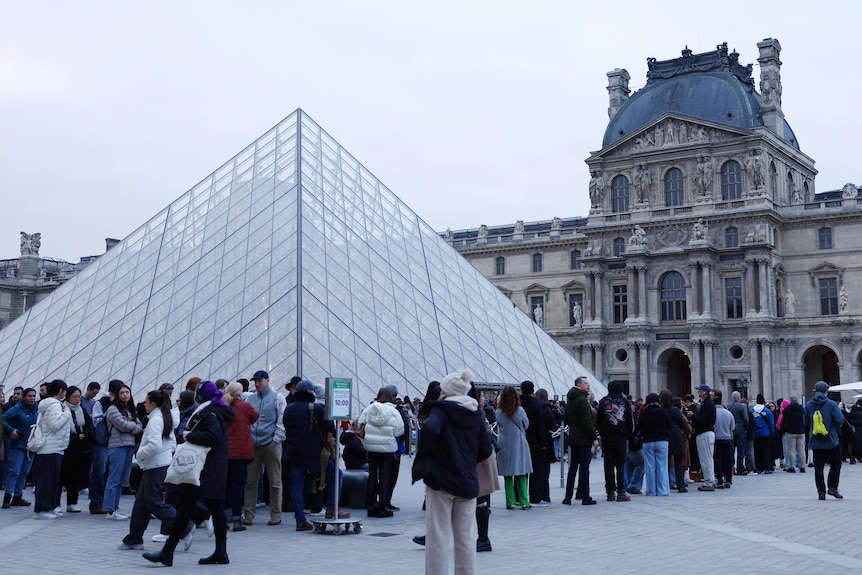
Multiple issues have put new political weight on a project to fix the Louvre Museum. (Reuters: Abdul Saboor)
That tension defined Ms des Cars’s final months in office.
She was both the public face of the Louvre’s modernisation drive and the official left carrying the fallout from damaging failures.
AP