
The relationship between screen and music has long been one of co-dependence. Soundtracks lend emotional weight to directors’ visual imaginings and documentaries give music fans a more complete picture of the people behind the songs. But a clutch of new film and TV releases take the dance in intriguing directions.
As Elvis Presley gets reborn in glistening close-up in Baz Luhrmann’s EPiC, Charli xcx escalates her myth in real time in The Moment and Billie Eilish calls in James Cameron for the 3D IMAX event Hit Me Hard And Soft: The Tour, it seems we’re living in a golden age of music on film. From AI and 4K to animation and satire, the range of creative possibilities leaves the humble album ever deeper in dust.
The Eilish-Cameron collaboration is arguably the most eagerly anticipated of the new line-up, combining as it does the creative visions of the bedroom-pop maverick and the tech-loving director who brought us Titanic and the Avatar films. Originally scheduled for a March release, it has now been postponed until May. Cameron posted that “we’re refining the cut”, promising “cool new 3D tech [and] special behind-the-scenes [parts] we know you’ll love… Worth the wait!”
This is the arms race end of the pop-doc spectrum, an unprecedented event for a world in which the album is just the flyer for the tour and the tour is raw material for whatever next year’s tech allows. While we wait for what is being breathlessly trumpeted as the “reinvention of the concert experience”, there’s a host of support acts worth catching…
The Moment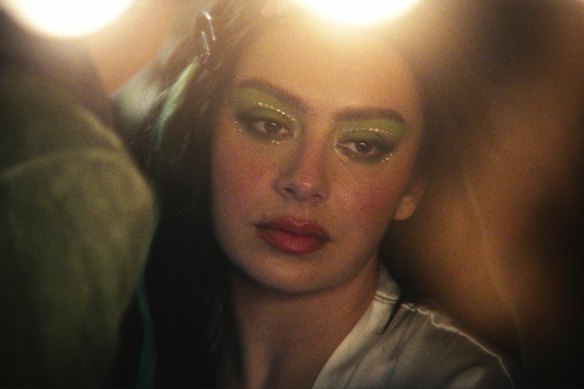
Dance pop diva Charli xcx may have more than a decade of chart hits behind her – along with Brat, the top-selling album of 2024 – but she is still a beginner in the movie world. The Moment, which screened at this month’s Berlin International Film Festival, is not her first acting role, but it does signal an arrival of sorts.
The film is a mockumentary about a singer, also called Charli xcx, who feels creative control slipping away as she embarks on a concert tour. The fictional tour show is the final fling of Brat summer, the real-life phenomenon of 2024 when Charli’s sixth album dominated the airwaves. The Brat persona became to the lockdown generation what Girlpower meant in the early ’90s.
In the story, the show is hijacked by the concert film’s director, a slimy manipulator called Johannes, played by Alexander Skarsgård, who pushes out her team and begins to dictate everything, right down to the patter she will deliver between songs. The tour is financed by a bank putting out a Brat credit card – also fictional, fortunately – which has its own agenda.
Charli xcx – real name Charlotte Aitchison – plays a version of herself. “I’ve been training to play this role my whole life, going method since the day I was born,” she told the press in Berlin, where The Moment had a plum Saturday night slot. At the same time, the Charli on screen is a fiction. “The scenarios are not things that happened to me but, given a different set of circumstances, they might.” She is just as emotionally volatile as her on-screen avatar, she said – “Have I had a breakdown in the back of a van while smoking a million cigarettes? Yes!” – but nicer.
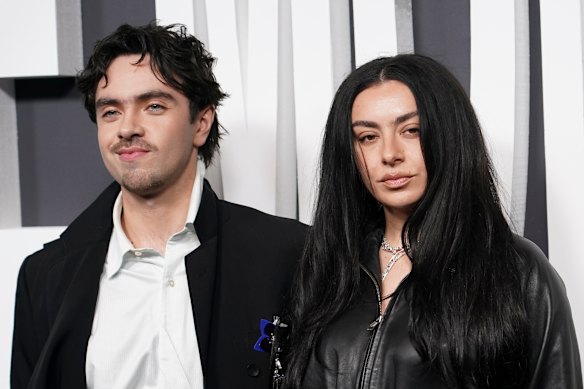 Charli XCX with director Aidan Zamiri at the London premiere of The Moment.Alberto Pezzali/Invision/AP
Despite seeing herself as a beginner, the 33-year-old has had a long flirtation with film as both composer and, increasingly frequently, writer and actor. An invitation to write a song for Emerald Fennell’s rumbustious take on Wuthering Heights inspired her to make an entire album, working with Welsh artist John Cale, that was released late last year. It was her second soundtrack album.
She has also been taking more acting roles. When The Moment screened at Sundance in January, it was flanked by two other films in which she played supporting roles: The Gallerist with Natalie Portman and I Want Your Sex, with Olivia Wilde.
“Films that have a social angle and films by directors with a vision who have something to say,” she said in Berlin of the type of projects that appeal to her. “I’m just starting out in this industry, but I feel passionate about working in those spaces.”
The Moment is directed by Aidan Zamiri, who had made mostly music videos before this feature debut. He had already directed some of her music videos and was a close friend. “The whole way through, it was collaborative,” says Zamiri. Charli co-wrote the story, then stepped back, leaving room for stories about celebrity life to come from other sources.
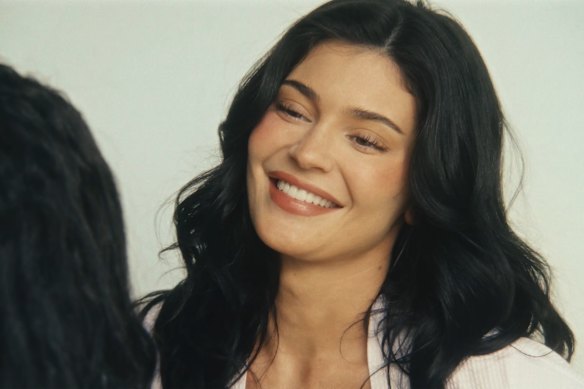 Kylie Jenner in a scene from The Moment.
A flying visit to an Ibiza spa, where she encounters Kylie Jenner in a bathrobe, is funny but sadly made up. “I think what’s interesting is that we were able to play with these real-world elements of culture that are like a modern mythology,” said Zamiri. “It’s like having a signpost to something we understand.”
For Charli xcx, this film represents a climactic transition in her life, from niche artist whose music featured in gay clubs to a household name. She describes it as a catharsis. “Charli in the film decides to set herself free of Brat, to kill Brat,” she said. “I think we were aware this was the full stop to that campaign in the real world as well.
“We’ve always been interested in the lifespan of a star, the idea of overstaying your welcome in a cultural space, especially in pop music, because fans are so feverish for the next thing – the next album, the next version of you.” Any future versions of Charli xcx remain under wraps, but her Wuthering Heights album may indicate a new musical direction. “For me,” she said firmly, “the Brat summer is over.”
In cinemas from March 5.
Paul McCartney: Man On The Run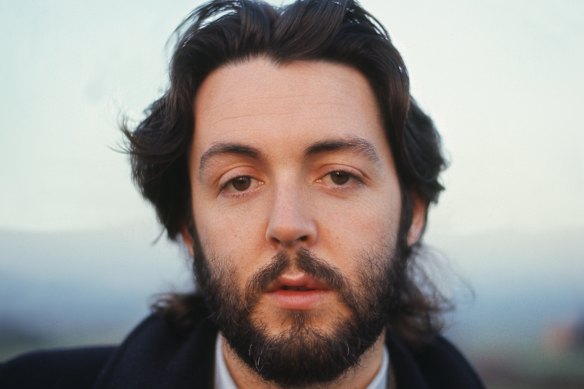
It’s hard to think of a movie that rewrote rock history as decisively as Peter Jackson’s Get Back in 2021. With AI assistance and epic narrative craft, the forensic reassembly of that grim Let It Be footage flipped Paul McCartney’s stock from villain to hero as his dissolute gang staggered and charged to a joyous climax worthy of impossible dreams.
So it’s initially a little deflating that Man On The Run finds him “back to square one”, buying into the old break-up bad-guy myth. “If I hear someone damning Paul McCartney, I tend to agree with them,” he says over an opening montage of crashing waves and collapsing brotherhood. From there, the story is familiar to the point of doctrine: the post-Fab depression, the hit-and-miss DIY rush, the stabilising force of Linda, the roaring redemption of Wings ramming stadiums.
This is the classic heritage rock doc model: less revelation than technical upgrade, timed for the redux Wings hits collection and companion book. McCartney’s role as executive producer and narrator means exceptional insight and home-movie intimacy while director Morgan Neville (20 Feet From Stardom) plays sideman: the only kind of collaborator, since he lost his old mate John, that the peerless songwriter allows.
That absence remains this legend’s centre of gravity and McCartney knows it. “In my case there’s never anyone around saying, ’No, that’s a bad idea — so I blame everyone else,” he quips winsomely after one pratfall. The holding pattern works for everyone: Lennonists redefine their position against Silly Love Songs and Mull of Kintyre; the rest of us surrender to the twinkling charm and whistling tunes all over again — but now in higher resolution.
Prime Video from Feb 27.
It’s Never Over, Jeff Buckley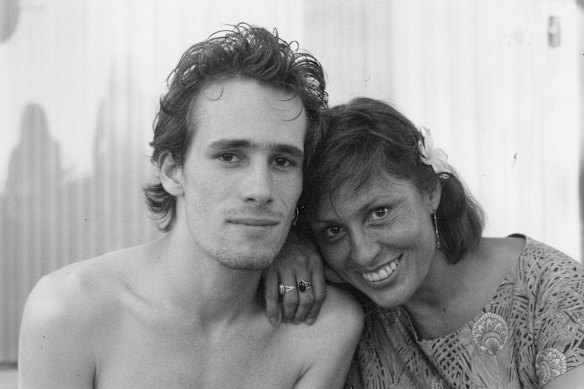
Not every legend enjoys the luxury of such a settled ending. With the gravitas of her church sex abuses expose Deliver Us From Evil at her back, director Amy J. Berg plunges into the eternity of grief to frame the short, sainted life of Jeff Buckley, as felt by three women who miss him more than even fans can imagine.
With intimate recollections and no shortage of real tears, his mother Mary Guibert (pictured with Buckley) and girlfriends Rebecca Moore and Joan (As Policewoman) Wasser ensure the story remains grounded in personal loss rather than squandered artistic potential: a diminishing argument, frankly, in light of that one brilliant but fragile album many decades ago.
The value of Berg’s film is a modern understanding of a story that has tended to invest in tragic romance. This gritty telling suggests standard corporate bullying and mental health conditions derailed the gifted young man’s confidence. Manic animations, messy collage and multiple exposures escalate as the falling angel loses his grip, just as any mother’s son might.
What draws us closer is not the trilling media grabs, overreaching headlines and eulogising contemporaries but the lost boy’s phone messages, letters and scribbles on a paper tablecloth. It’s devastating to realise these things were kept by a chosen few who seem to have cherished everything, as if some part of them sensed how little there would be.
The takeaway is less about exceptional talent than ordinary tragedy. Armed with the visual and psychological language of a new era, it’s a pop-doc that doesn’t close the story so much as keep it in play.
Select cinemas from April 30.
Live It Up: The Mental As Anything Story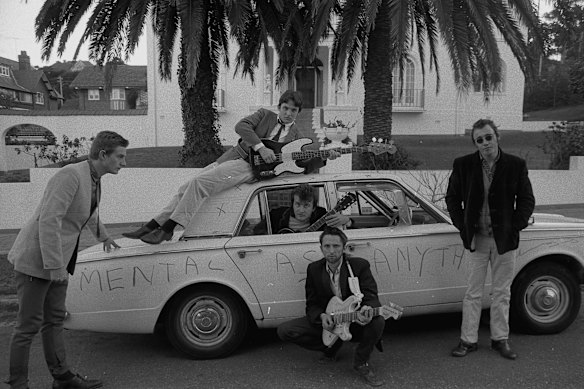
Ten years since Brett Morgen brought Kurt Cobain’s journals to life in Montage of Heck, inventive animation is almost de rigueur to the pop documentary. In this big-hearted Mental As Anything film by Matthew Walker (I’m Wanita), the paint and pencils are not about joining hidden dots and revealing internal spaces but celebrating an upfront distinction: these guys were artists. They saw the same dull suburban crap as the rest us, then made it sing.
“Before the internet, there was artwork on a telegraph pole. We could do that,” says future Mambo guy Reg Mombassa (aka Chris O’Doherty) over a collage of street posters and painted photographs gloriously energised by colour and motion. Even their record label was called Regular. But what was bog normal in the Aussie backyard of the 1980s looks like an absolute riot framed like this.
The biography is concise but arresting: Mombassa talks about global anxiety, Martin Plaza about his aversion to the spotlight. The late Greedy Smith’s “sad clown” persona is unsentimentally revealed. Cartoonish screen text highlights just how brilliant their lyrics were, but the O’Doherty brothers’ chuckling conviction that “pop stardom is ridiculous” makes any hint of mythologising mercifully redundant.
While most pop docs obsess over legacy, this one is more about shared cultural atmosphere: lackadaisical pop band as mirror to a national mood that seems now like another country. You can send it to America on a massive stadium tour with Men At Work but then, well, you can pull the other one. What’s real is coming home to flip snags at the kid’s birthday do.
The surviving Mentals narrate loss without melodrama; the archive is affectionate rather than corrective and every lawnmower and telegraph pole delights the eye. “Beauty out of banality,” as Neil Finn observes admiringly. Straight to the poolroom with this one.
Select cinemas from March 5.
The Rose: Come Back To Me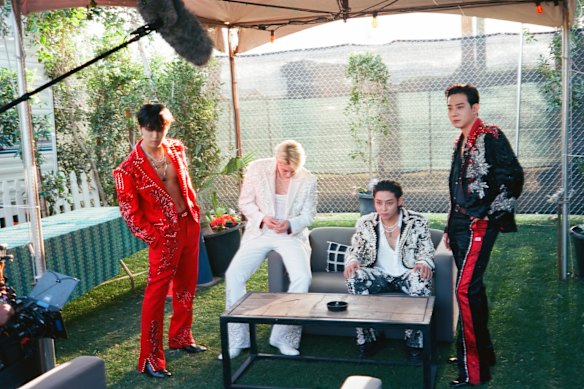
Even if you’re fluent in BLACKPINK and the broader K-pop conversation, chances are The Rose have slipped under your radar. Unlike the idol juggernauts built by committee, this South Korean quartet operates beyond the factory system with little catalogue and less myth to lean on. In that light, Come Back To Me, directed by Eugene Yi, attempts something ingeniously bold: using the clout of the pop-doc form to manufacture the future.
The chemistry is textbook. Sammy, Dylan, Jeff and Leo (that’s how they introduce themselves) are four young men against the world, unfailingly polite rebels sustained by brotherhood, self-belief and unshakeable faith in that one elusive hit. They battle industry obstacles, litigation and personal challenges both familiar (depression, ego) and intriguingly culture-specific: a cannabis rap is reputational disaster in Korea; military service is compulsory.
What’s irresistible as they bare their tender souls to camera is the mist in their eyes. Perhaps not fully aware of the precarious fates of boy bands going back decades, they invoke legends as recent as The Script, The 1975, Adele and Bruno Mars as guiding stars. When Jeff emotionally recalls fans telling him his song Seesaw saved them from grief and self-harm, he’s so palpably touched by purpose that the cliche is irrelevant.
“We just hope that through our music, people understand our truth,” Sammy says over euphoric slo-mo hero shots as The Rose defy the odds to crack a daytime slot at Coachella. He means it, man.
This is pop-doc as marketing tentpole, an act more crucial to the story than the third album yet to drop. From debut gig to Tribeca Film Festival red carpet in under eight years (minus two in the army) it’s the legend conjured into being as content. That’s not cynicism in the new music release cycle, it’s belief.
Screening details TBA.
Pavements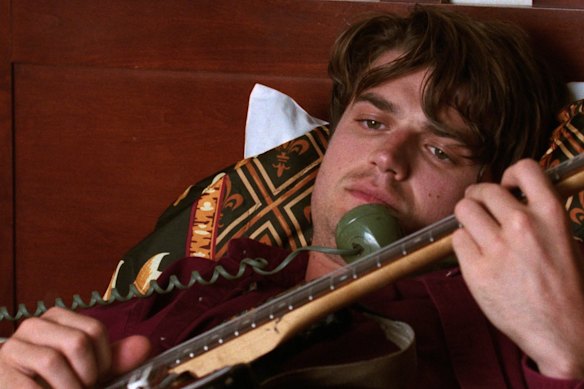 Joe Keery in Pavements.
Speaking of cynicism, this subversive mock-doc hybrid about “the world’s most important and influential band” is surely as meta as the music documentary will get in 2026. A wilful mess of true history and parody, it effectively pulls the rug from under its own feet and calls the rest of us idiots for watching.
In the 1990s grunge boom, Californian “slackers” Pavement were the alternative rock band’s alternative rock band, the one that managed to maintain the anti-star ethos as practically every staunch outsider from Nirvana downwards got sucked into the old corporate sausage factory.
Rock iconoclast Alex Ross Perry’s film is not so much a portrait as a hall of mirrors. There’s archival footage, talking heads, pretentious prattle and rueful reflections, but constantly interrupted by casting and promo for a mock biopic called Range Life, an absurd jukebox musical in rehearsal and a museum exhibition treating Pavement as artefact.
Actors play band members. Real band members wander through staged reconstructions. Po-faced aspirations to genre touchstone Bohemian Rhapsody abound. The director appears on camera to explain what his (fictional) biopic is aiming for: “something, you know, like that Elton John one I saw on a plane”.
For a band whose career was built on irony and strategic indifference, dramatising authenticity is right on brand, even as masks slip all over the shop. When (the real) singer Stephen Malkmus and guitarist Spiral Stairs walk into the museum enshrining their life and work, they can’t help falling into the very ego trap they’re sending up.
In a landscape of documentaries as brand extensions and legacy maintenance, Pavements feels genuinely anarchic. Furthering the legend in real time with no apparent punchline or purpose, it’s too much of an in-joke for a general streaming audience, which is partly why it’s so funny.
Streaming on MUBI.
Thom Yorke: Live At Sydney Opera House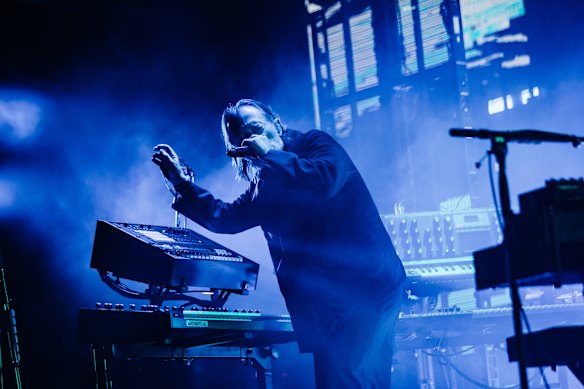
Thom Yorke has been explicit about the “heavy mental health toll” inflicted at his second Melbourne concert last October, in which a heckler challenged his alleged silence on the war in Gaza. So his subsequent tailspin was in motion, it would seem, when this film was shot over the two nights that followed.
The inside knowledge adds an anxious edge to what is already, thanks to high-tech design and chilly emotional temperature, a strangely detached and unsettling experience. He opens with Let Down, a statement of chronic disappointment. “I’m a reasonable man, get off my case,” goes the refrain of the second, Packt Like Sardines in a Crushd Tin Box.
As he stands subsumed by keys and cables, Yorke’s recurring theme of man in uneasy alliance with machine is enhanced by generating and decomposing big-screen graphics, liberally enlarged and extrapolated here to fill a claustrophobic canvas. Director Dave May lets us feel the weight of it all, other embellishments limited to drone shots over an eerily still Sydney Harbour, dim-lit profiles of rapt audience members and the odd languid seagull.
This is the rock doc as moment-in-time artefact, unexplained by backstage scaffolding or interview cutaways, flying by the seat of trousers which we now know to be shaking against the singer’s legs. Yorke’s art is an extension of his permanent, inner gloaming. Here it is in motion, projected large.
In the long tradition of D.A. Pennebaker’s Ziggy Stardust or Spike Lee’s American Utopia, the camera is a blank witness to the performance and all it reveals, but with far better sightlines than most in the crowd and immaculate sound unsullied by, say, hecklers. Concert prices being what they are, who could blame fans for prioritising the pristine cinematic experience?
Select cinemas from March 6.
Take That Mark Owen in Take That.Netflix
There’s a double-take moment midway through Take That, the new Netflix docu-series about England’s favourite boy band. It’s 2006. The music is over. The gang has splintered into gloating winners and broken losers. Then comes the ITV documentary, Take That: For the Record. Suddenly, this band is BACK. More than that, it’s forever.
The new doco that turns on the victory of the old one is a revealing indication of what this medium has become in a cycle where the record is just the prelude to a media event. No longer a thinking fan’s sidebar or historical coda, the pop-doc is a plot point designed to pick up where the music stalled and throw forward what matters most: the legend.
Screening on Netflix.
Billie Eilish – Hit Me Hard And Soft: The Tour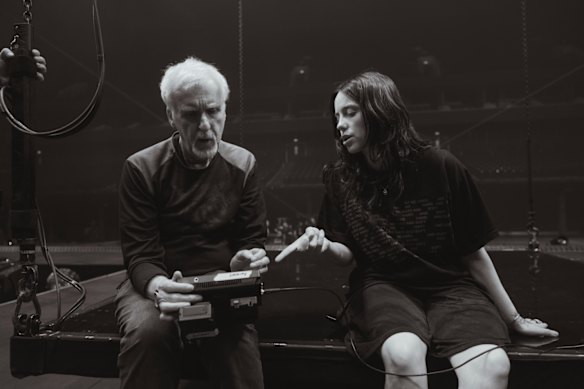 James Cameron and Billie Eilish during filming of Billie Eilish: Hit me Hard and Soft: the Tour.
Billie Eilish made no secret of her lavish Hollywood fantasies in her last concert film of 2021, Happier Than Ever: A Love Letter to Los Angeles. Her elegant soiree with LA Philharmonic and choir was staged for an audience of one: her Disney-animated self, perched adoringly in the empty splendour of the Hollywood Bowl.
Accompanied, as the content monster demands, by a “making-of” documentary about the film proper, that project wasn’t exactly small change but the imminent arrival of Hit Me Hard And Soft: The Tour (the movie) is clearly intent on a blockbuster recalibration of the whole ballgame.
The film was mostly shot during Eilish’s July 2025 residency at Manchester’s Co-op Live Arena, engineered to reproduce that magnitude but with even backstage access shot at IMAX scale. Expect the full vertigo-inducing live spin cut with ultra-close-up puppy-cuddling intimacy: modern pop’s most low-key star rendered mythic by technology.
“She changed music. He changed movies,” the trailer thunders: a gauntlet for Taylor, Lana, Olivia, Doja and Dua, sure, but also for the likes of Peter Jackson, Baz Luhrmann and Martin Scorsese. Try pulling that off with a greatest hits album.
IMAX and select cinemas from May 7.