

Updated February 25, 2026 — 3:56pm,first published 1:13pm
Save
You have reached your maximum number of saved items.
Remove items from your saved list to add more.
Save this article for later
Add articles to your saved list and come back to them anytime.
Got it
AAA
The Reserve Bank is poised to hit the economy with an interest rate hike just days before Jim Chalmers’ May budget, ramping up demands on the treasurer to cut spending and find ways to reduce inflation pressures.
Former Treasury secretary Ken Henry had said the nation’s tax system was undermining the economy and young Australians, just as the Bureau of Statistics reported a larger-than-expected 0.5 per cent increase in monthly inflation through January.
While annual inflation was steady at 3.8 per cent, the closely watched measure of underlying inflation lifted to 3.4 per cent. In January, underlying inflation increased by 0.3 per cent.
While much of the increase was driven by the end of electricity subsidies, the figures confirmed broader inflation pressures from beef to children’s shoes.
Chalmers, who has said the May 12 budget will contain policies to boost productivity and cuts to spending, said the end of the federal government’s energy subsidy had contributed to the increase in January.
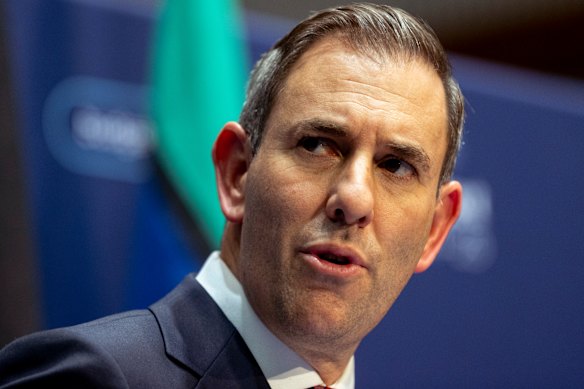 Jim Chalmers will have to reckon with rising inflation in his May budget. Dominic Lorrimer
He said inflation was higher and had been that way for longer than the government would like.
Prime Minister Anthony Albanese has made clear to his ministry that the coming budget must contain spending cuts to take inflation pressures out of the economy.
Shadow treasurer Tim Wilson said this was an admission that government spending under Chalmers was contributing to the lift in inflation.
“Until ‘pyro Jim’ gets spending under control, Australians will keep paying through higher prices, higher mortgages and weaker living standards,” he said.
Related Article
Apart from electricity, which has climbed by 32.2 per cent over the past 12 months, the bureau reported there had been an 11.2 per cent jump in beef prices, a 13.5 per cent lift in coffee and tea and a 12 per cent increase in clothing accessories.
Housing construction costs, a large portion of the entire consumer price index, are growing at 3.5 per cent annually, their highest level since October 2024.
Before the release of the figures, markets had expected a rate hike by June. After their release, a rate increase at the RBA’s May 4-5 meeting was fully priced in.
KPMG senior economist Terry Rawnsley said the figures were not what households wanted to hear.
“There is no sugar-coating it, these are not encouraging numbers and inflation remains stubbornly high,” he said.
“However, there is some cause of optimism, with the various electricity rebates having now worked their way through the system, inflation should hopefully begin to ease off.”
Apart from spending cuts, the budget is expected to contain tax reform. A change to the current 50 per cent concession on capital gains tax, which would pay for cuts in personal income tax, is one option being considered by the government.
A Senate inquiry examining the capital gains tax was told by Henry, who released a review of the nation’s tax and welfare system in 2010, said all Australians were being penalised by current tax settings.
He said the Hawke and Howard governments had cut the top marginal rate from 60 per cent to 45 per cent where it remained today.
Related Article
“After all the work that was done, we should have been able to get the top marginal rate of tax … to [one with] a 3 in front of it,” he said.
Henry said the current tax structure, including capital gains tax and negative gearing, effectively made investment in the rental market a tax avoidance system.
“Rental property investments are primarily, under Australian tax law, a vehicle for sheltering wage and salary income from tax,” he said.
Opponents of change to capital gains tax have argued it will drive up rents and lead to investors reducing house construction.
But pre-eminent independent economist Saul Eslake said fewer investors in the property market could be a positive, particularly for first-home buyers who often had to compete against investors for homes.
He said the way negative gearing and the capital gains tax worked meant investors would remain in the property market.
“Raising rents in order to recoup the impact of less generous tax treatment would seem to defeat the whole purpose of negative gearing, which is to incur losses that can be used to reduce the amount of tax payable on other incomes,” he said.
Finance Minister Katy Gallagher conceded findings from the Senate inquiry, which is due to report well before the May budget, would be examined by the government.
Save
You have reached your maximum number of saved items.
Remove items from your saved list to add more.
 Shane Wright is a senior economics correspondent for The Age and The Sydney Morning Herald.Connect via X or email.From our partners