

There has been a refreshing aesthetic to the Premier League this season.
Some might think that the style of football has regressed to a bygone era, but the increased quality across all teams means that we find ourselves in a moment where greater focus is being spent on small margins.
Throughout the division, teams are more willing to play with an aggressive, man-for-man defensive structure, which has led head coaches to look for creative solutions to find space to exploit.
As a result, individual battles have never been more important. Players whose strengths lie in one-v-one profiles are worth their weight in gold — both in and out of possession.
“When a team plays (with) man-marking, when you break that line you have to attack quickly,” Manchester City manager Pep Guardiola said in a recent interview. “You have to respond to the way they (the opposition) defend. If they play high, you have to attack quicker — if they block lower, you have to be more patient.”
“Most of the teams now have the courage to go for you, but there is always an antidote for that. Every system has an antidote.”
Guardiola’s antidote is often thanks to his one-v-one specialists.
In recent years, Manchester City’s recruitment has seen them look for players with a strong ability to shake off their opposite number — whether that is in deeper areas with the off-ball running of Tijjani Reinders, the tight-space quality of Rayan Cherki alongside Phil Foden, or the explosive dribblers of Jeremy Doku, Savinho, or Antoine Semenyo.
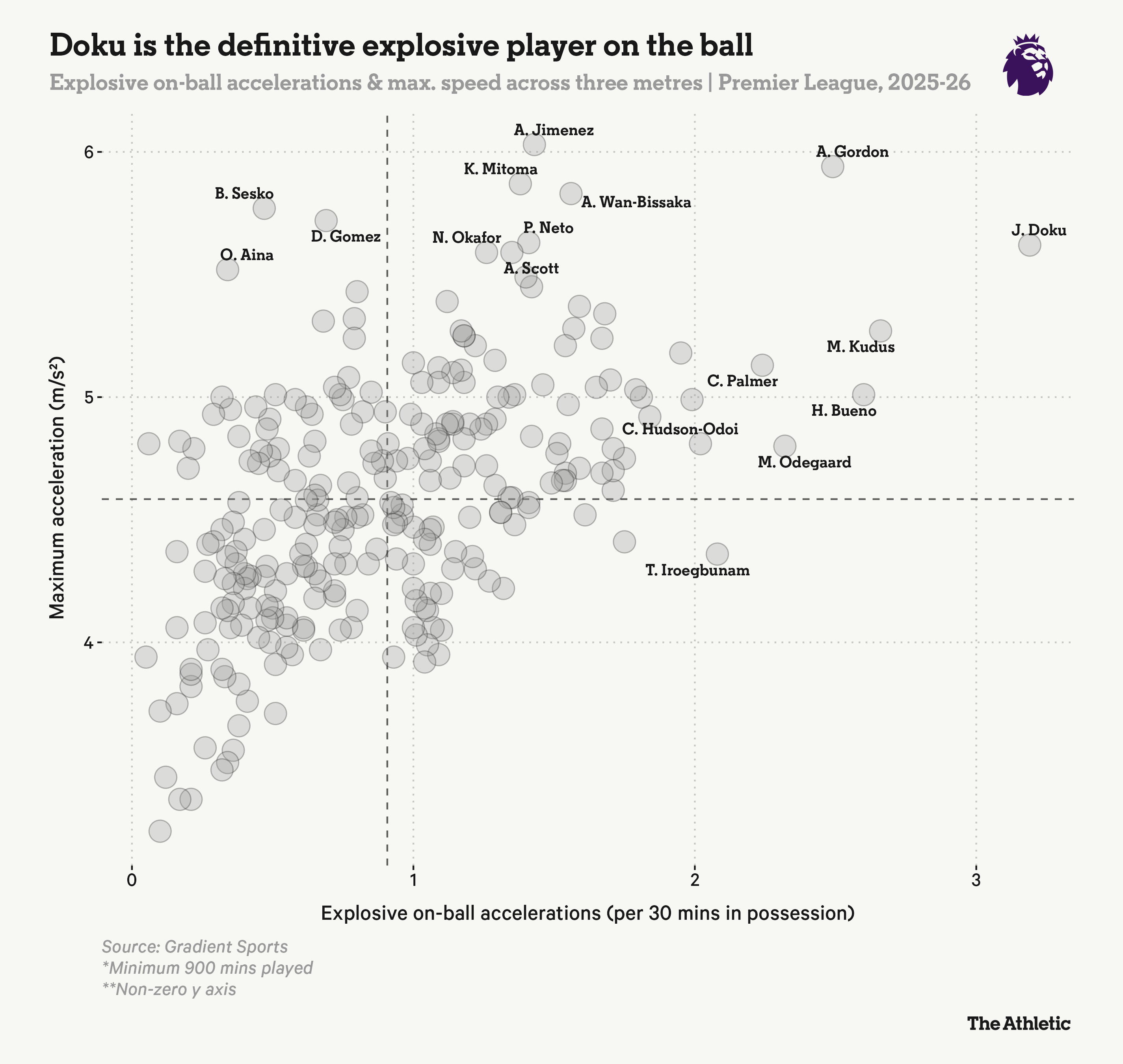
Those darting runs to unlock a defence can be crucial, and now we have a method to measure them. Using data from football analysis company Gradient Sports, we can explore a player’s explosive on-ball accelerations (denoted as an acceleration of three-plus metres per second) to see who looks to create separation from a walking pace to a sudden burst forward over three metres.
Even accounting for players at some teams having more opportunities to perform such attacking actions, City’s Doku stands out as the individual who accelerates most often by standing up his man before springing forward.
“I ask the wingers in the final third to go one-v-one,” Guardiola said during a press conference in September.
“I have the feeling that Jeremy’s decision-making in the final third has improved like — wow — compared to the past. Over five or 10 yards, no winger can match Jeremy. He can go left or right. That means anyone near him will be free to make a cross.”
The numbers match what Guardiola’s eyes can see, but such explosiveness can come at a cost — with Doku and his dribbling team-mate Savinho both sidelined with muscular injuries in recent weeks. The same can be said for Tottenham Hotspur’s Mohammed Kudus, who is among the highest-ranked players in accelerating actions but is currently out of action with a thigh injury.
Other names in the graphic above make for interesting reading, with Newcastle United’s Anthony Gordon having one of the quickest accelerations across three metres (5.9 m/s²).
Gordon’s work rate has always made him a pest in and out of possession, with the 25-year-old recently reminding fans that he is equally comfortable when Eddie Howe asks him to play as a central striker as he is when playing as a left-winger.
“Anthony has some really good qualities in that position (centre-forward),” Howe said in a press conference last week. “His pressing intensity but also his tactical understanding of when to do it and how to do it is of the very highest level.”
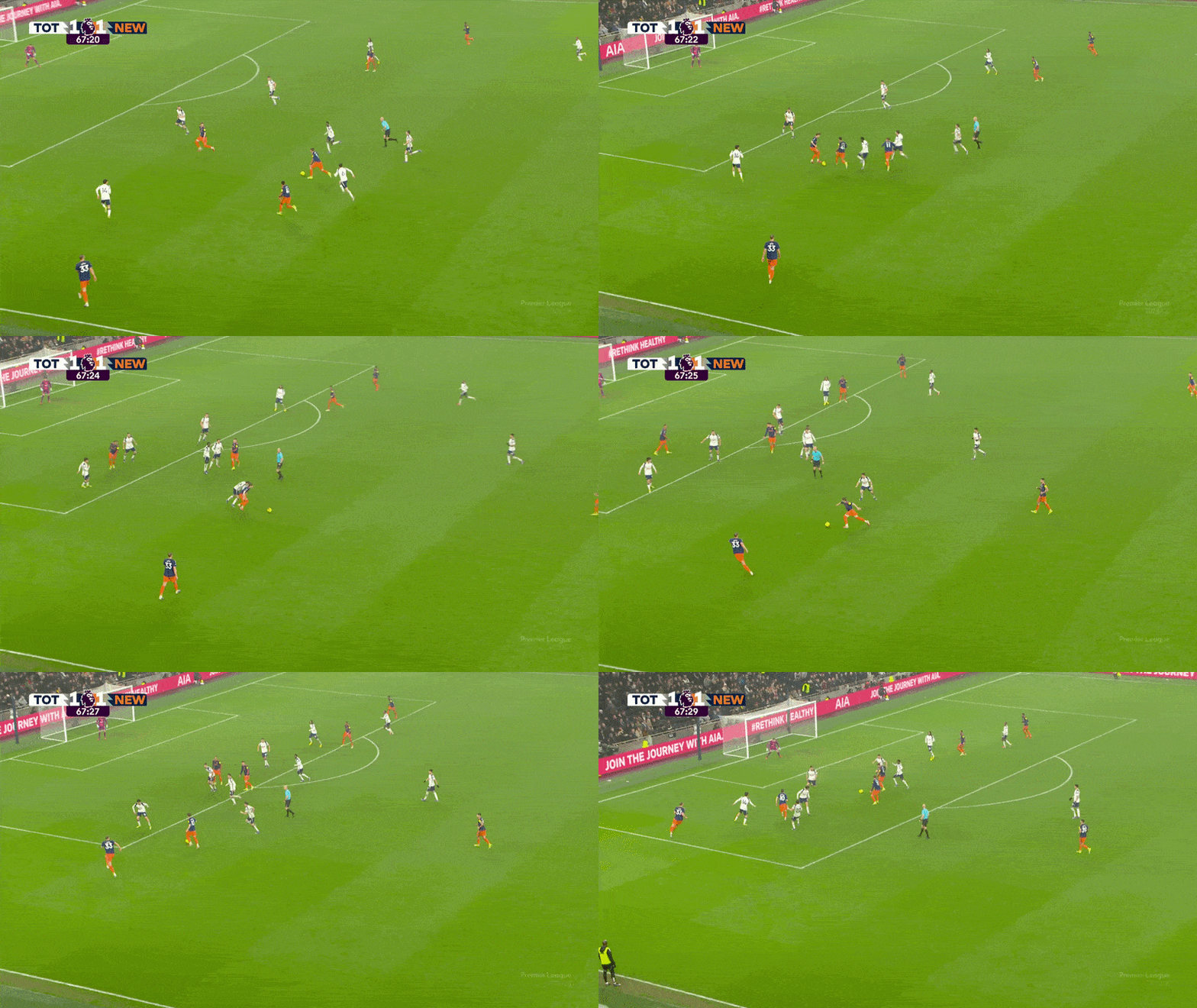
On the ball, those blasts of pace proved crucial from a central position when Gordon found space for himself to assist Jacob Ramsey for Newcastle’s winning goal against Tottenham earlier this month.
From a standing start, Gordon wriggles free with his back to goal before pivoting and driving forward — finding Ramsey with a neat pass with the outside of his boot in a packed penalty area.
The same attributes can leave defenders flat-footed in his traditional role on the flanks. Against Burnley, Gordon slows down full-back Lucas Pires and waits for the Brazilian to dive forward before accelerating down the touchline and putting in a cross with his left foot.
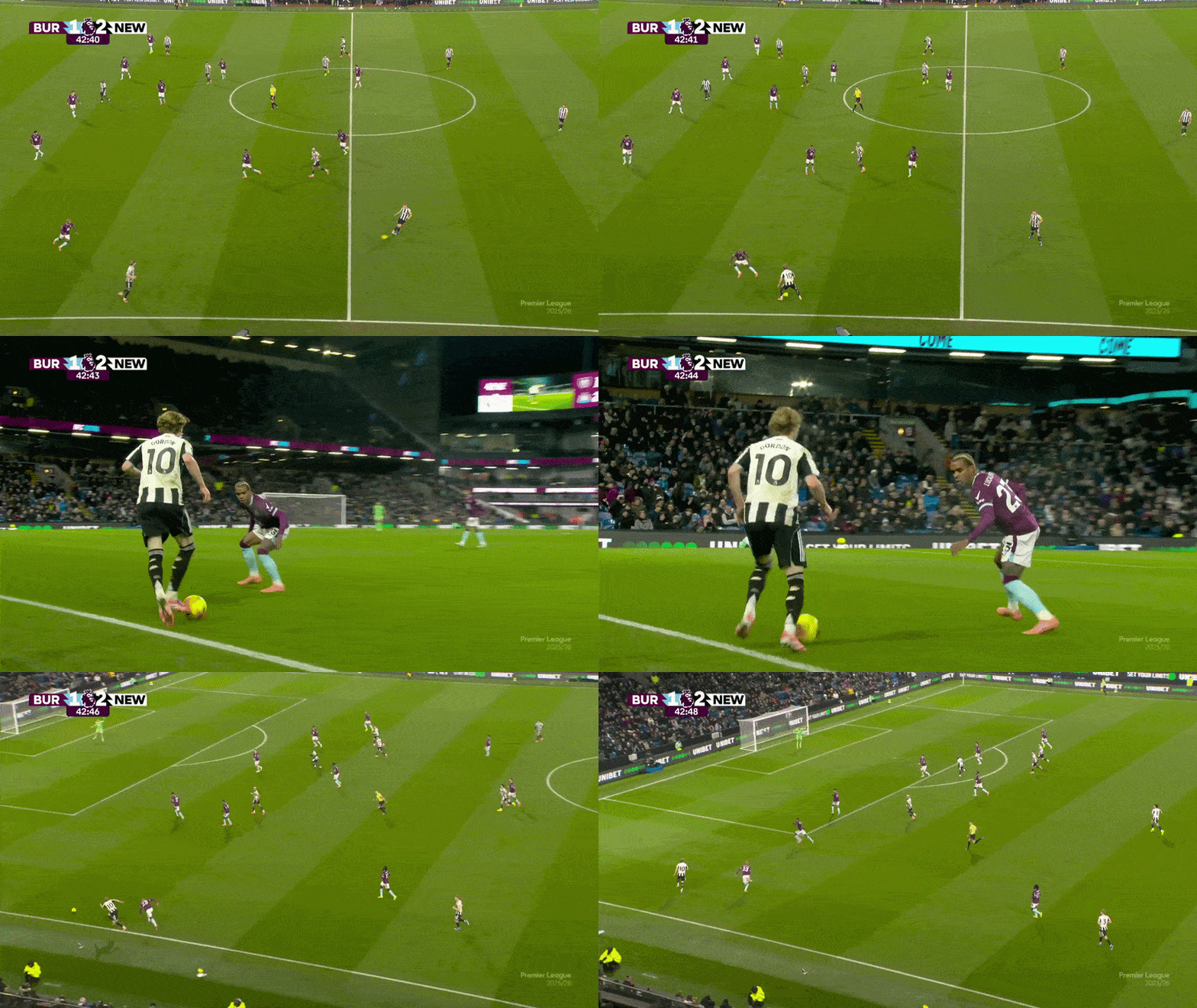
With a searing burst of pace performed at high volume, it is little wonder why Gordon is so trusted by Howe to implement his style based on high physical intensity.
A word must also go to Wolverhampton Wanderers full-back Hugo Bueno, who is one of the few defenders standing out on the graphic above. To pinch a yard before delivering into the box, Bueno will often lean on his ability to dart forward from a standing start — impressing with his determination to attack this season. Despite his side being rooted at the bottom of the table, no player has made more successful open-play crosses than the 23-year-old’s 1.6 per 90.
Drilling deeper, we can localise which players make their accelerations in certain areas of the field.
Focusing on the middle third of the pitch can help to show who looks to inject some pace into the game — stepping forward from a deeper position to disrupt the opposition’s defensive structure.
By this measure, Manchester United’s Lisandro Martinez tops the list with 7.4 on-ball accelerations in the middle third. Martinez is regularly tasked with breaking lines with a carry or pass, compared with fellow centre-backs Harry Maguire, Leny Yoro or Matthijs de Ligt. Those figures are perhaps fuelled by his minutes as a left centre-back in Ruben Amorim’s 3-4-2-1 system, where there was more licence to drive into space, but Martinez is well-regarded for his ability to get his side on the front foot.
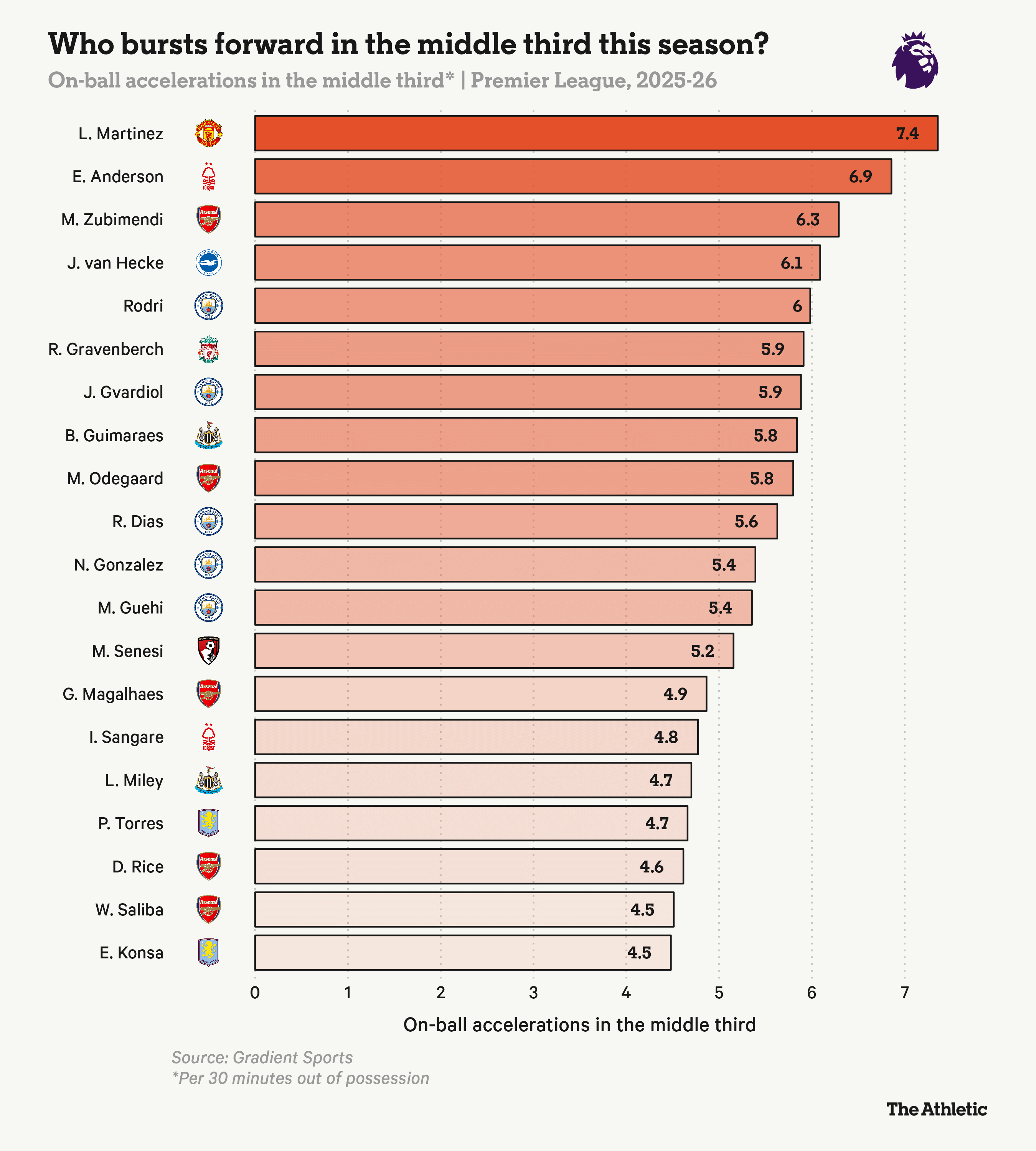
Nottingham Forest’s Elliot Anderson is an interesting case study, given his strong performances that have placed him firmly on the radar of Europe’s elite clubs this season.
Known for his relentless ball recoveries and eye for a piercing progressive pass forward — Anderson’s ball-carrying might be slightly overlooked, but he is often the man to introduce more energy into the game when he has possession.
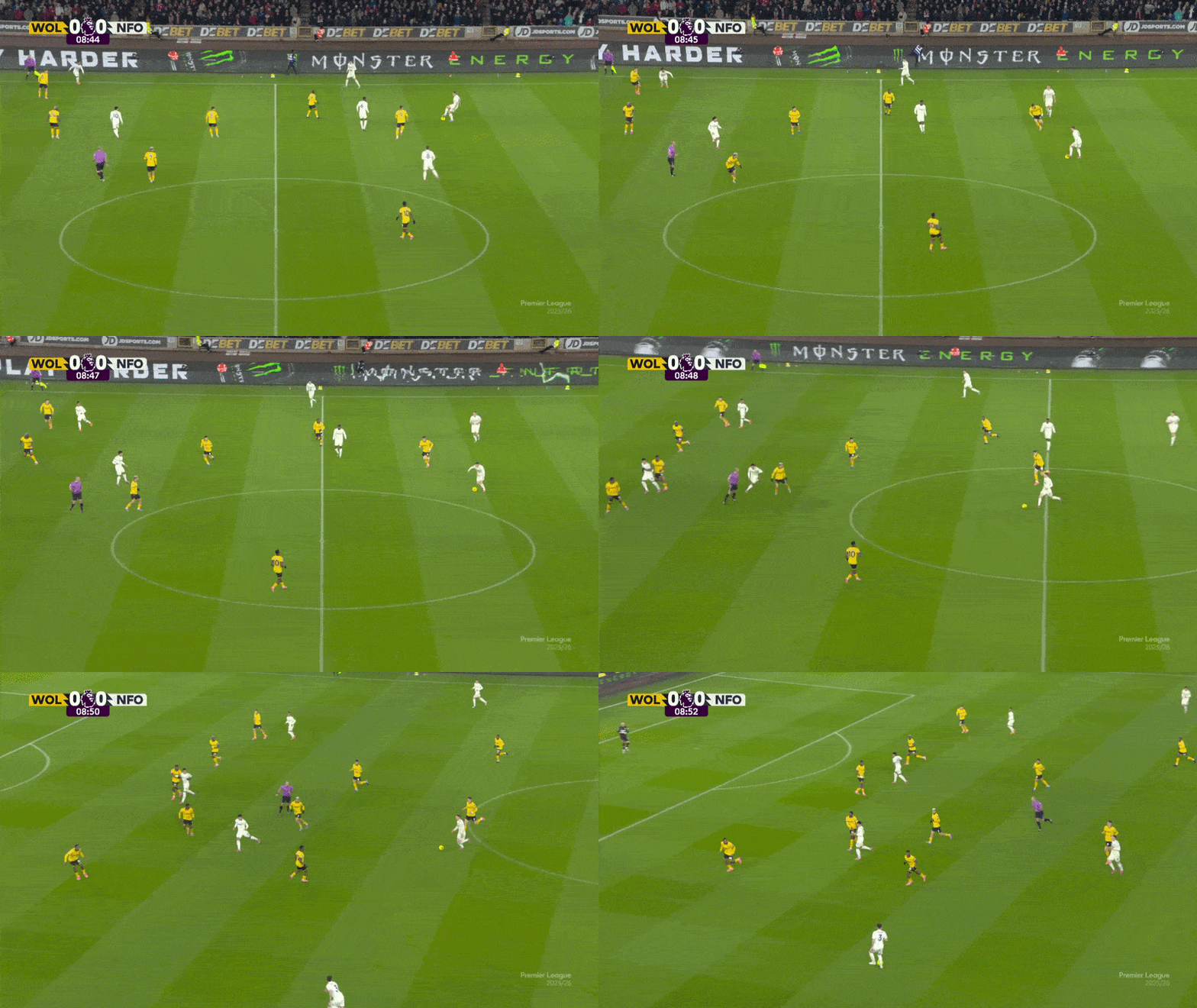
It might look like a simple action, but an example of such acceleration in the middle third is shown in Forest’s away clash with Wolves earlier this season.
Collecting the ball from the defence, Anderson could simply opt to circulate possession, but instead elects to drive into space and shuffle Wolves’ defensive shape across the pitch — committing men and asking questions of the opposition in a single burst of pace.
It is those driving attributes that can be levelled up within a more dominant possession side, making Anderson an attractive prospect to potential suitors this summer.
Particularly in the modern era of man-marking and individual duels, those who can drive away from their opponent and break lines will be increasingly lucrative — whether that is in deeper areas or at the sharp end of the pitch.