
David Harding believed that art did not stand apart from society but emerged from it — from streets, landscape, politics, memory and shared experience. He devoted his life to embedding that conviction in both civic space and art education.
Born in Leith in 1937 to Alfred Harding and Kathleen Murray, the youngest in a Catholic family resident in Bonnington Road, Harding was educated at Holy Cross Academy in Edinburgh, a school that proved unexpectedly fertile ground for artistic ambition.
Among its former pupils were Eduardo Paolozzi and Richard Demarco, and the art department — presided over in Harding’s day by an eccentric and formidable Miss Teresa Clarke — later became the subject of an unpublished play, The Conservatory, by fellow pupil Joe Gillies.
Though austere in discipline, Holy Cross fostered intellectual seriousness and creative restlessness. Harding and Demarco shared a youthful enthusiasm for cricket. Demarco presented him with a lovingly copied cricket scorebook, written out in his own precise hand — a gift Harding cherished.
If Catholicism sometimes weighed heavily in Demarco’s public life, Harding carried it more lightly. It informed his sense of duty and community but was never worn as a burden or a banner. He trained at Edinburgh College of Art in the 1950s as a sculptor, working in concrete, glass and ceramics, before completing teacher training at Moray House. It was during this time that he met his future wife, Frances McKechnie, who later, as Dr Frances Harding, went on to have a successful career as a member of the teaching staff at the School of Oriental and African Studies in London.
Among his many formative influences was the Mexican artist Diego Rivera, whose integration of art and labour, image and public life offered a compelling model of socially embedded practice. For Harding, the question was never how to place sculpture in a gallery but how to situate it in the lived fabric of a town.
As a teenager he displayed an instinctive scepticism about civic short-termism. On November 17, 1956, as Edinburgh prepared to scrap its trams, Harding — in duffel coat — attempted to halt the final service. The episode, recorded in The Scotsman, became family lore. When trams eventually returned decades later, the gesture appeared less romantic than prescient.
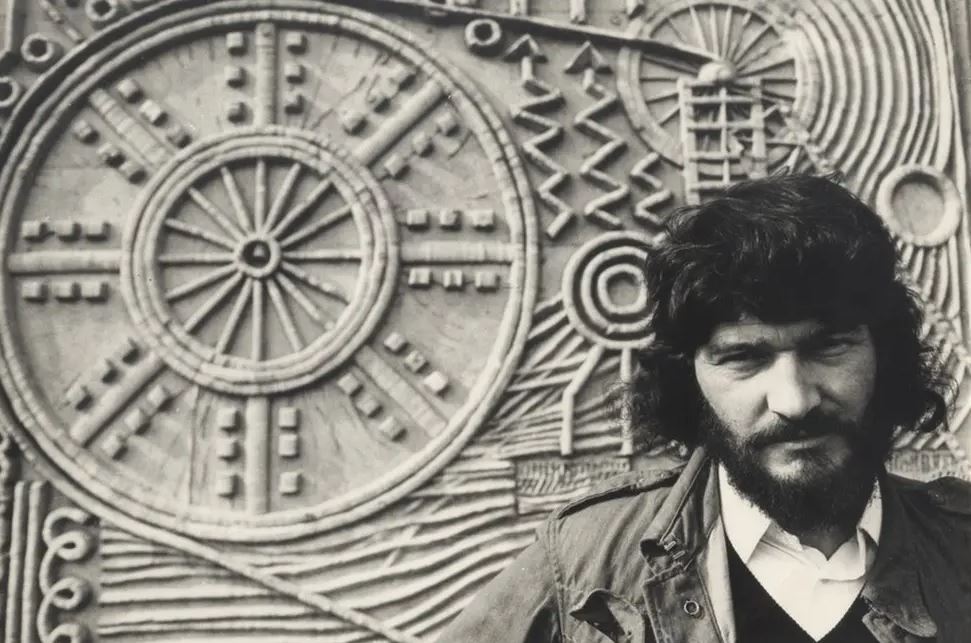
Harding with one of his works, Industry
DAVID HARDING
A decisive widening of horizons came in 1955 when he was selected for the inaugural Edinburgh–Munich link programme. Exposure to continental theatre, opera and architecture — and to Munich’s efficient tram system barely ten years after the war — left a lasting mark. He later described it as the moment the world expanded beyond Leith.
After early teaching posts, including a demanding year as a travelling art teacher in the Hebrides and a formative period teaching in Lafia, Nigeria from 1963 to 1968, Harding answered a newspaper advertisement for a newly created post within the Glenrothes Development Corporation. As town artist — embedded inside the planning department — he became part of a bold civic experiment in postwar Scotland.
At Glenrothes, Harding developed a form of public art that was neither decorative nor monumental, but participatory and site-responsive. He worked largely in concrete, the material of new-town modernism, using it to create works such as Poetry Path — a sequence of inscribed slabs integrating verse into everyday pedestrian routes (what planners term “desire lines”) — and Henge, which echoed the circular geometry of Britain’s prehistoric standing stones while remaining rooted in contemporary housing landscapes.
His commitment to poetry in public spaces extended beyond Fife. At Brownsbank Cottage near Biggar, home to the poet Hugh MacDiarmid, Harding installed a concrete slab inscribed with MacDiarmid’s poem The Little White Rose, embedding modernist Scottish verse directly into the landscape the poet inhabited. He was equally attentive to the seemingly modest details of civic life. In one housing scheme he asked tenants what colour they would like their front doors painted, treating aesthetic choice as a form of democratic participation rather than imposed design.
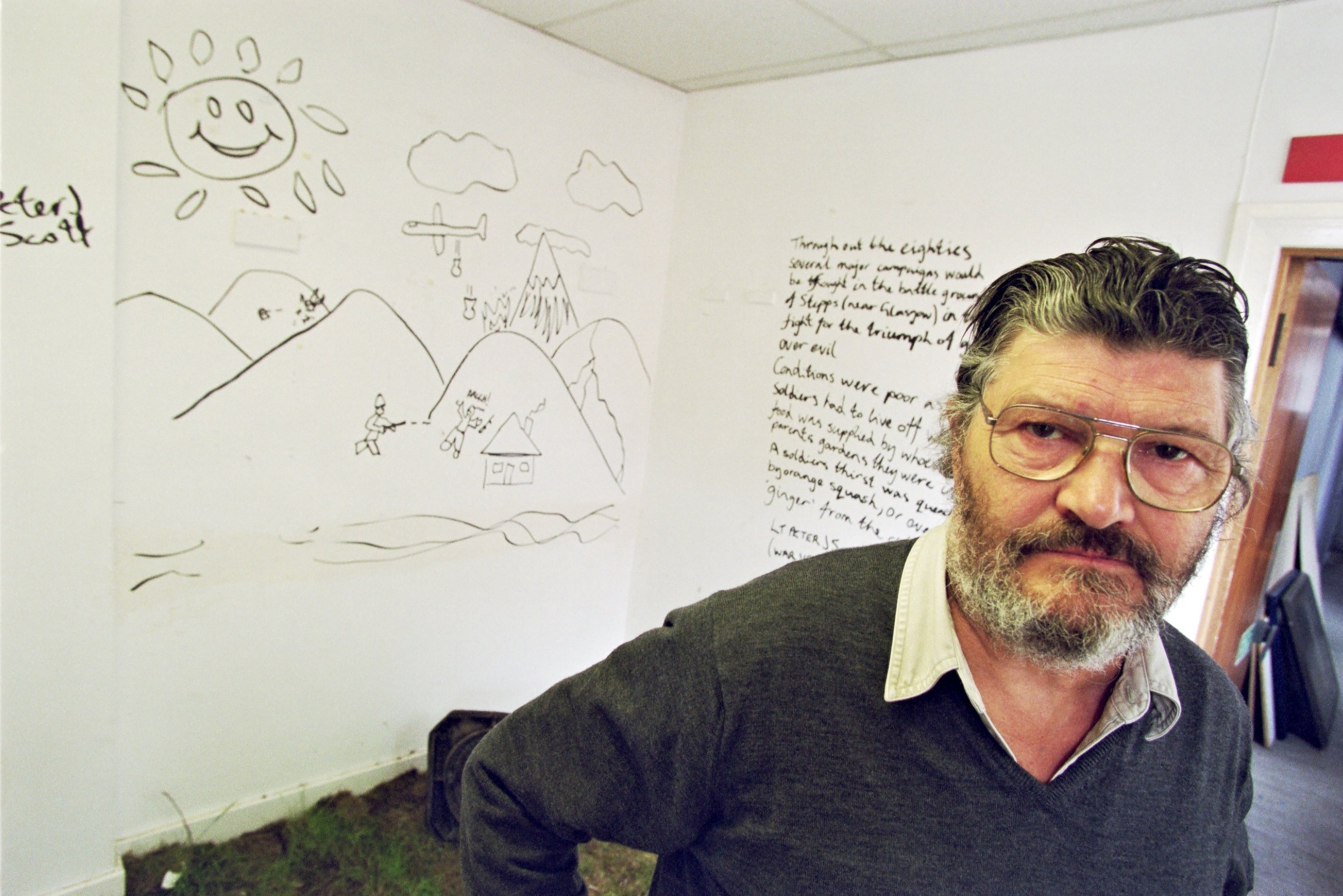
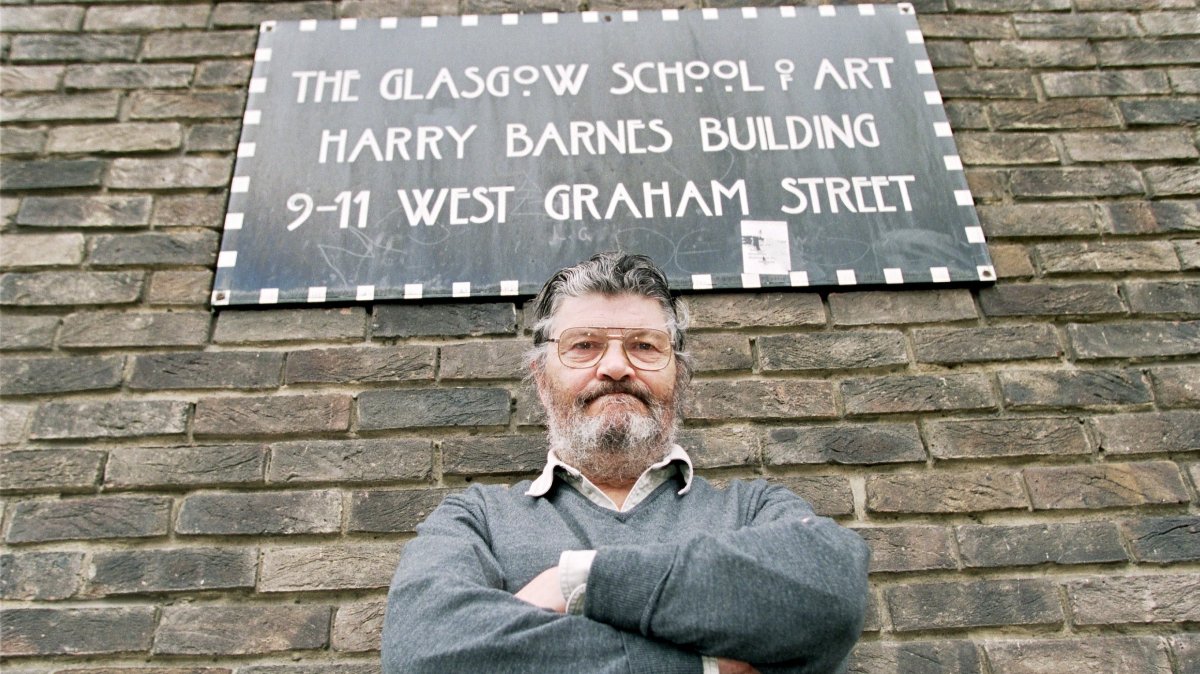
At the Glasgow School of Art in 2001
STUART WALLACE FOR THE TIMES
Harding got round the bureaucratic strictures of the planning office by telling colleagues the choices of door colours were his own. For him, public art mattered because it acknowledged the intelligence of its audience. It did not explain itself; it invited encounter.
Harding learnt that such work required political fluency. After presenting one proposal, a developer suggested installing a plaque explaining the piece. A supportive councillor intervened: one of the strengths of Harding’s art, he insisted, was that “you don’t know what it’s about — you’ve got to work it out for yourself”. Harding later distilled the lesson into advice for students: “First, find your politician.”
A period at Dartington College of Arts in Devon reinforced his commitment to interdisciplinary thinking — the college was determinedly experimental and outward-looking, becoming more so with Harding’s progressive approach. In 1986, he moved to Glasgow School of Art to lead Environmental Art, guiding the course in collaboration with colleague and fellow artist Sam Ainsley until 2001. In 1995 it became Sculpture and Environmental Art, and it continues to thrive — many of his former students later returning as lecturers, a quiet but enduring measure of his influence.
Environmental Art was frequently mistaken for ecological art. For Harding, it signified something broader: a philosophy of context. He articulated what he called the “five contexts” — physical, social, historical, political and psychological. Students were required to select a site, document it intimately and understand its histories and power relations before making work. Context, influenced partly by the thinking of John Latham and the Artist Placement Group, was “half the work”.
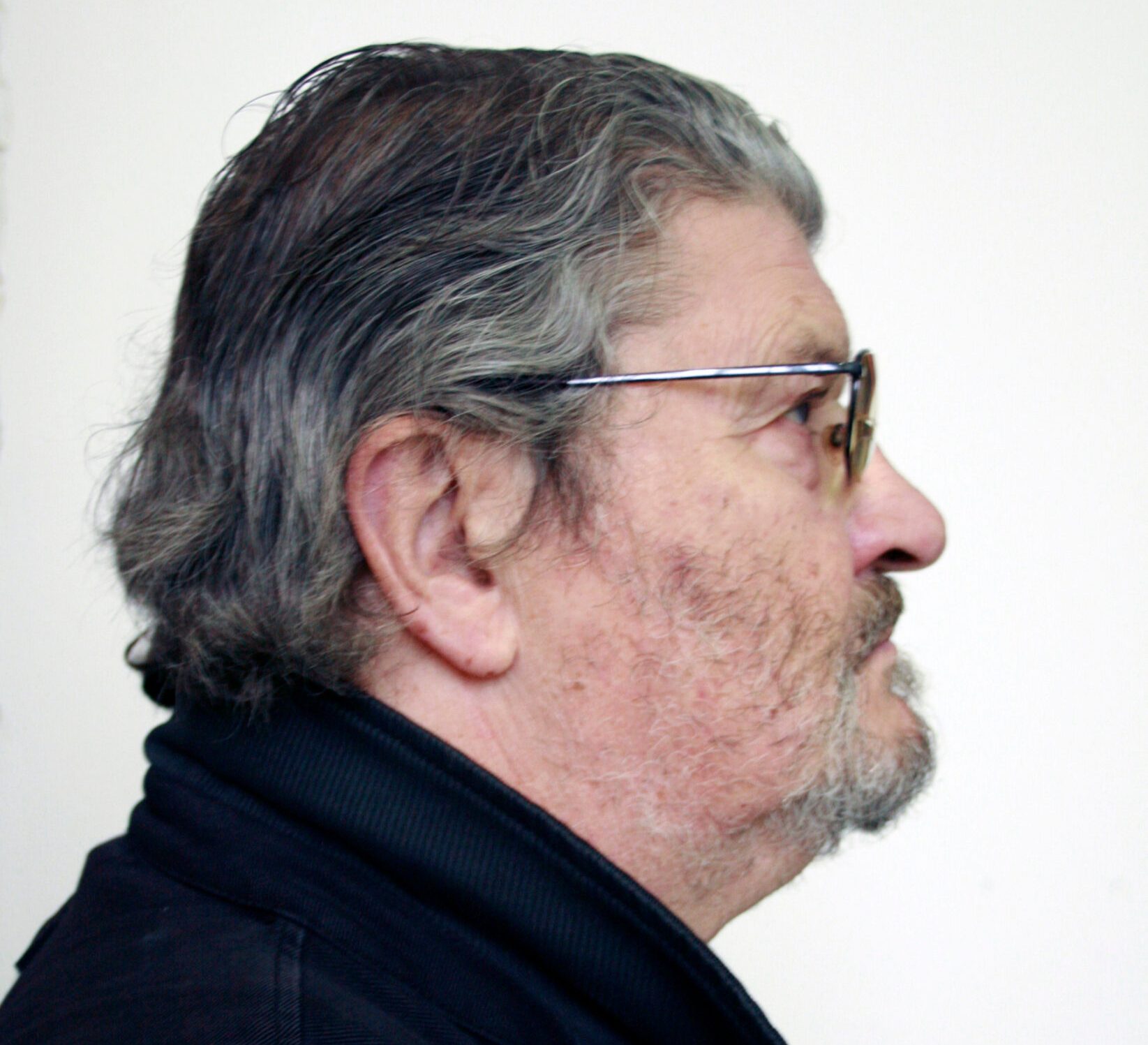
A portrait provided for a group exhibition in 2011
THE GLASGOW SCHOOL OF ART
The cohort that entered in the mid-1980s included Douglas Gordon, Christine Borland, Claire Barclay, Ross Sinclair, Jackie Donachie and Nathan Coley — figures later associated with the “Glasgow Miracle”. Harding resisted myth-making. “There’s no prescription,” he observed. “A group of students and tutors come together at a specific time and it works.”
What distinguished Harding was not stylistic doctrine, but atmosphere. He did not claim to teach genius. “You can’t teach that other element,” he said of creativity. “You can create an environment in which it thrives.” He celebrated the achievements of his students without possessiveness and took pride in their independence. Many went on to develop prestigious artistic careers, with some becoming Turner Prize winners and nominees. Of such achievements, Harding was immensely proud, but never envious.
He was remembered as a warm and perceptive presence. At his home in Crown Terrace, Glasgow, he hosted Burns Suppers for students, introducing many to Scottish poetry and song as lived fellowship rather than heritage display. He believed singing dissolved hierarchy and created community — a conviction rooted in his Leith upbringing.
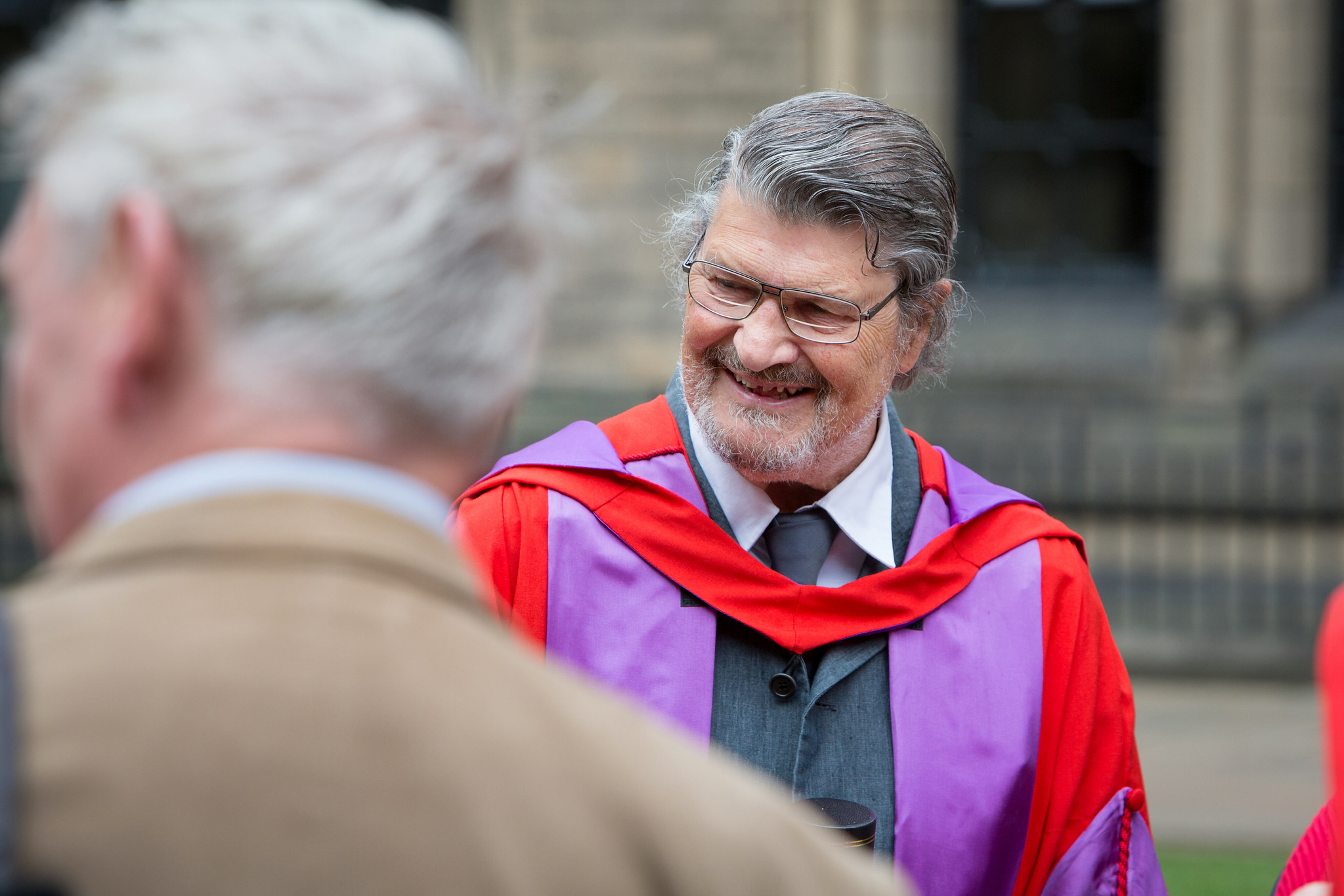
Harding was awarded an honorary doctorate by the Glasgow School of Art in 2018
MCATEER PHOTOGRAPH
Gordon later remarked that when asked what Environmental Art had taught him, the answer was: “Singing — not how to sing. Just to sing.” He added, “David was — and remains — one of my dearest friends — he transformed the Glasgow School of Art by being open to suggestions, inquisitive, open to intrigue, willing to learn from a ‘slightly’ younger generation and had a warmth and generosity that are quite rare in life. Hell of a singer too.”
Throughout his life Harding remained grounded in his origins. A lifelong supporter of Hibernian FC, he followed the fortunes of Easter Road with steady loyalty. Travel and international collaboration, including projects with the artist Ross Birrell in later decades, never displaced his sense of belonging.
In retirement he continued to advocate for the arts through AHM, alongside Ainsley and Sandy Moffat, organising symposia aimed at strengthening dialogue between artists and policymakers. He expressed concern about the bureaucratisation of art education and believed he had taught in “the end-days of art schools before they became businesses”. In his classrooms, he told students that everything was possible.
Frances Harding died in 2025. She and David are survived by their children Damien, Donald, Ninian, Abigail, Martha and Benedict, 11 grandchildren and one great-grandson.
David George Harding OBE, artist and teacher, was born on March 30, 1937. He died on February 21, 2026, aged 88.