
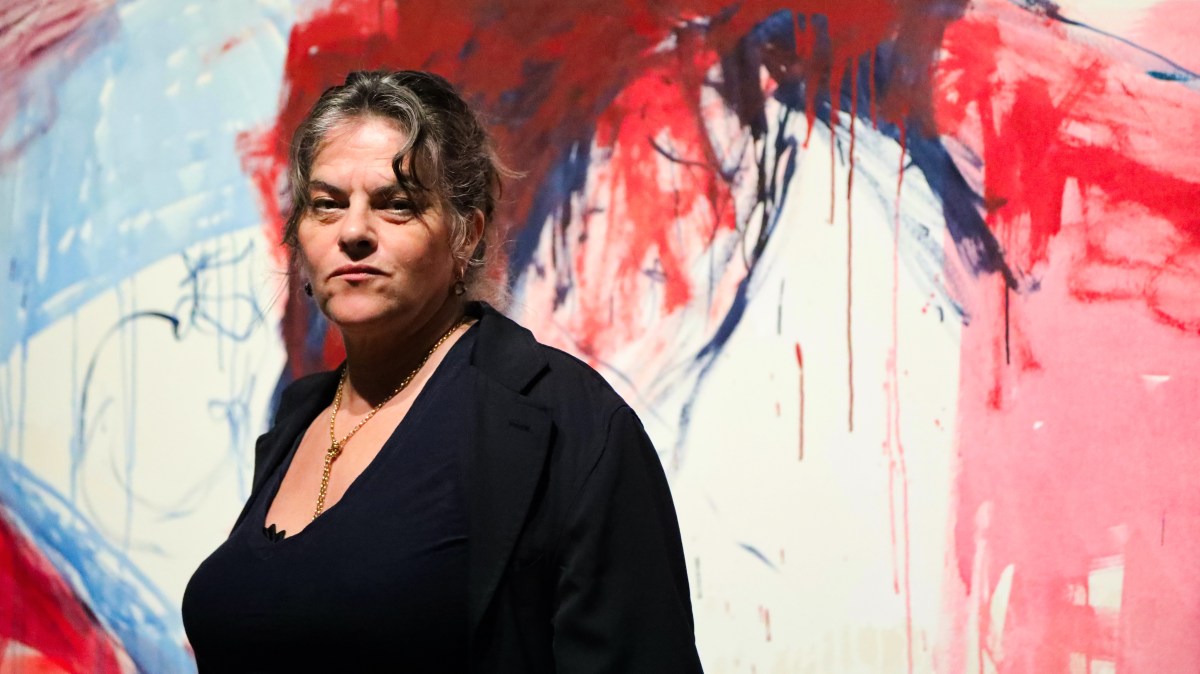
On the eve of the British Museum’s inaugural ball — dress code: pink — last autumn, Tracey Emin was doing the rounds at the Frieze art fair. She was asked what she was going to wear for her Cinderella moment. The reply? “Not fackin’ pink.” She wore Vivienne Westwood in darkest black silk. You can take the girl out of Margate, give her a damehood, a foundation and a retrospective at the Tate, but you can’t take the Margate out of the girl.
Tracey Emin: A Second Life opens on Friday at Tate Modern. It is both a fitting tribute to her own brand of belligerent resilience and yet curiously un-Tracey-like in its presentation. The show is overdue. Other YBAs — the loose group of Young British Artists who established a mouthy reputation for themselves in the late Eighties and early Nineties — have had their Tate tributes: Damien Hirst at Tate Modern in 2012, Sarah Lucas at Tate Britain in 2023.
This Emin show is a tasteful affair. She has been tamed and tidied up for the occasion. The lighting is low, the paint (Farrow and Ball Stiffkey Blue) is moody. The exhibition space could be the drawing room in an outpost of Soho House. Where’s the roughness? Where’s the scuzz?
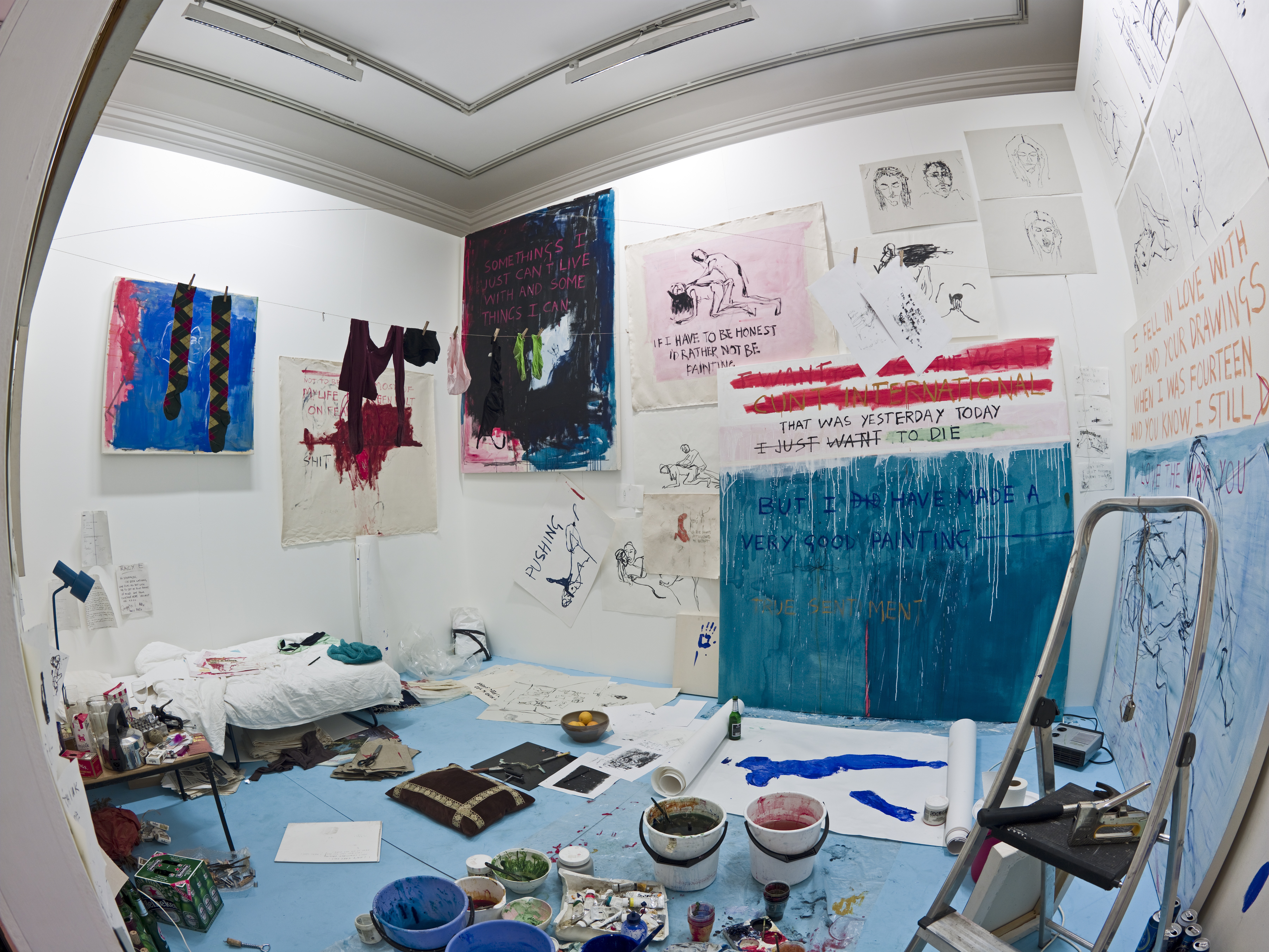
Exorcism of the last painting I ever made (1996)
© TRACEY EMIN. ALL RIGHTS RESERVED, DACS 2026
• Tracey Emin interview: ‘I can hardly see colours. I’ve got cataracts’
There is very little curatorial apparatus — wall texts and so on — and while I’m usually a great one for complaining about overbearing interpretation, you do need some intervention, some grit, to stop it all becoming too reverential. Someone needs to explain, for example, why the neon lettering pieces — much traduced by a thousand “Live Love Laugh” (barf) knock-offs — are worth the kilowatts. There are quotes from Emin and quotes from Harry Weller, her right-hand man and creative director of her studio, but next to nothing putting Emin in context, explaining what worked, what failed, what got her noticed, what wound up the press and the public. There’s a jar of Marmite on a table in her installation Exorcism of the last painting I ever made (1996) and I found myself thinking: like Marmite, you either love Tracey Emin or you really, really hate Tracey Emin.
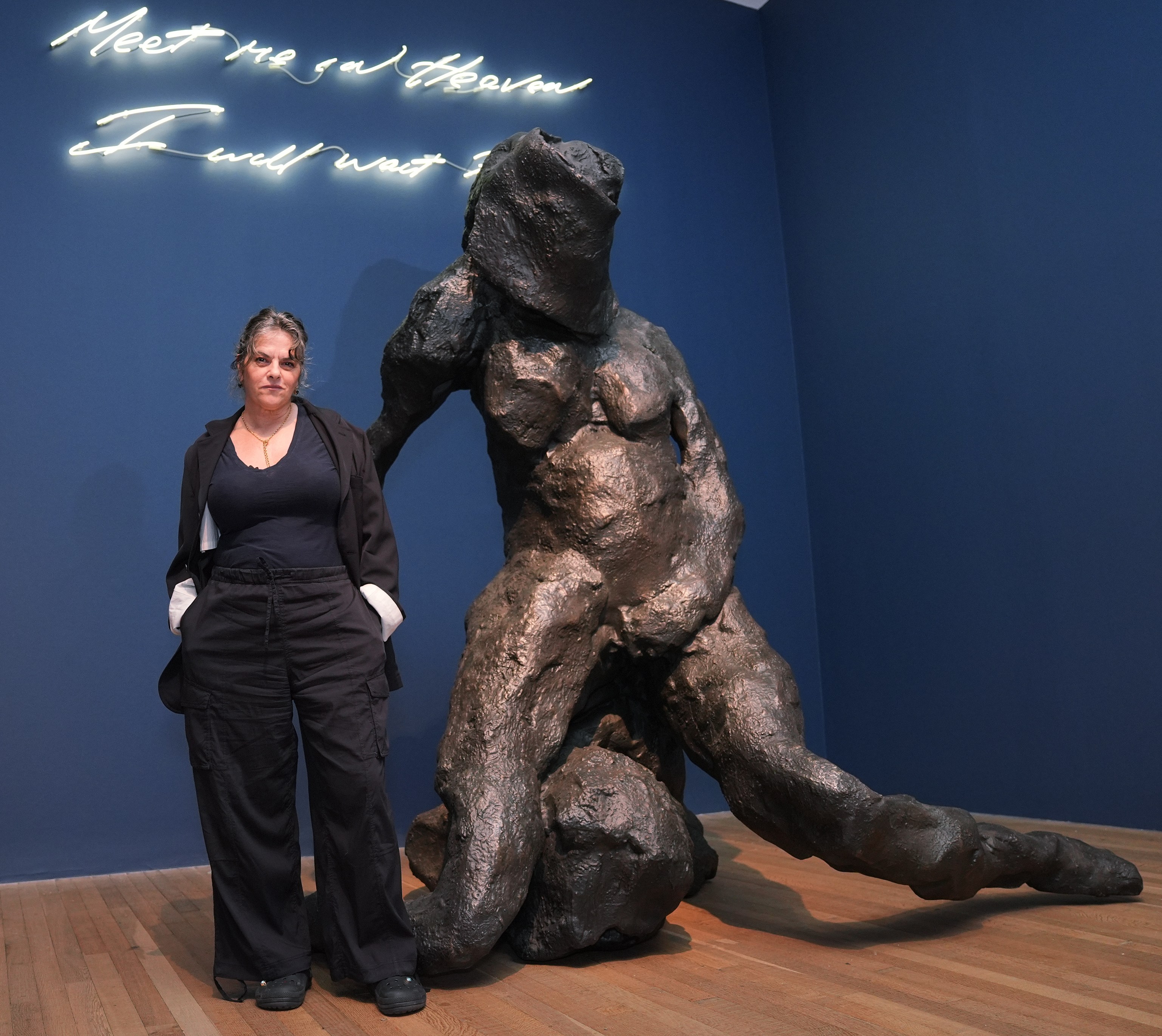
Emin with I Will Not Be Alone (2025) and the neon sign Meet Me In Heaven I Will Wait For You (2004)
YUI MOK/PA WIRE
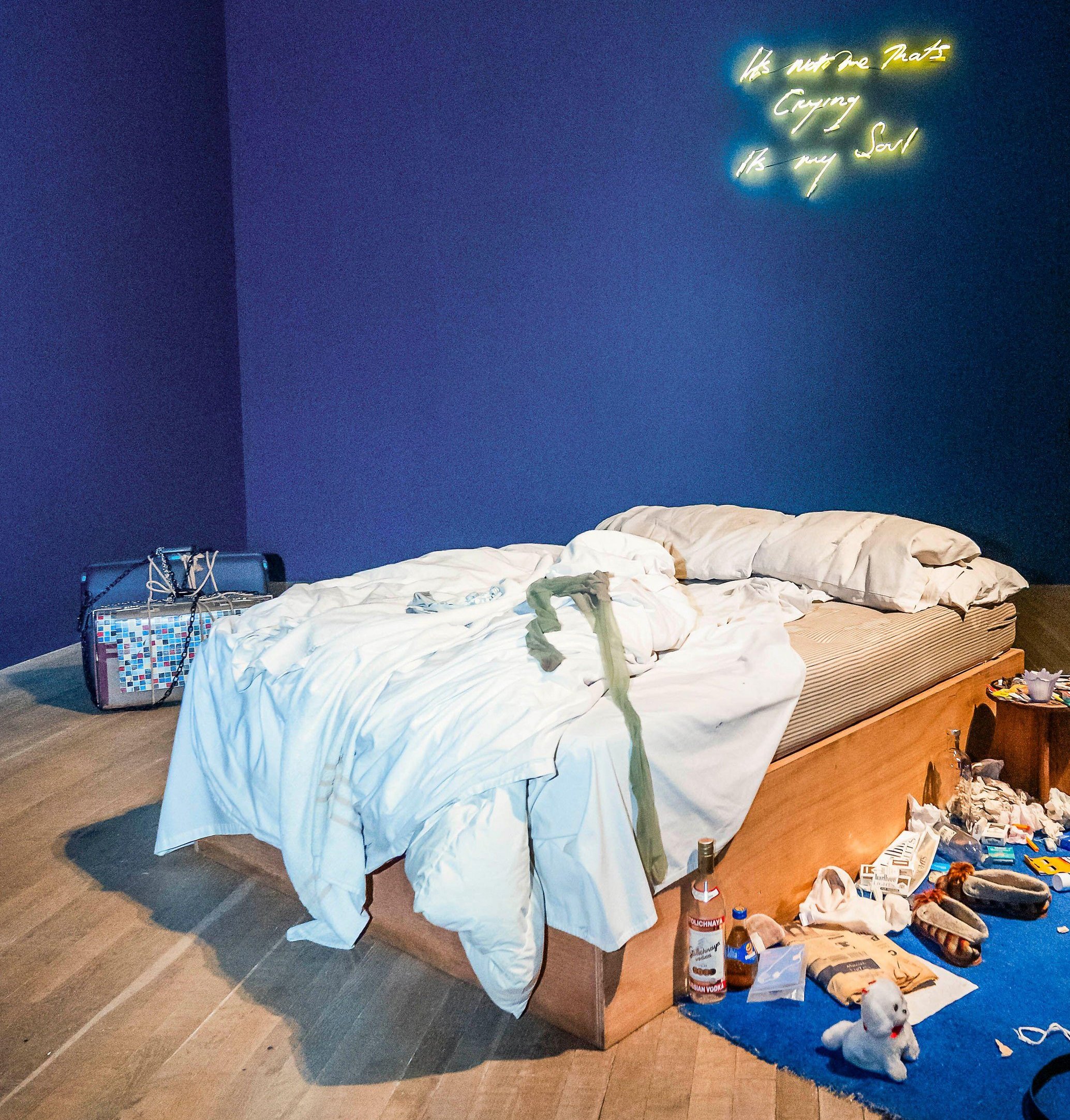
I was 12 years old when My Bed, littered with the detritus of squat and bedsit life, didn’t win the 1999 Turner prize (it went to the film artist Steve McQueen, then little known) and even I can remember the coverage, the op-eds, the hand-wringing over the modern woman and what she was coming to, the cartoons mocking it, the letters to the editor saying “come up and see my teenager’s bedroom sometime”, the two Chinese artists who staged a performance piece called Two Naked Men Jump into Tracey’s Bed. My Bed was a meme before memes. Here it is lit like an altar, a holy of holies complete with holey tights. It’s a polite, kid-gloves approach. What you need is for someone to pull on the marigolds and plunge into Emin’s dirty dishwater.
And yet… the grubby gussets may have been gussied up but the rawness of Emin’s art still comes roaring through. This is a show that gets under your skin and into your bowels. You feel it physically. In the 1990 video My Abortion, Emin says: “They scraped inside of my womb.” You experience this show like a scrape. It isn’t easy, I wouldn’t say it is especially enjoyable, but it is powerful. If you’ve ever had a mastectomy, a hysterectomy, a colectomy, a c-section or a bad birth and a worse tear, your scars will start to ache.
Emin is the Margate martyr. She shows us her wounds, holds up blood-stained canvases, displays the instruments of her torture. The medieval saints proffered their pliers and tongs, Emin offers up the bottle of painkillers she took after an abortion in 1990. “Abortion — the best f***ing mistake of my entire life,” she says in a monologue to camera. “That’s a contradiction but it’s the truth.” Emin has a way with words, often mangled to great effect. Walk along the concourse outside the exhibition and you’ll spot tiny baby cast-offs cast in bronze. There’s a mitten, a teddy, a sock, a shoe. Whose baby — forsaken, loved or lost — has dropped them?
• Madonna meets Tracey Emin! Why the queen of pop was on the southeast coast
In a video called Conversation with my Mum (2001), Emin refers to her “narcissism”. She said it, not me. The relentless focus on self could be exhausting but Emin doesn’t go in for self-pity. There’s regret. There’s tender embarrassment for her childhood self. (I hope the girl who didn’t invite Little Tracey to her party saw Dame Tracey go to the ball.) Mostly, though, there’s a sense of eff-off defiance. Past isn’t destiny. Second lives are possible. I kept thinking of the line that has come out of the Gisèle Pelicot memoir: shame must change sides. This show feels like a riposte to every man who groomed Emin, humiliated her, called her a slag.
I’ve seen My Bed in the flesh. I’ve seen photos many times. I know the grim list of accessories: the ash and cigarettes, the tampon applicators and condoms, the contraceptive pills and antidepressants, the half-opened sachet of barbecue sauce and the empty bottles of Absolut vodka. One detail I’d never noticed before is a Polaroid of Emin, fresh-faced and smiling, on the bedside table. Innocence knocked about by experience.
• Read more art reviews, guides and interviews
A corridor has been lined with two sequences of polaroid photographs both called Self Portrait. The first, taken in 2001, is Emin (then 38) in peekaboo mode: black lace bra, a seductive arched foot, knickers in a twist. The second set, taken between 2020 and 2025, don’t dare you to look, they dare you not to look away. They show Emin after an operation to remove her bladder, womb, ovaries, lymph nodes, urethra and part of her vagina and intestine. She wears mesh surgical pants, zooms in on her stoma. There’s no question, though, which is the happier, freer Tracey.
Among the best pieces in the show are the recent bronzes. Roll over, Rodin. Her twisted, sinewy nude maquettes make a mockery of every supplicant nude who ever reclined on the couch of a male sculptor. Similarly, a painting such as Rape (2018) will make you question every painting of a mythological “rapture” by an old master. It’s a painting of obliteration.
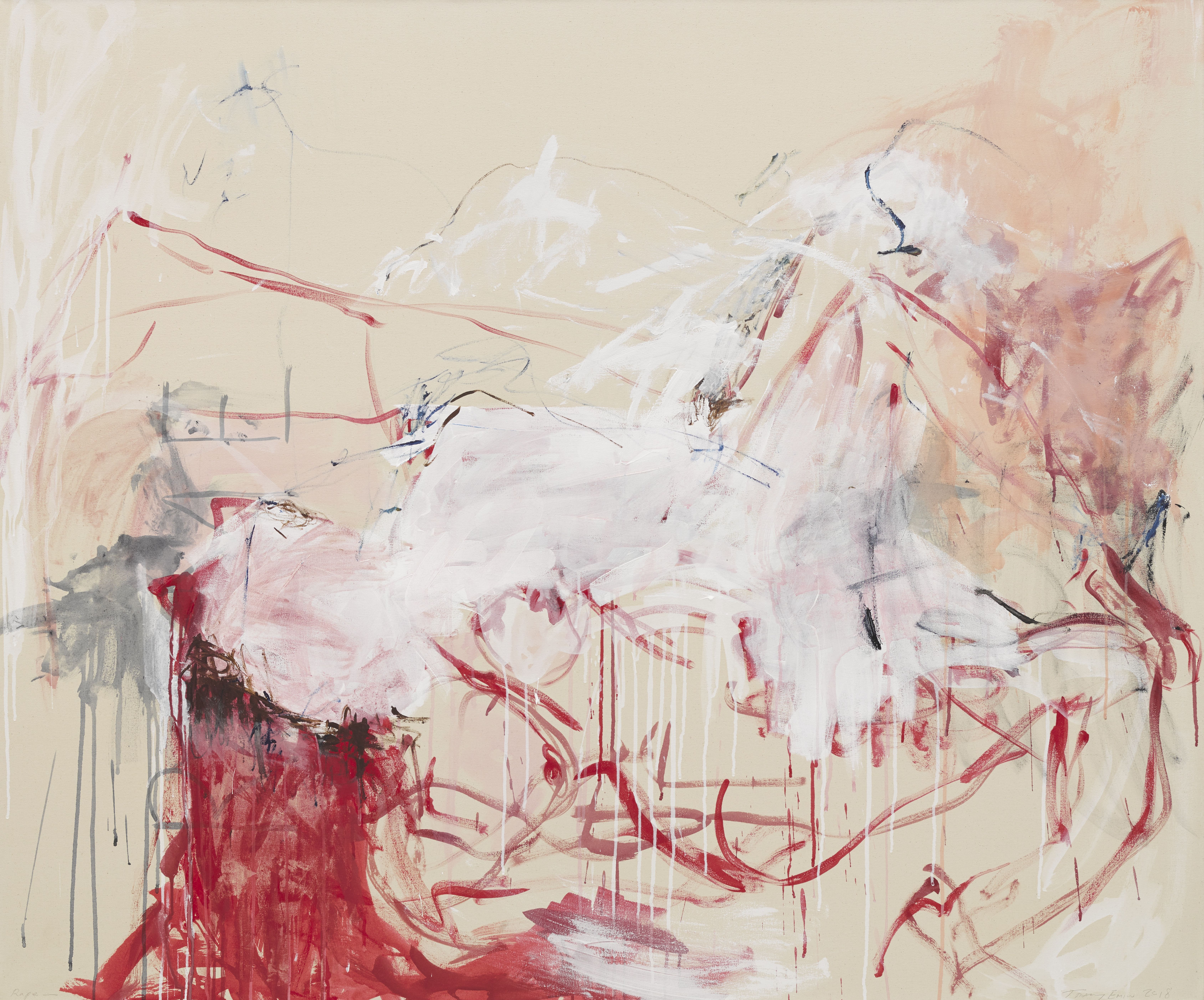
Rape (2018)
© TRACEY EMIN. ALL RIGHTS RESERVED, DACS 2026
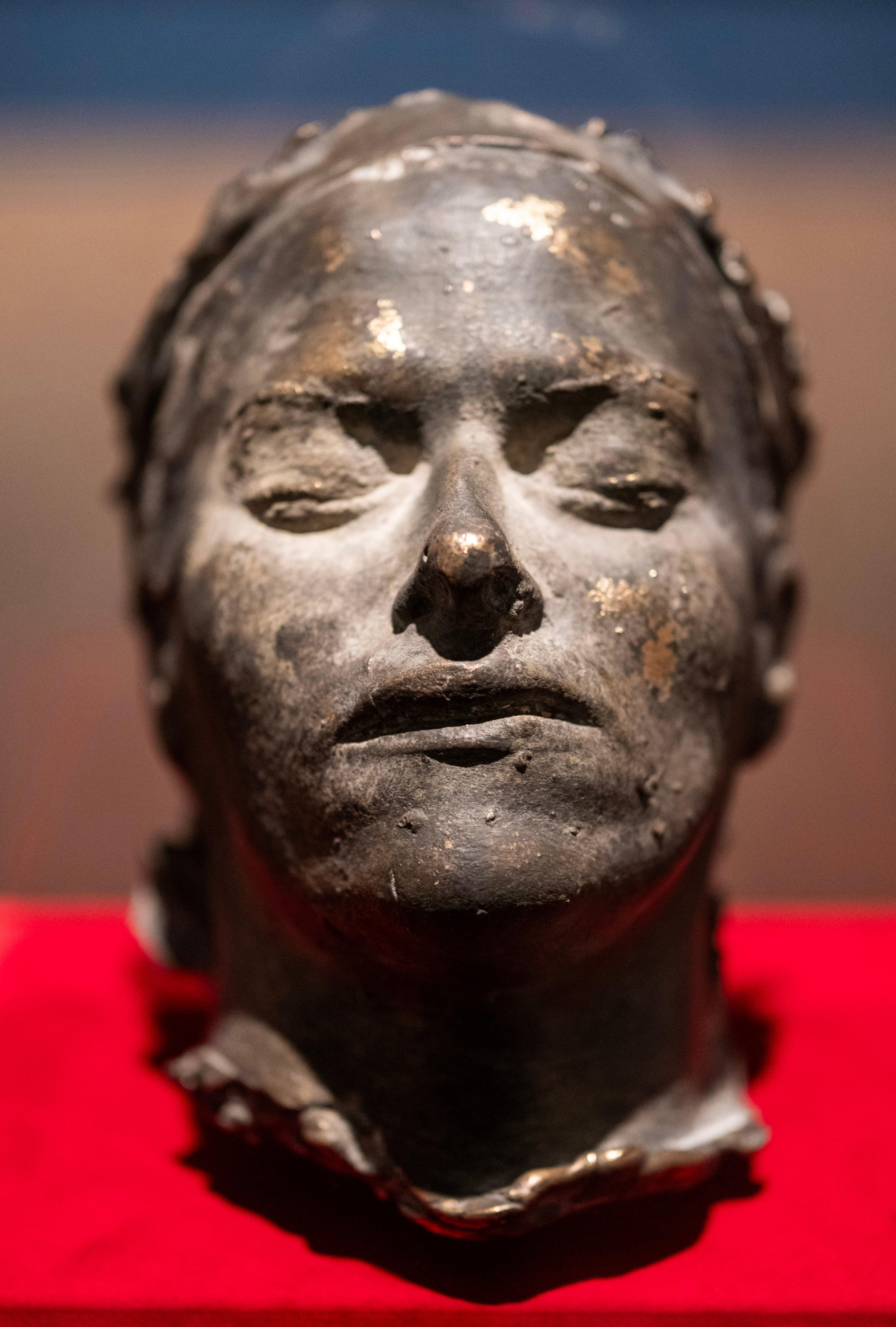
The final room is like a mausoleum, with Emin’s gilded bronze death-mask in the middle and flanking tomb figures along each side. It’s too soon for a send-off. Surely the best is yet to come.
★★★★☆
Tracey Emin: A Second Life is at Tate Modern, London, February 27 to August 31 (tate.org.uk)