
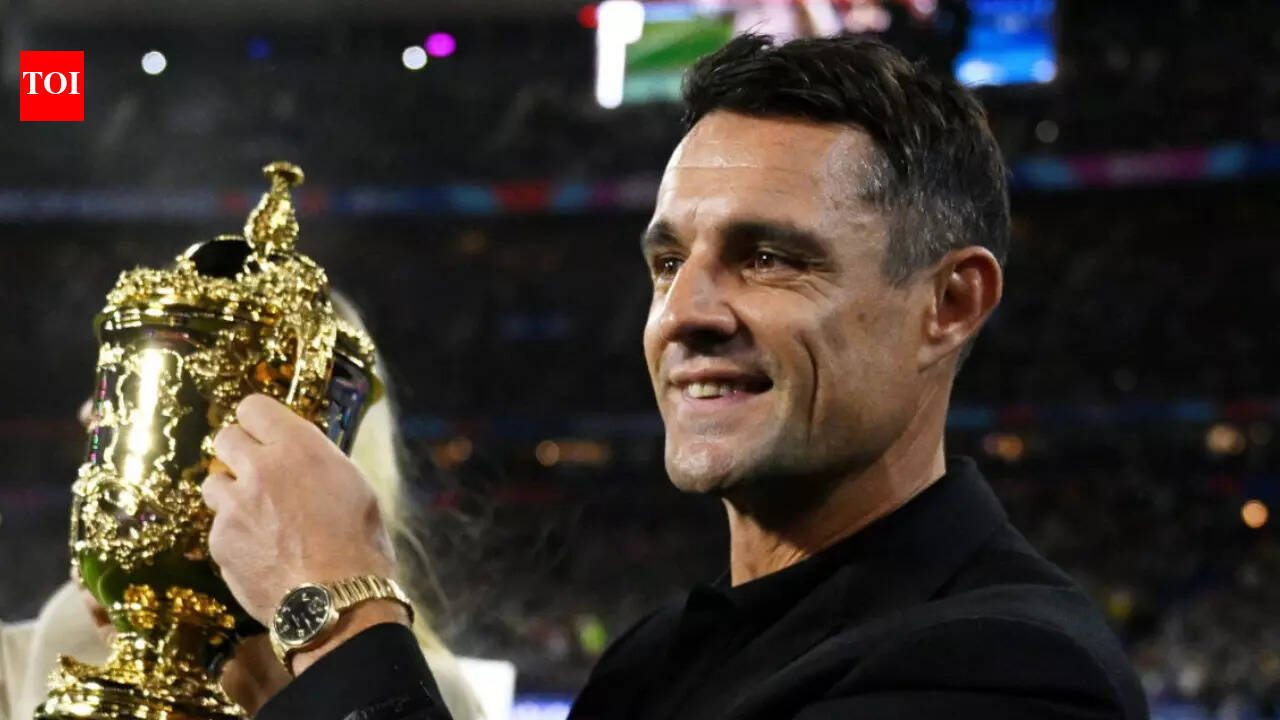
 Dan Carter net worth revealed.Image via: Getty When people talk about the greatest rugby players of all time, Dan Carter’s name comes up almost immediately. For nearly 15 years, he was the calm, calculating presence running the All Blacks backline. But beyond the trophies and records, Carter built something else: one of the strongest financial legacies the sport has seen. Rugby does not produce billionaires. It rarely even produces nine-figure athletes. But within the financial limits of the sport, Dan Carter maximised everything.
How Dan Carter turned rugby dominance into lasting wealth
Dan Carter’s estimated net worth sits around $20 million. In rugby terms, that places him among the wealthiest players in the game’s history. Born in Leeston, New Zealand, in 1982, Carter came through the Canterbury system before becoming the face of the Crusaders in Super Rugby. His control at fly-half, his kicking accuracy and his ability to deliver in big moments made him indispensable. He was not flashy. He was reliable. And that reliability made him valuable. Across 112 Test matches for the All Blacks, Carter scored 1,598 points — a world record at the time. He won two Rugby World Cups, in 2011 and 2015, and picked up three World Rugby Player of the Year awards. At his peak, he wasn’t just New Zealand’s best player. He was the standard for the position globally. His income reflected that status.During his years with New Zealand Rugby and the Crusaders, Carter was among the highest-paid players in the country. But the real financial leap came when he moved overseas. His contract with Racing 92 in France was one of the most lucrative in rugby at the time, reportedly paying well over $1 million per season. Later, a stint in Japan with Kobelco Steelers added another strong payday before he eventually retired in 2021.Then there were endorsements. Carter was one of rugby’s most marketable figures. Global brands such as Adidas and Land Rover partnered with him during and after his playing career. Unlike many players in the sport, he had crossover appeal: clean image, international recognition, World Cup success. That matters commercially. Since retiring, Carter hasn’t disappeared. He has written a bestselling autobiography, taken on ambassador roles and invested in business ventures. His income now comes less from rugby and more from the brand he built while playing it.He left the game with medals, records, and a balance sheet that reflects a career done right.