
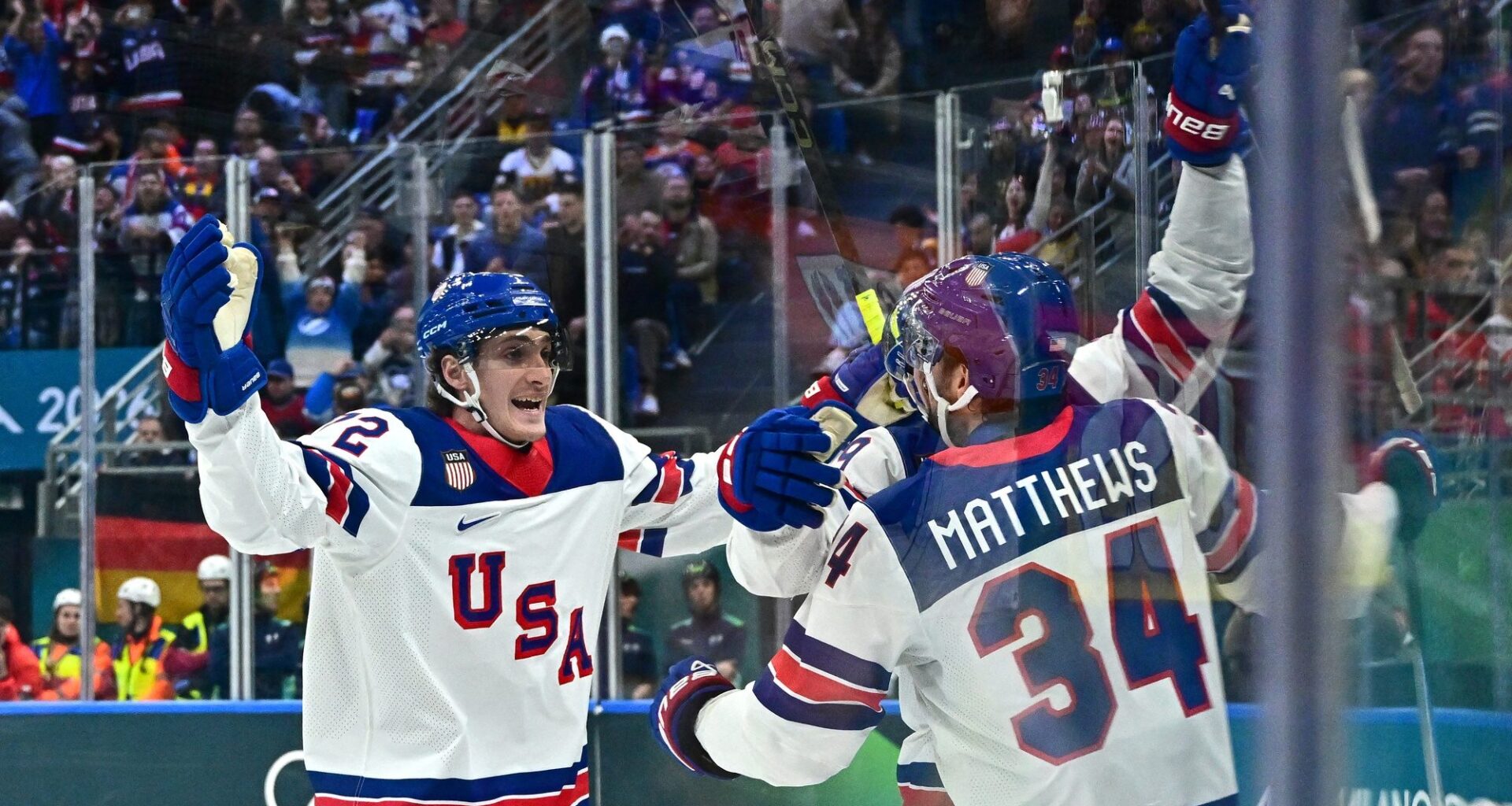
Following historic viewership for the men’s ice hockey gold medal game at the 2026 Winter Olympics that saw NBC earn 18.6 million viewers, it’s tempting to assume the NHL is about to enjoy a ratings bump. History suggests otherwise.
Last year, the Canada-United States final in the 4 Nations Face-Off tournament, like this year’s Olympics, also drew a historic U.S. audience. The game averaged 9.3 million viewers, the most-watched non-Olympic hockey game in the modern era. However, interest in the sport didn’t meaningfully translate to the NHL.
The first games after the 4 Nations tournament, a Capitals-Penguins and Wild-Red Wings doubleheader on ABC, averaged 1.02 million viewers, about the same figures the network pulled for a Golden Knights-Bruins and Lightning-Red Wings doubleheader right before 4 Nations, which averaged 1.12 million viewers.
Overall, regular-season NHL viewership was up 5% after the 4 Nations tournament compared to the same period in 2024. However, it’s unclear how much of that was directly related to the tournament. TNT saw the biggest viewership increase, but that also corresponded to additional coverage of Alex Ovechkin chasing Wayne Gretzky’s all-time goal record. The game in which Ovechkin broke the record, which aired on TNT, averaged 905,000 viewers, the most-watched regular-season non-Winter Classic game on the network.
The modest increase for the post-4 Nations period could reasonably be attributed to the record chase and statistical noise. Take a series-clinching Game 6 of last year’s Stanley Cup Finals, for instance. That game averaged just 2.8 million viewers on TNT (excluding streaming), making it the least-watched Cup Final Game 6 since 1994.
The 4 Nations is not the only time the United States and Canada have delivered a historic hockey audience that didn’t translate into NHL viewership. The United States-Canada gold medal game at the 2010 Olympics averaged 27.6 million viewers and is the third most-watched hockey game ever in the United States. But similar to 2024, viewership for the NHL in the 2009-10 season was a mixed bag. Overall, viewership was down 7% on Versus that season compared to 2008-09. But early-round playoff viewership saw a decent increase and potentially benefited a bit more from the Olympics than the season-long numbers..
Structurally, the Olympics aren’t set up particularly well to support leagues that send players. The NHL can’t post any highlights of games on its social media platforms due to the Olympics’ strict copyright laws, and the same applies to individual teams. Additionally, unlike in 2010, the NHL is no longer partnered with Olympic rights holder NBC. As a result, NBC has no reason to directly promote NHL games during the Olympics.
One thing the Olympics does very well is draw casual fans. Most people, including you, dear reader, are very unlikely to watch curling again until the 2030 Winter Olympics. Even though hockey is a much more mainstream sport in the United States, a similar principle applies.
This is not a knock on the NHL, and how the league feels about the worthiness of sending NHL players to the Olympics is unlikely to be reflected in American TV ratings. The Olympics allow top-level NHL players to be watched in markets around the world where the NHL otherwise wouldn’t be seen. That’s a meaningful accomplishment for the league.
While history does not support a United States viewership bump for the NHL as a result of the Olympics, the league is still likely to feel the benefits of allowing its players to participate, just not as much as it would hope.