
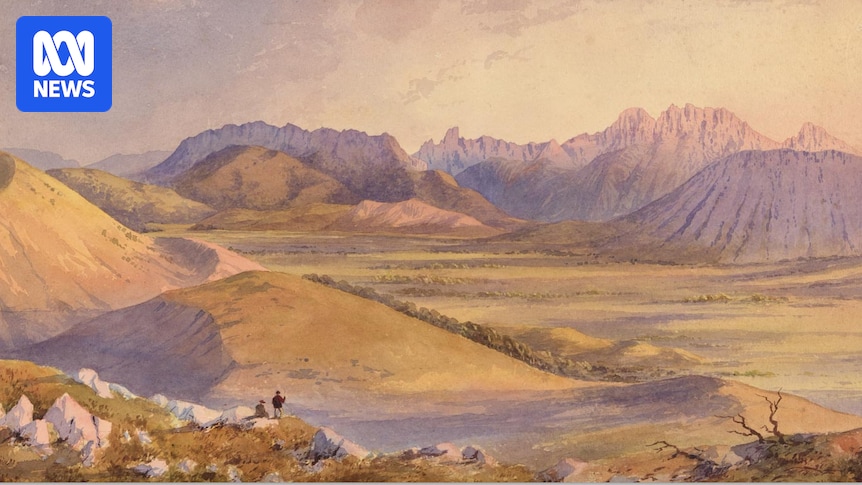
Could a valuable piece of Australian art history be hanging in your home?
Perhaps you once picked up a sketch of Tasmania’s wilderness from an op-shop, or have an old painting passed down through the family.
The Royal Society of Tasmania believes lost works by colonial painter William Charles Piguenit are yet to be discovered.
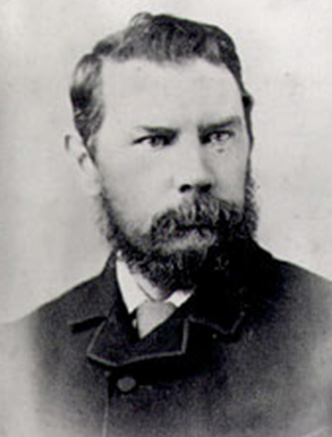
William Piguenit was a prolific painter with pencil, watercolous and oils from the 1870s up until his death in 1914. (Wikimedia Commons: Granville A. Wood)
They are appealing to Tasmanians to check their walls and cupboards for possible pieces by the celebrated artist.
Born in Hobart in 1836, Piguenit was one of the first professional painters born in Australia and is considered among the top tier of colonial artists.
One of his works sold for more than $300,000 at auction last year, and experts believe many more of his works remain undiscovered in private hands.
Ross Large, the chair of the Royal Society of Tasmania’s art committee, said while experts consider Piguenit to be on par with other celebrated colonial artists such as John Glover, his name is not as widely recognised among general audiences.
“He’s sort of been forgotten to a degree, and it’s only in recent years that people are realising what a fantastic artist he was,” he said.
“Therefore the value of his paintings are rising substantially.”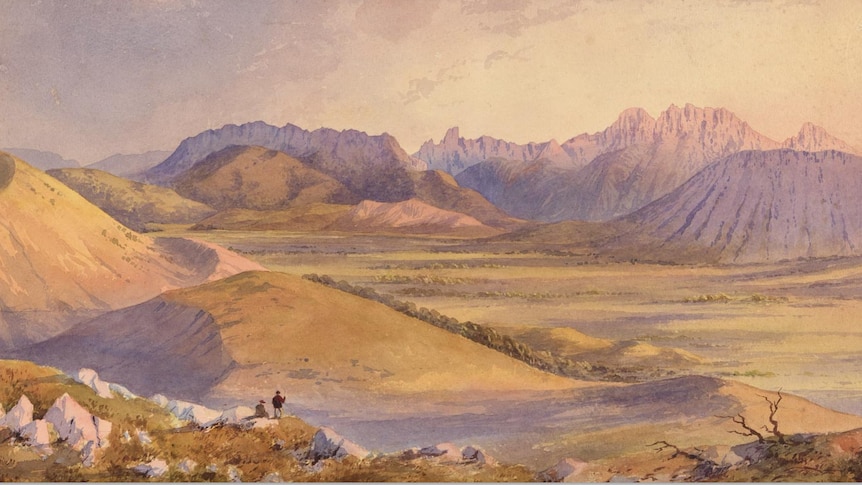
Tasmanians are being urged to check if any of the artworks in their home could be a lost Piguenit. (Supplied: Royal Society of Tasmania)
‘Countless’ works still out there
From the 1870s until his death in 1914, Piguenit was a prolific painter and sketcher, working with pencil, watercolours and oils.
He is best known for his dramatic landscapes, regarded as some of the earliest depictions of Tasmania’s wilderness.
Many of his best known oil paintings are held in public collections, including the Tasmania Museum and Art Gallery.
Art historian Anita Hansen, a former honorary curator with the Royal Society of Tasmania, said many of Piguenit’s oil paintings began as pencil or watercolour sketches, made during trips into the wilderness.
The society’s collection is predominantly made up of these watercolours, and she believes there are “countless” more to be discovered.
“The artists often worked together and they give each other a painting when they’re out in the field working, so it is very likely that someone would have one,” she said.
But it is not just the sketches that might be waiting to be found.
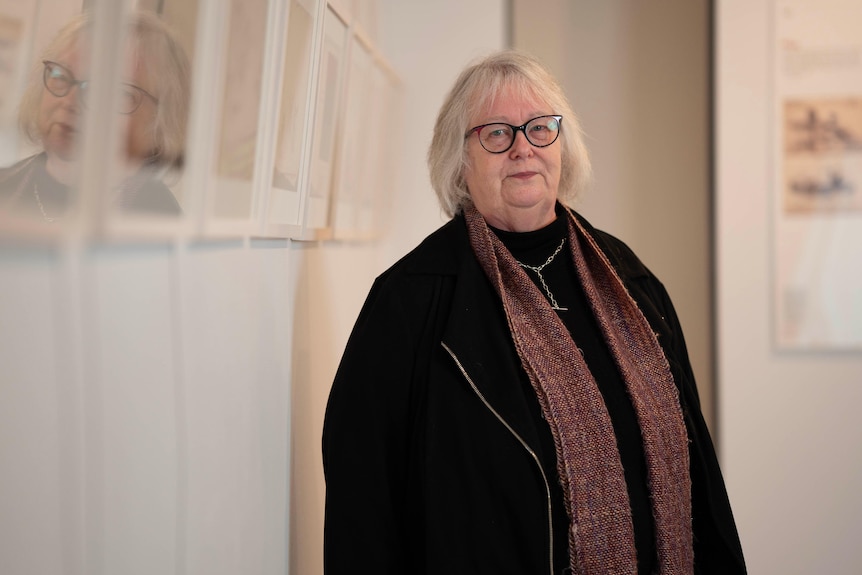
Anita Hansen says she’s hoping one of the artworks may “turn up” at an upcoming arts roadshow on Tasmania’s west coast. (ABC News: Maren Preuss)
Dr Hansen said she knows of at least three oil paintings that have “half-disappeared”.
“Whoever’s got them might turn up with them,” she said.
“It would be nice to know where they are.”
Mr Large believes the best chance of finding lost Piguenits would be in Tasmania’s west coast.
“Because he painted in the central highlands and the western country of Tasmania, he probably came across quite a few of the local people that were living in those areas and could well have passed a sketch or a painting on to them,” he said.
“I think it’s more likely we’ll find one in Queenstown than in Hobart, for instance.”
Roadshow hopes
According to the experts, identifying a Piguenit is not always straightforward.
“He rarely put his signature on his paintings … and he rarely put the title of the painting on the works either,” Mr Large said.
To help track down some of his potentially lost works, the Royal Society of Tasmania is hosting an Artwork and Antiques roadshow at The Gallery Museum in Queenstown on March 7.
For $5, people can bring in up to two items to be assessed by art and antique expert Warwick Oakman.
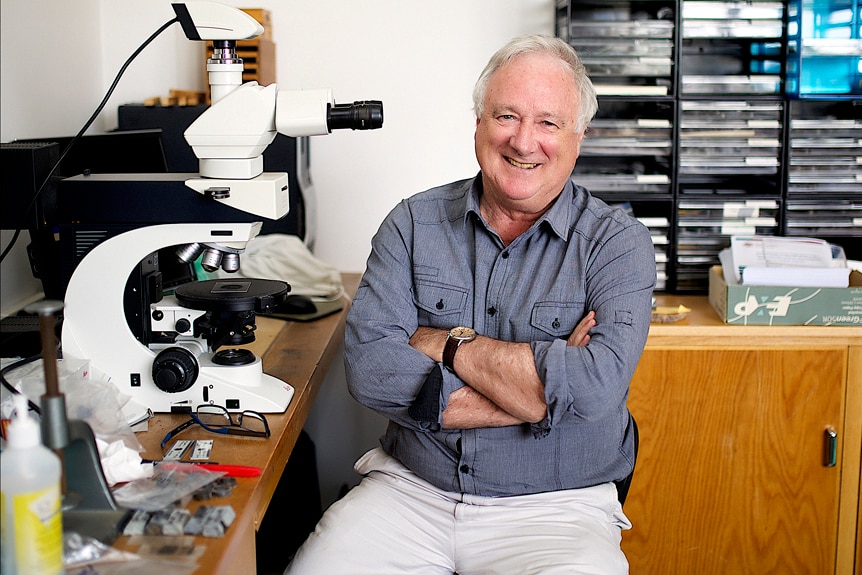
Ross Large says the west coast could be one of the likeliest locations for one of Piguenit’s lost artworks. (Supplied: Karen Brown)
Mr Large said a discovery would be “incredible”.
At a recent roadshow event in Longford, someone showed up with a Piguenit oil painting.
Dr Large said the owner was aware of the artist, but they were shocked to learn it was valued at more than $100,000.
‘Atmospheric’ artworks
The roadshow coincides with the opening of the society’s ‘Hidden Treasures: Walk to the West’ exhibition.
Running from March 6 to April 10, the exhibition will feature works sketched by Piguenit during his 1887 walk from Lake St Clair to Macquarie Harbour along the Linda Track.
An excursion will also be held for people to retrace sections of the walk.
“He sketched a whole lot of scenes along that track … and we are featuring in the exhibition a number of those scenes and we’re taking people along the track to see where he painted from,” Dr Large said.
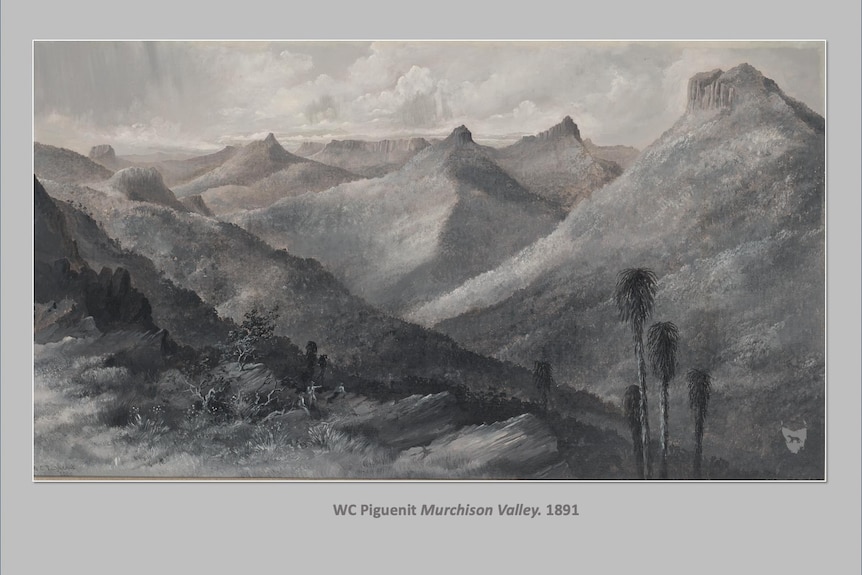
Piguenit’s artworks are “atmospheric” and “beautiful”, according to Anita Hansen. (Supplied: Royal Society of Tasmania)
Dr Hansen said Piguenit’s famous works from the region remain powerful.
“They’re so atmospheric … they’re just beautiful representations of that area,” she said.
“When you see those, you feel like you’re up there.”
A dozen Piguenit works will be on display, alongside paintings from fellow 19th-century artists Simpkinson de Wesselow and Louisa Anne Meredith.
Loading…