Trailblazing comedian and queer icon Wanda Sykes struts her dramatic stuff in Tamika Miller’s underwhelming boxing drama, Undercard. Sort of. There’s a familiarity about Sykes that’s hard to escape. For one thing, her voice is almost as distinctive as the late, great Gilbert Gottfried. It is an acute voice that gets accented when she’s going in for the kill, and the quality of it is only more recognizable when her temper is flaring. Sykes is a beloved comedian because of her sharp wit, but also because of how that wit is deployed: like she’s always incredulously trying to figure out how in the hell something is happening. Her approach makes us feel like we’re trying to figure this out together.
Undercard has been billed as Sykes’ “first dramatic role,” but marketing notwithstanding, this is the same Sykes the world has already fallen in love with. Her Cheryl “No Mercy” Stewart, an alcoholic and former boxing champ turned sober crusader and boxing coach, is temperamentally in line with the comic’s four-decade-old on-stage career. Her dialogue might not be as packed with jokes, but it is certainly as punchy and short-tempered, meaning that as well as Sykes can act — and she’s always been wonderful — she isn’t exactly disappearing into the role.
Undercard Underserves Wanda Sykes’ Considerable Talent
She is, nonetheless, as captivating as she typically is, but it’s a Pyrrhic victory. Miller’s film is well acted but written and directed so shoddily that any believability gained by the performers is lost in the final edit. Boxing is a sport that lends itself exceptionally well to the easy binaries of a hero’s journey, but Miller can’t get out of the shadow of better films like Creed, Rocky, and Million Dollar Baby.
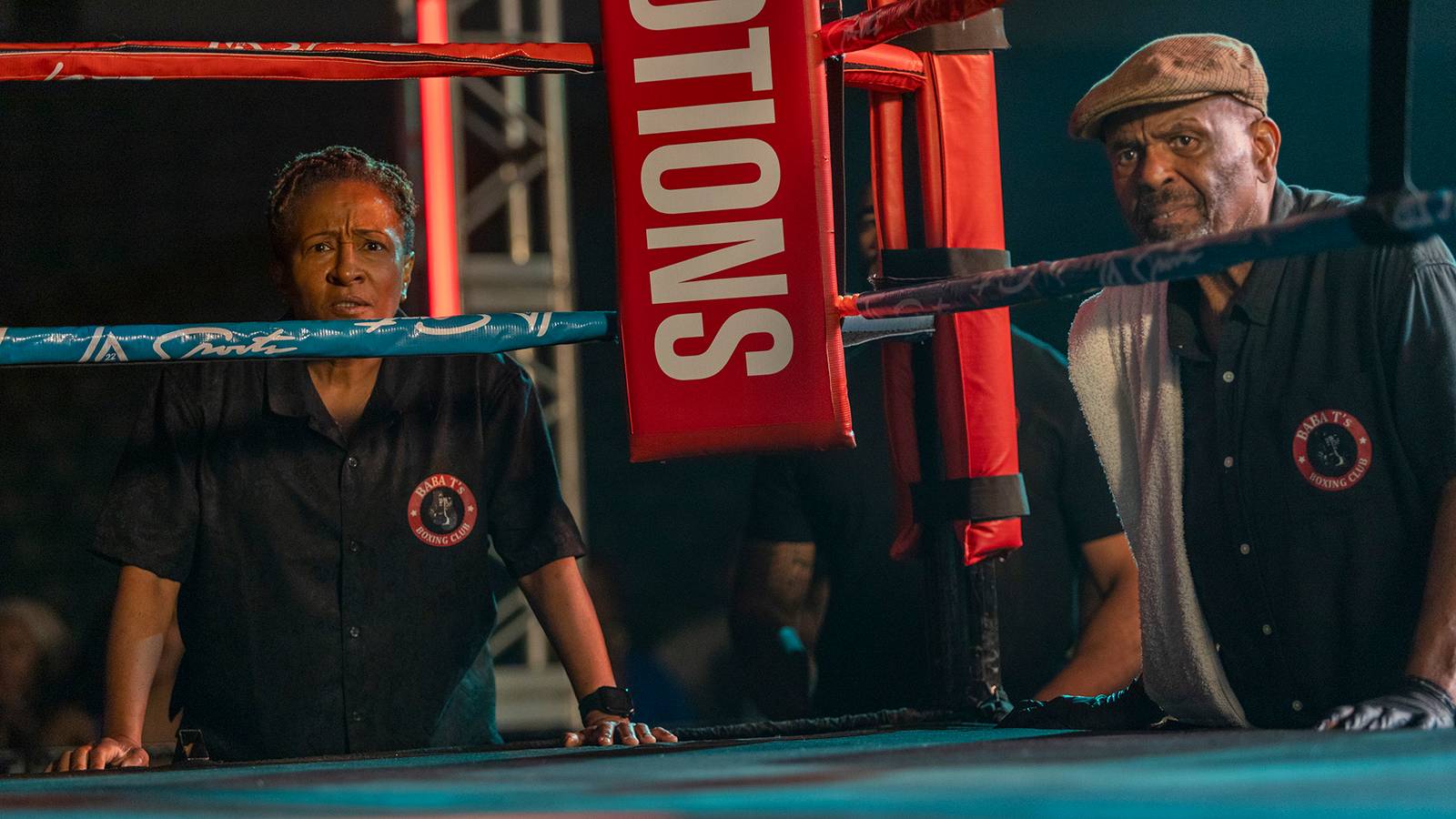
When we meet “No Mercy,” she is in the midst of training Kordell (Xavier Mills), a young, quick and boastful boxer she’s been with since he was sixteen. She works at Baba T’s, a rundown boxing gym, whose namesake (William Stanford Davis) is, seemingly, Cheryl’s only real friend. Despite gainful employment and four years of sobriety, Cheryl is confusingly riddled with debt and unable to make rent, which has several consequences beyond the obvious. The former star’s guardianship over her late sister’s child, Meeka (Estella Kahiha) is constantly being threatened by child services.
Experiencing imminent homelessness is not helping her attempt at reconnecting with her twenty-two year-old estranged son, Keith (Bentley Green), whose own promising boxing career is persistently threatened by an undisciplined life outside the ring. In ways that only highlight Miller’s conveniently-plotted screenplay, Keith eventually relents to being coached by his mother, even though he has sworn off contact time and time again.
Very little characterization across the board passes the smell test. Miller is so keen on casting Cheryl as a down-and-out former champ that she gives Sykes three hats too many, and in the process none of them are given enough attention. The battle for custody of her adopted daughter is an emotional crux that more or less disappears until it’s convenient to be brought back, which Miller does at the exact same moment that Keith happens to get arrested for selling drugs. Her financial instability doesn’t make a ton of sense, either, and Keith’s arc from righteously indignant cast-aside offspring to fawning devotee happens in the blink of an eye.
Most frustratingly for the film’s narrative is that the centerpiece rivalry between Kordell and Keith is cast in two very different lights that don’t square. At first, they are equally matched boxers, with the latter being written about in the trades as a real star, but then in the back half of the film it suddenly, without any explanation, becomes its reverse, whereby Kordell is a Goliath that Keith has to slay. Given that the final twenty minutes or so are devoted to their anticipated bout, it’s hard to know who to root for, nor who is actually the favorite, even as the robotic announcers insist that a Keith Stewart victory would be a massive upset.
… inadvertently, it only reifies the idea that this is a film stuck in the shadow of all that came before it.
Sykes brings what she can to the proceedings, but there’s only so much she can do to make Undercard even slightly distinctive. What she can’t do is make the film look nicer than it does; the boxing scenes unfortunately make the low budget stand out like a sore thumb, with the crowds at these events numbering maybe twenty but being sold for hundreds. The film’s first half hits its beats fine, if without uniqueness, but the back half is packed to the gills with every requisite trope one can think of for an underdog sports film.
The film’s title comes from the boxing term for the type of match that is scheduled as a kind of opener for more prestigious events. Miller invokes it as an ironic way to comment on the uphill battles for her characters, but, inadvertently, it only reifies the idea that this is a film stuck in the shadow of all that came before it. Sykes deserved better.
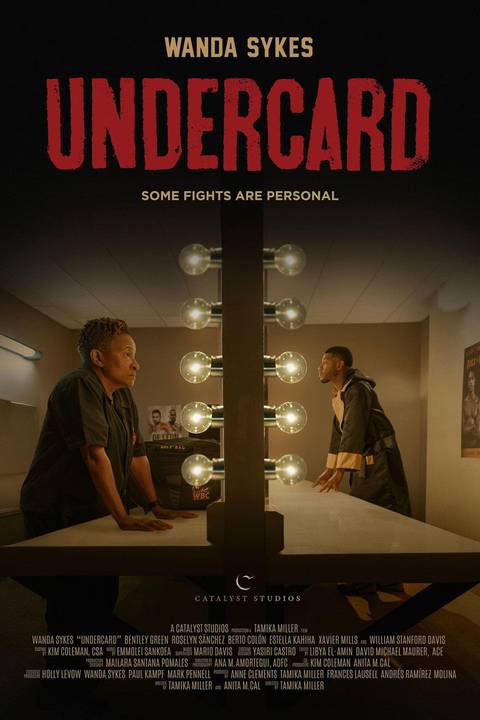
Undercard has a limited theatrical release on February 27th, 2026.
Release Date
February 27, 2026
Runtime
106 Minutes
Director
Tamika Miller
Writers
Anita M. Cal, Tamika Miller
Producers
Anne Clements, Mark Pennell, Paul Kampf, Andrés Ramírez
Cast

Cheryl ‘No Mercy’ Stewart