
KUALA LUMPUR – More than RM1.6 billion (S$522 million) is at stake in a family dispute that has drawn fresh attention to one of Malaysia’s best-known business dynasties.
At the centre is the estate of Ms Lim Siew Kim, the youngest daughter of late Genting patriarch Lim Goh Tong. Under her final will, two of her daughters – Chan T’shiao Li, 48, and Kimberley Chan, 45 – were left RM900,000 and RM100,000, respectively. These are modest sums relative to the size of the estate.
They have filed suit to nullify their mother’s final will, alleging it was executed under “fraudulent and suspicious circumstances”.
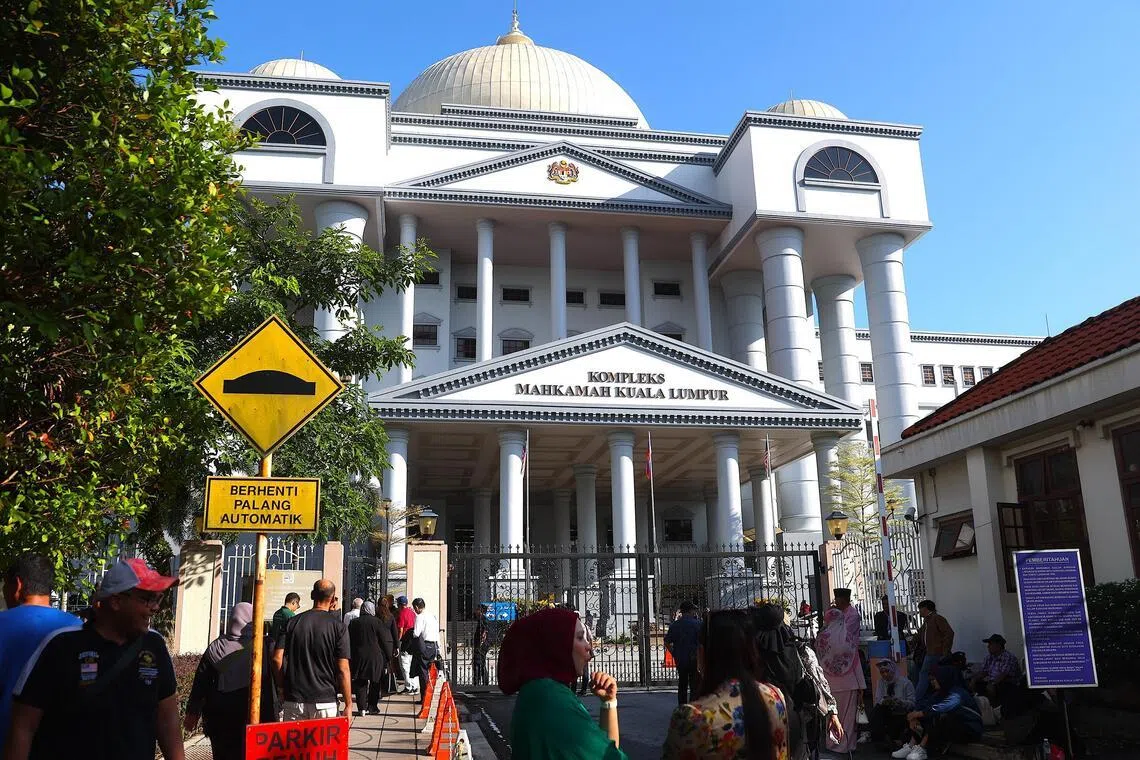
The civil action, filed in the Kuala Lumpur High Court, names their brother Marcus Chan as a defendant alongside the estate’s executors, Malcolm Fernandez and Chan Mei Yee.
Lawyer Low Beng Choo has also joined the proceedings as a defendant (intervenor) to address allegations surrounding the drafting of the will, a New Straits Times report indicated. The trial opened on Feb 23.
At stake is not only a substantial inheritance, but also the reputation of the Genting founder’s family and the relationships within.
Ms Lim Siew Kim died in July 2022, aged 73, following a two-year battle with Stage 4 ovarian cancer. Her daughters argued that she lacked the mental and legal capacity to execute her final will, signed just three months before her death while her health was deteriorating.
Here are five key aspects of the dispute.

Ms Lim Siew Kim died in July 2022, aged 73, following a two-year battle with Stage 4 ovarian cancer.
PHOTO: INTERNET
The final will, dated April 28, 2022, is the focal point of the conflict, as it dramatically restructured the distribution of Ms Lim’s RM1.6 billion fortune.
In 2023, her daughters discovered two earlier wills (dated Nov 2, 2021, and April 11, 2022) that suggested significantly different allocations, according to the Malay Mail.
Based on news reports in Malaysia, the plaintiffs argued that this rapid succession of three wills within a few months is a clear indicator of “suspicious circumstances”, forming the central pillar of their legal challenge.
In the disputed will, the Dikim Foundation received the bulk of the fortune. The charity was co-founded by Ms Lim and her late husband, and was granted more than 70 per cent of her residuary estate.
Her son, Mr Marcus Chan, received properties in Kuala Lumpur, shareholding in a company, the contents of all safe-deposit boxes and 30 per cent of her residuary estate.
Ms Cressa Chan, another daughter of Ms Lim, was left with RM10 million, a Kuala Lumpur property and company shares. Her daughter Jasmine – Ms Lim’s granddaughter – was allocated a monthly allowance of RM50,000.
By contrast, Ms Chan T’shiao Li and Ms Kimberley Chan were left RM900,000 and RM100,000, respectively – amounts their legal team described as mere fractions of the estate’s total value.
The plaintiffs claimed that the marked difference in allocation did not reflect their mother’s true intentions or sound judgment at the time of signing.
They also demanded that Mr Fernandez and Ms Chan return all the title documents that they currently hold to their mother’s properties, according to The Sun.
Whether Ms Lim possessed the requisite mental capacity during her terminal illness is central to the case. The court must determine whether the will reflected her genuine wishes, or was shaped by external pressure.
When the trial began, the focus quickly shifted to its high-profile participants. Ms Low, the veteran lawyer, was among the first to testify. She drafted and witnessed the will at the centre of the dispute.
Her dual role as both witness to the document and party to the proceedings drew close examination of her evidence in court.
She described Ms Lim as “alert and aware”, stating that she sat up in her hospital bed and signed the will page by page without visible medical tubes or assistance.
The plaintiffs’ lawyer, V. Sithambaram, disagreed, calling parts of her testimony “hearsay” and asking the judge to strike them out. They also alleged that Ms Low has a personal interest in the estate due to her connection with the Dikim Foundation – which she denied.
Judge Mahazan Mat Taib is scheduled to rule on March 2 on whether the disputed testimony remains admissible.
Beyond the legal technicalities, the prominence of the Lim family has amplified interest in the case.
Tycoon Mr Lim Goh Tong is renowned for transforming a remote hilltop into Genting Highlands, Malaysia’s only casino resort and a flagship conglomerate.
He had six children: three sons – Lim Tee Keong, Lim Kok Thay and Lim Chee Wah; and three daughters – Lim Siew Lay, Lim Siew Lian and Lim Siew Kim. He died in 2007.
Mr Lim Kok Thay assumed leadership of Genting and expanded the group into Singapore, the United States and the United Kingdom. His son, Mr Lim Keong Hui, is the group’s deputy chief executive and widely viewed as the heir apparent.
Most of the founder’s other children, including Ms Lim Siew Kim, did not take active management roles within the group.
Although the present dispute does not directly involve Genting’s corporate control, the family has faced litigation before.
In 2016, Ms Lim Siew Kim sued family vehicle Kien Huat Realty and her brother, Mr Lim Kok Thay, claiming 796,250 Genting shares were held on trust for her since the 1970s. She sought either the shares plus all attached benefits, or nearly RM2.1 billion in value.
She said an understanding with their father created this oral trust, while her brother and the company denied any trust existed, arguing the shares were fully sold and transferred to Kien Huat Realty in 1975, according to The Edge.
The lawsuit between the siblings ended via a broader family settlement in 2019.
The High Court’s eventual verdict could determine not just the division of RM1.6 billion in assets, but also set a precedent for how Malaysian courts evaluate claims of mental incapacity and undue influence in high‑value estates.
The judge’s upcoming ruling on the admissibility of the disputed testimony will determine if the trial proceeds or moves towards settlement.
The case also highlights the intersection of trust law, charities and private wealth. It gained further significance following Genting’s
failed privatisation bid
in late 2025.
In October 2025, the group launched a RM6.7 billion bid to privatise Genting Malaysia and delist it from Bursa Malaysia. However, the offer closed on Dec 1 with only 73.1 per cent acceptance, falling short of the 75 per cent required to proceed with delisting.
THE BUSINESS TIMES