
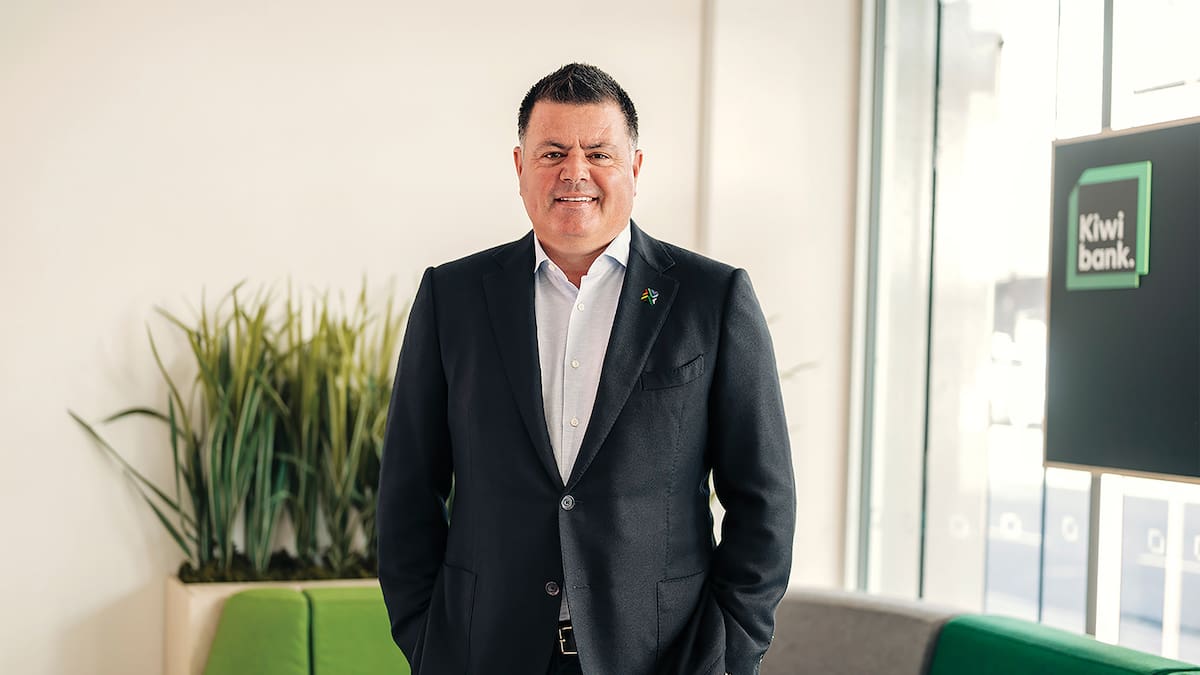
“Just about everyone in the industry would’ve felt like they were caught on the hop.”
The Reserve Bank pointed out there had been a 40% decline in bank branches over the past decade, branches had reduced their hours, banks charged ATM users, and it was difficult for business owners, particularly in rural areas, to conveniently deposit cash.
The Reserve Bank said “significant market failings” were removing New Zealanders’ choice to use cash, and providing cash services was part of a bank’s “social licence” to operate.
It was dismissive of the cost of its proposals, estimating they would amount to about $104 million a year – the equivalent of 1% of banks’ collective annual profits.
The Reserve Bank estimated that, if banks passed the entire cost onto customers (it was unconvinced they would), borrowers would end up paying 1.8 basis points more in interest. This would see someone with a $600,000 loan pay $108 more over a year, for example.
New Zealand Banking Association chief executive Roger Beaumont said customers would carry the cost of the “extreme” and “back to the future” pathway the Reserve Bank wanted to take.
Jurkovich was happy to consider how to ensure the 5-7% of Kiwibank customers, who relied heavily on cash, were better served.
However, he believed cash wasn’t necessarily as widely used as survey results suggested.
“The use of cash is falling for everyone but criminals,” he said, questioning whether Inland Revenue would be as keen as the Reserve Bank to encourage more cash use.
Reflecting on his lunch with Breman, Jurkovich said: “The Reserve Bank Governor did make the very good point that she’s been operating in Sweden, very close to the Ukraine war, and those types of events really bring to the fore that people need access to cash, and we should be thinking about how much cash circulates.
“But it wasn’t that long ago that we were talking about stablecoin and central bank digital currencies as well. It all seems to have moved pretty quickly.”
Indeed, the Reserve Bank is stopping an extensive piece of work it did exploring whether it should issue a digital currency.
In terms of the role of cash during crises, Jurkovich said it wasn’t as simple as setting up more ATMs.
For example, he noted that people couldn’t withdraw the cash that was helicoptered into the East Coast during recent extreme weather, because there was no power to operate ATMs.
Politicians, retailers, farmers respond
Bank executives raised their concerns at a lunch with Prime Minister Christopher Luxon on Wednesday, just after the Reserve Bank published its consultation.
Finance Minister Nicola Willis recognised that people relied on cash to buy essentials when eftpos and online banking systems were down. She also said, “many New Zealanders still prefer to use cash, which is a fair expectation”.
However, she did not express a view on whether the Reserve Bank’s proposals were proportionate.
“I encourage the commercial banks and other stakeholders to work with the Reserve Bank to find a solution that works for the banks and their customers,” she said.
Act, NZ First, Labour and the Greens all expressed some concern around the potential cost to customers.
NZ First and the Greens most strongly supported the Reserve Bank’s intent, recognising the importance of cash for rural, elderly and vulnerable communities. Labour did so too, but said a response had to be proportionate. Meanwhile, Act was particularly worried about the cost.
NZ First noted it also had a policy to “mandate vendors in trade to accept cash payments for goods and services, which addresses the unintended consequences of an increasing use of digital-only payment systems”.
The Reserve Bank said it would consider whether to require vendors to accept cash “in due course”.
Retail New Zealand chief executive Carolyn Young’s initial thought was that the Reserve Bank’s proposals sounded heavy-handed. However, she was interested in better understanding how they would work in practice.
She acknowledged that even though card payments were increasingly common, those who used cash relied on it heavily.
Federated Farmers spokesman Mark Hooper was open to discussing ways of addressing the lack of banking services readily available to those in rural communities.
“It’s ironic that farmers and other primary industry producers are New Zealand’s principal ATM for export earnings, but they struggle to access cash services themselves because banks in provincial towns have pulled down the shutters,” he said.
“Banks are making excellent profits, including from farmers. We agree with the Reserve Bank that providing and handling cash should be a basic banking service, free of charge to customers.”
Jenée Tibshraeny is the Herald’s Wellington business editor, based in the parliamentary press gallery. She specialises in government and Reserve Bank policymaking, economics and banking.
Stay ahead with the latest market moves, corporate updates, and economic insights by subscribing to our Business newsletter – your essential weekly round-up of all the business news you need.