
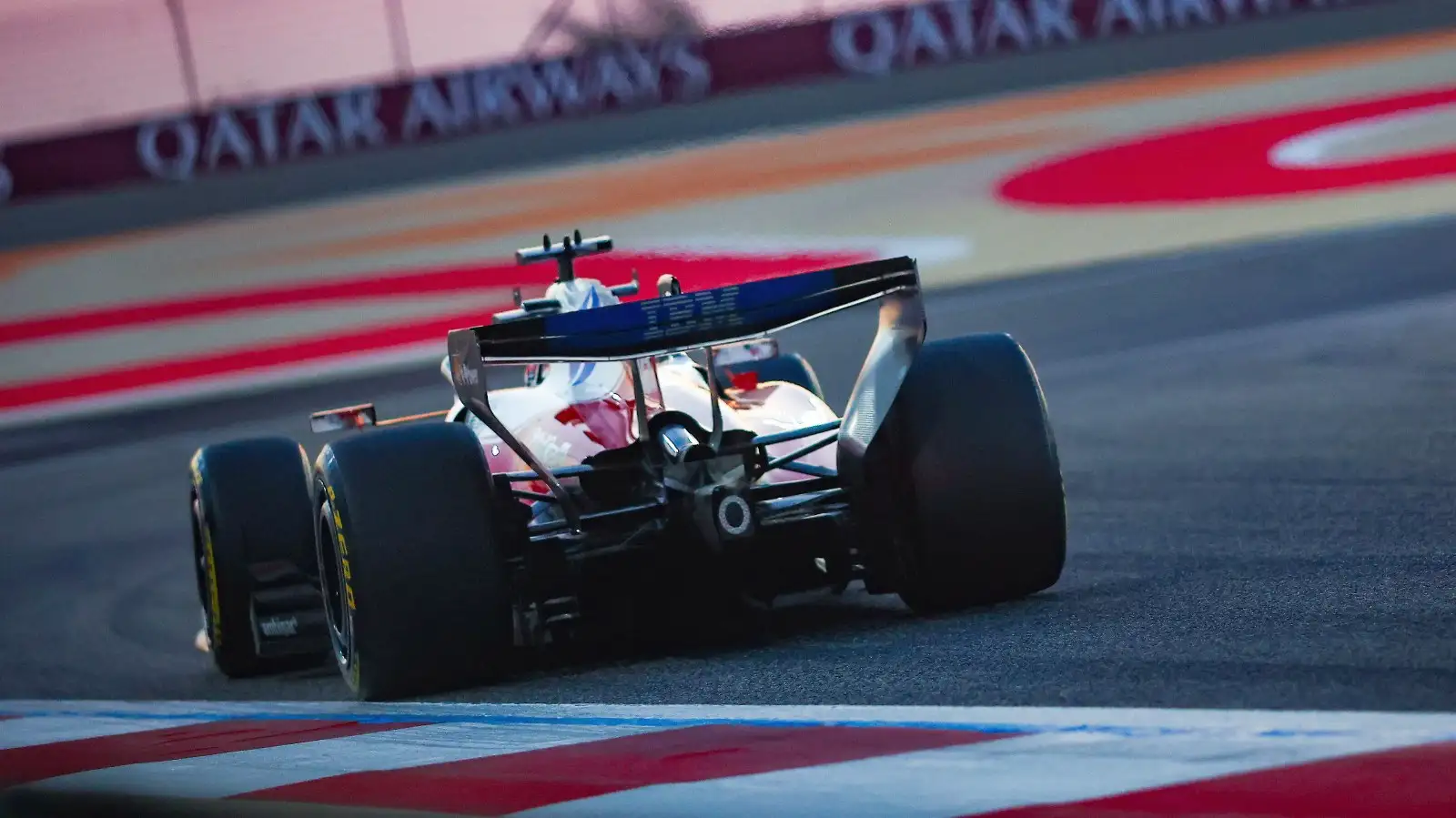
F1 drivers and teams are preparing for a markedly different season as they become more concerned than ever with just how much charge the car’s battery has.
The 50/50 split between the internal combustion engine and the battery has seen plenty of drivers warn that racing will fundamentally change, with drivers potentially having to ease off the accelerator on the straights to manage the charge state of their battery.
That will be very circuit specific, with such venues termed ‘harvest poor’ by teams. Here are the tracks which are predicted to cause problems.
Which tracks will cause problems for F1’s recharging?
Want more PlanetF1.com coverage? Add us as a preferred source on Google to your favourites list for news you can trust
Australian Grand Prix
The first problem comes immediately with Melbourne.
A battery likes a heavy braking zone, ideally one coming from a big speed, to give it sufficient recharge. If you look at a map of the Albert Park Circuit, you will see this occurs almost never.
Aside from Turn 1, there are very few long straights leading into sharp corners and instead a mix of medium to high speed corners, something that does not promote battery charging.
There are small opportunities into Turn 3 and at the end of Lakeside Drive towards the end of the lap, but the opportunities are few and far between.
Japanese Grand Prix
One of the most revered circuits on the calendar for drivers, the sinuous Suzuka circuit is famed for the esses section that opens the lap.
In modern machinery, there is comparatively little braking into Turn 2, with Turn 1 really acting as a curved braking zone.
Degner 2 offers the next significant braking event, but that’s comparatively brief as drivers flight their cars right under the bridge before the hairpin at the other end of a short straight.
There’s little braking into Spoon, and 130R has become flat, or close to it, in recent seasons, leaving the Casino Triangle the only real hard braking point of the lap.
Saudi Arabian Grand Prix
The challenge of Saudi Arabia a few weeks later comes thanks to its fast, flowing nature.
The stop into Turn 1 is arguably the best recharge point on the lap, with most other corners requiring little more than a brush, or a dab, on the brakes.
The exception is the final corner, which is another hard braking event, but it makes for few places where drivers can harvest energy during deceleration.
Canadian Grand Prix
While not as bad as its Australian counterpart, Montreal is another track where drivers don’t slow down all that often.
Plenty of the corners are medium speed and in between those are some long straights where the battery could take a real hammering.
There is a decent braking zone into Turn 2, and another into the hairpin at the other end of the circuit, and even the chicane to end the lap. Beyond that, there’s very little.
Belgian Grand Prix
At over 7km, the Circuit de Spa-Francorchamps is the longest on the Formula 1 calendar and with that comes its challenges.
The track is primarily made of medium/high speed corners and, in particular, the run from Turn 1, up Eau Rouge and down the Raidillon straight is often done at flat out.
In a predominantly ICE-powered car, that was no problem. But with increased electrification, how drivers use their battery during these long flat-out stretches before even reaching the second sector could be decisive.
Sector 2, though Les Combes and Bruxelles may often some moments for recharge but Sector 3 is also primarily high speed corners, with the exception of the Bus Stop chicane.
More on the F1 2026 season from PlanetF1.com
* F1 2026 explained: why ‘super clipping’ could reshape racing
* Eye-opening Fernando Alonso telemetry data as 50km/h speed deficit emerges
* Opinion: Formula 1 is undermining innovation with 2026 engine politics
Italian Grand Prix
If there is one circuit that F1 teams have looked at the calendar, circled with a big red pen and wrote ‘trouble’ next to it, it’s Monza.
The Autodromo Nazionale Monza is a circuit that doesn’t really do corners. In theory, there are 11 of them, but in reality, only about half of them could be considered actually corners.
The rest are just bends in an otherwise flat-out, foot to the floor circuit. A track doesn’t get the nickname the Temple of Speed for nothing.
All of this poses a very real problem for the batteries. Long, high speed straights with few braking zones mean it is unlikely the battery will be able to recharge sufficiently over a lap.
For qualifying, drivers may be able to get away with depleting their battery to near zero for one lap but over the course of a 53-lap race, they will have to be much more conservative about when and where they use their electrical power.
Azerbaijan Grand Prix
As someone who drives an electric car, I can tell you the thing it hates most is long straights with no braking, so I point you towards Baku.
The main straight is 2.2km long followed immediately by a sharp turn, a short chute to Turn 2, and then another long straight. There are more noteworthy straights in the middle of the lap, too.
This may well make the rest of the lap a quest to allow the battery to recharge otherwise drivers will be sitting ducks on the long run to the line and Turn 1.
Las Vegas Grand Prix
Similar to Baku, the Vegas circuit has a long straight at around 1.9km long meaning drivers will be paying the price later on in the lap if they go full throttle for the majority of it.
After the blast down the Strip, they have a weave section from Turns 14-16 and then another reasonably long straight.
To kick off the lap, they can recharge under braking into Turn 1 before having to blast down Koval Lane before, hopefully, recharging into Turns 5-9.
Read next: F1 schedule: When is the next race and where is it being held?
Want to be the first to know exclusive information from the F1 paddock? Join our broadcast channel on WhatsApp to get the scoop on the latest developments from our team of accredited journalists.
You can also subscribe to the PlanetF1 YouTube channel for exclusive features, hear from our paddock journalists with stories from the heart of Formula 1 and much more!