
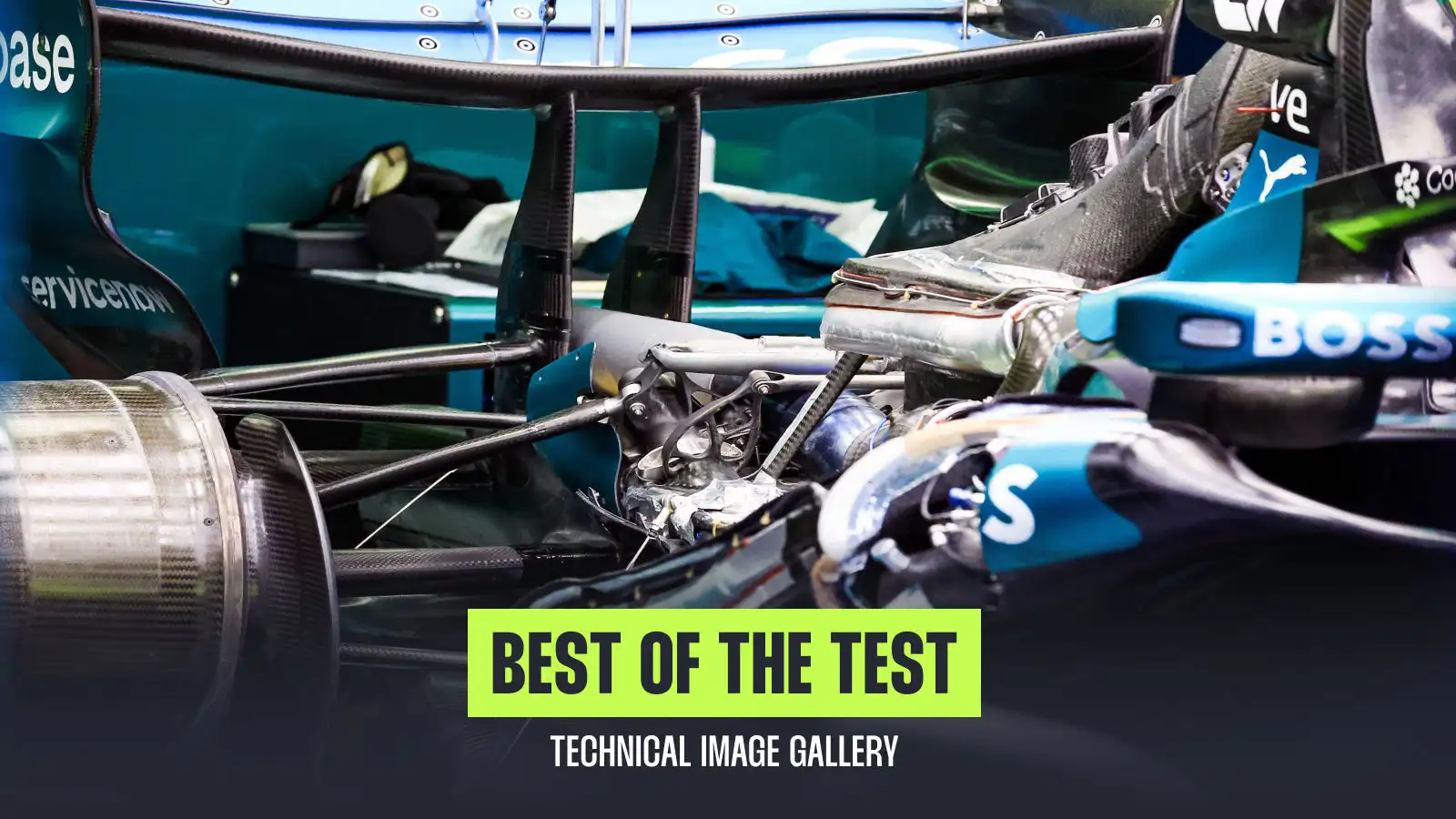
The second pre-season test saw many of Formula One’s teams unveil cars that were much more representative to those that’ll roll out of the garage in Australia, with a slew of new and interesting parts unveiled throughout the three days.
Join us as we delve into all of the best technical details on display at the first pre-season test, in Bahrain.
Mercedes, Ferrari and Red Bull headline Bahrain test upgrades
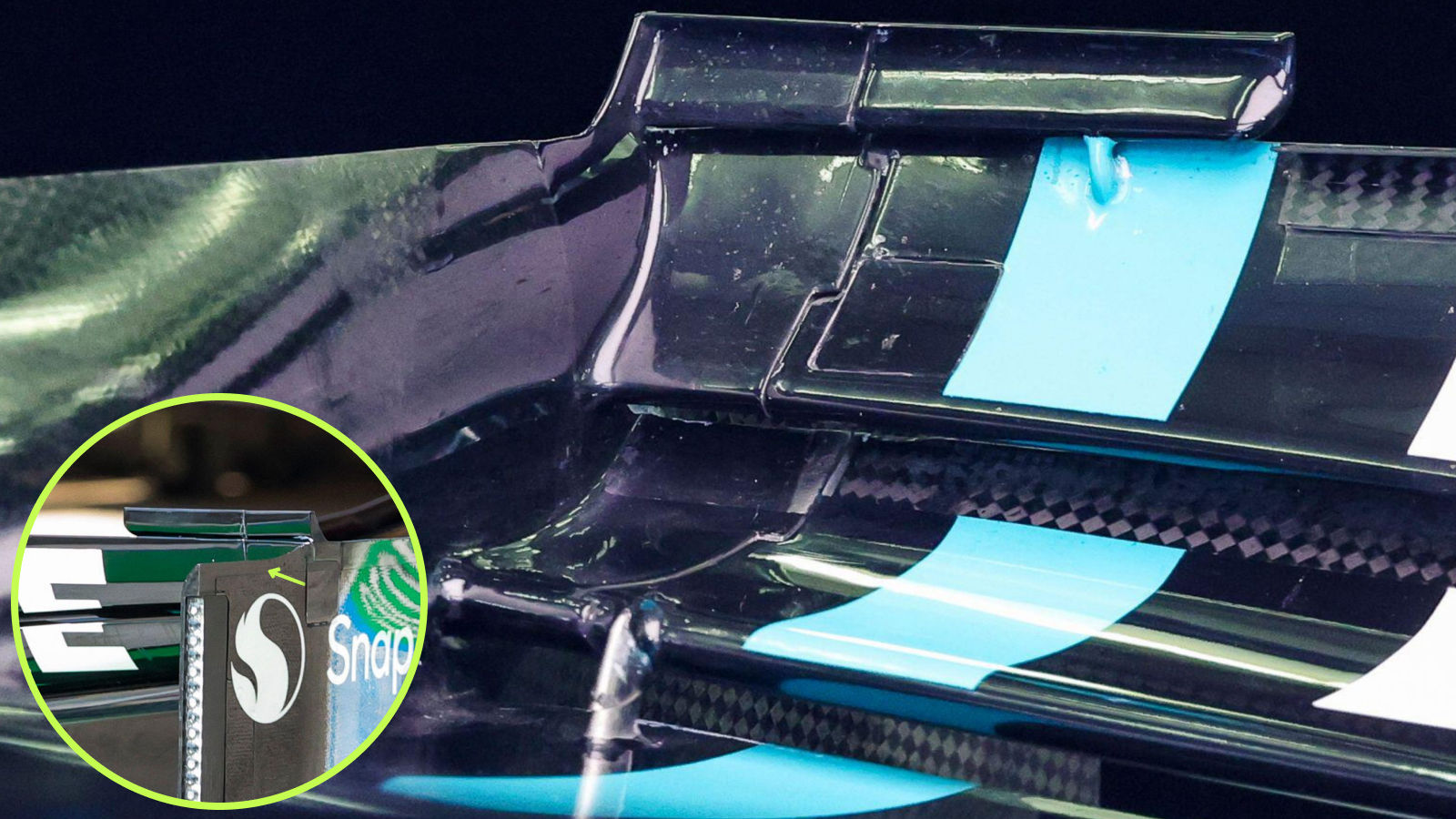
Mercedes introduced a new rear wing solution during the second test, which featured a mini-flap arrangement in the upper rear corner of the main assembly, that will increase the downforce that can be generated without being too detrimental in terms of the relative drag that’ll be created.
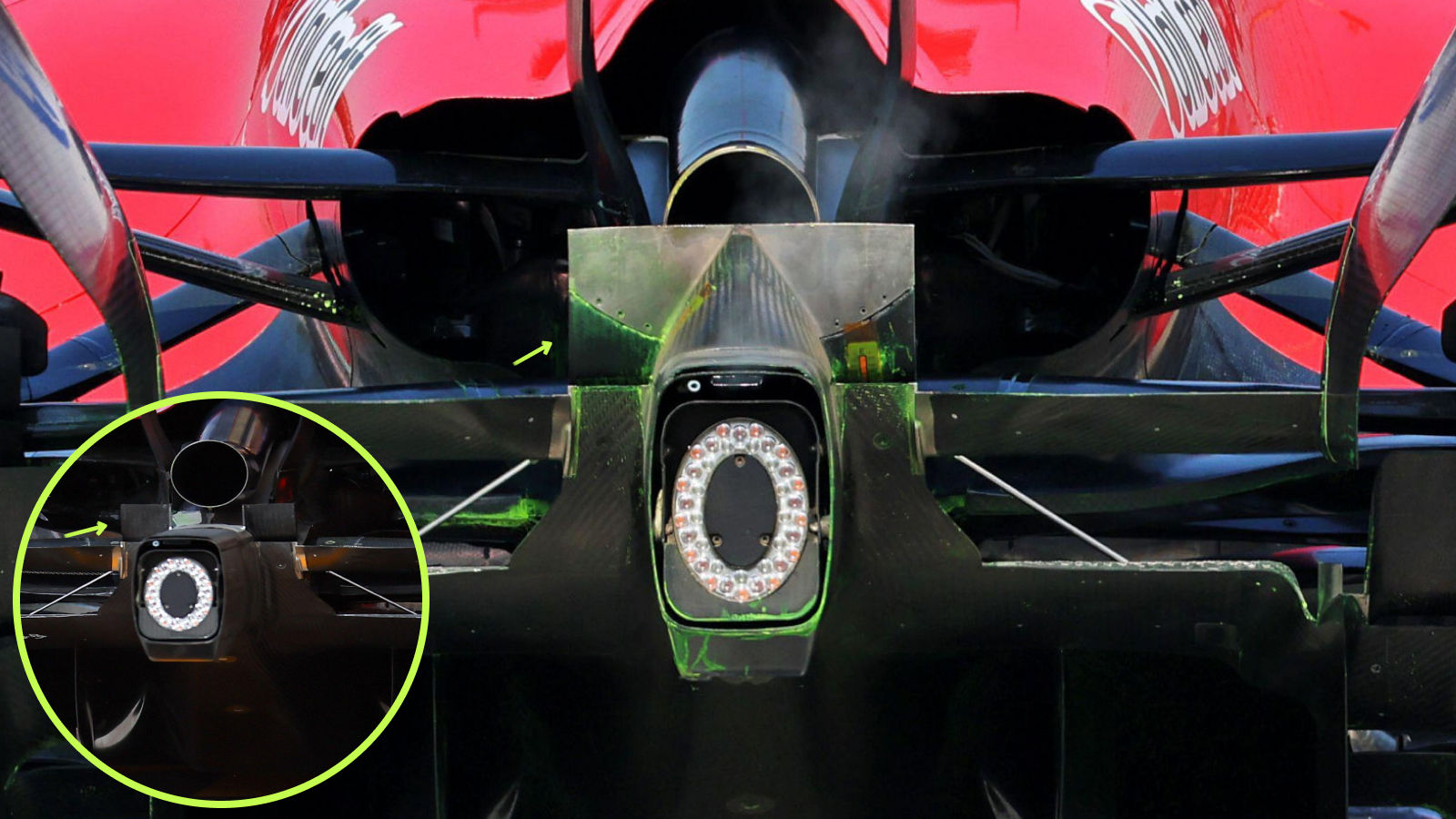
Ferrari have added a flap on top of their rear crash structure that sits behind the exhaust and will undoubtedly have a significant impact on the exhaust plumes behaviour (old configuration inset).
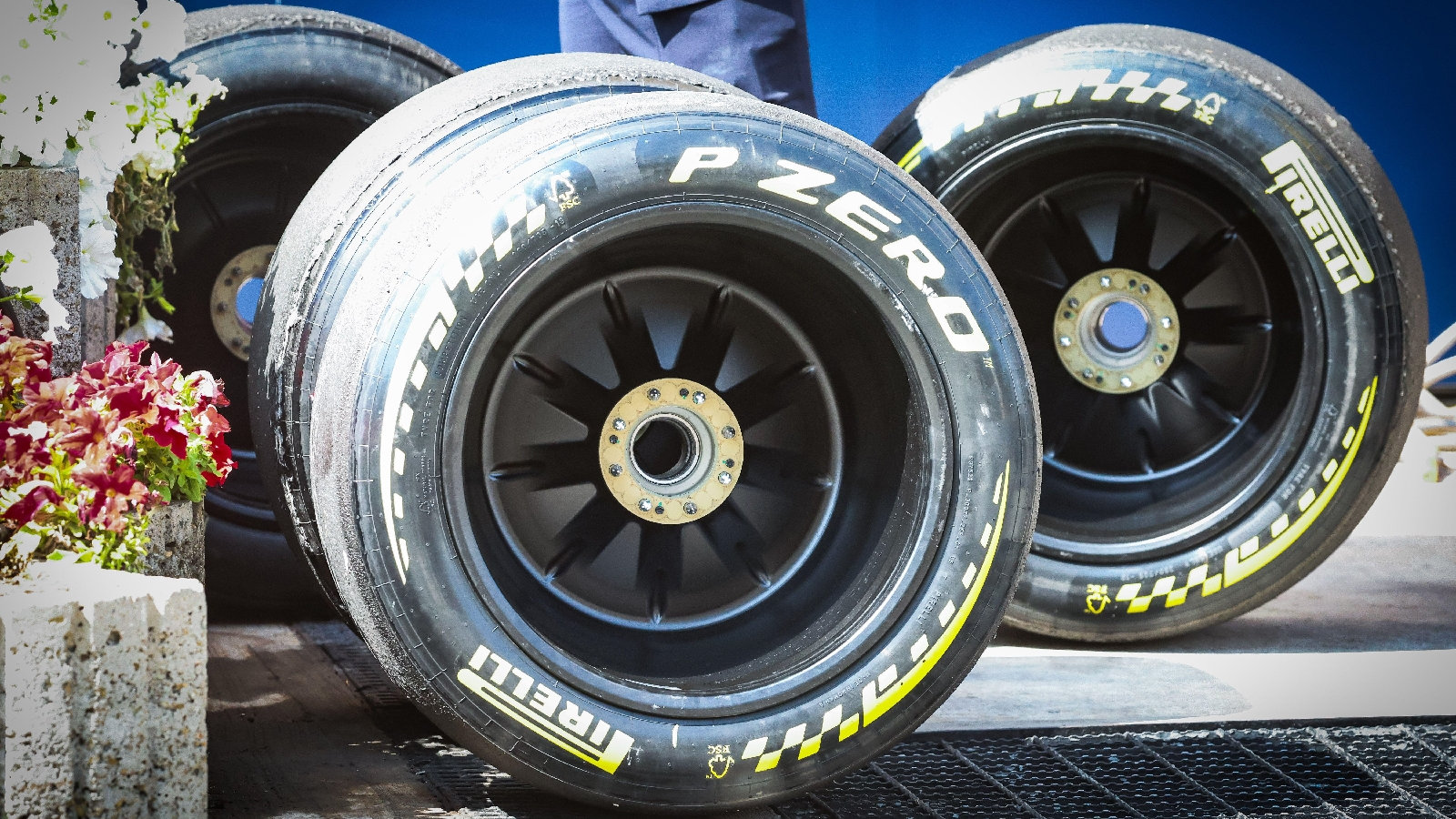
Formula One teams are able to design wheel rims in conjunction with their suppliers again for this generation of car, having used a specification solution during the ground effect era cars, meaning we’re seeing a wide variety of solutions on display.
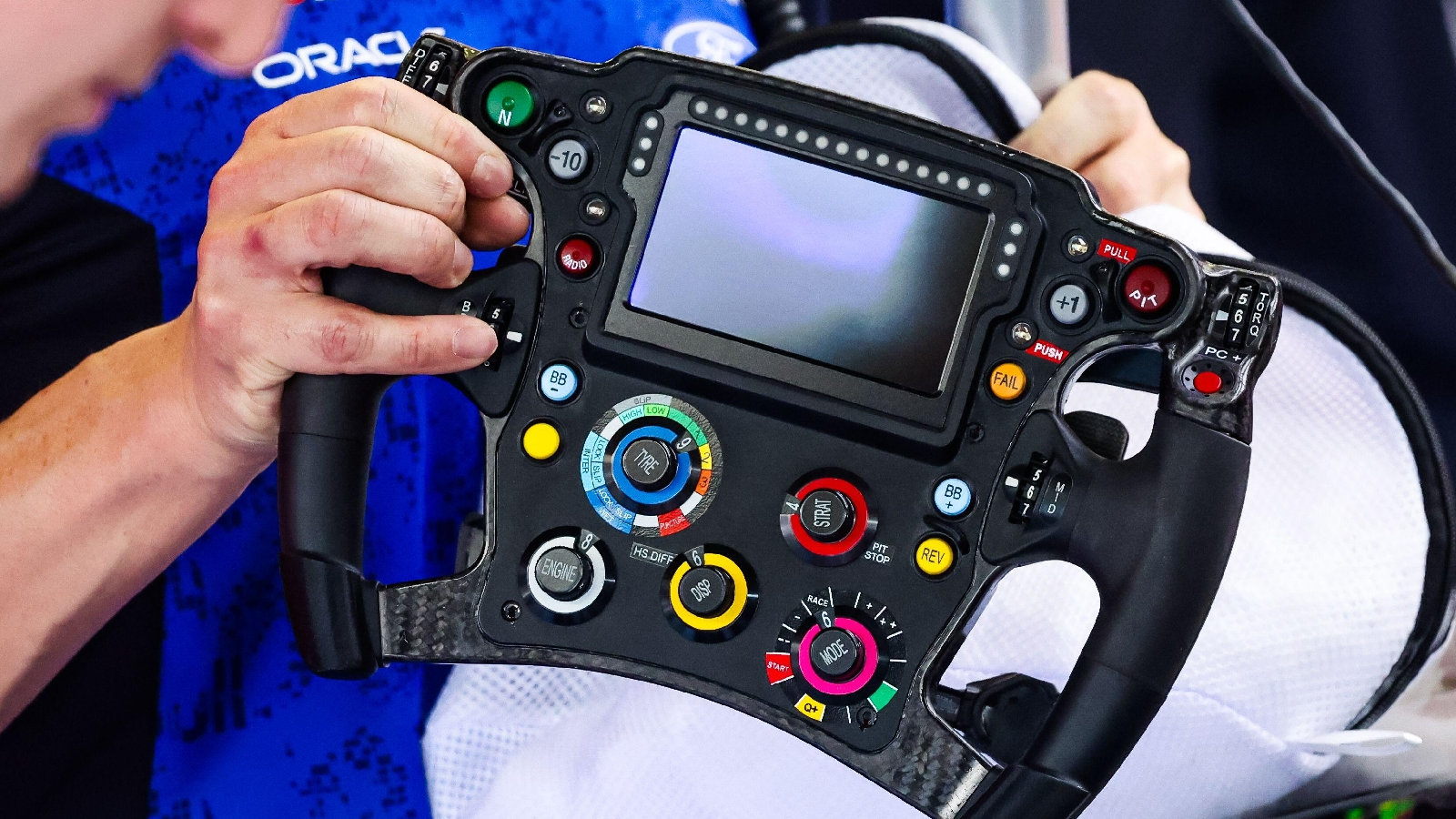
A close up of the front of the Red Bull RB22’s steering wheel, with the various buttons and rotaries the driver has at their disposal to control the chassis and powerunit functions.
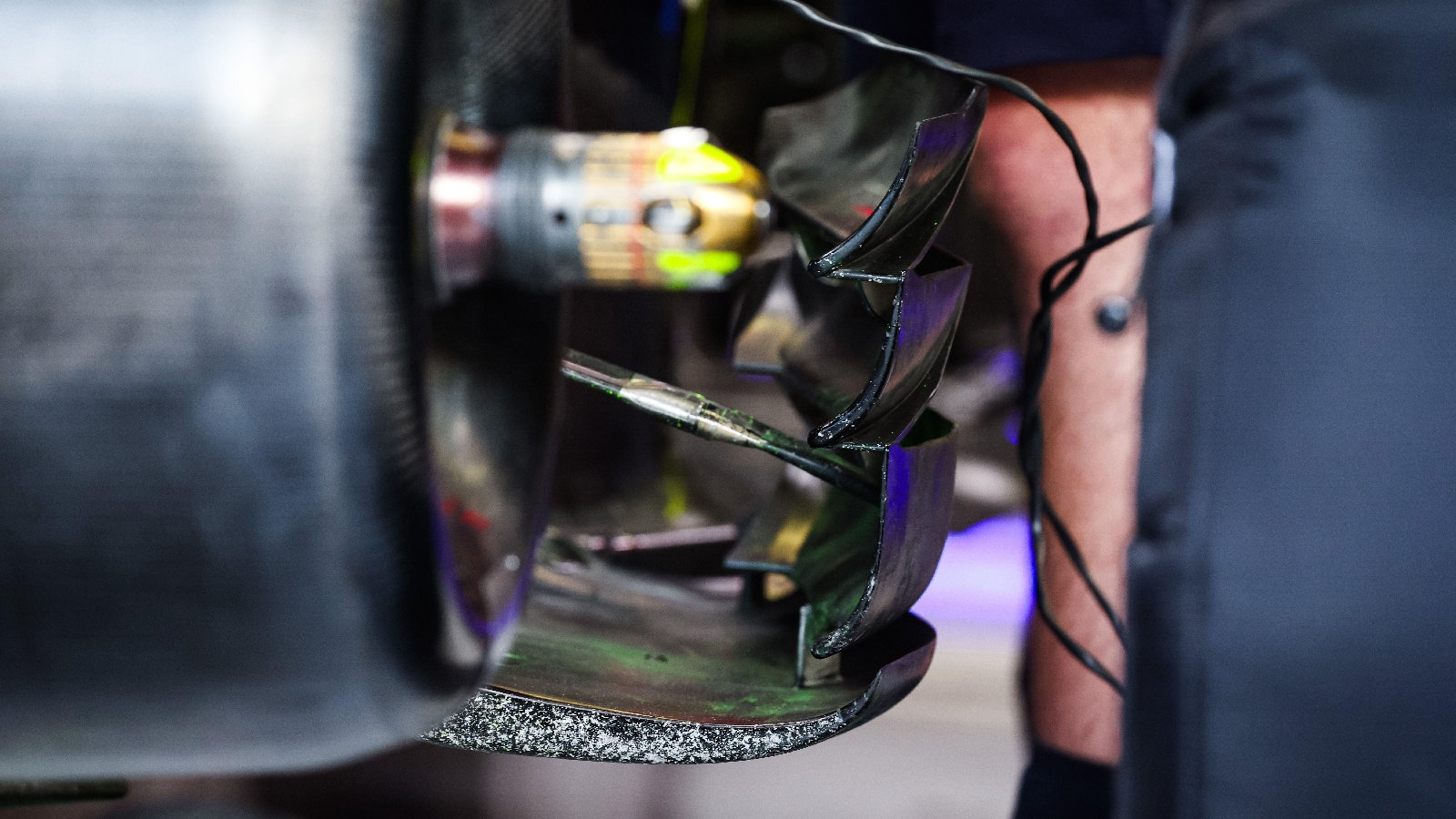
A close up of the front section of the deflector array on the Red Bull RB22, noting the winglet shaped brackets being employed to help direct the airflow around the assembly.
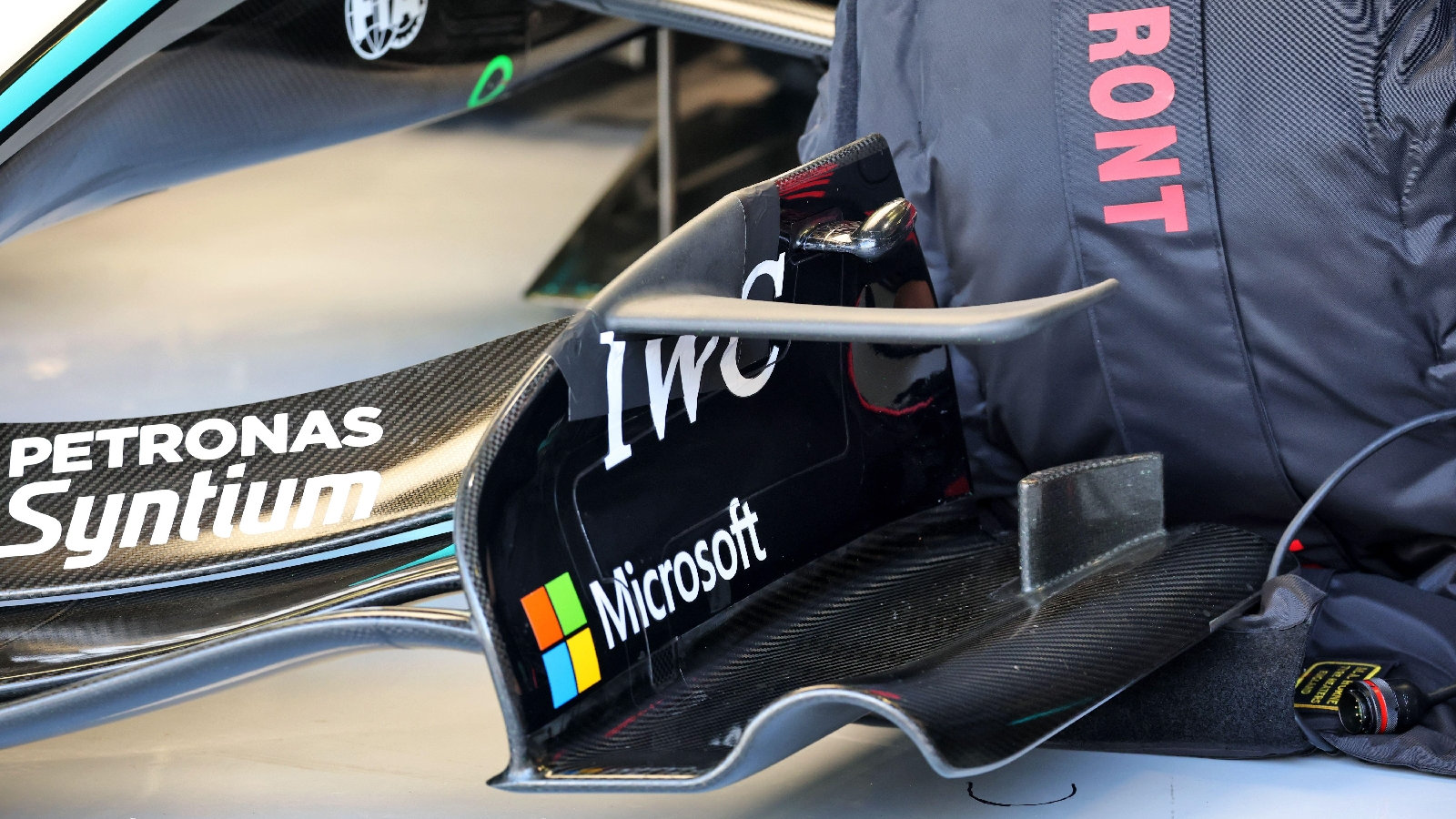
Mercedes briefly ran a diveplane on their front wing on the final day of the test.

Mercedes had a new floor for the second pre-season test, which featured a revised layout ahead of the rear tyre. This includes a slotted L-shaped arrangement, ahead of a slat-like rear deck.
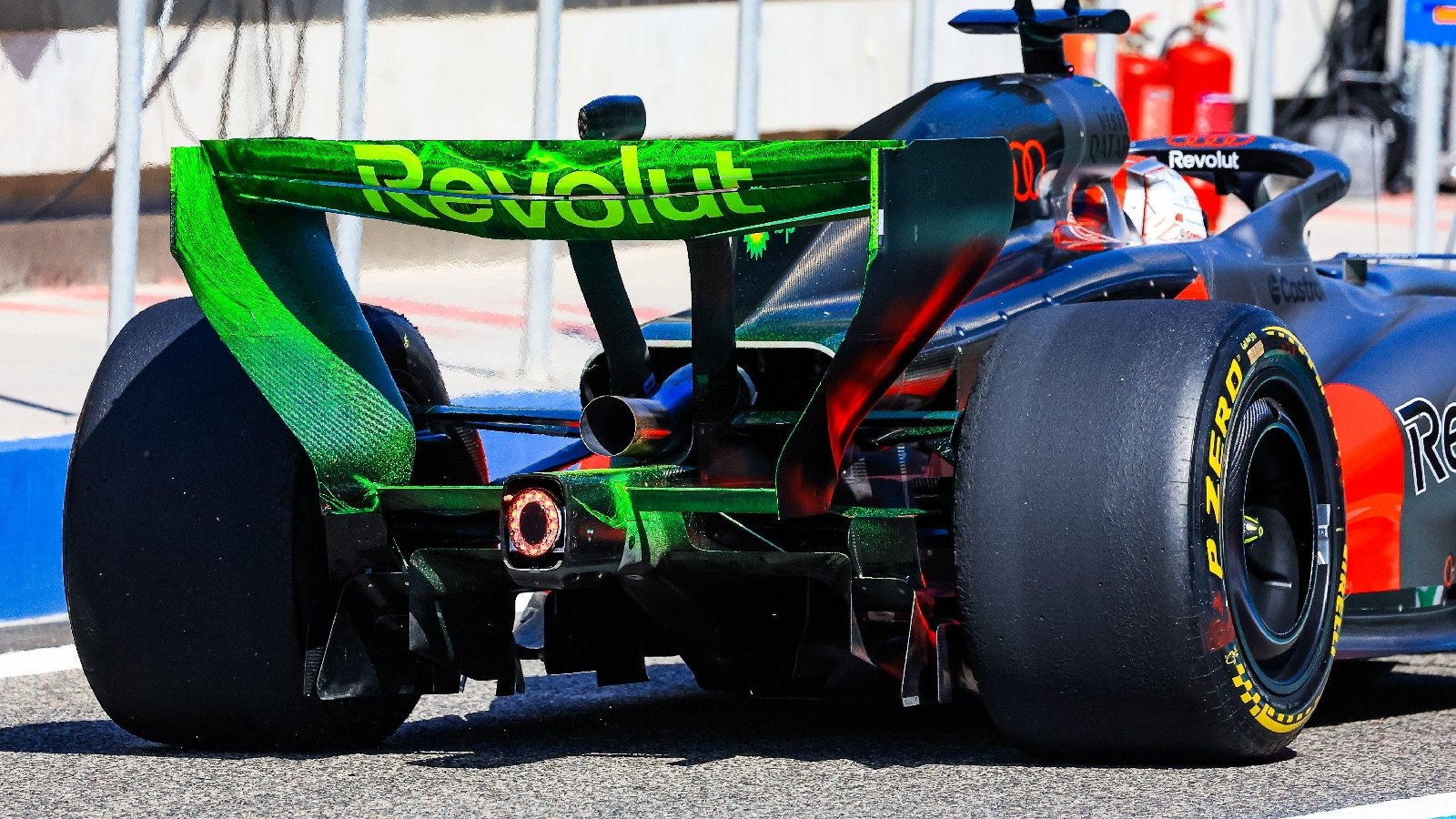
The Audi R26 with flo-viz paint on the rear end to evaluate the airflow’s behavior.
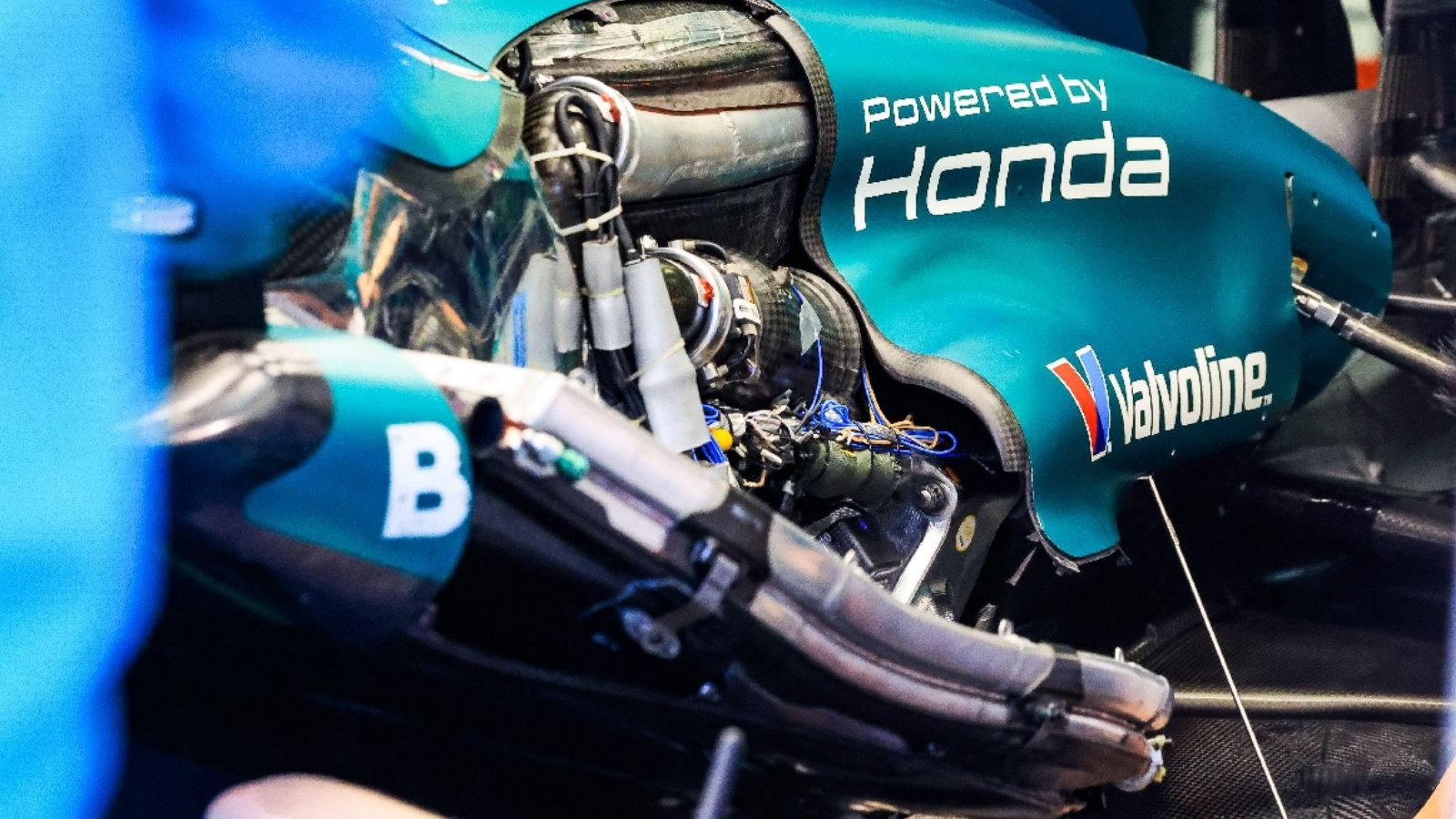
The Aston Martin AMR26 with the covers off gives us a great view of the powerunit’s layout and how the heat exchangers are mounted within the sidepod.
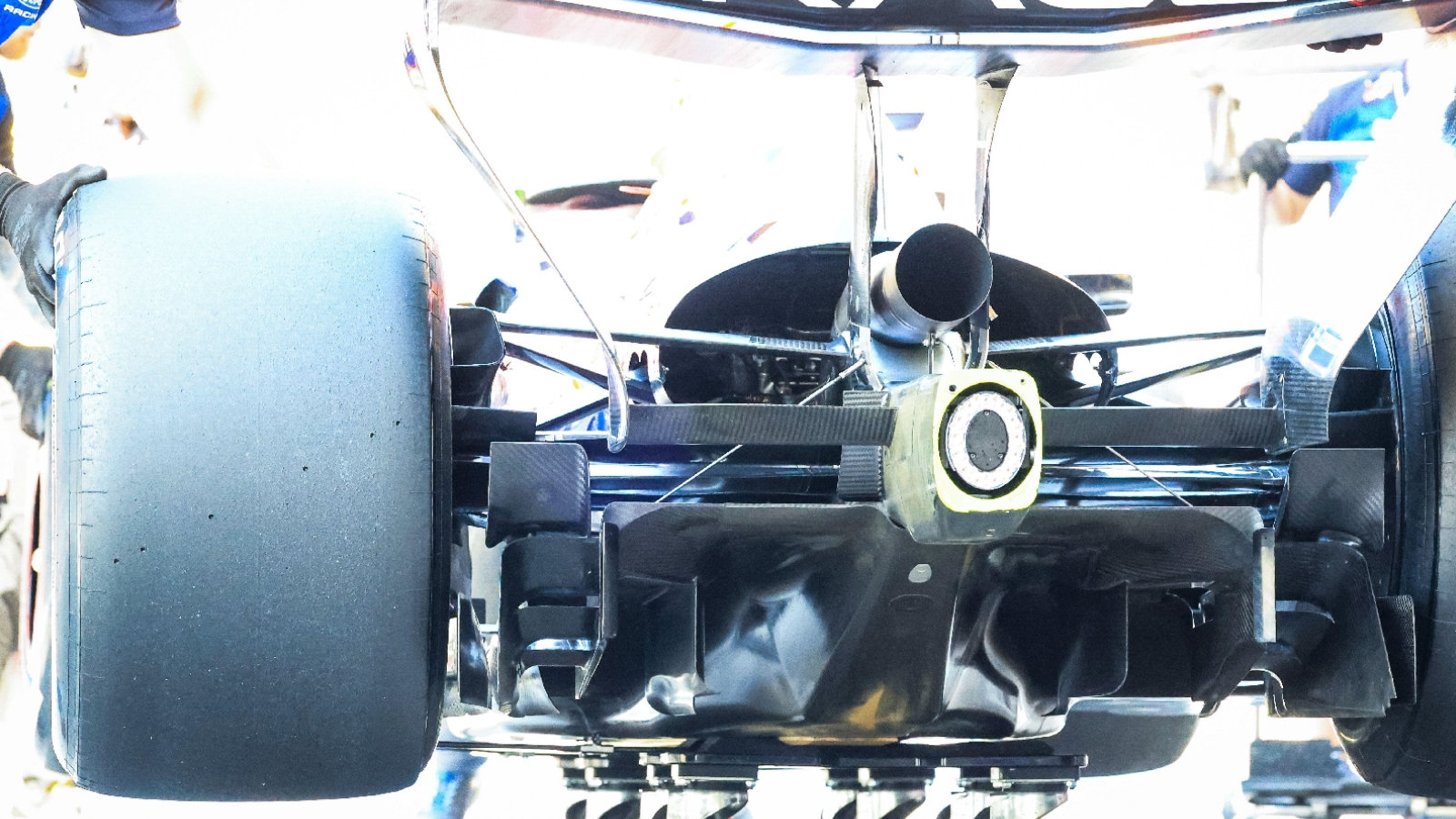
We’re treated to a view of the Red Bull RB22’s diffuser as it’s wheeled into the garage, with the design and layout of the strakes, vertical handle-bar winglets on the outer edges and the serrated finish on the floor winglets, all notable features.
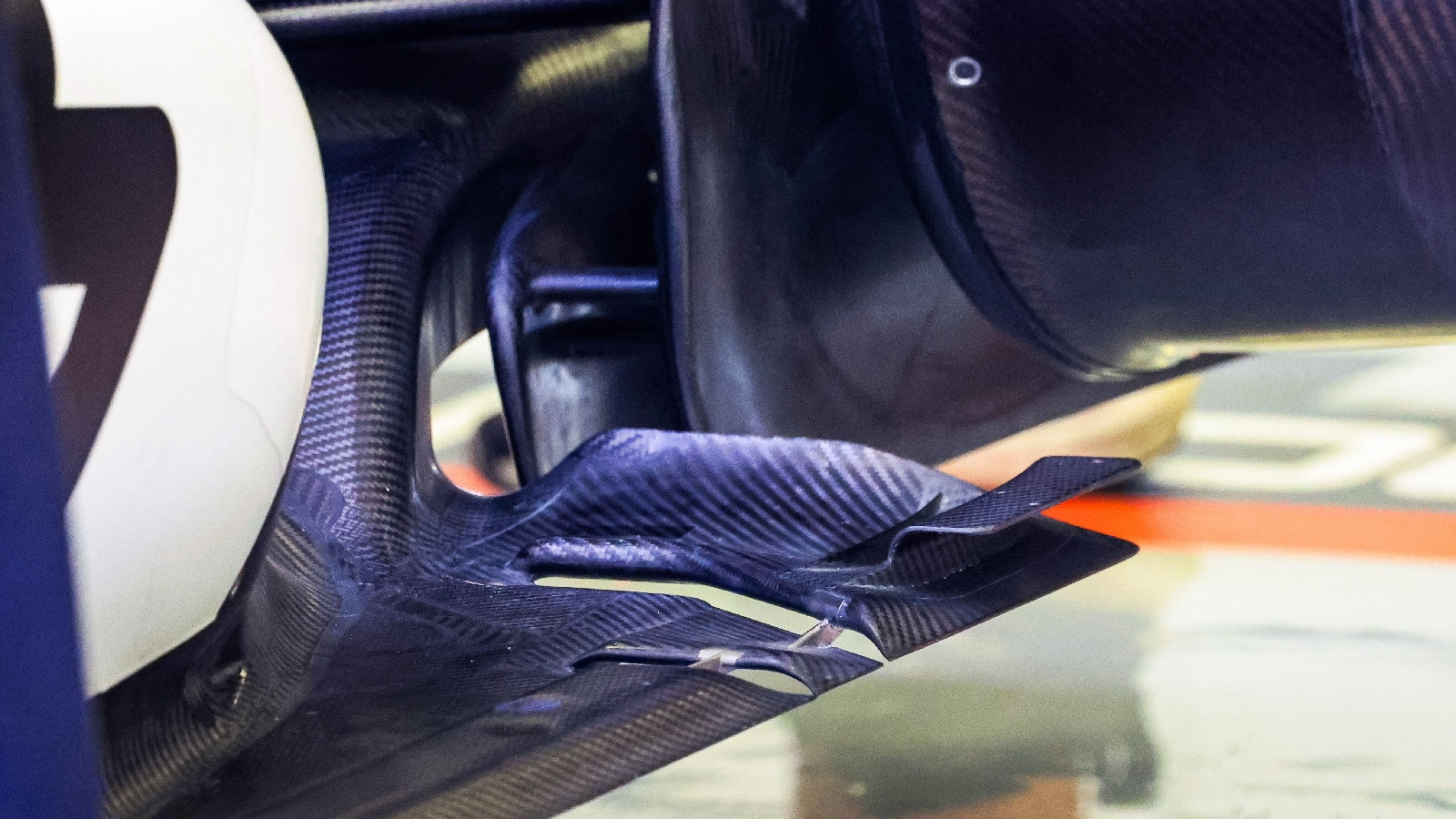
The tyre spat region ahead of the rear wheel assembly on the Haas VF-26’s floor has a couple of slots, which are supported by metal brackets, whilst the rear deck is turned upwards and has a dog-eared winglet stacked on top of it.
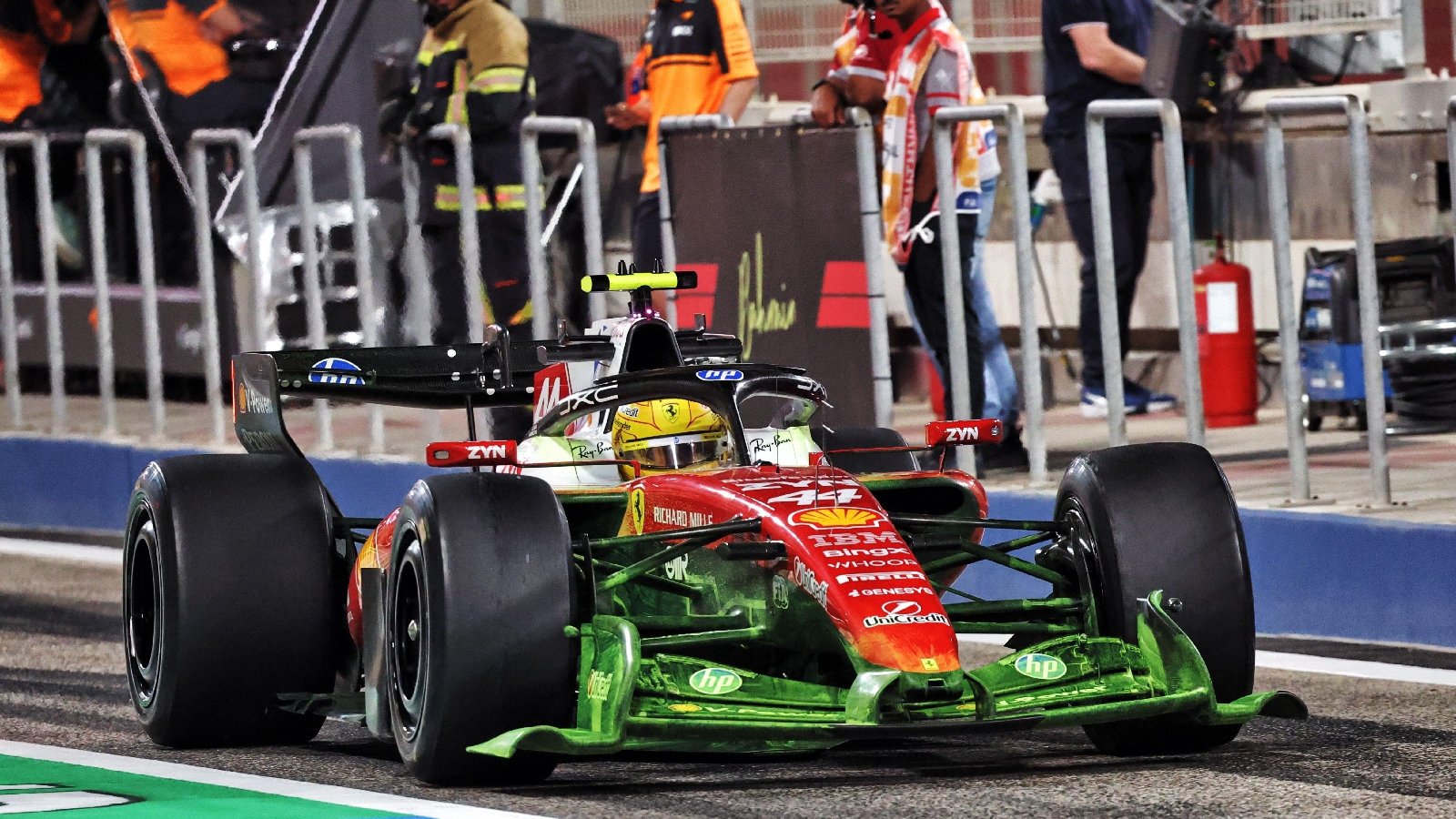
The Ferrari SF-26 with flo-viz painted on the front wing in order that the team can check for correlation between the real world conditions and what was expected from their simulation tools.
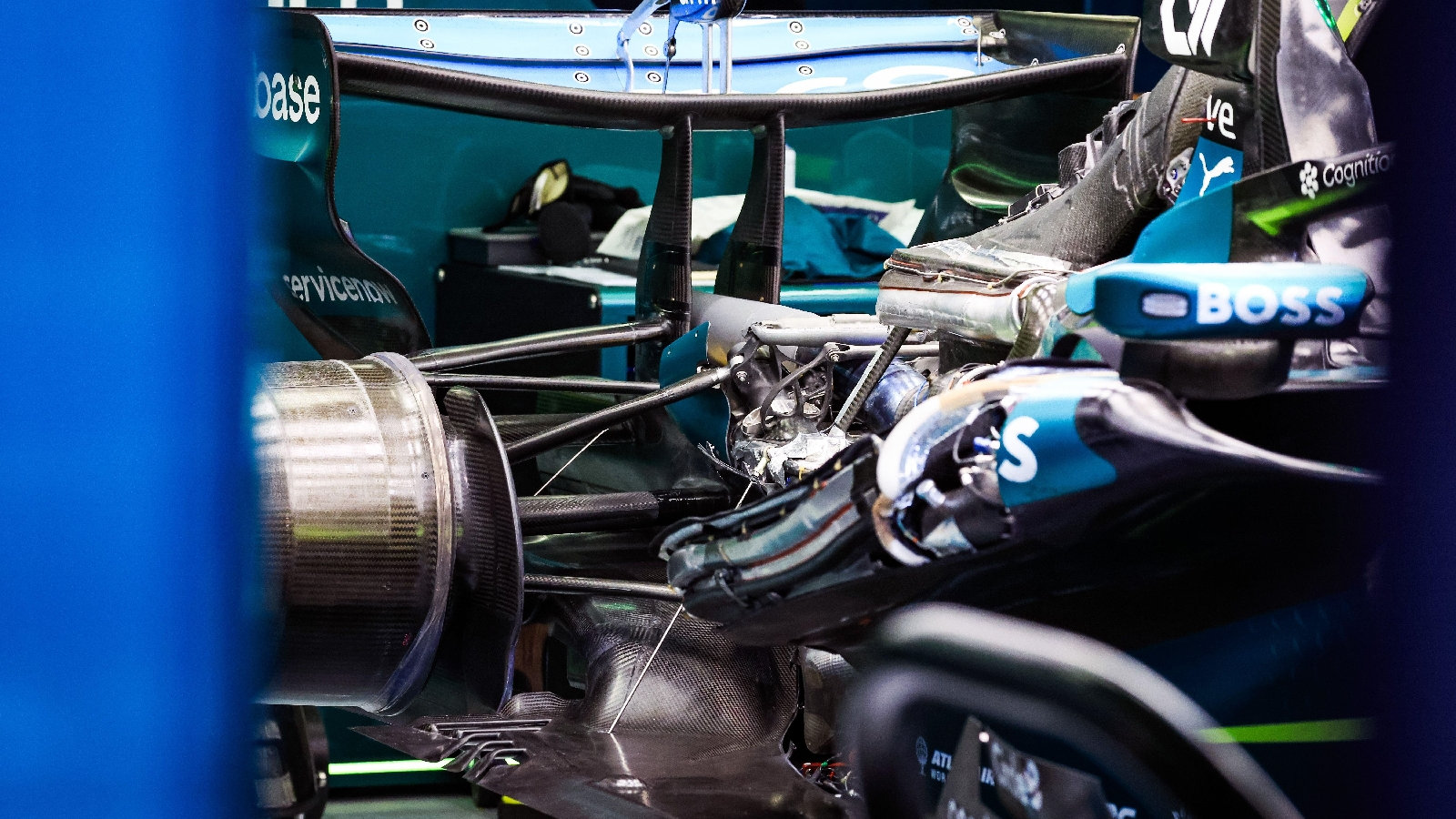
Another shot of the Aston Martin AMR26 without the rear bodywork on shows the position and shape of the heat exchangers, both in the sidepods and above the powerunit, whilst some of the inboard rear suspension detail is also revealed.
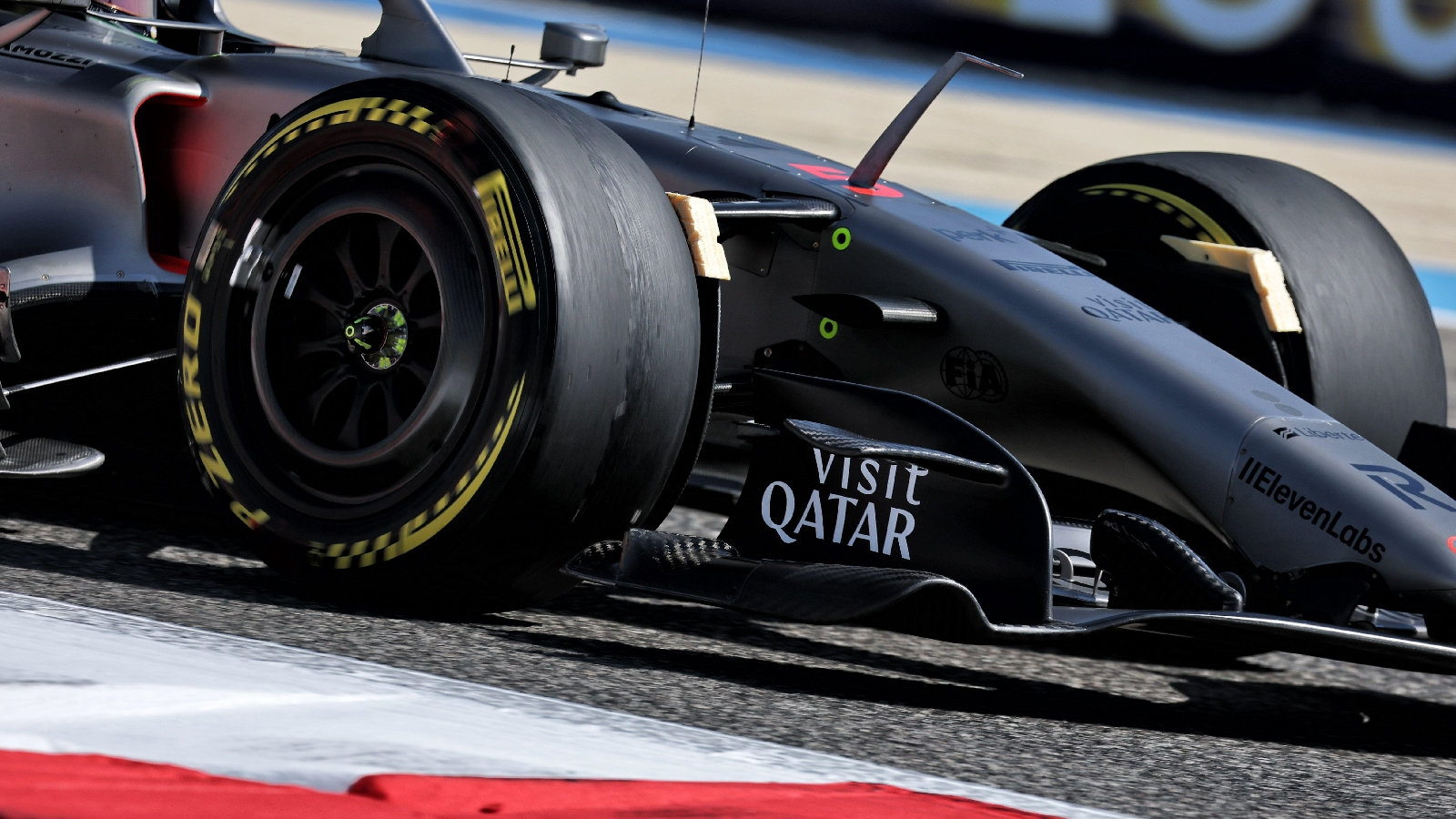
Audi used foam between the front brake duct fence and tyre’s sidewall to check clearance.
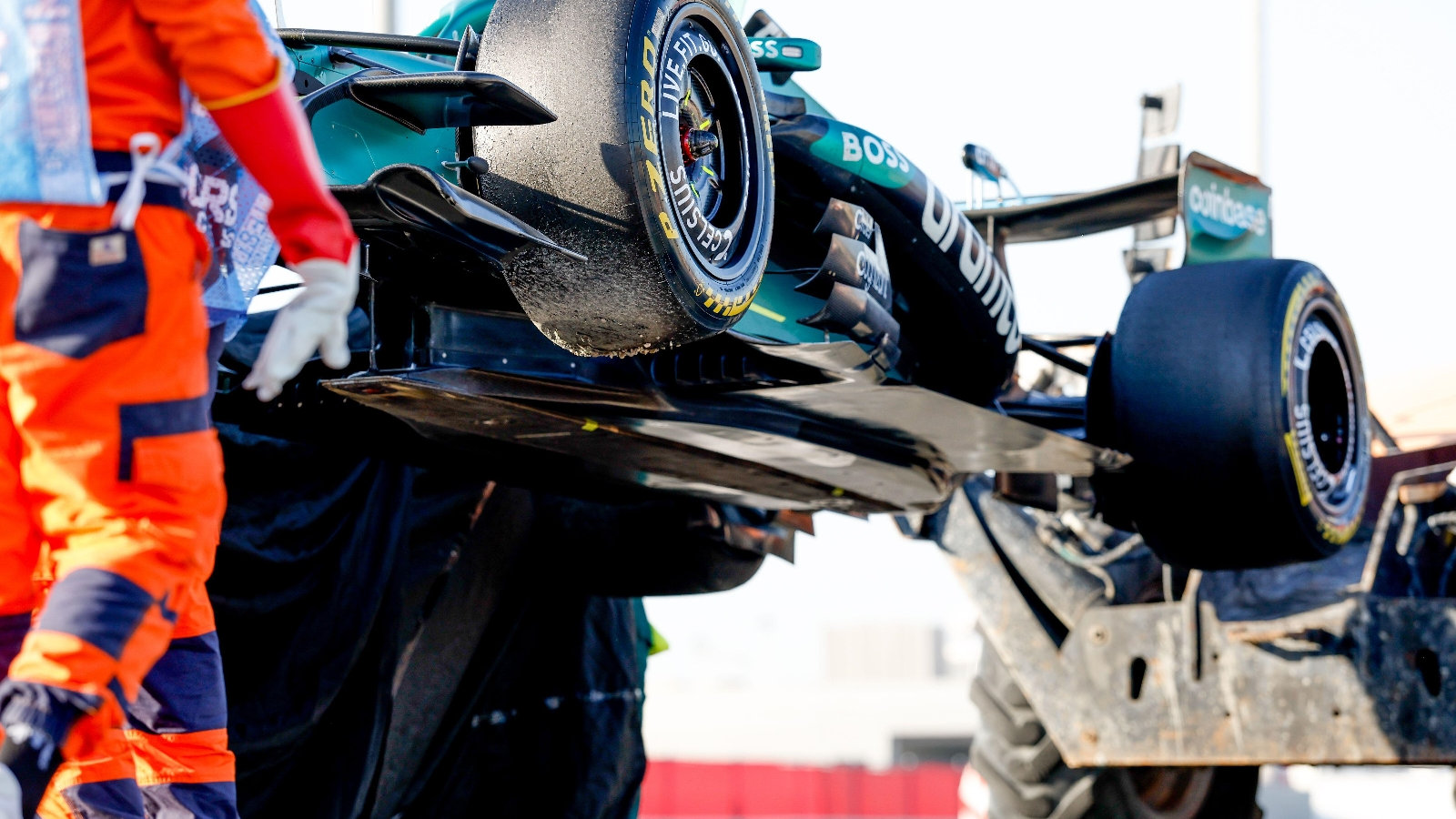
A lowdown view of the Aston Martin AMR26 as it’s craned away from the circuit gives us a different perspective of the underside elements that are usually out of sight.
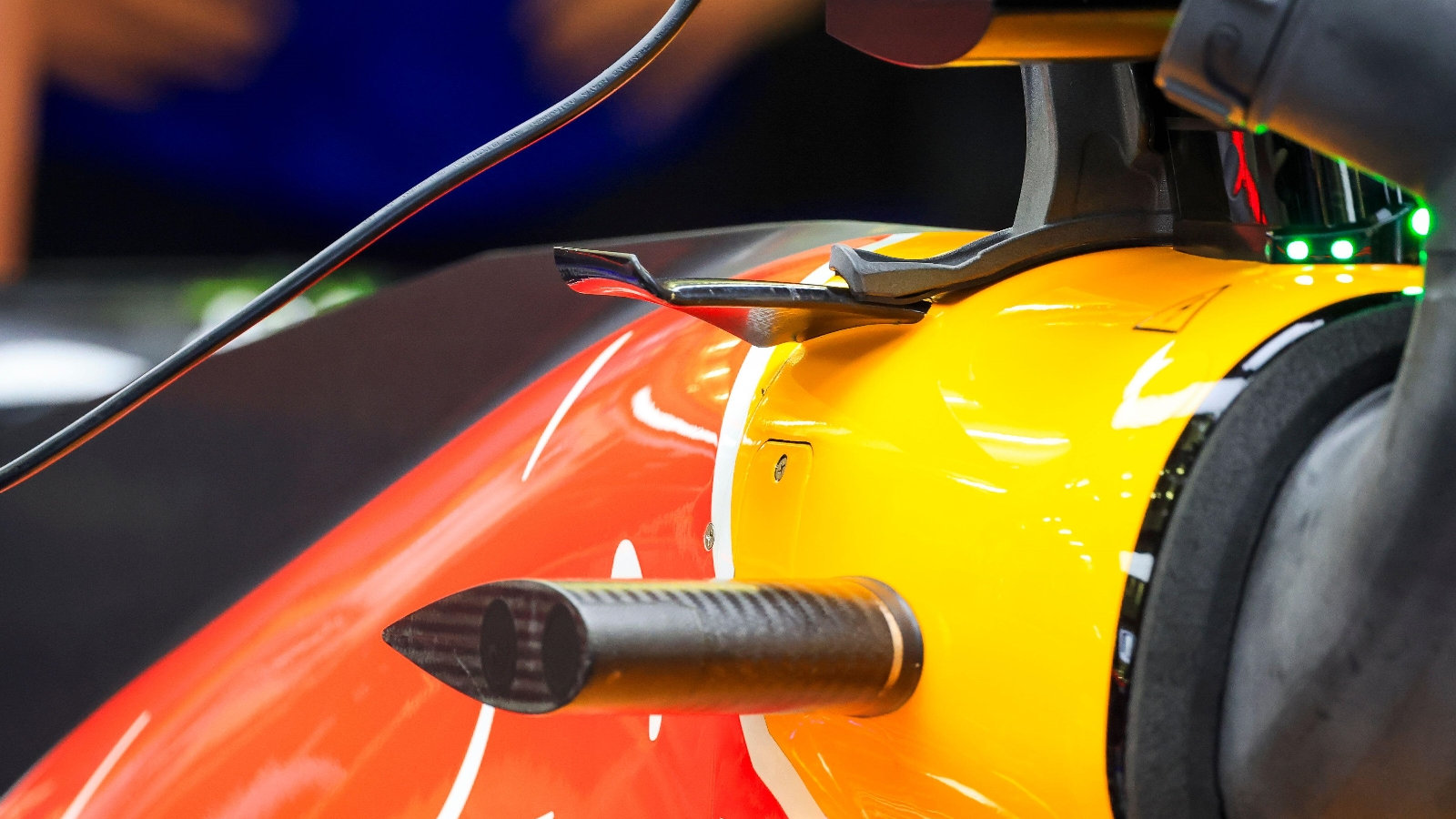
A close up of the winglets that can now be found on the side of the Red Bull RB22’s airbox.
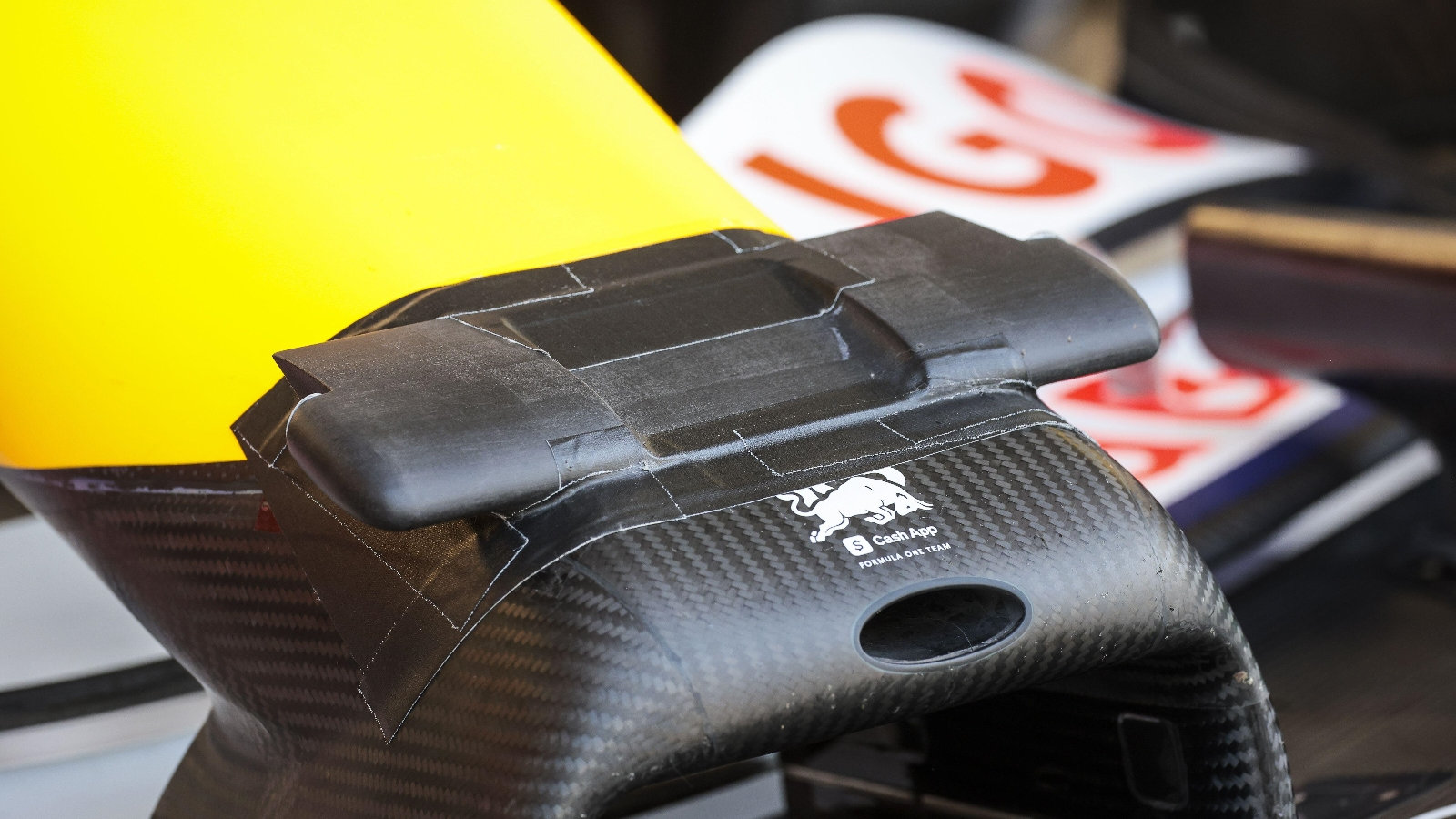
Racing Bulls fixed these pods to the front of their nose which incorporate cameras that are looking back down the car and capturing footage whilst out on track.
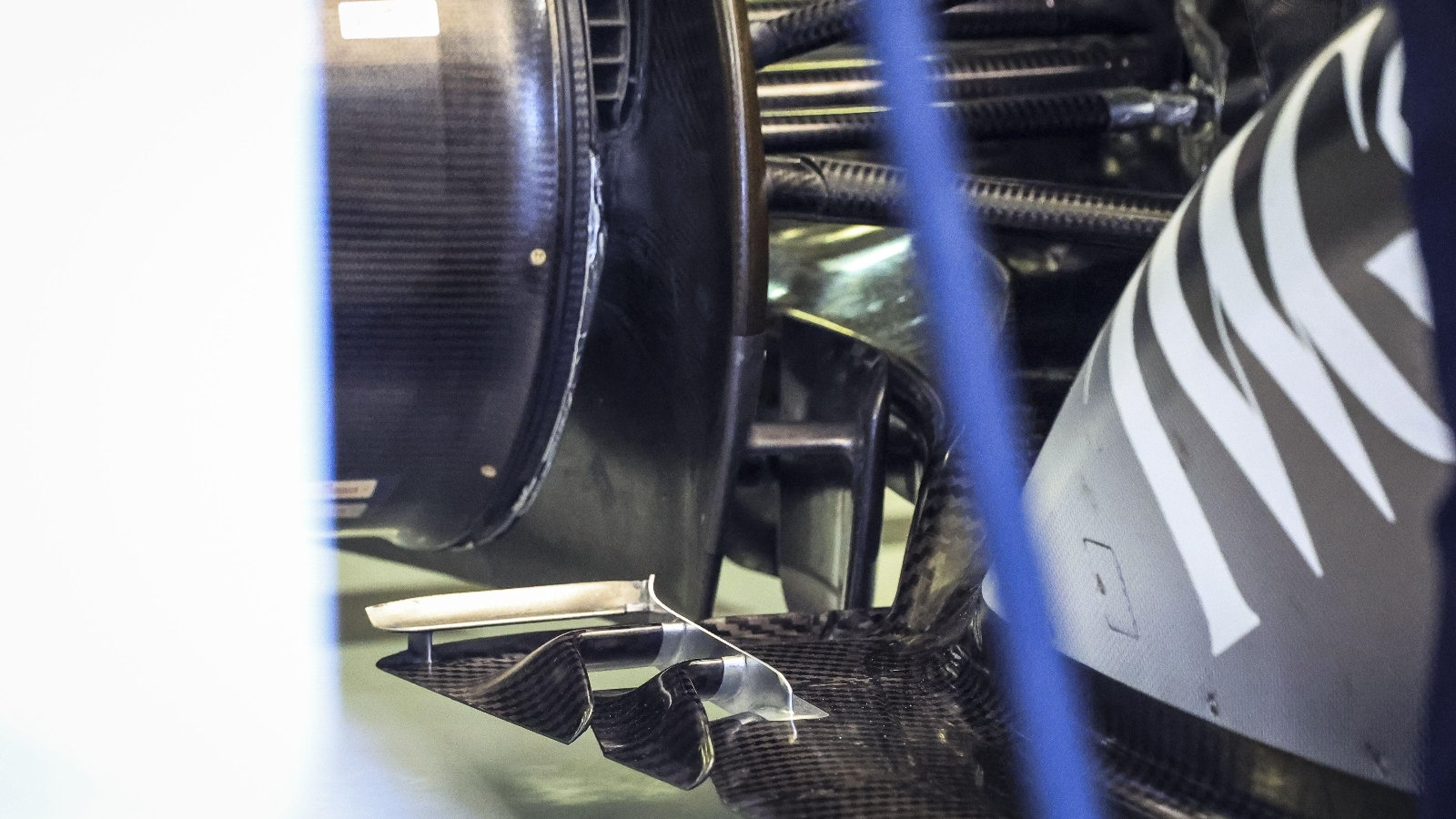
Peering into the Cadillac garage we can see the solution they’ve opted for in the rear tyre spat region of their floor, which includes two raised L-shaped slots, a vertical vane from which they’re hung and a slat-like winglet raised above the rear floor deck.
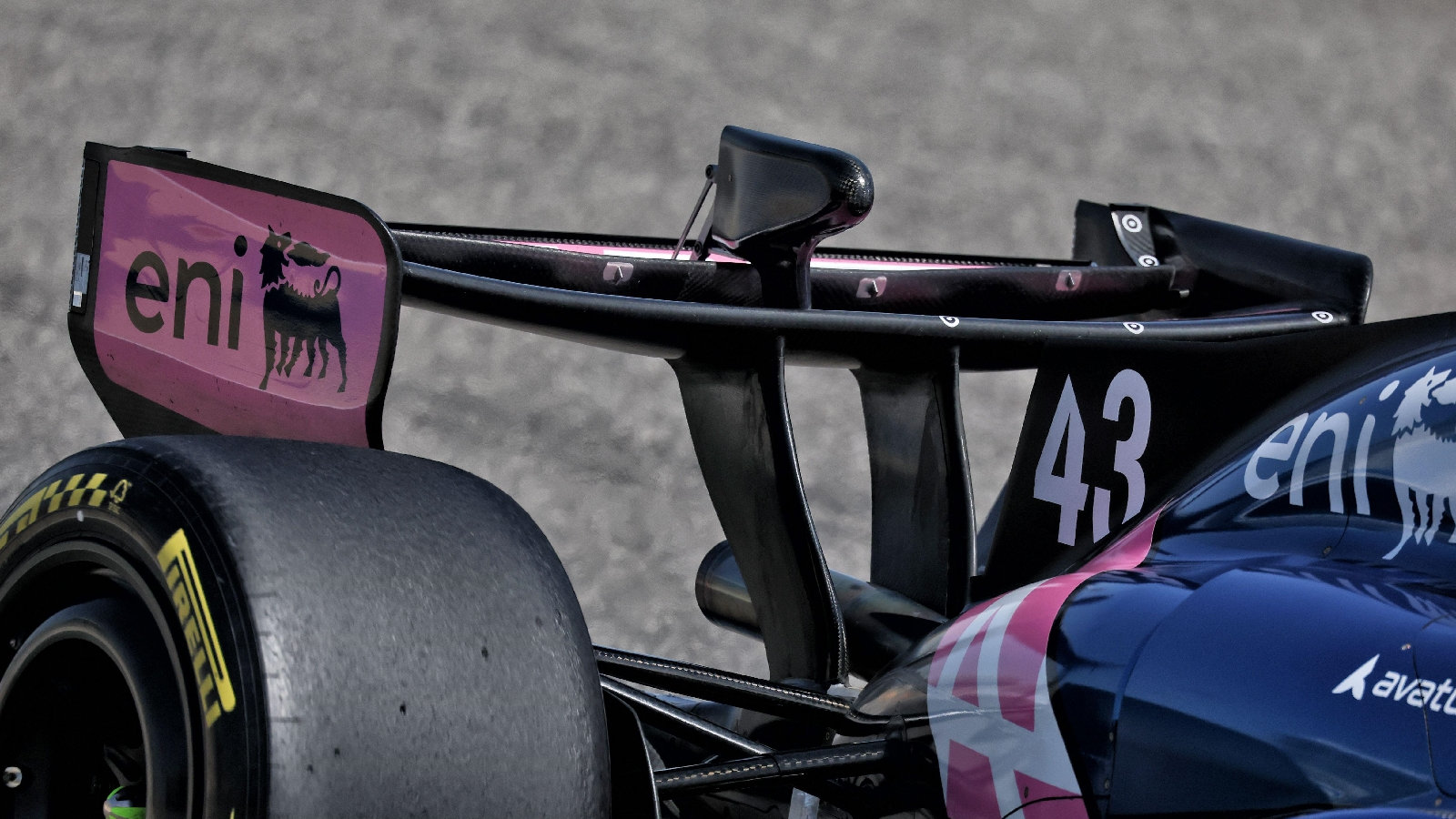
A look at the collapsible active aero solution being employed Alpine on the A526
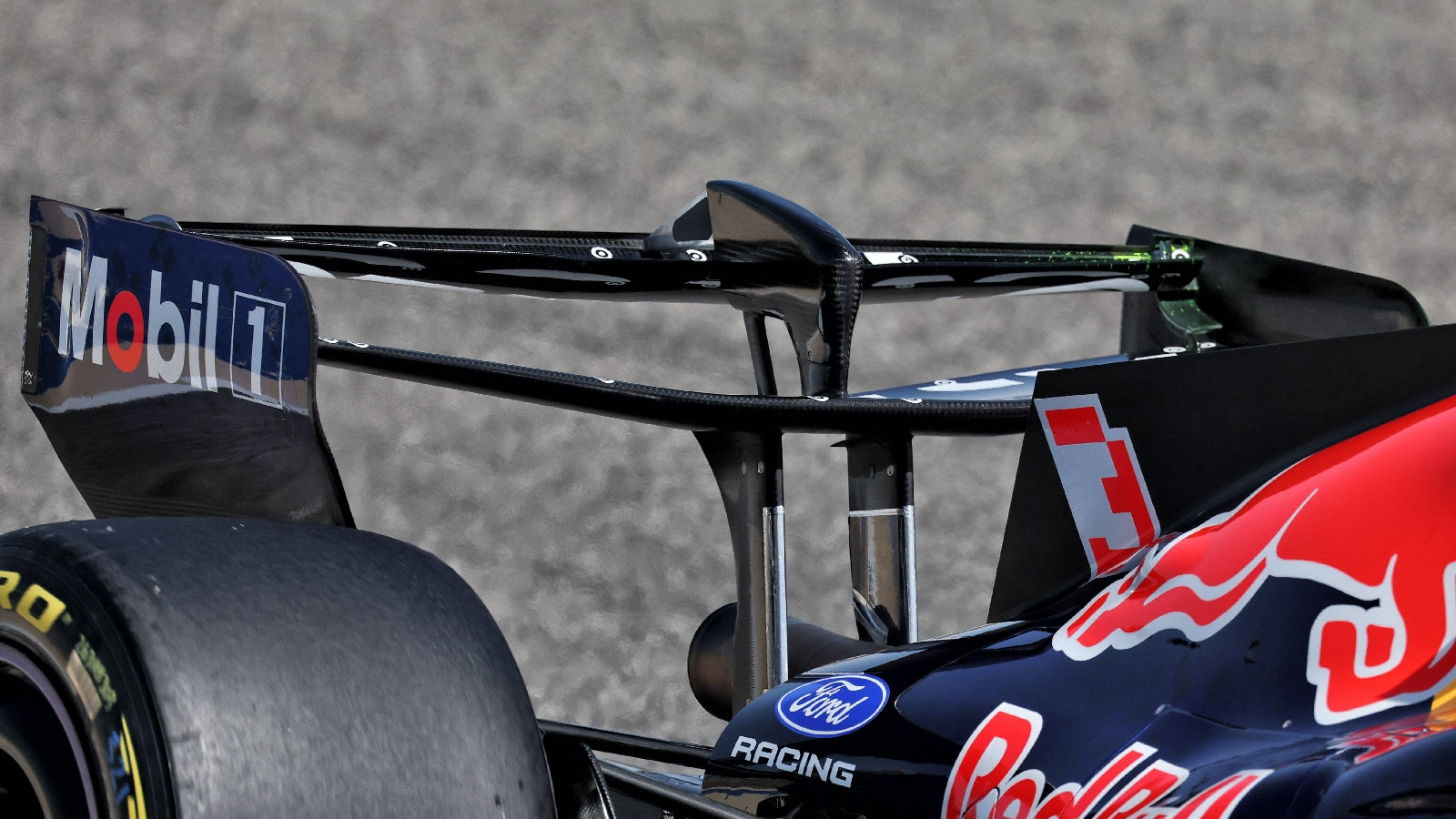
For comparison, Red Bull continues to employ a solution similar to the one we’re used to seeing with DRS.
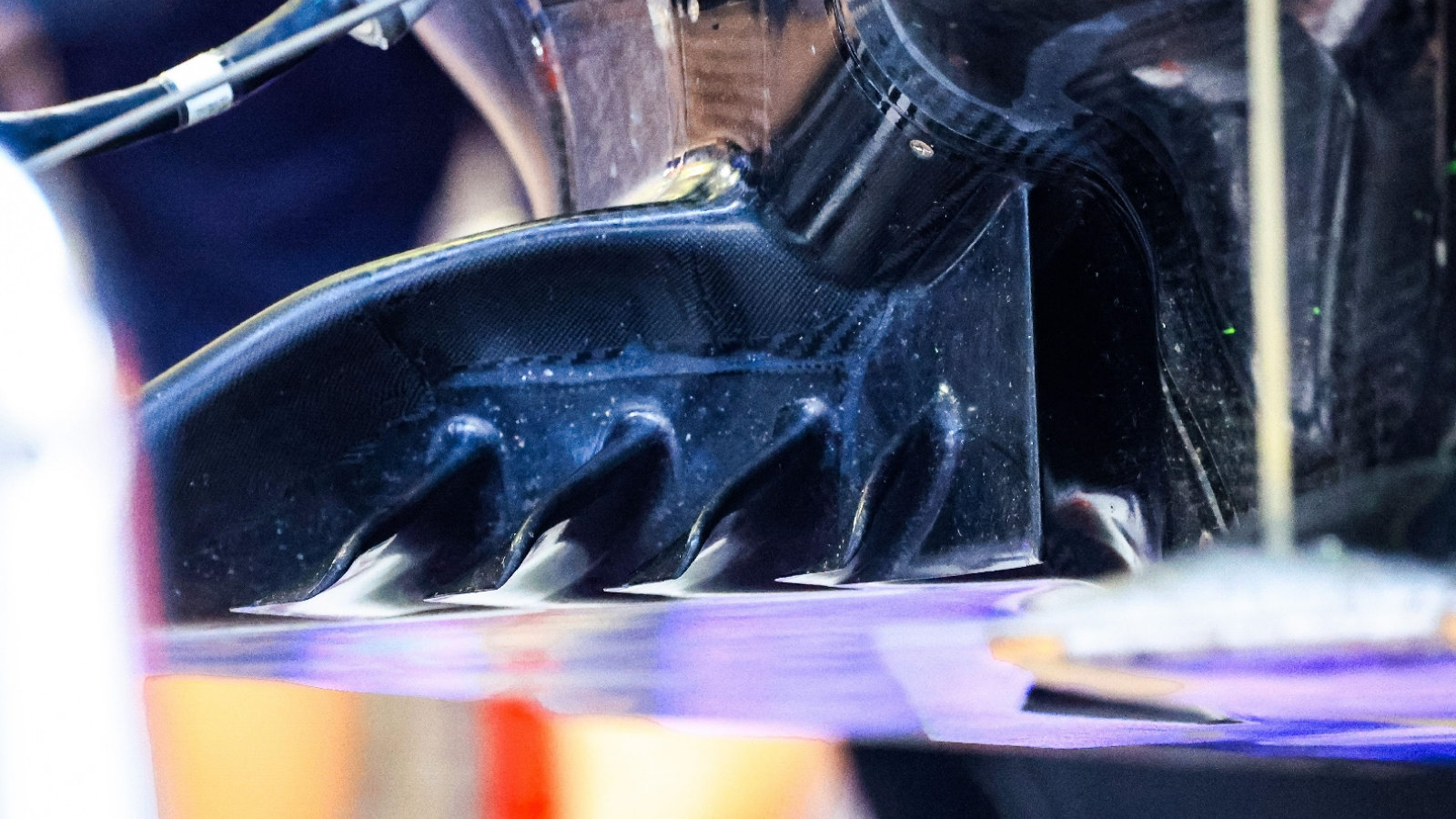
An intriguing solution appeared on the Red Bull RB22 during the second test, whereby they have a false floor leading edge, upon which they’ve also mounted four vanes. However, you’ll note the discontinuity where this leading edge might ordinarily meet with the side of the chassis, allowing the passage of airflow to the underfloor.
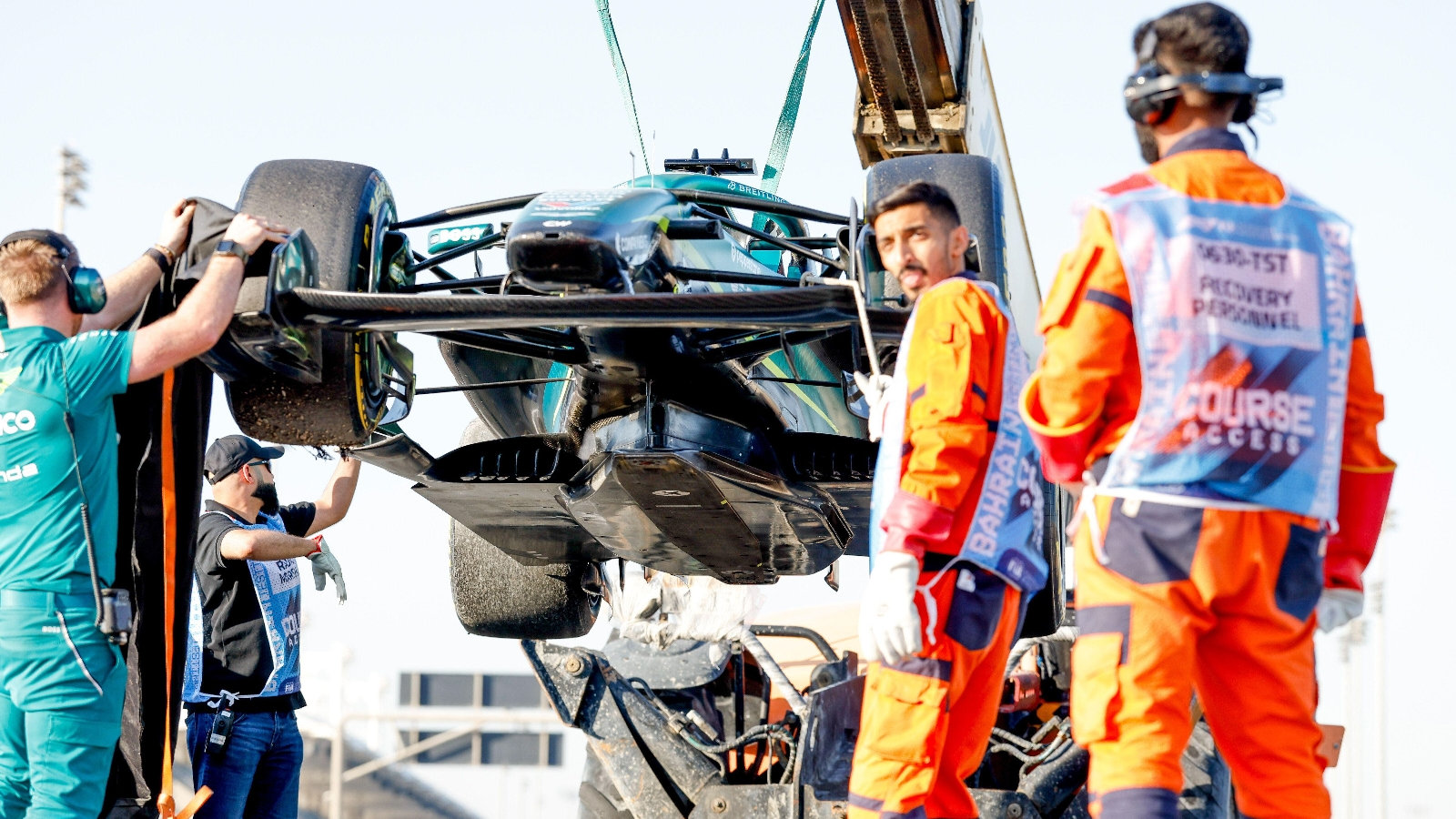
Another shot of the Aston Martin AMR26 being lifted away from the track and providing us with a view of the underside of the car.
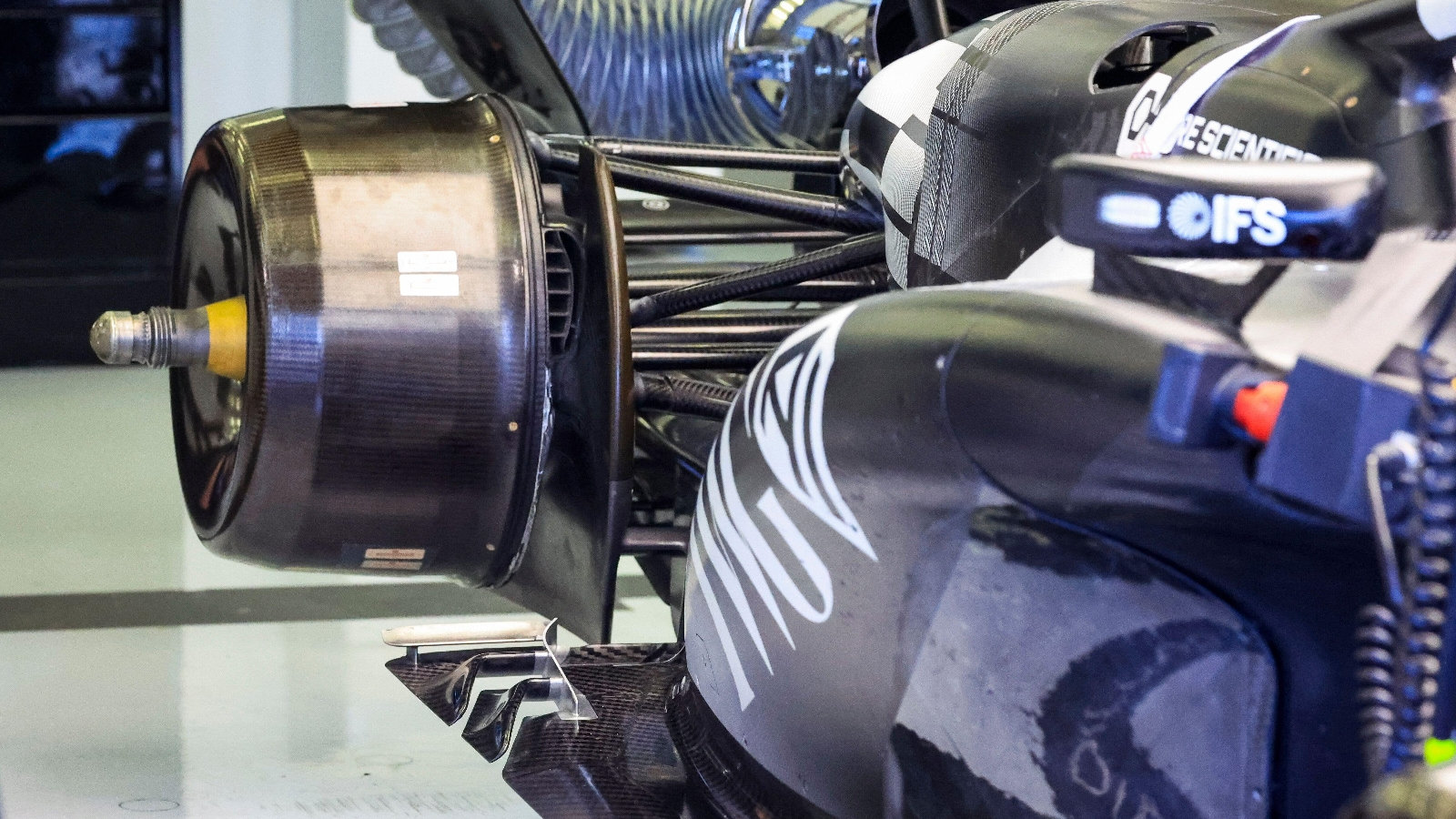
A wider view of the Cadillac as it’s being prepared for action gives us a better view of their rear brake duct and suspension arrangement.
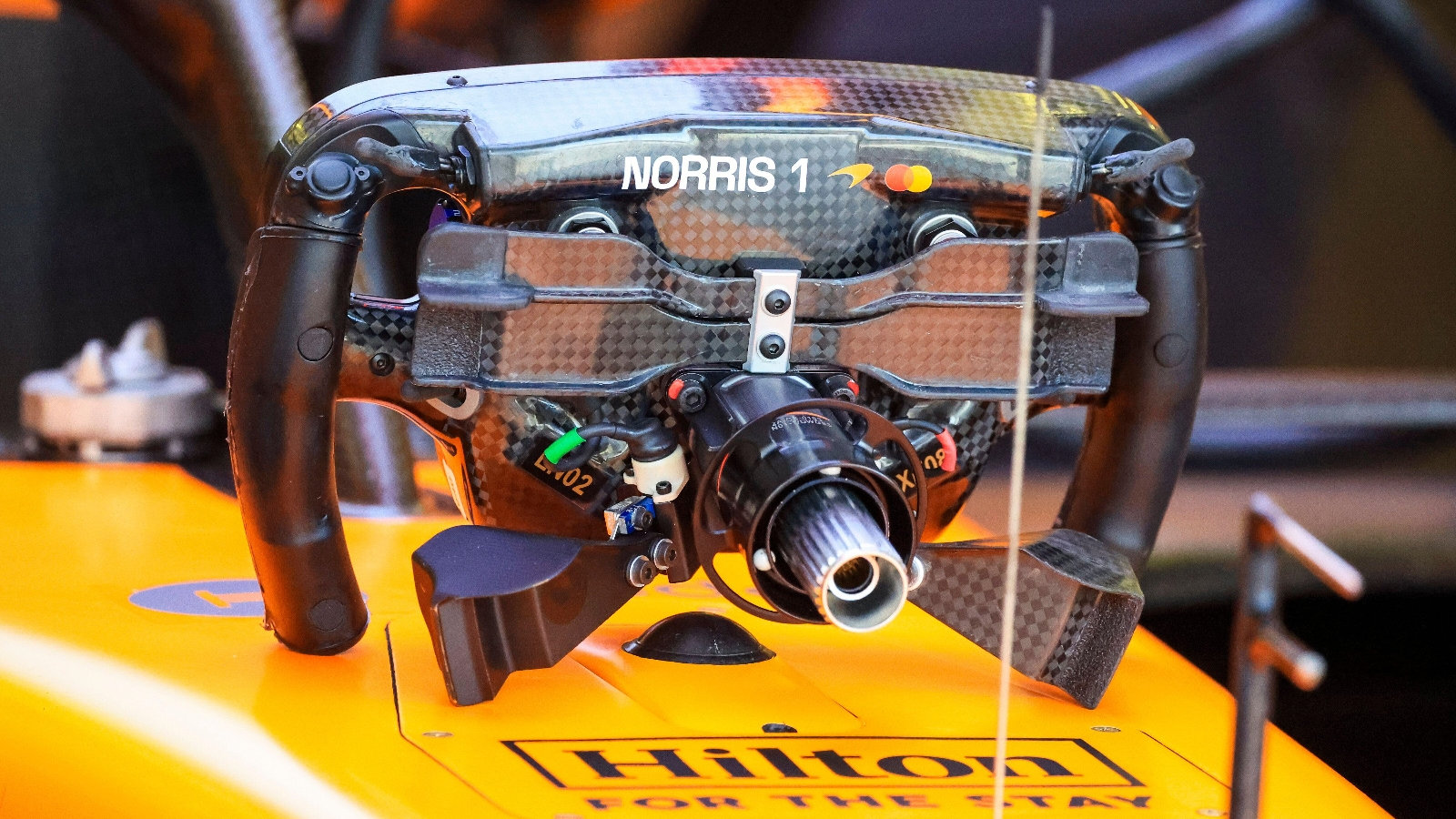
A look at the rear of the McLaren steering wheel, showing us how the layout of their clutch and gear selector paddles, toggle switches and buttons.
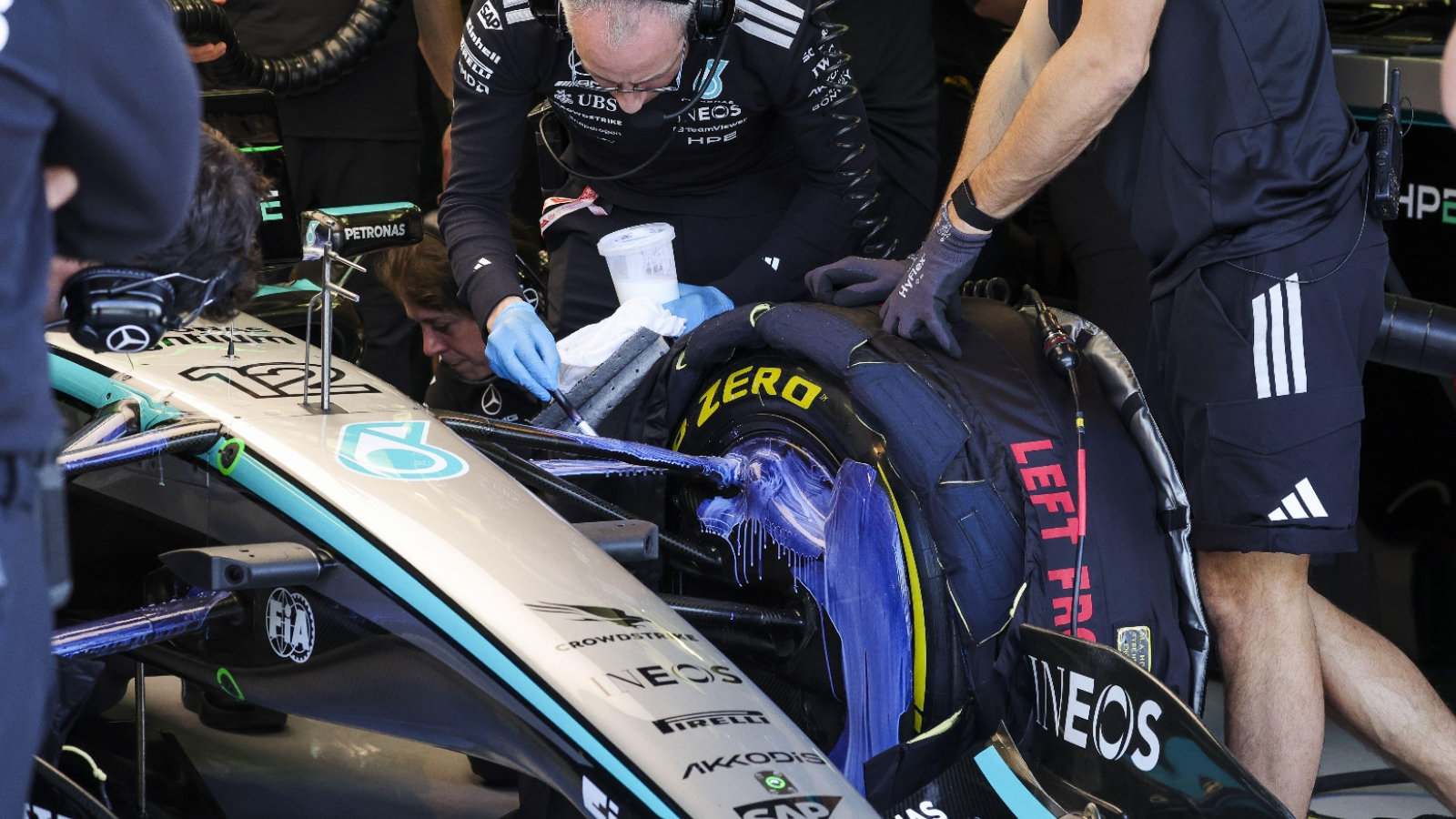
Mercedes mechanics paint flo-viz on their front brake duct and suspension assembly, in order to get visual confirmation the airflow is performing as anticipated.
Want to be the first to know exclusive information from the F1 paddock? Join our broadcast channel on WhatsApp to get the scoop on the latest developments from our team of accredited journalists.
You can also subscribe to the PlanetF1 YouTube channel for exclusive features, hear from our paddock journalists with stories from the heart of Formula 1 and much more!
Read next: Alex Albon says ‘a lot’ of lap time still untapped in 2026 cars