
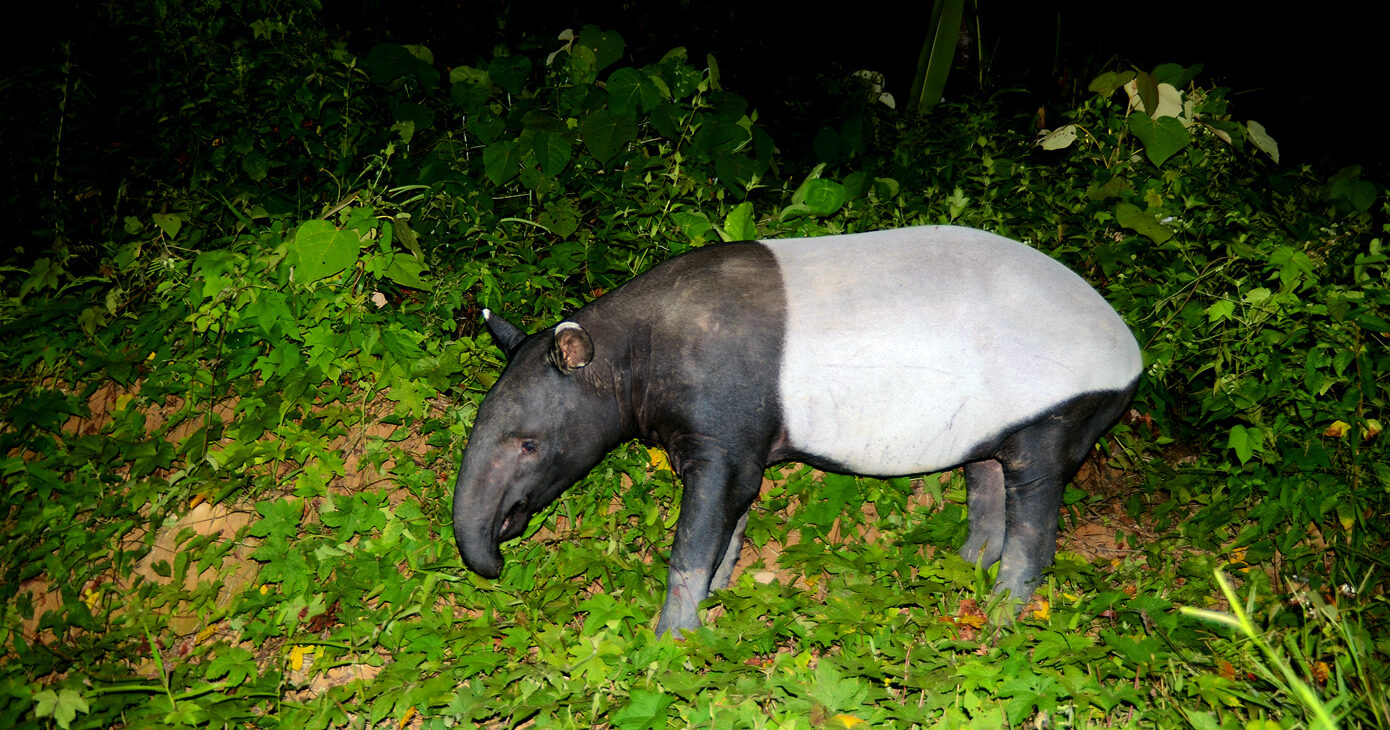
Archived camera-trap data from southern Thailand’s Khlong Saeng–Khao Sok Forest Complex identified at least 43 individual Asian tapirs, suggesting the area may be a key refuge for the endangered species.Researchers used “bycatch” images from camera traps originally set to photograph bears to estimate tapir density at 6-10 individuals per 100 square kilometers, showing existing data can help monitor elusive species.Modeling suggests the forest complex could hold up to 436 mature tapirs, far higher than previous estimates for Thailand and Myanmar combined, though researchers warn the figure may overestimate actual numbers.Despite the promising findings, Asian tapirs face ongoing threats from habitat loss and snaring, and experts say protecting intact forest strongholds is vital for the species’ survival.
See All Key Ideas
Researchers in Thailand have used archived camera-trapping data to identify a stronghold for Asian tapirs in the Khlong Saeng–Khao Sok Forest Complex, a lush network of protected areas in the country’s southern Surat Thani province.
The new study, led by Wyatt Petersen, a biologist at King Mongkut’s University of Technology Thonburi in Thailand, and published in the journal Mammalian Biology, shows how camera-trap “bycatch” data — images of nontarget species — can be used to monitor tapirs (Tapirus indicus). To date, tapirs have mostly been surveyed using visual transects, in which researchers walk along a predefined path through the forest and count any tapirs they can spot along the way.
The Asian tapir, sometimes also called the Malayan tapir, is the largest of the world’s four tapir species and the only one found outside Latin America. It ranges from southern Myanmar and Thailand to Sumatra and is considered endangered, with fewer than 2,500 mature individuals remaining, according to the latest assessment conducted in 2014 for the IUCN, the global wildlife conservation authority.
Boldly black-and-white patterned adult tapirs can weigh up to 350 kilograms (772 pounds), whereas the more discrete brown coats of calves are flecked with white, perfectly camouflaging them against the dappled light of the forest floor. As nocturnal understory specialists, they have stubbornly thick hides to protect them against scrubby thorns, and a protruding prehensile snout for gathering foliage and fruits that doubles as a “snorkel” while rummaging underwater for aquatic plants.
Although Asian tapirs are preyed on by tigers and leopards, by far their greatest threat is humans. Habitat loss and deaths in snares set by hunters are thought to have halved their numbers across their range over the past few decades, according to the IUCN assessment.
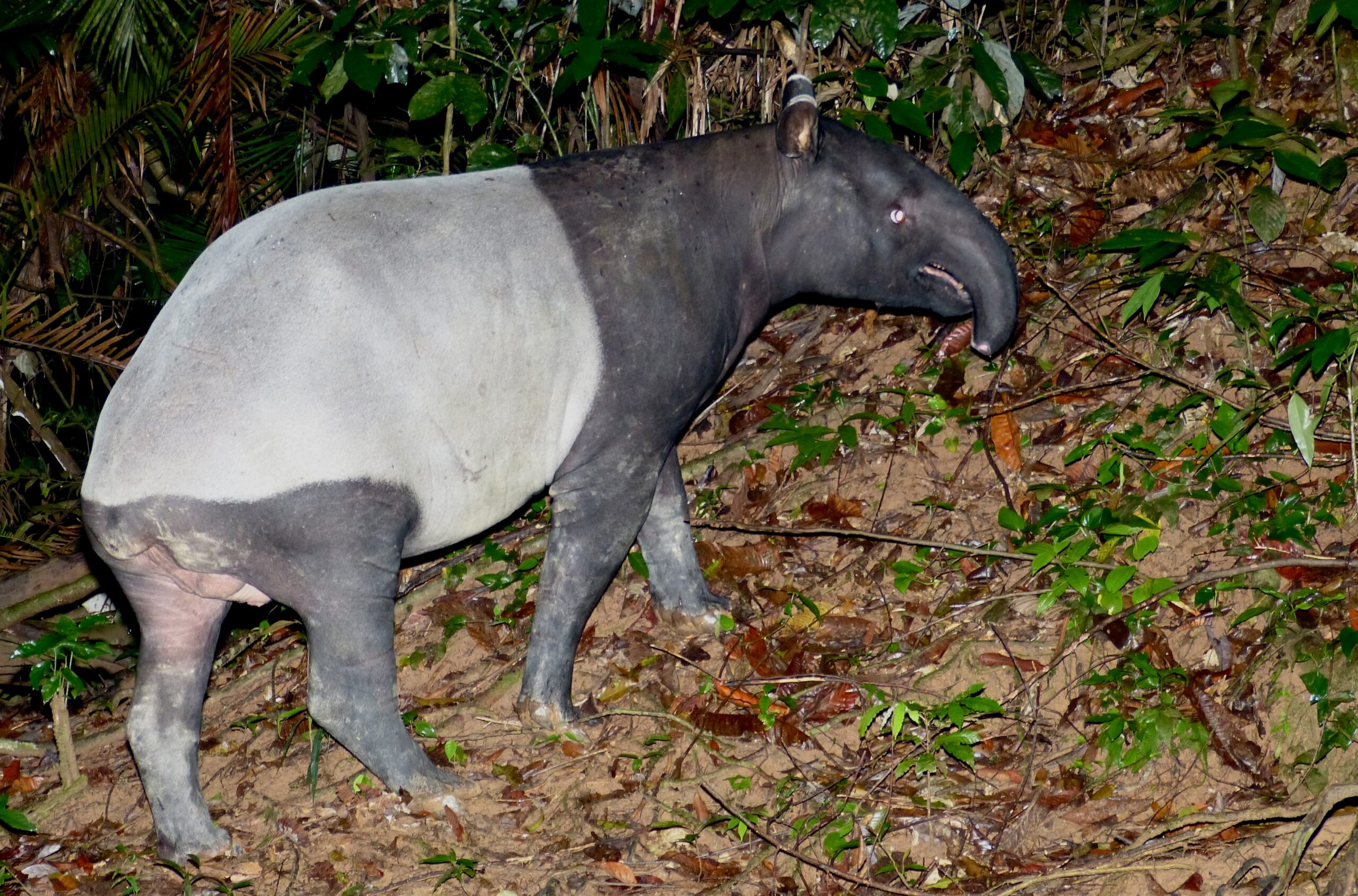 An adult Asian tapir (Tapirus indicus), photographed in Taman Negara National Park in Peninsular Malaysia. Image by Bernard Dupont. CC BY-SA 2.0.
The team in Thailand examined 91 photos of tapirs taken by camera traps set up at 40 locations around the forest complex between 2016 and 2017. The camera traps had originally been used to study the two bear species that live in the landscape: the Asian black bear (Ursus thibetanus) and the sun bear (Helarctos malayanus). In the process, the camera traps also photographed many other species, including tapirs. By observing distinctive physical traits like scars, ear marks and signs of sexual identity, the researchers identified at least 43 individual tapirs, mostly photographed at night.
From their modeling, they estimated a tapir population density of between 6-10 individuals per 100 square kilometers (about 15-26 per 100 square miles) in their study area. This is comparable to what’s been found in similar habitats in Peninsular Malaysia, such as Tengku Hassanal Wildlife Reserve (previously known as Krau Wildlife Reserve) and Gunung Basor Forest Reserve.
The researchers note that this density of tapirs would yield a population size of up to 436 mature individuals across the Khlong Saeng–Khao Sok Forest Complex, dwarfing previous IUCN estimates of “less than 250 individuals” across both Thailand and Myanmar combined.
While the higher-than-expected population size theoretically turns assumptions about the species’ status upside down, the researchers say their estimate should be “interpreted with caution.” It’s unlikely that tapirs are spread evenly across the forest complex, they say, so the actual population size is probably much smaller.
The Khlong Saeng–Khao Sok Forest Complex is nonetheless “an important stronghold for Asian tapirs that warrants dedicated conservation attention and research,” the study says.
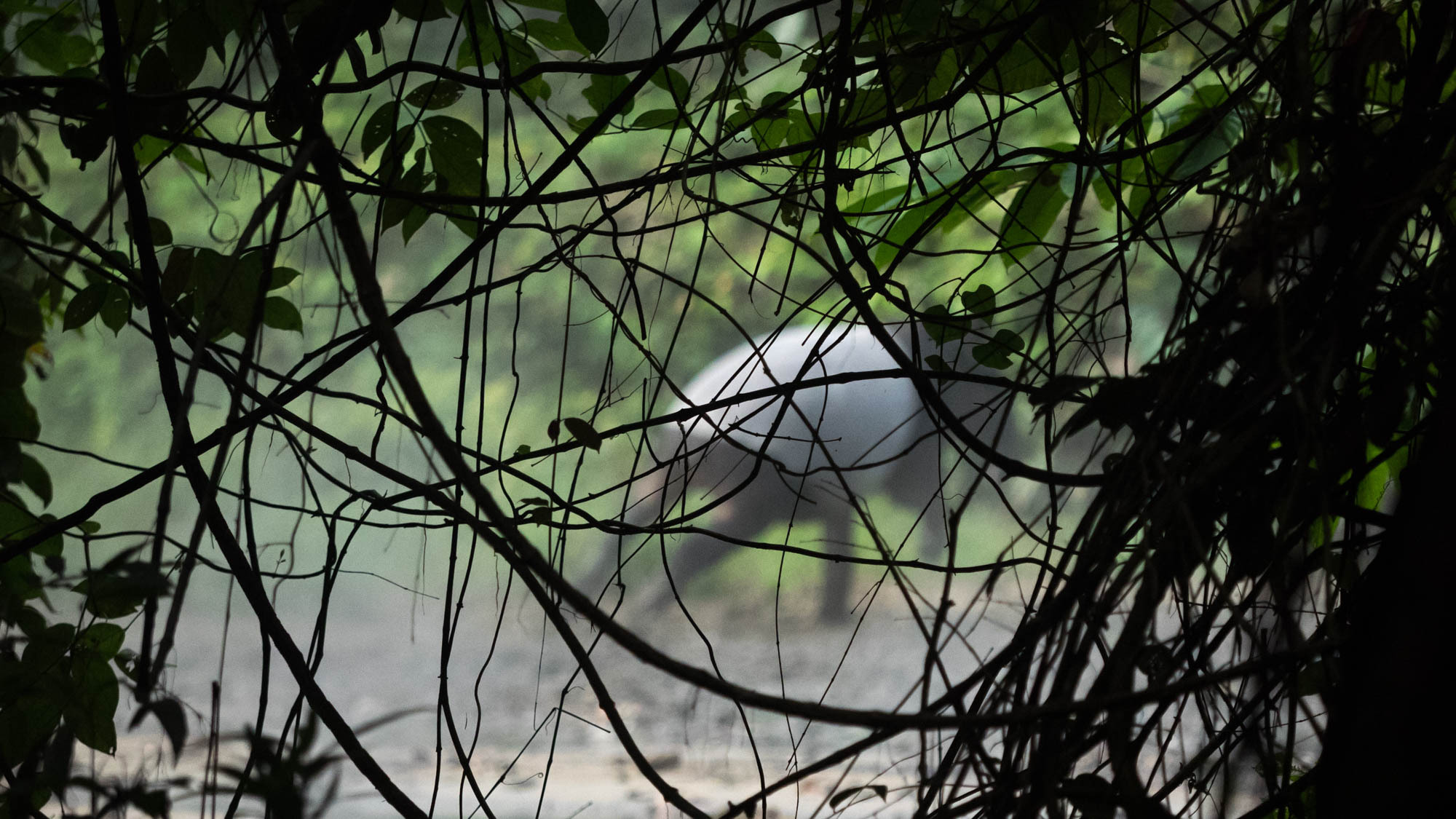 The black-and-white coloration of adult Asian tapirs breaks up their outline in the forest undergrowth. Image by ©chinotto_chena. CC BY-NC 4.0.
Protecting remaining forest refuges where tapirs persist is crucial for the long-term survival of the dwindling species, experts say. “They are large, slow-reproducing species requiring large areas of specific habitat [and] play a vital role as seed dispersers, helping to maintain biodiversity in plant communities,” Naparat Suttidate, an ecologist at Walailak University in Thailand, told Mongabay.
Naparat, who wasn’t involved in the new study, previously showed that habitat fragmentation poses a major threat to Asian tapirs in Thailand. As a shy and nocturnal mammal, they typically stay away from forest edges. “The few populations which remain in Peninsular Thailand persist within protected areas and their numbers continue to dwindle,” he said.
The Khlong Saeng–Khao Sok camera-trap data also revealed valuable insights into tapir behavior. One curious finding was that tapir numbers in Khlong Saeng–Khao Sok increased with elevation — a direct contrast to previous findings from Sumatra. The researchers say this might reflect stronger seasonal changes in Thai forests compared to the more static year-round conditions in the forests of Sumatra. Tapirs in Thailand may be seeking Sumatra-like forest features that occur at higher elevations there.
Another discovery was differing “space use” between the sexes. Males were twice as likely to show up on the camera traps than females, indicating females might have significantly larger home ranges than males.
The results also show how existing camera-trap data sets can be used to learn more about Asian tapirs and other animals with small home ranges that might otherwise be overlooked, the researchers say. In this way, the study provides a new way of gathering insights into enigmatic and little-studied species in the face of relentless habitat loss and environmental change.
Understanding more about tapirs can also bring benefits for their forest habitats, according to Naparat. “They act as an iconic symbol for education and ecotourism,” he said. “Fascination with these creatures and concern for their future sparks interest, funding and action that benefits tropical forest conservation as a whole.”
Banner image: An adult Asian tapir (Tapirus indicus). Image by ©Royle Safaris. CC BY-NC 4.0.
Carolyn Cowan is a staff writer for Mongabay.
Citations:
Petersen, W. J., Steinmetz, R., Sribuarod, K., & Ngoprasert, D. (2026). Insights into the abundance and ecology of Asian tapirs using camera-trap bycatch data. Mammalian Biology. doi:10.1007/s42991-025-00557-0
Rayan, D. M., Mohamad, S. W., Dorward, L., Aziz, S. A., Clements, G. R., Christopher, W. C., … Magintan, D. (2012). Estimating the population density of the Asian tapir (Tapirus indicus) in a selectively logged forest in Peninsular Malaysia. Integrative Zoology, 7(4), 373-380. doi:10.1111/j.1749-4877.2012.00321.x
Suwannaphong, T., Radeloff, V. C., Limmun, W., & Suttidate, N. (2024). The effect of habitat fragmentation on Malay tapir abundances in Thailand’s protected areas. Global Ecology and Conservation, 54, e03186. doi:10.1016/j.gecco.2024.e03186
Holden, J., Yanuar, A., & Martyr, D. J. (2003). The Asian tapir in Kerinci Seblat National Park, Sumatra: Evidence collected through photo-trapping. Oryx, 37(1), 34-40. doi:10.1017/S0030605303000097
See related story:
Small mammals stranded by hydropower dams die out surprisingly fast: Study
FEEDBACK: Use this form to send a message to the author of this post. If you want to post a public comment, you can do that at the bottom of the page.
