
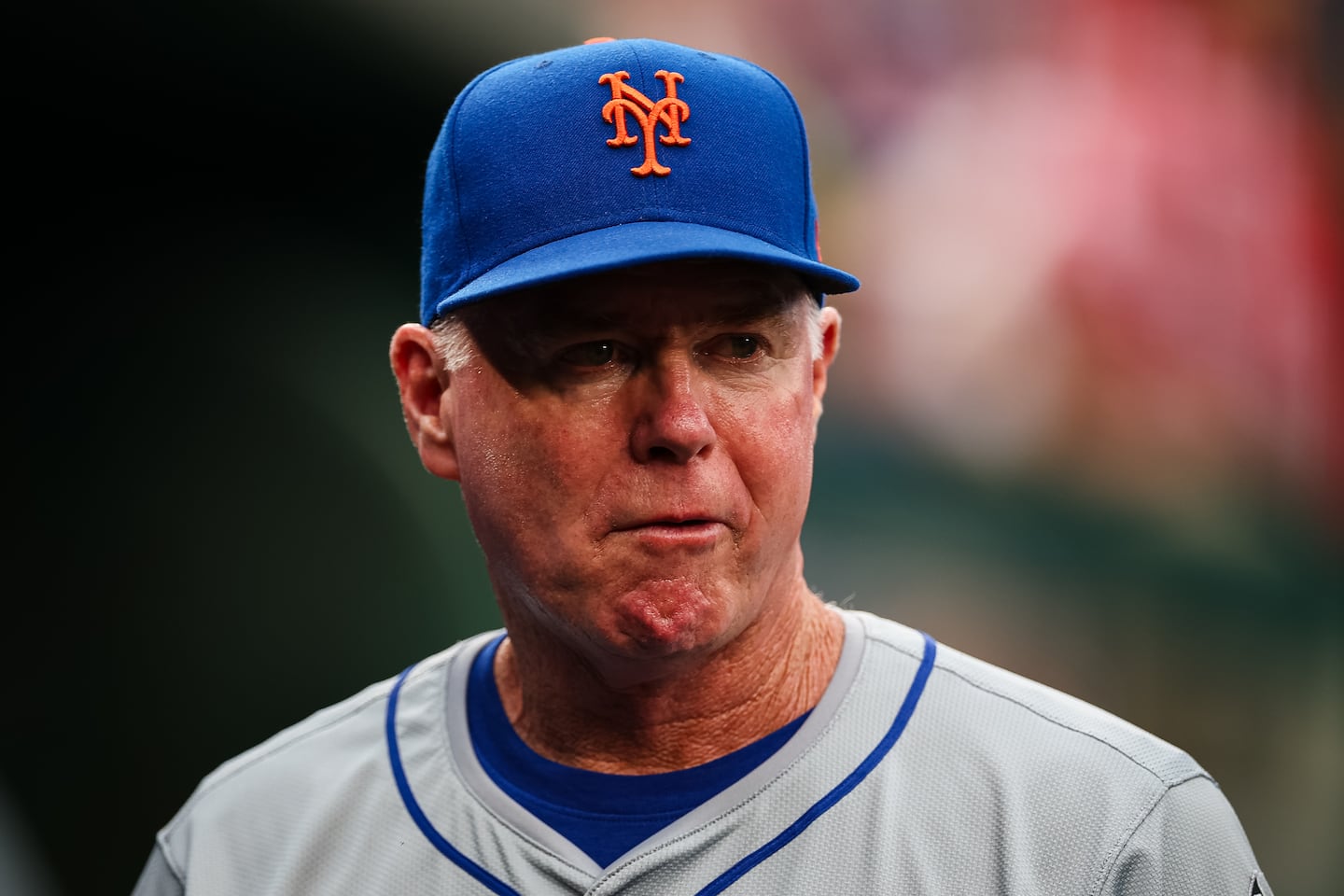
These are among the bits of wisdom collected through the decades by Glenn Sherlock, a North Shore native and behind-the-scenes baseball lifer who recently retired after 43 years in the professional ranks, including 31 seasons coaching in the major leagues.
He was a Globe All-Scholastic as a St. John’s Prep standout in 1979. He served as Mariano Rivera’s first manager. He helped put The Yankee Way into writing, and he helped launch the Diamondbacks as a franchise. He won a World Series in 2001 and once in a while breaks out the ring to prove it. He threw batting practice to a batting champion (1994 Paul O’Neill), coached a catcher to a Gold Glove (2021 Jacob Stallings), and had up-close views of stars from Deion Sanders to Randy Johnson to Jacob deGrom.
Get Starting Point
A guide through the most important stories of the morning, delivered Monday through Friday.
Over the offseason, a generation after he first nearly stepped away from baseball, Sherlock decided: It was time. He and his wife, Lisa, along for the whole ride, moved to Nahant, the tiny peninsular town in which he grew up.
“The only thing on my body that didn’t hurt was my arm,” Sherlock, 65, said with a wincing laugh. “I’ve been doing it a long time. A long time. I’m gonna miss it. I’m gonna miss the camaraderie with the players and the coaches. But it’s time for somebody else to do it.”
From contractor to new contract
In the Sherlock household, catching was a key skill. One did not merely walk through doorways. He was the youngest of six, five boys.
“It was a very competitive place to be,” Sherlock said. “My house was like — you had to be careful if you came in, because they would throw a basketball at you or a football at you. Something was coming at you, so you had to be ready.”
Appropriately, then, he found his first baseball home behind the plate, which wound up creating all sorts of opportunity. Coaching staffs are filled with former catchers.
Sherlock graduated from St. John’s Prep and headed to Rollins College in Florida. Four years later, the Astros selected him in the 21st round of the 1983 draft. His signing bonus was “$2,000, a glove, and a pair of spikes,” he said.
“All you need,” he continued. “Good luck.”
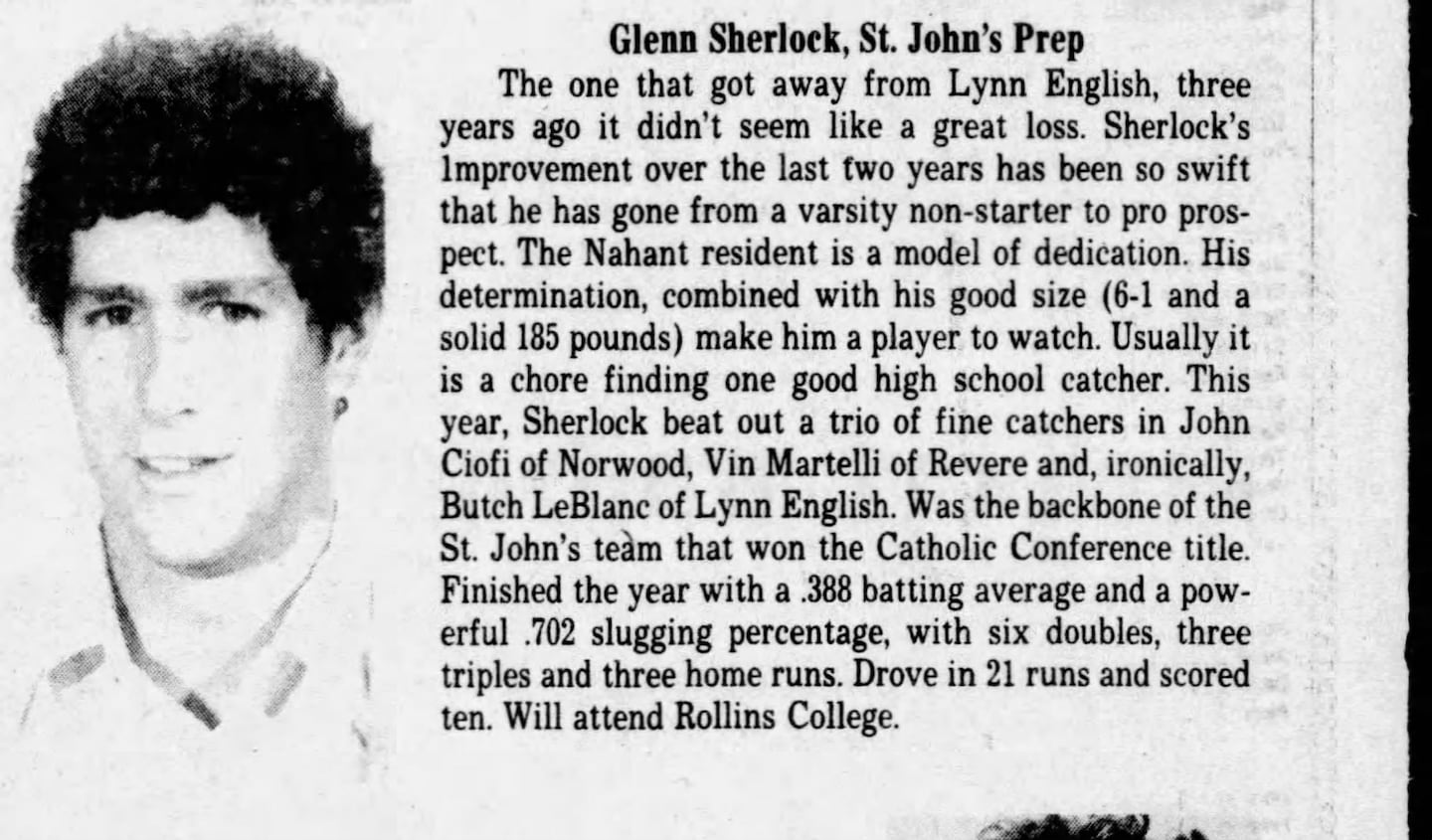 Glenn Sherlock was a Globe All-Scholastic baseball player in 1979.Globe Archives
By the winter of 1986-87, after several seasons bouncing around the lower minor leagues, Sherlock’s mind-set shifted. He had been released. He had become a father. He was working his usual offseason gig, in Florida for a contractor, and intended to make it a full-time job — even planning to go to contractor school.
Mentally, he was sort of retired.
Then the Yankees reached out with a no-frills minor league contract. He signed, not knowing how it would go. It marked the start of a decade-long run with the organization.
In his first assignment, with the Triple A Columbus Clippers, he played for manager Bucky Dent, who nine years prior had hit his famous division-deciding popup over the Green Monster.
Dent’s advice: Go into coaching. Sherlock played 10 games all year.
“Those were tough discussions, tough things to say, but telling the truth is the most important thing,” Dent said in a telephone interview. “When Glenn was with me, I just saw that he did everything right. He understood the game. He wanted to learn the game.”
He came to want to teach it, too.
“[Dent] sat me down many times and said your future is in coaching. You need to start thinking about that. I was like, ‘ … OK.’ I wanted to play,” Sherlock said. “He was very realistic, and I’m glad that he took the time to be honest.”
Front-row seat to history
In 1990, his first year fully done playing, Sherlock was tasked with managing the Yankees’ squad in the Gulf Coast League (now the Florida Complex League), the lowest level of the minors in the United States. The season was short but the days were hot.
The bold name on that roster: a 20-year-old Panamanian pitcher named Mariano Rivera, making his professional debut. He didn’t throw a cutter yet but did put up an absurd 0.17 ERA in 22 games, including a seven-inning no-hitter in his finale.
“[Rivera] could hit, he could play shortstop, he could run them down in the outfield,” Sherlock said. “And he may have been our best outfielder.”
Another formative experience in Sherlock’s initiation into coaching: He was among the farm system personnel charged with developing the Yankees’ player development manual, an instruction book that became a bible for the department.
How would the Yankees teach baseball? They defined how to handle every piece of minutia for about every situation in the sport.
It laid the foundation for their homegrown stars and the dynasty later in the decade, and helped groom almost as many coaches as players.
Sherlock still possesses the physical document — and referred to it periodically throughout his career.
“I’ll never forget . . . we spent hours deciding whether [outfielders] should catch the ball on their glove side or if they should catch the ball on their backhand side, and then throw,” Sherlock recalled.
“And I was sitting there — as a catching guy — thinking, are you kidding me? It was so thorough. But we went through the whole thing like that, position by position.”
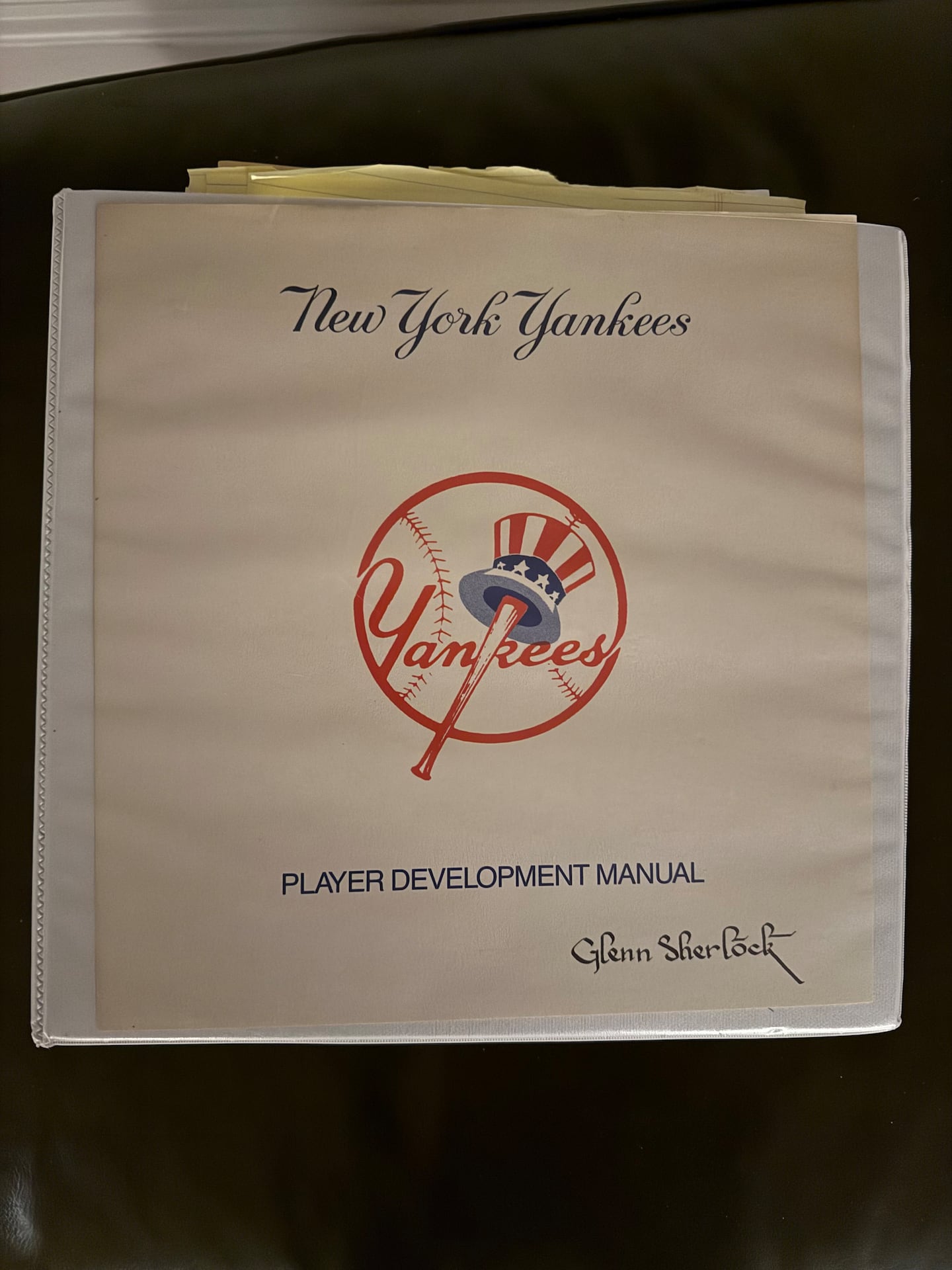 In the early 1990s, Glenn Sherlock was among the farm system personnel charged with developing the Yankees’ player development manual.Courtesy of Glenn Sherlock
In those early years with the Yankees, Sherlock met Buck Showalter, who became a close friend and key figure in his career.
To Showalter, Sherlock (and his then-strong accent) was “right out of a scene from ‘Cheers,’ ” the longtime manager said. They hit it off. Showalter’s obsessive attention to detail was of great interest to Sherlock, who wanted to learn it all in pursuit of being a great minor league manager. Showalter wound up hiring Sherlock three times — in 1992 with the Yankees, in 1996 with the Diamondbacks, and in 2022 with the Mets.
“He’s very talented. Players have a way of trusting him,” Showalter said. “And he was the gold standard of batting practice. He knew that was always going to be his fallback ticket.”
Sherlock also had an initial stop with the Mets (2017-19) and worked for the Pirates (2020-21). But that Arizona tenure was by far his longest, staying for 19 seasons under eight managers.
When Bob Brenly became manager ahead of the 2001 season, he retained Sherlock because of his track record with catchers. Sherlock came to be a mentor of sorts to Brenly’s son, Mike, then a teenage batboy and aspiring catcher (and now the Red Sox’ replay coordinator).
“His reputation in the game preceded him,” the elder Brenly said. “This game is full of [expletive], so when you run into one of the good guys, you keep him around.”
The most famous Arizona season was 2001, when the Diamondbacks won the World Series.
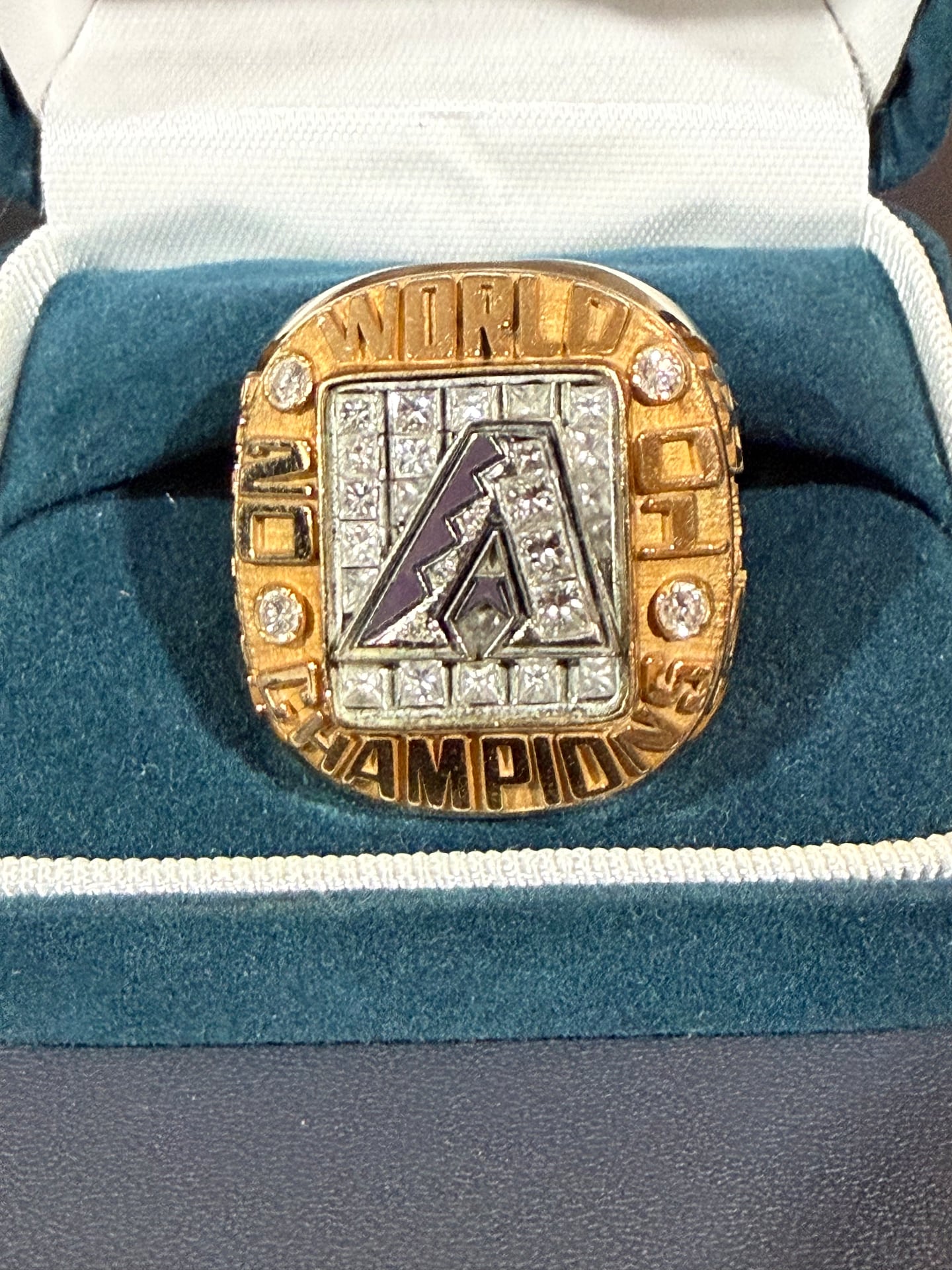 Glenn Sherlock will occasionally show off his 2001 Diamondbacks World Series championship ring, but only at “special events.”Courtesy of Glenn Sherlock
Sherlock remembers clearly the day of Game 7. The night before, Johnson had thrown 104 pitches across seven innings. But in the hours before the last game of the season, he had his cleats laced up because “you just never know,” he told teammates.
The bullpen coach that year, Sherlock watched as Johnson made the slow midgame walk down the left-field line, deeming himself available just in case.
“The place is going crazy,” Sherlock said. “I was in the bullpen going, man, this is unbelievable. The excitement in the stadium, they had these white towels, it was so loud. He came right down, sat down, calm as can be and said, ‘Just let me know.’ ”
Johnson recorded the final four outs. A quarter-century later, Sherlock shows off the ring — but only at “special events,” he said.
Sherlock’s swan song came with the 2025 Mets, whose members he still holds dear. A midseason bout with the flu and pneumonia sidelined him for weeks. The team missed the playoffs on the last day of the season, and change was coming to the staff. He decided he had had enough.
And so Glenn and Lisa returned to Nahant. The fixer-upper they had bought a couple of years prior was fixed up. Lisa, originally a Florida gal, was cool with the cold of New England. Part of the point of retiring was to spend time with family, and there still are plenty of Sherlocks in the area. And it’s nice not to have to check for scorpions.
In a lot of ways, home was much as he left it.
The ballfields next to Johnson Elementary School were Sherlock’s first. As a teenager, he worked the grounds — a prelude to contracting, maybe — for the Conigliaro brothers, Tony and Billy, at their Drumquill Golf Course, now Kelley Greens. The same beaches still are busy year-round; lobstermen still help the town go.
Even the family’s former home, where his great-grandfather settled after arriving from Ireland in the late 1800s, still is there.
The Boston skyline, visible across the Broad Sound, has grown.
“Really,” Sherlock said, “not a lot has changed.”
It all came flooding back, the landmarks and the history and the people: Cole Gaudet and Jim Brown, volunteers running the youth league; Lou Falkoff, of the nearby American Legion squad; Pat Yanchus, the legendary St. John’s Prep coach. These are some of the folks who through baseball shaped Sherlock, who went on to shape untold others.
Normally, at this time of year, he would be in the sun at spring training — Fort Lauderdale or Tucson or Scottsdale or Bradenton or Port St. Lucie.
This year, it is still winter. He can see the frigid ocean from his front window.
“It’s definitely an adjustment,” Sherlock said. “And I’m definitely happy with it.”
Tim Healey can be reached at timothy.healey@globe.com. Follow him @timbhealey.