
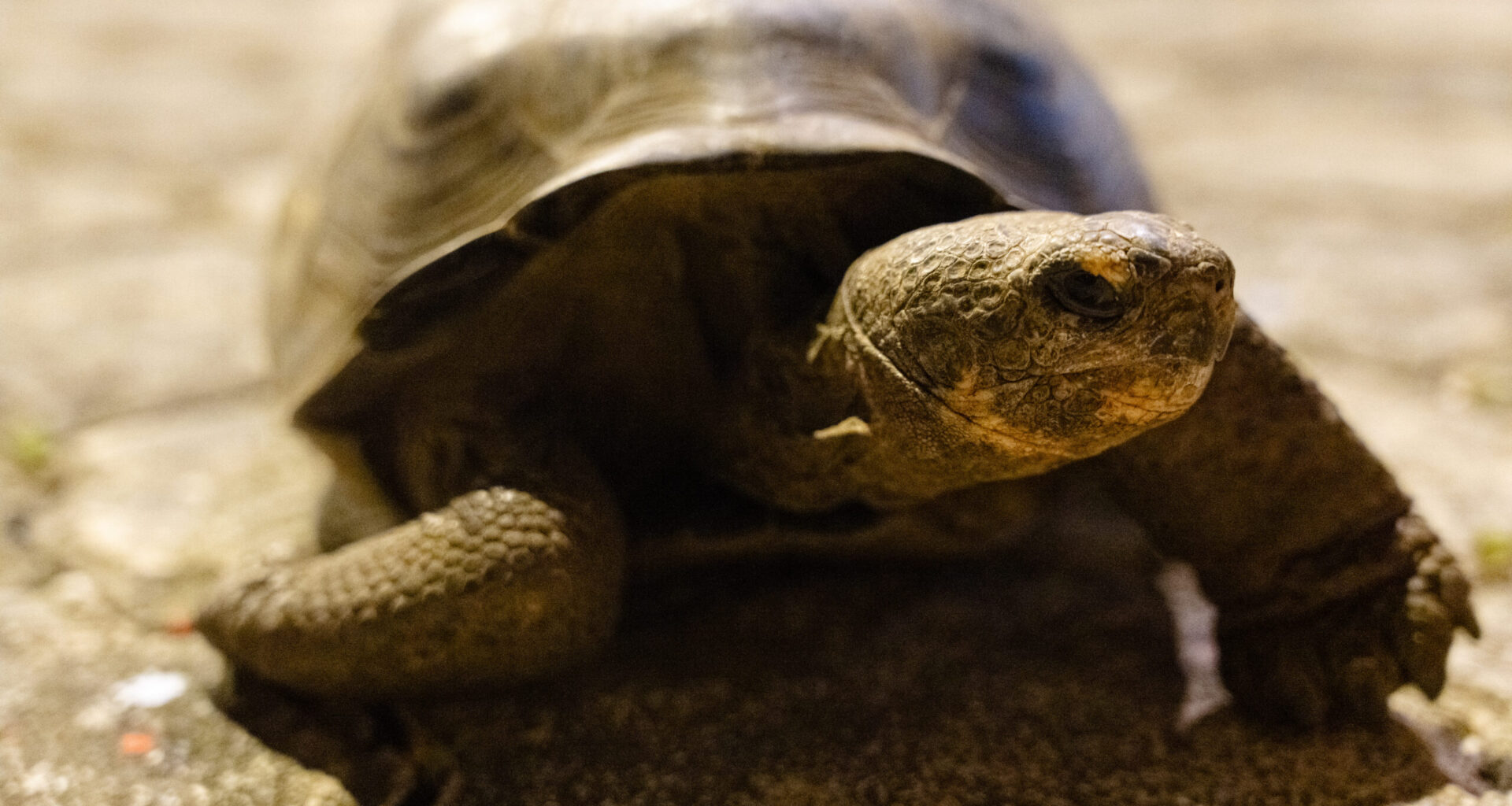
These tortoises were driven to extinction in the mid-1800s largely due to whalers, who would call into the port in search of food, and eat the turtles in their thousands. Conservationists have called their return a “hugely significant milestone”.
It was discovered in the early 2000s that some tortoises living on Wolf Volcano, to the North of Isabela Island, carried ancestry from Floreana. Through a breeding programme, these tortoises were raised to form a population that is genetically as close as possible to the original Floreana giant tortoise.
Slightly ironically, it transpires that the very same whalers who took so many animals from Floreana in the early 19th century unloaded some of them on Isabela island, and were thereby responsible for their revival.
“Habitats are the foundation for biodiversity; the home that allows species to move, live and evolve naturally over time,” said Rakan Zahawi, Executive Director of the Charles Darwin Foundation.
“Giant tortoises are a critical part of this system. By dispersing seeds, shaping vegetation, creating micro-habitats such as their well-known wallows, and influencing how landscapes regenerate, they help rebuild ecological processes that many other species depend on,” he added.
