
Sydney will experience a total solar eclipse on July 22, 2028, when the Moon completely blocks the Sun for a short time.
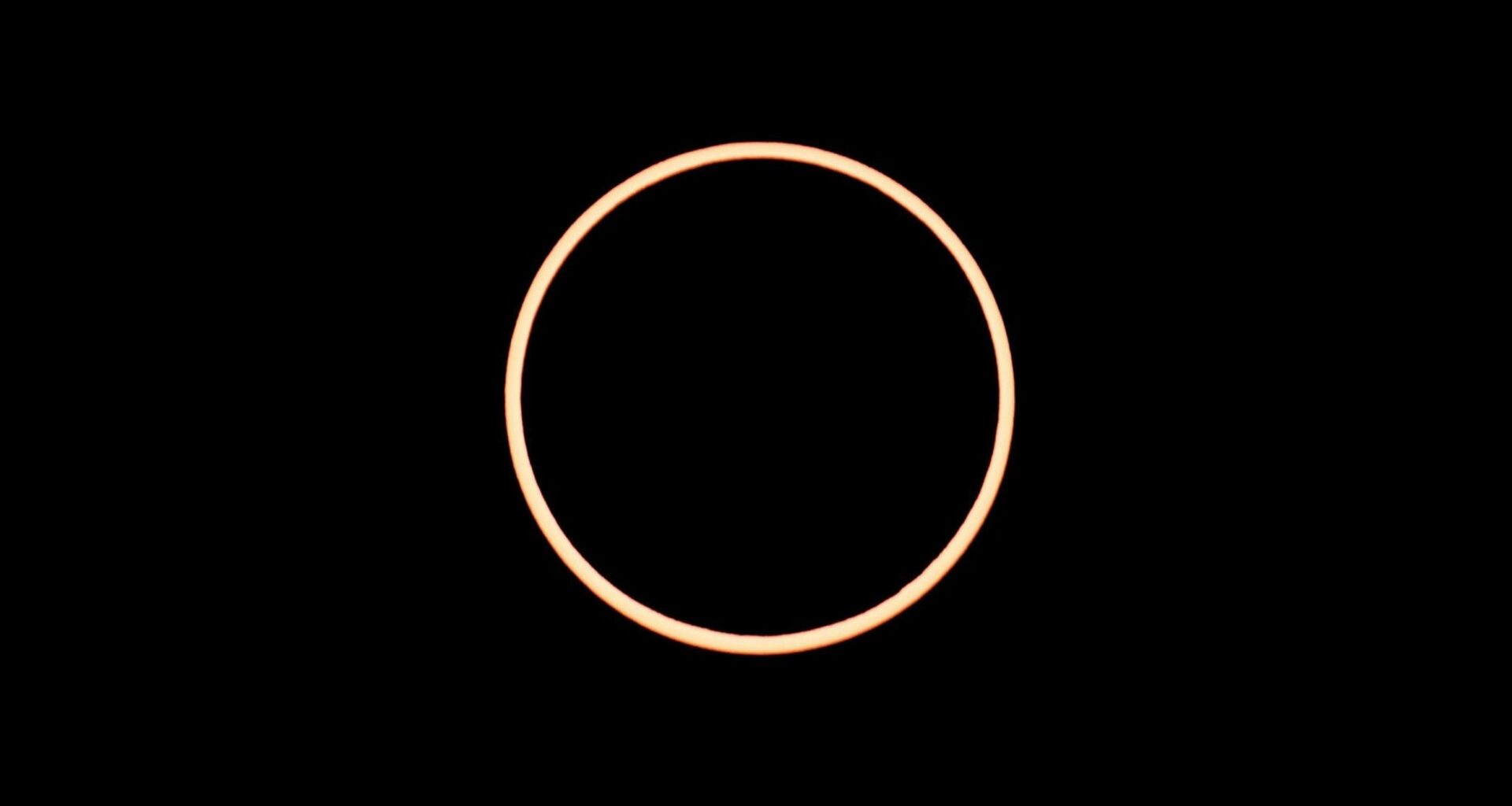
Over a span of less than two years, the world will see three of these full eclipses and three more “ring of fire” eclipses – when the Moon leaves a bright ring of sunlight visible around its edges.
Tracking the eclipse corridor

Updated eclipse maps trace the shadow’s narrow corridor, showing it jumping from Europe to Africa to Australia. By publishing the schedule on its eclipse table, NASA pins down six headline eclipses.
Across those rows, NASA marked a triple run of total eclipses, and each one crosses a different slice of Earth.
Outside that corridor, daylight stays normal, so viewers have to pick a spot inside the moving track.
A brief European blackout
On August 12, 2026, totality, the brief period when the Sun is fully covered, crosses Greenland, Iceland, and Spain.
Only a narrow strip gets full darkness, so a city a few miles away sees a partial bite instead.
At the greatest eclipse, the dark phase lasts two minutes, 18 seconds, giving photographers little time to adjust settings.
Weather will decide a lot in 2026, so flexible plans like cruises can rescue the view from clouds.
The eclipse of the century
August 2, 2027 brings up to six minutes, 23 seconds of totality along a path from Spain into Africa.
During this eclipse, the Moon’s shadow will move slowly across Earth, so the fully covered phase will last longer at each spot.
Across Morocco, Algeria, Libya, Egypt, and Saudi Arabia, the total eclipse track runs through regions that often see dry skies.
Crowds will chase that extra time, and local heat or dust can still spoil the view in minutes.
Australia’s long-awaited eclipse
In 2028, the Moon’s shadow cuts across Western Australia and then swings east to New South Wales and New Zealand.
Records for Sydney show the city last saw a total eclipse in 1857, so 2028 ends a 171-year gap. Near the point of greatest duration, totality reaches about five minutes in remote parts of northwestern Western Australia.
Sydney will be filled with visitors, but travelers who go inland can trade city convenience for simpler logistics and fewer crowds.
Three “ring of fire”
Another trio landed on February 17, 2026, February 6, 2027, and January 26, 2028, as annular eclipses.
During an annular eclipse, when the Moon leaves a bright ring of Sun, daylight stays strong and sharp.
In 2026 the ring shows mainly over Antarctica, while 2027 traces Chile and Argentina before sliding toward the Atlantic.
Unlike a total eclipse, an annular eclipse leaves a bright ring, so the sky never darkens the same way.
Why eclipses repeat
Astronomers track repeats with the Saros cycle, a repeating rhythm that brings similar eclipses back over and over.
After 18 years, 11 days, and about eight hours, NASA’s Saros guide shows the geometry nearly resets.
That extra eight hours means Earth rotates further, so each repeat moves the track west by roughly one-third.
Even so, local weather and access decide everything on eclipse day, so a friendly map still needs planning.
Travel strategies for eclipses
Chasing a total eclipse is simple on paper and hard on the ground, because the path stays narrow.
Missing the centerline by 20 miles can turn full darkness into a partial show, even in clear weather.
Booking hotels early helps, but flexible transport lets you dodge clouds, road closures, and last-minute local rules. Late decisions often cost the view, so planners lock in backup locations and stay ready to move fast.
Safe eclipse viewing
Sunlight can injure eyes in seconds during partial phases, so eclipse viewers need proper protection well before darkness arrives.
Certified filters with ISO 12312-2, an international safety standard for eclipse viewers, block intense light that can burn retinas.
“Ordinary sunglasses, even very dark ones, are not safe for looking at the Sun; they transmit far more sunlight than is safe for our eyes,” stated the American Astronomical Society Solar Eclipse Task Force.
Inside the path of totality, you can look briefly during the fully covered phase, but cover up again fast.
Rogue worlds revealed
Far from Earth, a Saturn-mass object showed itself in a microlensing event when it brightened a background star.
During gravitational microlensing, a gravity-driven brightening that occurs when an object lines up with a distant star, the lensing body stays otherwise invisible.
By combining ground telescopes with a spacecraft view, the team pinned down the mass and argued it was ejected.
Even without a visible shadow, alignment events can reveal wandering planets, and careful timing makes the difference.
A crowded sky calendar
Between 2026 and 2028, eclipse maps, travel choices, and eye safety rules all point to one thing: preparation.
For anyone chasing the shadow, the limits stay real, because clouds, crowds, and bad glasses can erase a rare moment.
The study is published in Science.
—–
Like what you read? Subscribe to our newsletter for engaging articles, exclusive content, and the latest updates.
Check us out on EarthSnap, a free app brought to you by Eric Ralls and Earth.com.
—–