

The wife of a Gold Coast businessman who is alleged to have squandered tens of millions of dollars of investor funds meant for disability housing has been accused of still living the high life despite freezing orders.
It is the second time David McWilliams and his wife have been accused of breaching freezing orders, which preserve the assets of a person accused of wrongdoing while legal proceedings play out.
ASIC initiated contempt proceedings against the pair for allegedly continuing to spend hundreds of thousands of dollars meant to be set aside for creditors last year.
According to an affidavit filed by corporate regulator ASIC to the Federal Court last week, Mr McWilliams’s wife, Laura Fullarton, has been travelling in Las Vegas, Los Angeles and Anaheim for the most part of February.
Bank transactions show Ms Fullarton rented a car, dined out at restaurants such as the Olive Garden, spent thousands of dollars on hotels and made multiple transactions at the four-star Westin Bonaventure Hotel in downtown Los Angeles.
ASIC also alleges Mr McWilliams appears to be seeking to incorporate a company and obtain a visa in the United Arab Emirates.
Bank transactions listed in the ASIC case show thousands of dollars were also withdrawn from an ATM at CSI Southport, a gaming venue on the Gold Coast, between August and December.
ASIC alleges the transactions were from accounts kept hidden from the court, and questioned the origin of the $50,000 in them and whether the funds should have been reserved for investors.
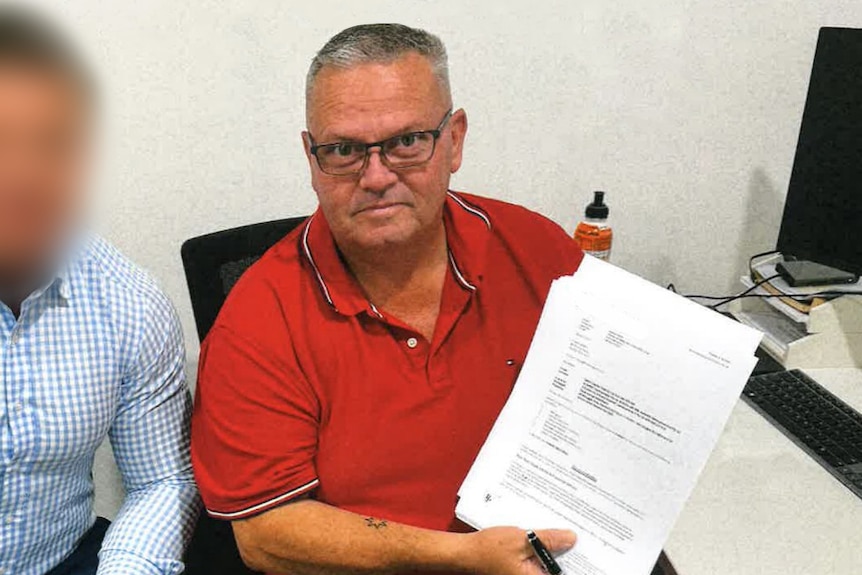
David McWilliams is being investigated for fraud over a multi-million-dollar property scheme. (Supplied)
But in an affidavit filed with the court, Mr McWilliams said the payments were gifts “given to me out of pity due to the financial hardship being experienced by myself and Laura and our children”.
He said he and his wife’s weekly allowance, allowed under the freezing orders, had been stopped by receivers, leaving them with no income, so they had to open the new accounts for “survival pure and simple”.
He said his wife’s “cheap” holiday to the USA was to relieve her immense stress from the proceedings, and the flights were mostly paid for with frequent flyer points.
Mr McWilliams denied seeking to incorporate a business in the UAE.
Contempt proceedings to be heard in April
It is the latest alleged transgression by McWilliams, a former supercar-driving property developer who has been under a two-year investigation by ASIC and featured in a Four Corners episode about specialist disability accommodation in August.
Mr McWilliams raised more than $92 million from hundreds of investors to build disability housing across Australia up until 2024.
But ASIC alleges he squandered much of it on luxury cars, a Fijian resort development, $600,000 on a Gold Coast modelling agency and $3.3 million in cryptocurrency.
He also allegedly gambled $40 million of it at Queensland casinos, ultimately losing $4 million.
Investors each lost hundreds of thousands of dollars in the scheme. Some lost the bulk of their superannuation.
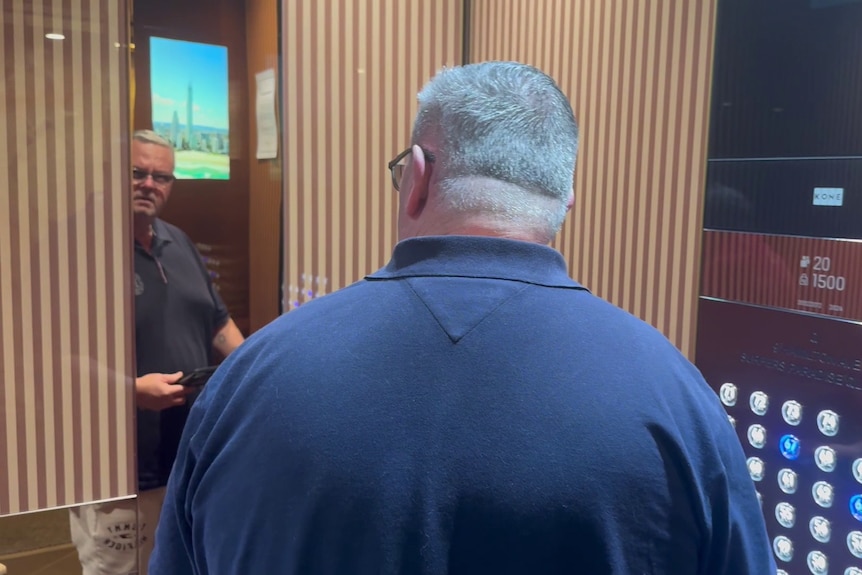
David McWilliams featured in a Four Corners episode last year. (Four Corners)
Mr McWilliams and Ms Fullarton had their assets frozen by the Federal Court over a year ago while ASIC investigated criminal charges against the pair.
Assets are frozen to preserve what is left of a person’s finances so it can potentially be divvied up between investors at the conclusion of investigations.
While ASIC has not laid charges against Mr McWilliams over the failed disability housing scheme, it has issued contempt proceedings against him and Ms Fullarton for allegedly breaching freezing orders.
Court documents filed last week also show lawyers for Mr McWilliams have written to court-appointed receivers requesting another $25,000 to pay for his legal fees to fight ASIC’s contempt application.
That is on top of $47,000 already granted by the court.
But in a scathing reply, they refused, pointing to Ms Fullarton’s overseas trip this month.
“… Your clients have deliberately prioritised expensive and extravagant overseas travel over not only the interests of creditors and unit holders, but over [their legal defence],” Stephanie Trajcevska, Senior Associate for Norton Rose Fulbright Australia, wrote.
The contempt case will be heard in April.