
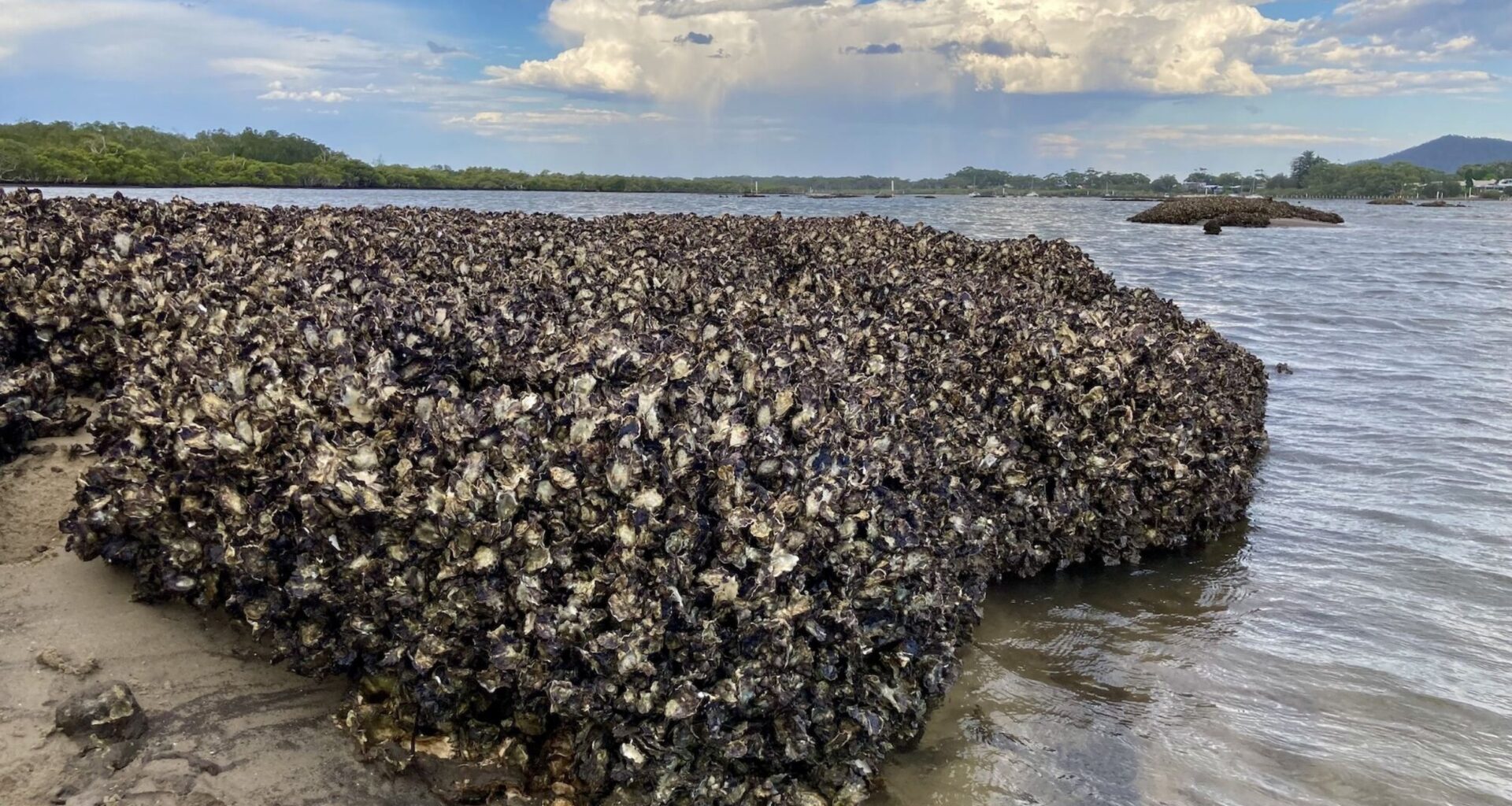
Natural oyster reefs have a repeatable, three-dimensional shape that maximizes the survival of newly settled oysters.
That blueprint explains why many rebuilt reefs stay bare, and it points to designs that keep baby oysters protected.
Blueprint for oyster reefs

Along the last natural oyster reef patches near Sydney, the surface looked messy, yet the same ridges and pockets kept appearing.
At Macquarie University, Dr. Juan Esquivel-Muelbert turned those shapes into 3D maps detailed enough to copy.
His team found that natural reefs used a middle level of roughness, offering many small hiding spots without towering walls.
Copying that balance improves survival, because young oysters die quickly when predators or hot sun can reach them.
Colonial impacts on reefs
In the late 1700s, settlers treated oyster reefs as a quarry sitting in shallow water. A historical analysis tracked early reef harvesting near Sydney to food demand and lime production.
Builders at Government House used lime made from oyster shells, tying reef loss directly to brick and mortar.
Once that shell base vanished, later restoration had to start from scratch, because new oysters cannot attach to soft silt.
Experimental reef designs
To copy the texture, the team cast 16 concrete tiles with ridges tall enough to make tight creases.
Researchers bolted clusters of tiles beside living reefs in three estuaries around Sydney, where larval oysters already drifted.
Half sat inside predator-proof cages, while matching tiles stayed out in the open, so fish and crabs could pick off newcomers.
After 12 months, scraping each tile showed which surface shapes kept young oysters alive long enough to begin forming reefs.
Testing predator pressure
Inside cages, bigger surface area for attachment simply held more oysters, because nothing could reach them after they settled.
Outside cages, counts rose and then fell as textures changed, showing that added area alone did not decide the winners.
Predators drove that trend, because fish and crabs could patrol simple surfaces while complex creases hid young oysters.
The results showed reef design cannot chase maximum roughness, because protection depends on how spaces connect, not on height alone.
Tiny gaps save oysters
Baby oysters start as pinhead-sized settlers, and waves and sun leave them exposed on bare concrete.
Cracks between ridges created microhabitats, small pockets with cooler shade and wetter air, during low tide drying.
Those pockets also blocked larger mouths and claws, so fish and crabs struggled to reach the newest oysters.
Over time each protected survivor cemented itself in place, so the surface slowly turned into the start of a new oyster reef.
Geometry behind reef design
Instead of guessing by eye, the team described each surface with two numbers that captured how it folded and rose.
One was fractal dimension – a score for how much surface packs into space – across small and large scales.
Higher values meant more nooks and crannies, which can turn a predator’s quick bite into a missed strike.
Adding height range, the peak-to-valley distance on a tile, kept the search focused on shapes that oysters actually use.
Sweet spot for oyster reefs
When fractal dimension and height range worked together, the model pointed to one best recipe for survival. Comparing that recipe with real reef scans, most natural patches sat in the top 10 percent zone.
“Our experiment showed the optimal configuration for both establishment and long-term survival was one that provided multiple small spaces for baby oysters to grow in, with minimal exposure to predators or harmful environmental stress,” said Esquivel-Muelbert.
Keeping designs within that narrow band may speed reef recovery, yet different oyster species might need a different match.
Templates for reef recovery
Across Australia and beyond, groups now rebuild oyster reefs to improve water clarity and reduce shoreline erosion.
Restoration crews often dump shells or concrete, yet the wrong texture can invite predators or dry out baby oysters.
Design rules based on living oyster reefs can keep projects from wasting money on structures that look complex but fail quickly.
Using that template lets builders choose shapes that protect the first generation, which is the step that decides reef fate.
Oysters engineer coastlines
Oyster reefs act as ecosystem engineers – species that build and reshape habitat for others – as they stack living shells.
Those layered shells slow water near shore, which can dampen erosion while giving small fish and crabs a place to hide.
A national assessment found oyster reefs across southern and eastern Australia fell 94 percent since 1750, amid global losses of above 85 percent.
Restoring reefs means restoring services, but success starts with the first months when tiny oysters either survive or vanish.
Blueprint for reef recovery
By reading reef surfaces as working architecture, the study links colonial damage to a practical recipe for rebuilding this important living structure.
Future projects can scale the same design rules to larger footprints, while testing new materials and other oyster species.
The study is published in Nature.
Image credit: Dr. Juan Esquivel-Muelbert
—–
Like what you read? Subscribe to our newsletter for engaging articles, exclusive content, and the latest updates.
Check us out on EarthSnap, a free app brought to you by Eric Ralls and Earth.com.
—–