
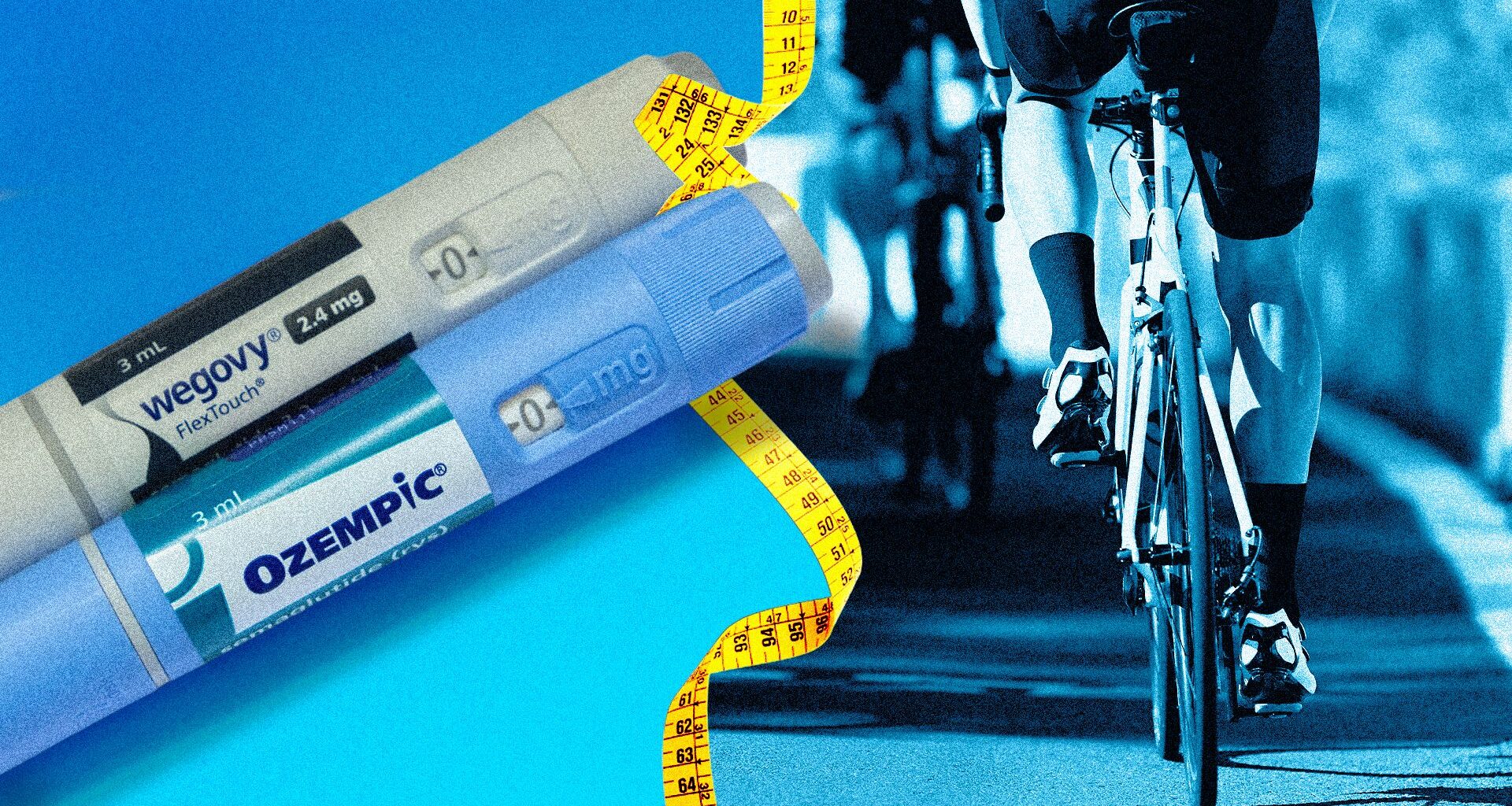
Developed for people with type 2 diabetes and those living with obesity, nearly 12% of US adults have used weight loss injections according to a 2025 study, with another report claiming that 3.3 million UK adults are expected to use them in 2026.
Cycling has a longstanding and uneasy relationship with body image and weight, forged by a culture that’s trickled down from the pro ranks, where every kilogram matters and diet is continuously under the microscope.
You may like
Of course, there are potential health risks posed by under-fuelling, too, with research still in its early stages and cultural stigmas aplenty. But for certain cyclists – several of whom we’ve spoken to, alongside experts, but did not want to go on the record or would only speak on condition of anonymity – could the benefits outweigh the risks when it comes to weight loss drugs?
How the drugs work
The drugs inhibit appetite and slow digestion, meaning people feel fuller for longer and eat less. They are called GLP-1 receptor agonists, which stands for Glucagon-like peptide-1.
Ozempic, Wegovy and Mounjaro are key brand names, with Semaglutide the active ingredient in Ozempic and Wegovy, and tirzepatide in Mounjaro. The latter works slightly differently as it acts on two receptors, GLP-1 and GIP, which further reduce appetite.
Anecdotally, Ozempic and Wegovy are both produced by Danish Pharmaceutical company Novo Nordisk, which has sponsored an all-diabetic UCI ProTeam since 2013.
They are typically injected weekly, although pill form is now available in the US and is expected soon in the UK.
“Most of the people we’re seeing aren’t necessarily high performing or recreational athletes; it’s people who are obese or overweight, possibly with other co-morbidities like pre-diabetes or metabolic syndrome,” said Tom Williams, Head of Performance and Strength & Conditioning Coach at Pure Sports Medicine.
“Their GPs have suggested they get on it, and our job has been working with them to increase their exercise and their activity.”
You may like
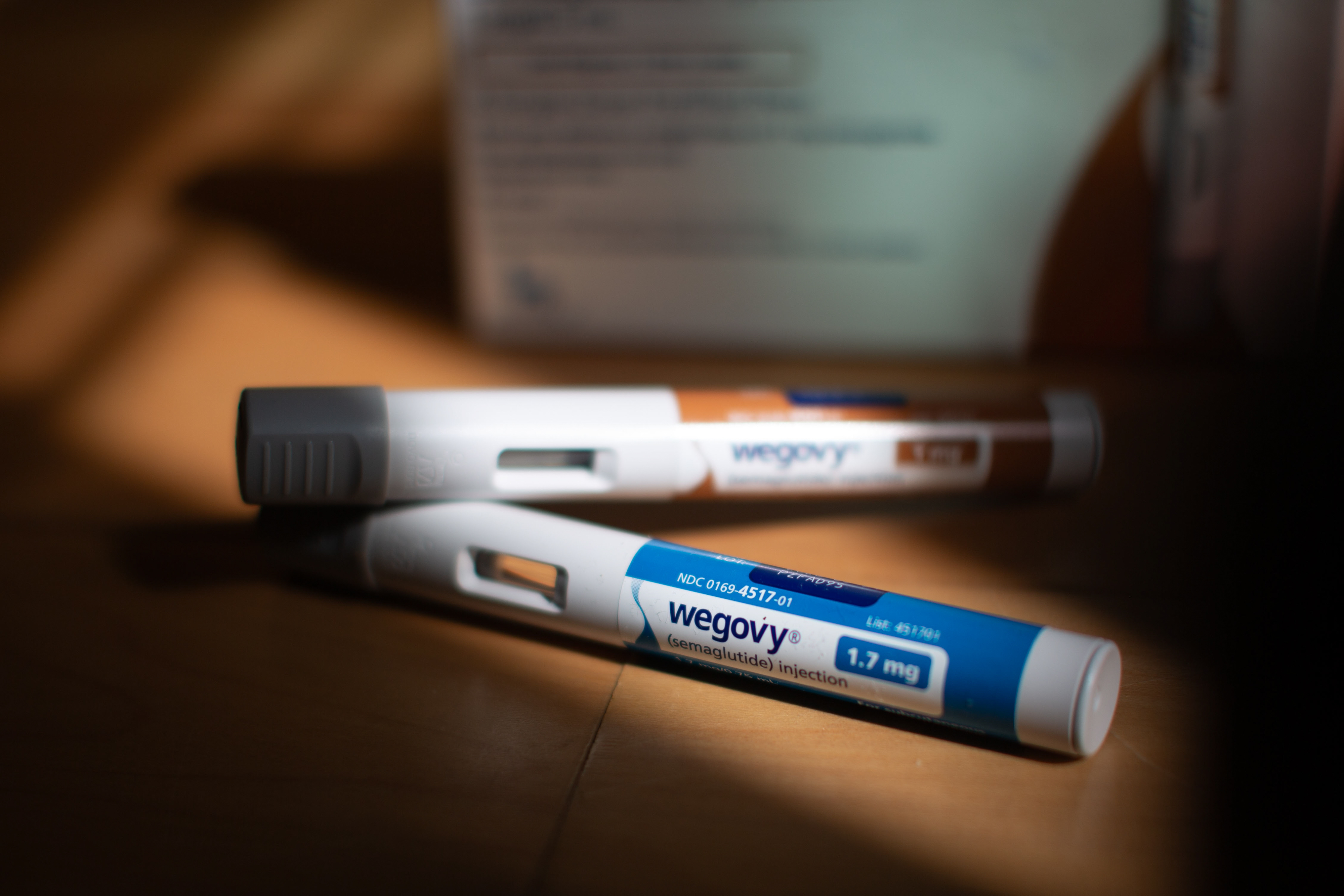
Semaglutide is the key ingredient in the Wegovy weight loss injection pen (Image credit: Shelby Knowles/Bloomberg/Getty Images)
Life-changing health boost
For those overweight or living with obesity, GLP-1s offer a lifeline and can enable them to get back into cycling.
A PT and cycling coach was struggling with weight gain as a side effect of long Covid and started using Mounjaro in July 2025. She was prescribed by a chemist as her BMI was in the overweight category and has since lost 17kg.
“It has been a game changer for me,” she said. “I eat well, I’ve had to change nothing except now that I use the GLP-1, it’s shifted something in my body, and I have so much more energy, I have so much more focus and clarity.”
It’s given her a renewed sense of joy on the bike.
“I was really struggling to get out on the bike, but when I went out on my bike for the first time, having lost that weight, it was just a game-changer. I did a hill session, and I could do it. I did the hill twice, I had the energy, and I got a PB.”
There have been other health benefits, too.
“I think it’s helped with inflammation, and all the markers in my blood tests have been amazing the past few months. I’ve suffered with anaemia my whole life, and that’s reduced; I’ve suffered with ethnic neutropenia, which seems to have gone too.”
In a similar vein, a person I spoke to who took Ozempic said she noticed inflammation and water retention dropped, better energy levels, walking was easier, portion control was better, she lost the desire to drink alcohol, and the food noise went away.
She called the drug “life-changing.”
Under-fuelling
It could come at a risk, however, because the drugs reduce appetite, which means cyclists may not be able to fuel adequately and be in a low-energy deficit.
“The risk is undernourishment as you’re not able to eat as much as you were prior to being on the drugs,” said Williams.
“People on these drugs need to ensure they are getting enough carbohydrates, fats and nutrients needed to sustain the workload they are doing. If you are hardly eating, you will fatigue quicker and your endurance will reduce as well.”
RED-S (relative energy deficiency syndrome) is also a potential risk that can lead to a series of health concerns.
“The risk of low energy availability will be more immediate which can be a long term issue, alongside picking up illnesses, not responding to training as well, longer recovery times, and the quality of your riding won’t be as good,” said said Dr Sam Impey, a performance nutritionist and co-founder of nutrition app Hexis, currently used by eight WorldTour teams.
At the WorldTour level, it’s a battle for riders to eat enough as it is, Dr Impey explained.
“There’s almost a trade-off now of whether a rider can physically get enough calories in on the key days and in a WorldTour race. For these athletes to perform, the physical amount of calories they need is already at the limit of what they’re happy to ingest.”
However, the PT and cycling coach on Mounjaro is conscious of adequate fuelling and hasn’t seen any negative impact.
“I make sure I eat three meals a day, I focus on my protein first and foremost, and if I’m going to be doing extra workouts, I have an extra snack,” she said. “I also take collagen to ensure I’m hitting my protein goals.”
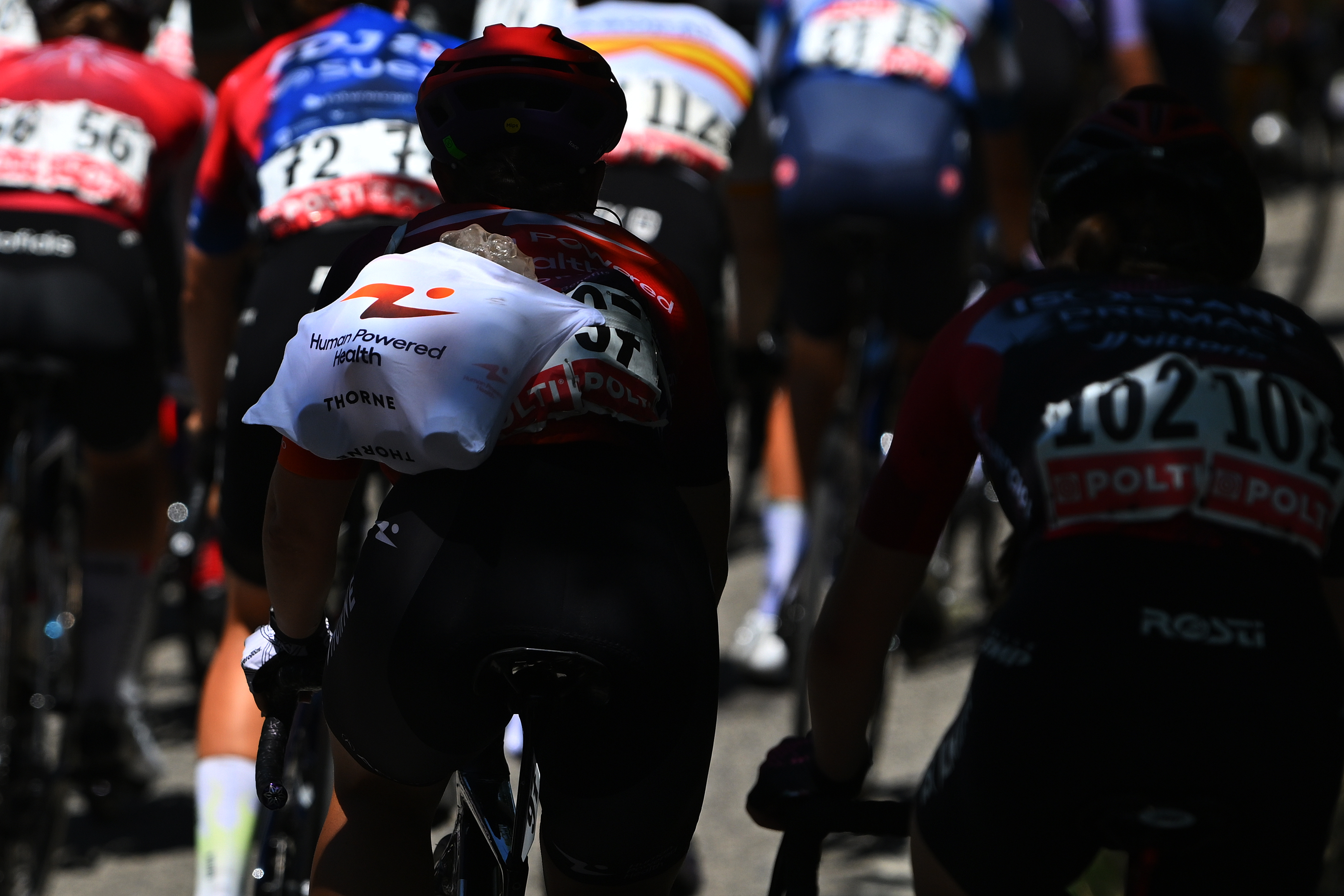
In the pro peloton, riders are continually pushing the boundaries of their carboyhdrates intake (Image credit: Luc Claessen/Getty Images)
Muscle and bone density loss
Exactly how much muscle mass and bone density loss GLP-1s cause is up for debate, with varied research thus far. One study reported up to 40%, while another has found it to be around 10% of the weight lost. Regardless, the loss can negatively affect performance on the bike.
“Total mass may come down, but you’ll probably lose as much muscle as you will fat, so whilst you might get a very temporary, and this is only speculative, increase in watts per kilo that will shortly be followed by a big drop in total capacity to produce watts,” said Impey.
“Your durability will also go down, so your ability to do longer stages, particularly back-to-back days of riding, is going to be impaired as well.”
Cycling is already known to negatively impact bone density, and with the addition of GLP-1s, the risk becomes greater. This is particularly significant for cyclists over 50 due to sarcopenia, an age-related decline in muscle mass, as well as female cyclists who are post-menopausal due to higher rates of osteoporosis.
Weight resistance training and a healthy diet are important to mitigate this.
“On these drugs, up to 40% of the weight you lose can be from muscle mass and bone density, which means you need to be in the gym two or three times a week and you need to make sure that what you’re eating is correct,” said Williams.
Performance enhancing?
GLP-1s are not currently banned by WADA, but they are being monitored.
“I don’t see it as a performance-enhancing drug because of the risks of under-fuelling and energy requirements, as well as the loss of bone and muscle mass,” said Williams.
“Base volume is king, and you can’t shortcut it,” added Impey. “There’s no HIIT protocol, sprint interval, or any chamber you can get into that will shortcut doing 15 hours a week of low intensity training.”
However, a researcher I spoke to suggested that independent components of the drugs could have anabolic qualities, although hard to separate, and the cognitive benefits could also be a consideration. Some research has shown that GLP-1 users have a lower risk of developing Alzheimer’s and overall improved cognitive function.
Body image
Research claims that cycling has a high prevalence of eating disorders, and adding weight loss drugs into the mix could increase this while also perpetuating damaging body image ideals.
“The use of weight loss jabs in a context where thinness is already put on a pedestal and where eating disorders and disordered eating is already a concern, is a recipe for disaster,” said Dr Garcia Ashdown-Franks, research fellow at York St John University.
“I think the introduction of weight loss jabs is going to perpetuate those norms and expectations around having the lowest possible body weight.”

Weight loss drugs could further cycling’s already uneasy relationship with body image (Image credit: Susumu Yoshioka/Getty Images)
Williams emphasises that the drugs are not appropriate for people who do not fit the prescribed category.
“There will be people who already have a history of eating disorders or body image issues, or people who want to shed a few kilos, and that’s where the risks come in. It’s not appropriate for them,” said Williams.
However, the drugs have been criticised for being easy to access, and one source based in the US said, “getting prescribed is easier than getting a bag of sweets from the shops.”
Weighing it up
For those overweight or living with obesity, weight loss drugs offer a way to improve health and quality of life. It could also enable people to get back into cycling and others to discover it.
However, for amateur and elite cyclists, it’s hard to see many benefits to the drugs amid the risks of under-fuelling and muscle and bone density loss.
More research is also needed to further understand the impact of these drugs too, and there are significant concerns over the potential for these drugs to lead to damaging body image norms.
As Impey said: “I don’t see how the combination of cycling and weight loss drugs is a good thing for someone’s long-term health unless there’s a clinical requirement.”