
The franchise tag window is here, and there are several big names to keep an eye on this offseason.
While there are plenty of players who could pick up the tag over the next week, it’s unclear how many actually will get the franchise tag. Last offseason, only two players — Cincinnati Bengals wide receiver Tee Higgins and Kansas City Chiefs guard Trey Smith — were tagged. The Dallas Cowboys used the tag on George Pickens on Friday, and after Atlanta used it on Kyle Pitts, we’re already at last year’s total.
Advertisement
Here’s everything you need to know, and who to watch out for, during the franchise tag window.
What dates is the franchise tag window open?
The franchise tag window opened Feb. 17 and runs until 4 p.m. ET on March 3.
What are the franchise tag rules?
During this two-week window, teams are allowed to tag one player who is scheduled to become an unrestricted free agent. That would then keep that player with the team for the 2026 season. The sides can still negotiate a long-term deal up until July 15. If that deadline passes without a new deal, a tagged player will play on a one-year contract under the tag’s price determined by position.
Franchise tag salaries by position for 2026
The projected franchise tag costs for each position in 2026, per Spotrac.
Advertisement
Offense
QB: $47.242 million
RB: $14.186 million
WR: $28.037 million
TE: $16.007 million
OL: $27.764 million
Defense
DE: $26.710 million
DT: $27.424 million
LB: $27.559 million
CB: $20.783 million
S: $20.758 million
Special Teams
K/P: $6.846 million
Which players have been franchise-tagged?Kyle Pitts, TE, Atlanta Falcons
The Falcons placed the franchise tag on Kyle Pitts officially on Tuesday.
Pitts looked significantly better last season, much more like the dominant tight end he was during his rookie campaign. He had 928 yards and a career-high five touchdowns on 88 catches, and was a very reliable piece for the Falcons’ offense that lost both quarterback Michael Penix Jr. and wide receiver Drake London due to injuries.
Advertisement
But Pitts has been underwhelming for much of his career. Outside of his first and most recent season, Pitts has largely failed to live up to the expectations that came with being the No. 4 overall draft pick.
It’s unclear how the Falcons’ new leadership feels about Pitts, but tagging him for one final season appears to be their safe strategy. The Falcons can now revisit his long-term future with the organization this fall, depending on how his fifth campaign with them goes.
George Pickens, WR, Dallas Cowboys
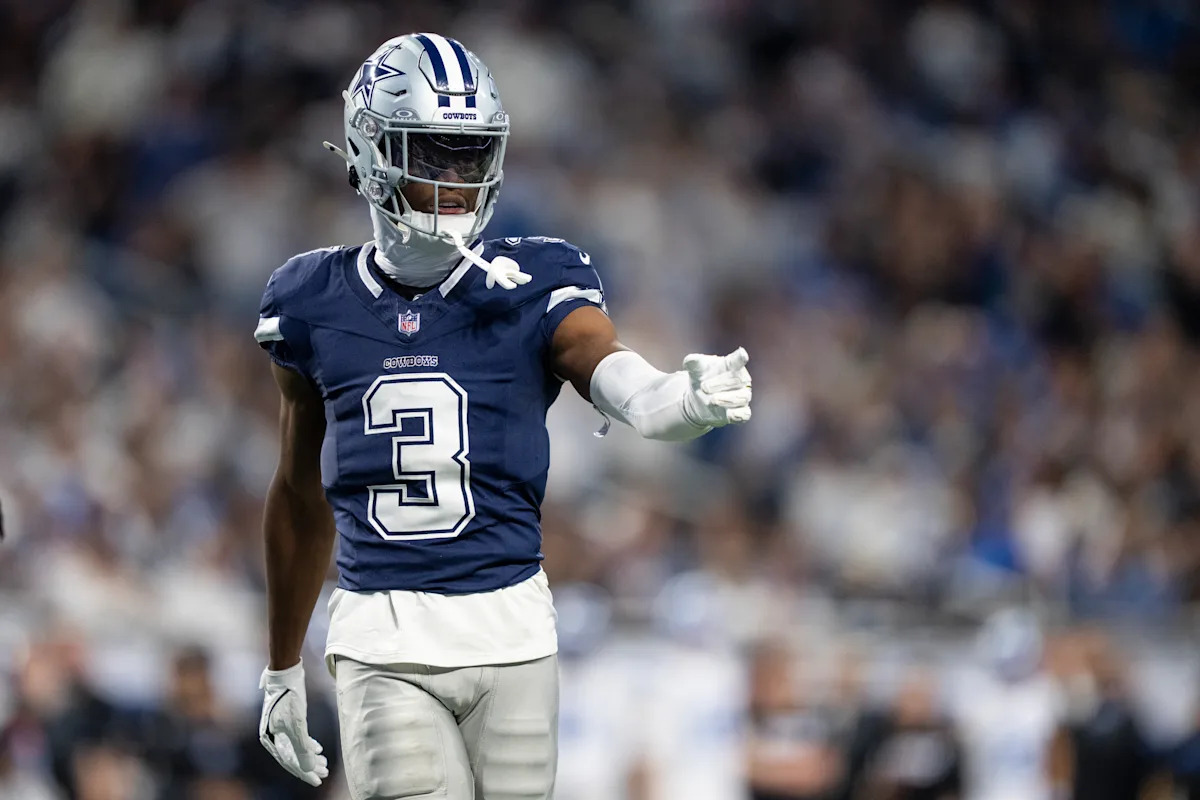
This is an easy one, and the Cowboys made the move Friday after planning to do it for quite some time.
Advertisement
Pickens is coming off the best season of his career in 2025, his first with the Cowboys after being traded there from the Pittsburgh Steelers. Pickens had 1,429 yards and nine touchdowns on 93 catches last season alongside star CeeDee Lamb. The Cowboys will have the second-most expensive wide receiver duo in the league next season when the deal is done. The Cowboys have made it clear they want Pickens on a long-term contract, too.
While negotiations on that deal could take some time, the Cowboys aren’t going to risk losing Pickens to free agency this offseason.
Top franchise tag candidates for 2026Breece Hall, RB, New York Jets
Jets general manager Darren Mougey told reporters Tuesday at the NFL Combine that the team will tag running back Breece Hall if they can’t agree upon a long-term deal.
Advertisement
Mougey said “the tags” are an option, meaning the transition tag could be another, cheaper, way the Jets keep Hall, although it isn’t used as often.
The transition tag’s value is the average of the top 10 salaries at the position. As is the case with players on the non-exclusive franchise tag, those on a transition tag can negotiate offer sheets with other teams, and the original team has the right to match an offer. The difference is that if the original team declines to match, it doesn’t receive draft-pick compensation in return for that player leaving.
Hall racked up a career-high 1,065 rushing yards with five total touchdowns last season, his fourth in the league. The former Iowa State star was easily the most consistent part of New York’s offense amid a 3-14 campaign.
Odafe Oweh, LB, Los Angeles Chargers
Oweh looked like a different player once he landed with the Chargers ahead of the trade deadline. Oweh had 7.5 sacks and 28 total tackles in just 12 games, and he had three total sacks and a pair of forced fumbles in L.A.’s playoff loss in New England. He seemed to be a very good fit for a Chargers defense that struggled frequently last fall.
Advertisement
The Chargers have a lot of money to spend this offseason, too, so securing Oweh could be a very easy move if the two sides can’t agree to a long-term deal. But letting Oweh walk after his revival of sorts feels like something the Chargers need to avoid.
Daniel Jones, QB, Indianapolis Colts
This may not even be necessary, but it’s something to look out for. Both the Colts and Jones have made it clear that they want to reunite next season after Jones’ career-best start with the franchise last fall. He’s currently recovering from a torn Achilles he went down with in December, but said he expects to be ready for training camp.
If the Colts use the tag on Jones — they’ve used it only once in the past decade — expect it to be a short-term option before a real extension is reached.
Advertisement
Kenneth Walker III, RB, Seattle Seahawks
The Seattle Seahawks rarely use the franchise tag, and it doesn’t seem like that’s going to change, even if they don’t want to let Walker go this offseason. But last week, ESPN reported the Seahawks won’t use their franchise tag on Walker.
Walker racked up 1,027 yards and five touchdowns on 221 carries last season while leading the Seahawks to their Super Bowl title. He was the game’s MVP, with 135 rushing yards and 26 receiving yards in the Seahawks’ 29-13 win over the Patriots. That made him the first running back to win the award in decades.
Walker will be a free agent this offseason if the Seahawks don’t reach a long-term deal with him. And the team is very likely going to want him back this fall, especially since fellow running back Zach Charbonnet is recovering from an ACL injury. Yet, considering Walker’s injury history — he made it in only 11 games during the 2024 campaign, and last season was his first full season in the league — securing Walker on the tag would be an easy short-term solution for the Seahawks as they work to defend their title. Then a long-term deal, or the decision to move on, will be an issue for another day.