

Save
You have reached your maximum number of saved items.
Remove items from your saved list to add more.
AAA
Tom Cruise and Brad Pitt, two of Hollywood’s biggest stars, are engaged in a violent tussle atop a ruined building.
“You killed Jeffrey Epstein, you animal,” Pitt shouts at Cruise as he blocks multiple blows.
It looks real – too real. A scene from an upcoming big-budget action flick? No, these aren’t the Hollywood stars we’ve come to know and love – they’re mere facsimiles, machine-generated for our viewing pleasure.
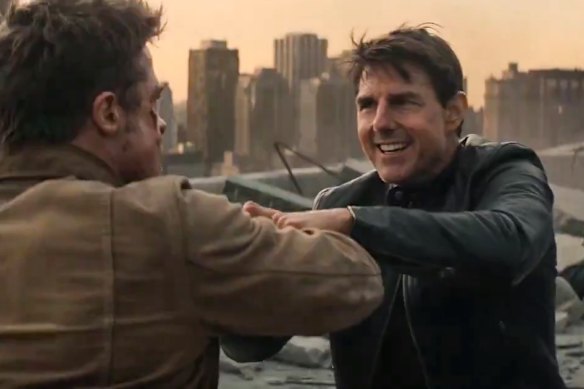 Brad Pitt fighting Tom Cruise over Jeffrey Epstein? Seedance 2.0 has made it even more difficult to know what’s real or fake.
Over the past two weeks, a wave of similarly outlandish and cinematic videos have been released by Seedance 2.0, a new advanced AI model, sparking major concern among the world’s creative industries.
What is Seedance 2.0?
Seedance 2.0 is a new generative AI (GenAI) model developed by ByteDance, the Chinese tech giant behind TikTok. It’s not the first GenAI model – it follows the likes of Midjourney and OpenAI’s Sora, both of which also have the capacity to generate video content based on written prompts. However, lecturer in media arts at UTS Dr Justin Harvey says Seedance 2.0 caught attention for its ability to create videos of much higher quality than previous “AI slop”.
“The hype around Seedance seems to be because of its outstanding ability to produce realistic characters, action and interaction, mostly between existing humans or characters like Brad Pitt or the Teenage Mutant Ninja Turtles,” Harvey says.
Creative arts theme lead at Swinburne’s Centre for Transformative Media Technologies Max Schleser notes that Seedance 2.0 is currently only officially accessible in China or through a few AI creative suites. Regardless, its ability to better render videos of human movement, fast-paced action and lifelike physics has impressed.
“When working with GenAI, you usually have to be very clever to maintain visual consistency,” Schleser says. “Before, you’d create one video prompt, and then create another. You’d then have to stitch those different scenes together into a sequence. But with Seedance 2.0, you can do that with visual continuity and multi-shot storytelling.”
The ultimate test: Will Smith vs spaghetti
One of the reasons Seedance 2.0 has stood out so much compared to other GenAI models is because it’s the first to pass the “Will Smith Eating Spaghetti” test.
“[It] created a realistic video of, well, Will Smith eating spaghetti,” says Dr Dana McKay, associate professor in interaction, technology and information at RMIT. “This is a hard test because we’re familiar with Smith’s face and the action of eating, but also because the movements in the scene – of Smith, his mouth, and the spaghetti – are all complex.”
How have people reacted to it?
While other GenAI models existed before Seedance 2.0, Schleser says its viral videos still managed to shock. In one, a giant Bruce Lee beats up Godzilla. In another, Wolverine sinks his claws into Superman’s chest.
Entertainment giants around the world quickly took notice of its use of existing, well-known characters. Major studios such as Netflix, Paramount, Warner Bros. Discovery and Disney sent ByteDance cease-and-desist letters, accusing it of copyright infringement.
“In a single day, the Chinese AI service Seedance 2.0 has engaged in unauthorised use of US copyrighted works on a massive scale,” chair of The Motion Picture Association Charles Rivkin said last week.
Related Article
“By launching a service that operates without meaningful safeguards against infringement, ByteDance is disregarding well-established copyright law.”
The US actors’ union SAG-AFTRA also issued a statement condemning Seedance 2.0’s unauthorised use of its members’ voices and likenesses.
“This is unacceptable and undercuts the ability of human talent to earn a livelihood.”
In response, ByteDance said it was taking steps to “strengthen current safeguards”.
Major Hollywood figures have also expressed concern, including Deadpool & Wolverine co-writer Rhett Reese.
“I hate to say it. It’s likely over for us,” he wrote on X. “In next to no time, one person is going to be able to sit at a computer and create a movie indistinguishable from what Hollywood now releases. True, if that person is no good, it will suck. But if that person possesses Christopher Nolan’s talent and taste (and someone like that will rapidly come along), it will be tremendous.”
What could it mean for the future of film and TV?
Some veteran filmmakers are already delving into AI-generated content. Co-writer of Pulp Fiction Roger Avary partnered with AI studios to produce three AI-driven films. Elsewhere, Black Swan director Darren Aronofsky’s studio Primordial Soup used AI to create the American Revolutionary War series On This Day… 1776. And in November, Melbourne’s ACMI hosted the Disrupt AI Film Festival, dedicated to showcasing AI movies.
Granted, most of these productions have been described as “AI slop”. That is until Seedance 2.0. Now, concerns have reached fever pitch over what this could mean for the creative industries.
Kimberlee Weatherall, co-director of the University of Sydney’s Centre for AI, Trust and Governance, says Seedance 2.0 could pose a threat to the film industry’s “middle-class” – storyboard artists, junior VFX editors, Foley artists and so on.
“Will other opportunities arise? Will there be democratisation such that some of those people create their own content and see earlier commercial breakthrough, or do the opportunities simply disappear? Will a second more ‘artisan’ market – ‘humans only’ – arise?” Weatherall says. “Regardless, the concern would be real.”
Mad Max director George Miller has said he believes GenAI could make filmmaking more egalitarian. Dr Dana McKay, associate professor in interaction, technology and information at RMIT says it could create a lower price of entry for people who have creative ideas but don’t have the money to bring them to life.
“Currently, to make a ‘big budget’ movie you need a big budget,” she says. “Something like Seedance can make it feel like you used costly stars, amazing locations and expensive stunts without any of those things.”
It could even make filmmaking safer and more time-efficient. Scenes that might otherwise have required physically risky stunts could be AI-generated, McKay says, and several takes could be combined to create one perfect scene without reshoots.
Related Article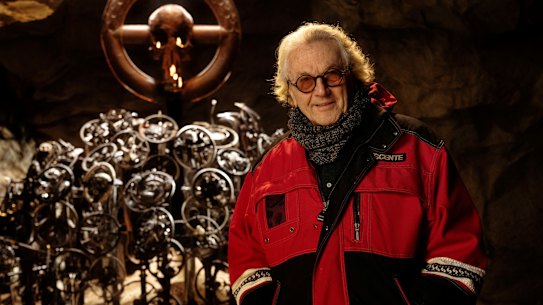
However, Weatherall notes both distribution and marketing – expensive and complicated yet necessary processes – as obstacles for AI productions.
“Even if you count film festivals, cinemas have limited bandwidth for new materials,” she says. “I worry that expectations will just rise. The ability to generate more, faster just means more is demanded, and faster.”
The cost of AI could also increase. Weatherall says it’s currently heavily subsidised by AI firms, but they may increase costs to finally make themselves profitable. “Then we’re back where we started, with generation at that level of quality only for those who can afford the compute.”
There’s also the content itself. GenAI is based on patterns in data, Weatherall says, so if more films are made using this technology, we may simply begin seeing more of the same.
“GenAI doesn’t naturally generate the genuinely new or the outlier. This isn’t just AI – action films today all seem to have a certain look … But AI will pick up on and amplify those patterns and sameness.”
Harvey, on the other hand, says AI could be a useful complementary tool to help embellish and enhance human creativity. It did so in The Brutalist, which used AI to refine the actors’ Hungarian, and it likely will do so for action or sci-fi films that require extensive VFX.
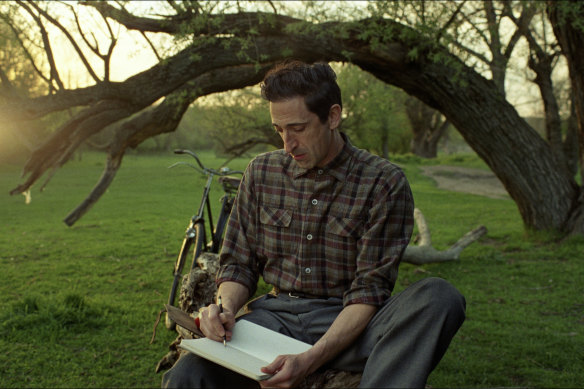 Adrien Brody won an Oscar for his performance in The Brutalist. AI was used to help perfect his Hungarian dialogue.AP
He sees these models as tools that can be integrated into production workflows, like an extension of traditional CGI. The fear of computers “taking over” is therefore largely unfounded. Humans are still required to both drive AI systems and judge quality.
“I like to think about it from an audience point of view. What’s acceptable to an audience?” Harvey says. “I like to think audiences still do and will continue to desire the kind of verisimilitude that can only be delivered by human creativity – conceived, visualised, drawn, animated, shot, acted and post-produced by people for people.”
Disney recently struck a deal with OpenAI’s Sora, giving it access to the House of Mouse’s trademarked characters. In 2024, Lionsgate did the same with artificial intelligence research firm Runway. Schleser says this kind of integration will probably continue.
Related Article
“These deals keep everything within one ecosystem,” he says. “If you have the original source material, it’s way safer than just scraping whatever’s online.”
Schleser says GenAI could also be considered a collaborator. We can still use human creative approaches, and AI could help augment and implement what was previously impossible or immensely challenging.
“To understand how new technology works, you need to engage with it because then we know the limitations,” Schleser says. “It shouldn’t be black-or-white thinking [where] we use all GenAI or nothing. I think some type of middle ground would be a future-focused and innovative approach.”
Must-see movies, interviews and all the latest from the world of film delivered to your inbox. Sign up for our Screening Room newsletter.