
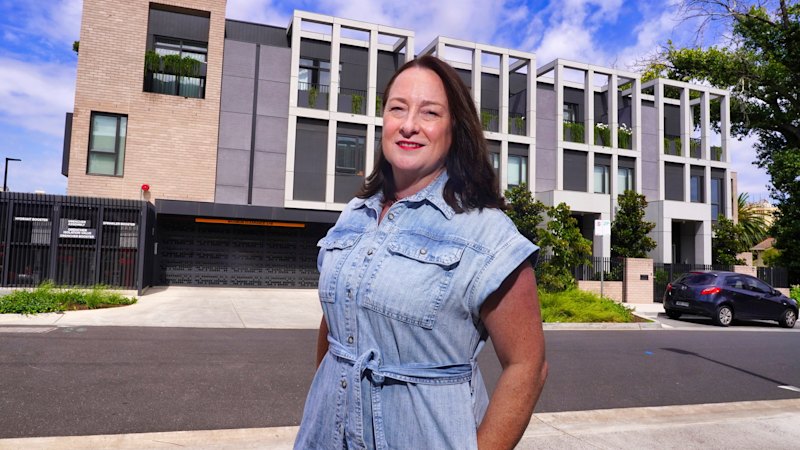
Opposition leader Jess Wilson’s housing proposal, announced on Wednesday, focuses on increasing apartment developments. It targets a “capital city zone” around the CBD – including Southbank, North Melbourne, Fishermans Bend, Parkville, Fitzroy and Collingwood – despite a glut of 8000 new and unsold units in metropolitan Melbourne.
ABS data shows the average cost of building semi-detached, row and townhouses is significantly less than apartments.
“Three storeys is a sweet spot,” Dan Honey, chief creative officer at property developer Molonglo, said. “Anything taller [requires] lift cores, basements, complex fire engineering and compliance, heavy structures, cranes, and a different type of builder … all adding to cost and risk.”
Molonglo is selling townhouses off-the-plan at a Brunswick former shopping arcade the firm planned to develop into apartments, until it became clear that would compromise design and buyer affordability.
“New apartment end prices have increased dramatically for the buyer in recent years, while developer margins have decreased,” she said. “[Townhouses] allowed us to pursue the spatial and material qualities we value… without pushing costs beyond reach.”
Elicia Wallace lives in a three-storey, two-bedroom, two-bathroom townhouse in Moonee Ponds.
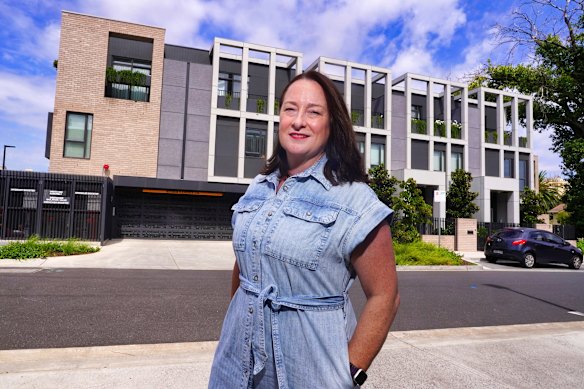
Elicia Wallace found living in a townhouse offered unexpected benefits.Credit: Luis Enrique Ascui
The 49-year-old and her 11-year-old daughter downsized from a single-storey, fixer-upper Edwardian house.
“I just didn’t have the appetite to renovate another house, to be honest. I just wanted something new,” the construction project manager said.
Loading
“I have quite a busy hectic life, like everyone. Having a 20-minute shorter commute into the city, and being home with my family is way more important than having a big backyard that I might use once, twice, three times a year.”
As well as halving her utility bills thanks to insulation and modern appliances, Wallace said the ability to create “kid zones” was an unexpected benefit.
“In my previous house, we were all on top of each other. Living in a townhouse… I can sit downstairs and watch TV, she can go upstairs and have her own space,” she said.
Wallace is now selling, looking for a larger home as she and her partner move in together. But she’d happily stay in the complex if a larger home became available.
Her agent, Nelson Alexander’s Ryan Currie, said townhouses provide a long-term alternative to apartments, and have benefits over a detached home.
“A good little single- or double-front period family home is definitely everyone’s dream, but people also need to consider: old period homes need maintenance,” he said. “A townhouse… you’ll probably have a lot less to worry about.”
Chamberlain Architecture & Interiors director Glenn Chamberlain said townhouses were well-established in Victoria, which allowed for innovation.
“You’ve got to think about how you tessellate the different spaces into a form that is quite rigid,” he said.
Solving problems like how to bring light into a space that may only get sun from one direction, navigating storage and maintaining generous dimensions, are challenges that can lead to more interesting designs, he said.
“Either apartments are going to improve – a little bit of extra storage, a little more space – or townhouses are going to become more and more viable as an alternative to detached homes,” he said.
Honey agreed, adding labour costs, insurance and compliance demands were “nudging the market back toward a form Melbourne has always known”.