
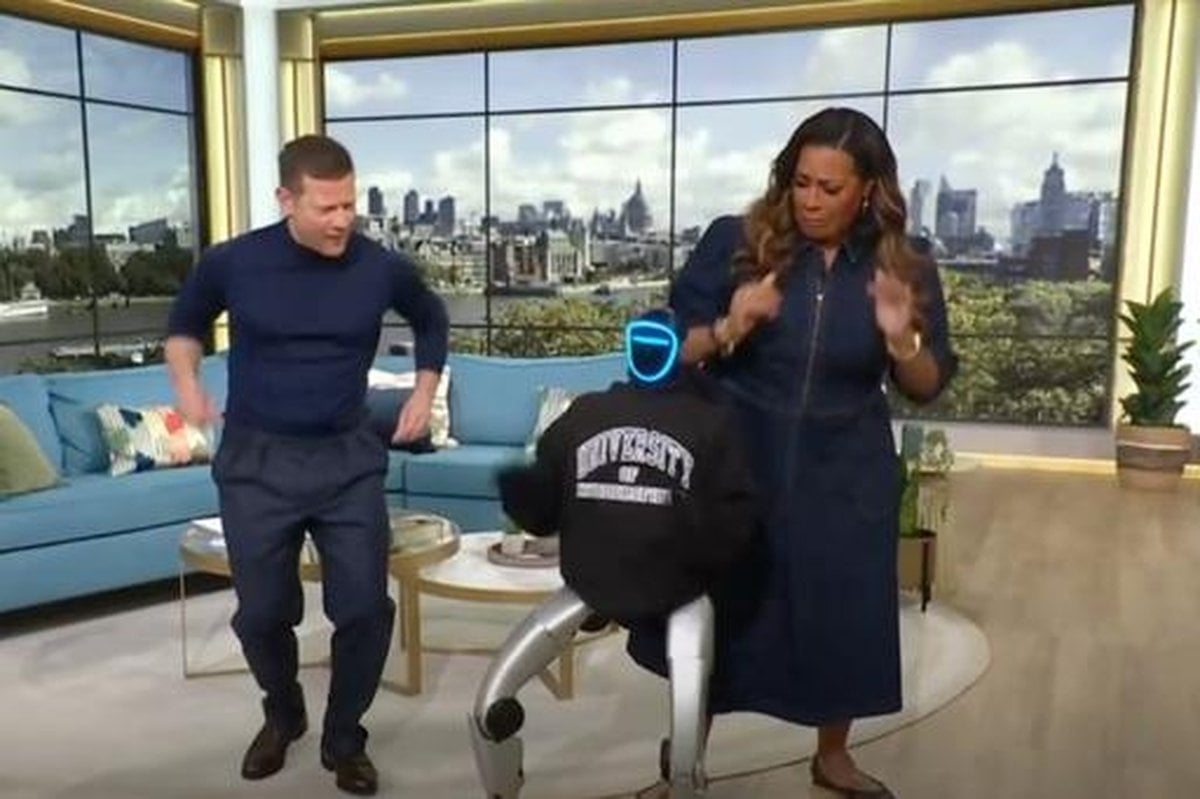
On Friday, February 27, 2026, viewers of ITV’s This Morning were met with an unexpected and rather futuristic sight: a humanoid robot named Harold took center stage, opening the show with a dance routine that left both the hosts and the audience somewhere between delighted and, well, a little unnerved. It’s not every day you tune in for some morning banter and get greeted by a mechanical guest busting moves to Tom Jones’ classic “Sexbomb.”
The episode kicked off with Harold the robot confidently grooving across the brightly lit studio floor, its motions surprisingly fluid for a machine. As the music blared and Harold spun and waved, the studio’s usual sense of casual familiarity was replaced with a tinge of awe and, as the hosts soon confessed, a touch of anxiety. According to The Independent, the spectacle was enough to leave presenters Dermot O’Leary and Alison Hammond visibly “freaked out.”
After Harold’s solo performance, the robot paused, turned to the camera, and in a clear, synthesized voice, greeted the audience: “Hello everyone and welcome to Friday’s This Morning.” The moment felt both welcoming and, in a way, uncanny—a machine addressing millions of viewers with the same cheer as any human presenter.
Dermot O’Leary and Alison Hammond, the show’s beloved co-hosts, then made their entrance onto the set. O’Leary, never one to let a strange moment pass without a quip, immediately broke the tension with a joke that seemed to capture the mood of the room—and perhaps the larger cultural conversation about artificial intelligence and automation. “It’s only a question of time until the duo are replaced by humanoid bots,” he mused, glancing at Harold with a mix of admiration and apprehension.
As if to prove just how convincing Harold’s performance was, O’Leary added, “Harold you are too good, it’s freaking me out.” With that, he and Hammond decided to join in, dancing alongside their robotic guest. The scene, equal parts surreal and playful, felt like a snapshot of a future that’s closer than many might have guessed.
According to The Independent, the entire segment left the hosts “freaked out,” a sentiment echoed by viewers on social media who watched the clip circulate online. The sight of a humanoid robot not only moving with rhythm but also confidently addressing a live television audience struck a chord—one that resonated with both excitement and a bit of existential unease.
For ITV and This Morning, the decision to feature Harold wasn’t just about putting on a show. It was a nod to the growing presence of robotics and artificial intelligence in everyday life. In recent years, robots have moved from factory floors and research labs into homes, hospitals, and now, apparently, television studios. The boundary between science fiction and reality is blurring, and Harold’s appearance on a mainstream morning program made that transition feel all the more tangible.
But why did Harold’s dance cause such a strong reaction? Part of it, surely, is the so-called “uncanny valley” effect—a term coined by robotics professor Masahiro Mori to describe the discomfort people feel when confronted with machines that look or act almost, but not quite, human. Harold’s movements were smooth, its voice friendly, but there was something just off enough to make the experience unsettling. Watching O’Leary and Hammond try to keep in step with their mechanical guest, viewers could sense both the fun and the underlying tension of sharing the spotlight with a robot.
It’s not just the novelty of a dancing robot that’s at play here. There’s a deeper conversation happening about the role of technology in entertainment, work, and society at large. As O’Leary joked about being replaced by bots, it was hard not to think about the broader implications—automation in the workplace, AI-generated content, and the ever-present question of what makes us uniquely human in an age of intelligent machines.
Still, Harold’s debut was handled with humor and a light touch. Rather than shying away from the weirdness of the moment, the hosts leaned in, making jokes and even joining the robot on the dance floor. It was a reminder that, for all the anxiety surrounding new technology, there’s also room for curiosity, play, and even a bit of joy.
The segment quickly became a talking point, with clips shared widely on social media and viewers weighing in with reactions ranging from amusement to apprehension. Some praised the show for embracing innovation and bringing a bit of sci-fi flair to their morning routine. Others admitted to feeling just as “freaked out” as the hosts, wondering aloud what the future of television—and human interaction—might look like as robots become more common in public life.
For the This Morning team, Harold’s appearance was a chance to spark conversation, entertain, and perhaps push the boundaries of what audiences expect from live television. It also served as a gentle reminder that the future is arriving faster than many of us realize, sometimes with a dance and a friendly greeting.
As the music faded and the show continued, O’Leary and Hammond regained their composure, but the moment lingered. The sight of a humanoid robot leading one of Britain’s most popular morning shows was both a novelty and a sign of things to come. Whether Harold’s performance was a one-off stunt or a glimpse of television’s next chapter remains to be seen, but one thing is certain: for a few unforgettable minutes, the future stepped onto the studio floor and asked us all to dance along.
There’s no denying it—Friday’s episode of This Morning left a lasting impression, blending entertainment, technology, and a dash of existential wonder. As viewers and hosts alike processed the experience, the question lingered: how soon before robots like Harold become a regular part of our daily lives? For now, the answer remains uncertain, but one thing’s for sure—television, like the world itself, is changing in ways that are both thrilling and, yes, just a little bit freaky.