
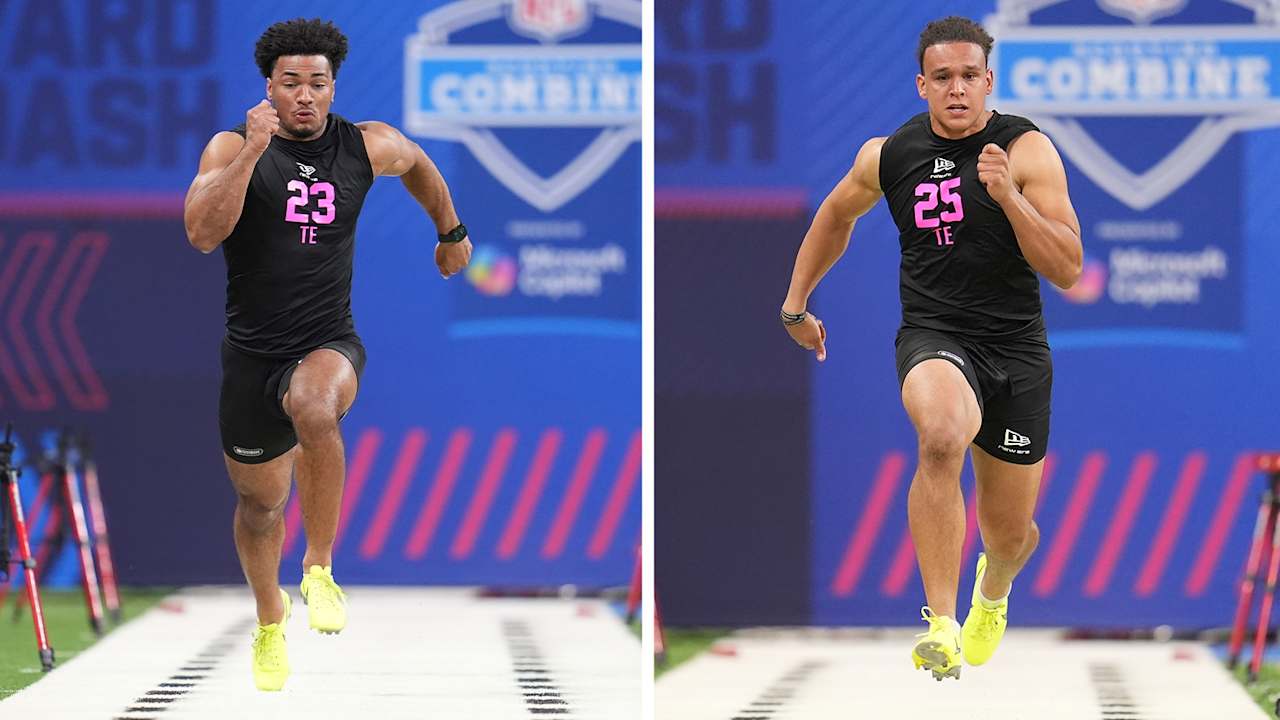
During his press conference earlier this week in Indianapolis, Patriots head coach Mike Vrabel turned the media’s antennas up when he pointed out the tight end depth in the 2026 NFL Draft.
“Just looking across the board, I think there’s volume at the tight end class,” Vrabel said. “When you go and you evaluate other teams and you get ready to play them, there’s a bunch of fourth-and-fifth-round tight ends that end up starting, playing, and contributing. So, wherever that value is, I just think that there are some names there.”
Vrabel, of course, was a two-way player during his playing career, catching 10 career touchdown passes, mostly from Patriots Hall of Famer Tom Brady. As a former linebacker and part-time tight end, Vrabel probably knows a thing or two about evaluating the tight end position. To his point about the volume of this particular class, 27 tight ends were invited to the NFL Scouting Combine this year, well above the usual combine average of 19. The group broke several combine records on Friday night, including the best average 40-yard dash time of any tight end class since at least 2003 (4.63s).
Offenses are trying to create mismatches by using versatile tight ends, which is why personnel people want to see these tight ends work out in Indy. Last season, the league used multiple tight end sets on an average of 33.2% of offensive plays, with teams like the Rams popularizing the usage of three tight end packages such as 13 personnel (1 WR, 1 RB, 3 TE). New England used two-plus tight ends on just 29.6% of their offensive plays last season, in part because they ranked 29th in rush EPA out of those groupings.
Along with potentially wanting to create more mismatches in the passing game by being a better rush offense with multiple tight ends on the field, veteran TE2 Austin Hooper is an unrestricted free agent this offseason, while starter Hunter Henry will turn 32 years old next season. Henry was still top-10 in most receiving categories among tight ends in a productive 2025 campaign, but adding youth and upgrading their in-line blockers appears to be on the Patriots offseason to-do list. Unlike other positions where football IQ and skill often override athleticism, athletic testing will help us sort through a high-volume tight end class. Historically, there aren’t many poor TE athletes who have gone on to have great pro careers.
Although our main focus will be on the tight ends, the Patriots could also need a safety depending on starting safety Jaylinn Hawkins’s free agency. There appears to be mutual interest in Hawkins returning, but he’s slated to hit the open market coming off a solid 2025 season and this is a great year to add safety depth. According to NextGen Stats, this year’s crop of safeties averaged a 4.42s 40-yard dash, the fastest average time for a safety class since at least 2003.
The Pats stress the importance of do-it-all safeties in their system. However, Hawkins and 2025 fourth-rounder Craig Woodson mostly lined up further away from the ball. On average, those two’s starting depth from the line of scrimmage was 11.0 yards. In 2024, starting safeties Kyle Dugger and Jabrill Peppers lined up at an average of 8.8 yards from the line of scrimmage. Adding a hybrid defender who could play in the box or over the slot might bring a new element to the defense. To match all these tight-end heavy offenses, some defenses are deploying “big” nickels who can play the run like linebackers and cover like safeties.
Here are five takeaways from the tight end and defensive backs workouts at Lucas Oil Stadium on Friday night.
1. Oregon TE Kenyon Sadiq Expected to be the Lone First-Round Tight End in 2026 Draft
At the top of the tight end class is one name: Oregon’s Kenyon Sadiq. Sadiq is projected to be the lone tight end drafted in the first round, with the volume Vrabel mentioned coming in the middle rounds.