
Mars is now a cold, radiation-battered world. Yet a broad body of evidence shows that billions of years ago, liquid water flowed across its surface. That wetter past has long fueled the idea that life may once have taken hold before the planet lost its atmosphere.
Back on Earth, some of the harshest landscapes mirror Martian conditions. Scientists often turn to these extreme environments as analogs while waiting for pristine samples to be returned from the Red Planet. One of the most Mars-like places, it turns out, lies high in the Chilean Andes.
A Mars-Like Laboratory in the Atacama Desert
Salar de Pajonales stretches across the Atacama Desert, one of the driest regions on Earth, at an altitude of about 11,540 feet (3,517 meters). The salt flats sit near the Flamencos Lagoon national reserve and are battered by intense sunlight and relentless winds.
According to Popular Mechanics, an international team traveled to this stark terrain to investigate whether ancient life could be frozen inside the gypsum crystals scattered across the site. The researchers collected samples from gypsum crusts and from stromatolites, mineral structures left behind by microbial mats.
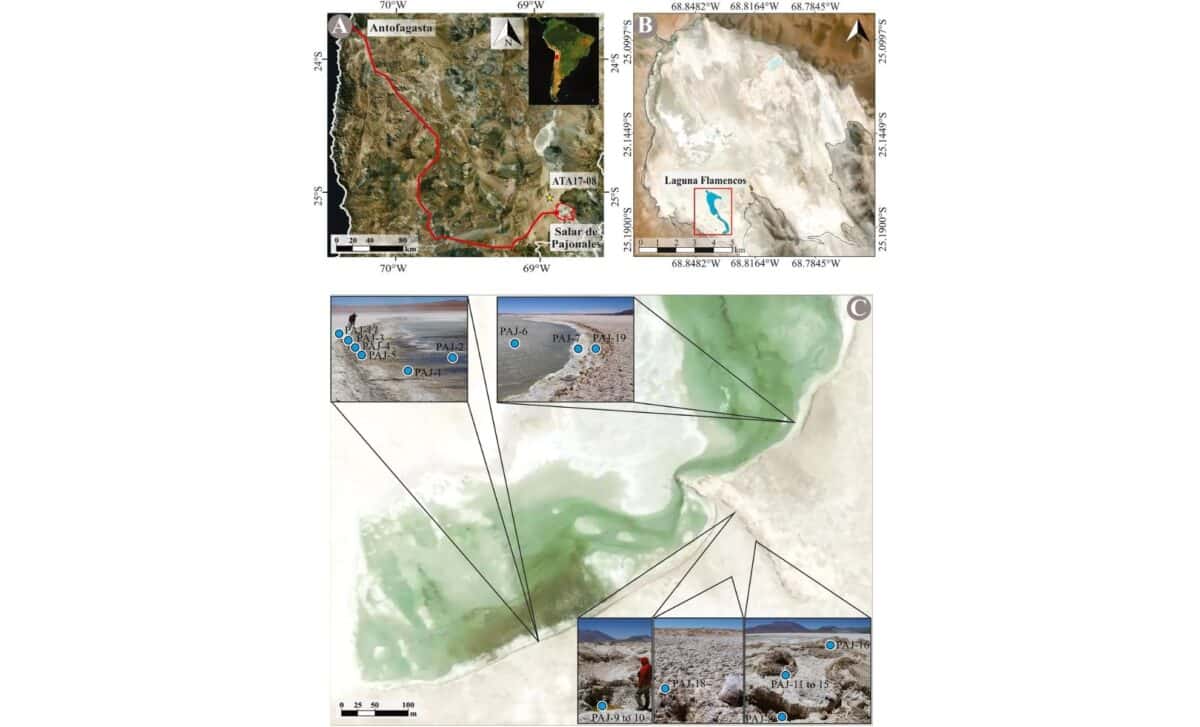 (A) Google satellite image showing the location of the Salar de Pajonales (star symbol) and the meteorological station ATA17-08 (red route), located approximately 20 km from the salt flat, in the Antofagasta Region, northern Chile, South America. This station was used as a local climatic reference for the study. (B) Terrace near Flamencos Lagoon, an oligohaline peripheral lagoon situated in the southeastern part of the salt flat. (C) Overview of the study area highlighting the collected samples, including unconsolidated sediments, stromatolites, and crusts – © Journal Frontiers in Astronomy and Space Sciences
The crystals examined were between 4,000 and 6,000 years old. While relatively young in geological terms, they offered a controlled window into how biological material can be preserved in extreme, Mars-like conditions.
Gypsum as a Natural Shield and Time Capsule
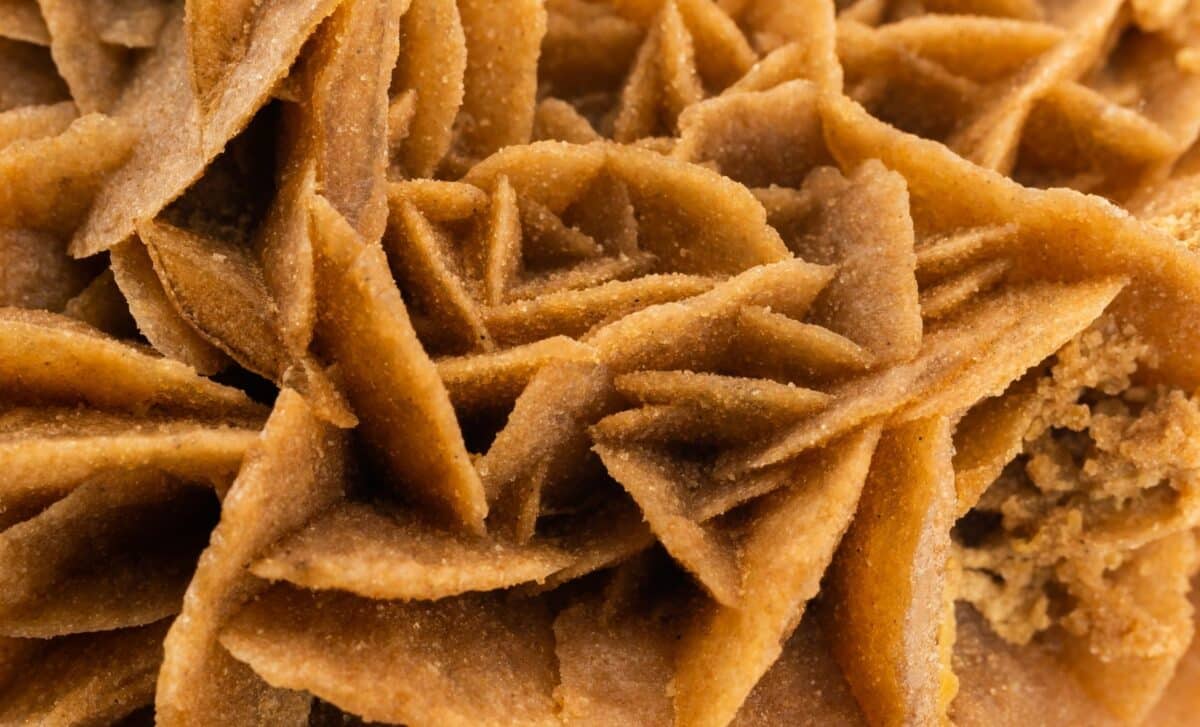
Gypsum is a soft, translucent sulfate mineral. Its structure allows a small amount of light to pass through, enough for photosynthetic organisms to survive, while shielding them from desiccation and harmful ultraviolet radiation. On Mars, where the atmosphere no longer provides strong UV protection, that detail matters.
This protective quality explains why cyanobacteria can thrive in the upper layers of stromatolites. Some of the earliest life forms on Earth are preserved in stromatolites dating back 3.5 billion years, roughly a billion years after the planet formed. By comparison, eukaryotic algae such as cyanobacteria appeared much later, around 750 million years ago.
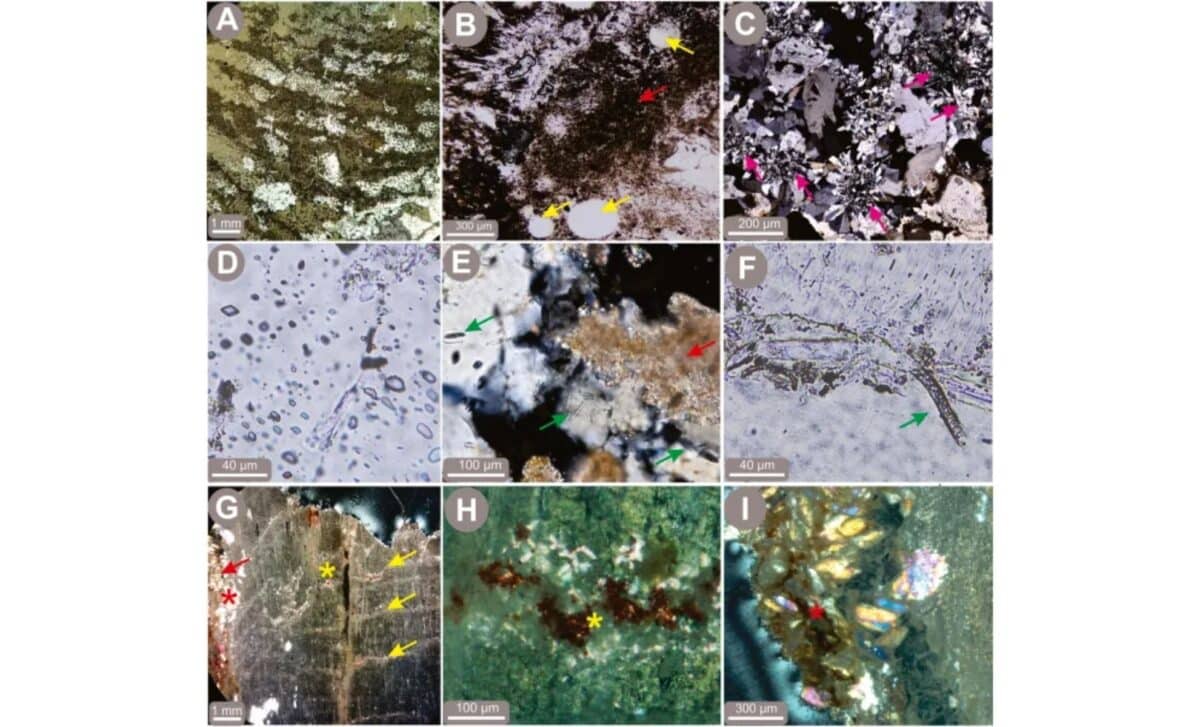 Microscale descriptions of stromatolites – © Journal Frontiers in Astronomy and Space Sciences
Gypsum has already been detected on Mars through spectroscopy. Because sulfates are abundant on the Red Planet, its presence is not surprising. What intrigues scientists is whether similar crystals on Mars might also have sheltered or preserved microbial life.
Fossil and Living Signatures Locked in Crystal
The team’s analysis revealed lipids associated with microbial life, including not only living cyanobacteria but also fossilized bacteria, archaea, and diatoms. According to the study, the spatial separation between fossil and extant signatures highlights gypsum’s capacity to entomb and protect biological evidence.
Deeper stromatolite layers displayed alternating bands of silicates, iron oxides, and calcium sulfates, patterns considered biosignatures, along with fossilized diatoms and preserved cell structures. Gas bubbles were also present, which could represent biological activity or remnants of past volcanism. Porous textures in the gypsum suggested mineralization processes linked to microbes.
Salar de Pajonales itself poses severe challenges to life. It is parched, nutrient-poor, rich in sulfates, and exposed to intense solar radiation. Researchers believe that limited precipitation may provide just enough moisture to sustain microbial communities within gypsum crusts and stromatolites.
As the authors stated in Frontiers in Astronomy and Space Sciences, these findings reinforce the astrobiological significance of gypsum as both a recorder of past life and a refuge for living microbes. Ancient Martian environments with similar evaporitic deposits, they noted, may have offered comparable conditions, making stromatolite-like structures prime targets for future life-detection missions.