
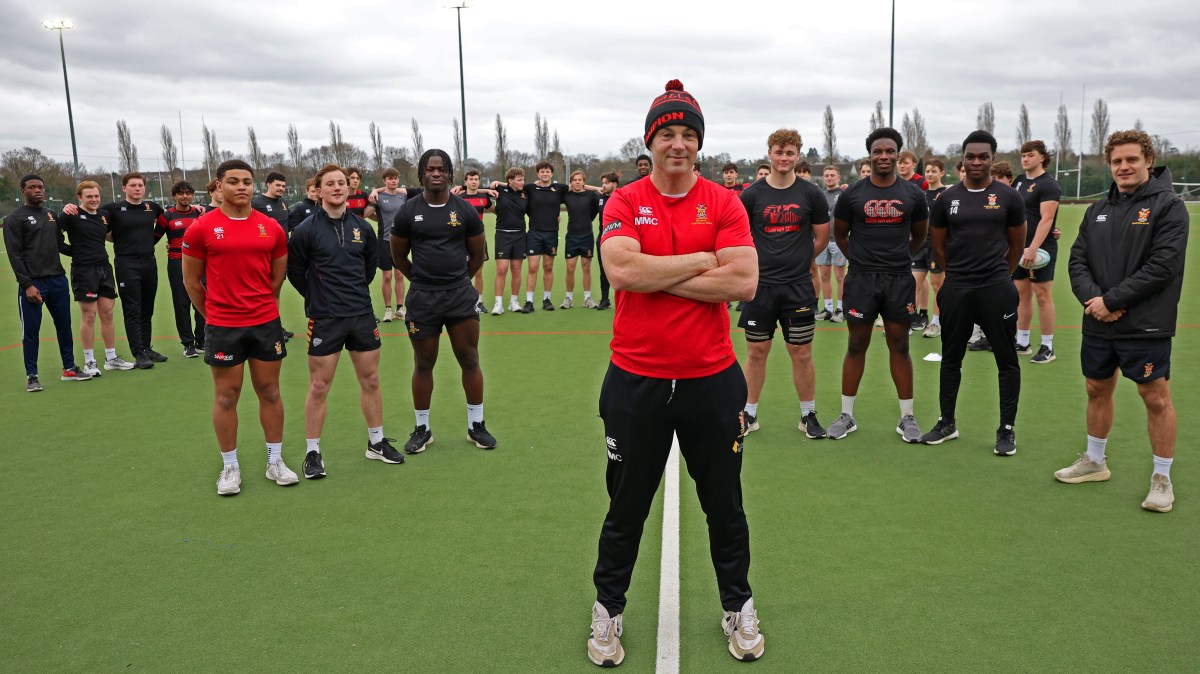
‘C’mon, boys,” says the head of rugby, bouncing down a stairway lined with framed shirts marking the achievements of alumni such as the England international Tony Diprose. “Shall we show him our spit-and-sawdust, Rocky-style gym?”
On the wall of a modest sports hall, across which uniformed pupils are whizzing passes during their lunch break, is a whiteboard. Nat Smith, the mischievous first-team scrum half, has been conducting a countdown since an 18-14 win over QEGS Wakefield on December 3.
“NSB 9 DAYS LEFT” reads a scrawled and simple message. No elaboration is necessary. The headteacher Paul Larner attended a funeral recently. A fellow mourner asked him for the kick-off time as they walked up to greet the priest.
Next Saturday at Aylesbury RFC, The Campion School face Northampton School for Boys (NSB) in the semi-final of the Continental Tyres Schools Cup. It promises to be a compelling, high-quality tie; and notable as a meeting of two state institutions. Sir Thomas Rich’s, alma mater of Sam Underhill, were agonisingly close to making it three from four. Whitgift edged out the Gloucester outfit 24-22, meaning the other semi will be an all-private affair between them and Epsom College.

Pupils praise Campion for helping them achieve their potential, which in some cases may have gone unrealised
SUNDAY TIMES PHOTOGRAPHER MARC ASPLAND
A non-selective Catholic academy in Hornchurch, east London, Campion is boys only until sixth form and remains the sole state school to have won this knockout tournament. They did so back in 2001, under the competition’s previous guise as the Daily Mail Cup. There have been troughs in the interim, but Campion have consolidated. The class of 2019, for instance, were edged out by a Whitgift side that overturned Fin Smith’s Warwick in the final.
Campion’s present crop finished ninth on the Daily Mail Trophy order of merit last term, winning ten of 11 fixtures including a 25-10 triumph over Brighton College. Captained by Joe Buscombe, a burly yet skilful back-rower who has represented England Counties, they pride themselves on toughness and relish the underdog role. Their progress has rewarded an impressive programme, which is underpinned by a tangible sense of belonging as well as the graft of it’s head Mike McDarby, the director of sport Rob Squire, and their colleagues.
Some 1,000 Campion supporters are expected in Aylesbury, including about 600 arriving on a fleet of coaches. Buscombe’s mum, a teacher at Southend High, plans to borrow a minibus and ferry over the family.
“There’s a culture at Campion,” says the explosive centre Zac James. “I’ve had two brothers come through the school and old boys get emotional talking about their experiences on that pitch. It probably sounds crazy, like a cult or something.
“There are people who get tattoos of auctore deo, the school motto, which means enterprises of God. No one in the team has one . . . not yet anyway.”
McDarby pulls no punches on the topic of preserving rugby union in non-fee-paying schools. “If England want to win another World Cup, there needs to be more state schools doing what we’re doing,” he says.
“And it’s not just us. There’s Tommy Rich’s, Judd, John Fisher, Old Swinford Hospital and Northampton School for Boys. You could name about ten doing it really well.”
Squire agrees. Thirteen of the 18-strong first-team squad started at Campion in Year 7. At that stage, from a group of 100 or so, only a handful had any experience of the sport. Buscombe and Mo Usman-Gambo, another back-rower, joined later because Campion offered rugby and strong academic prospects.
“I went to Woodlands in Basildon,” Usman-Gambo says. “We’d get smashed up by Campion because they were so well drilled. I had such a desire to play rugby and my only real options were private schools, which I couldn’t afford. I bet on myself because I didn’t know anyone, and it’s worked out amazingly.”
By supporting these youngsters and harnessing their athleticism, the school is servicing the ecosystem of English rugby union by “broadening the net and offering more opportunities”.

Campion players are as dedicated to the sport as the staff
SUNDAY TIMES PHOTOGRAPHER MARC ASPLAND
Prince Inyaba is a prime example of someone who could easily have slipped past the sport altogether without Campion. A rapid wing, he backs himself to dip under 11 seconds over 100m “on a good day”. Interviewing for a medical degree at several universities, Inyaba still receives guidance on the nuances of positioning. But those nuts and bolts are coachable. X-factor speed is not.
“If you’d told me a couple of years ago that I’d be playing at this level, I’d have laughed at you,” he admits. “A school like this drives you. I feel like other state schools don’t have that drive. People don’t reach their potential without that drive.”
Students reciprocate the dedication of their coaches. Fitness sessions are held on Monday, Wednesday and Friday mornings, with players assembling the “gym” themselves before a 7.15am start. This means a 5am alarm for those living further away. There is afternoon training on Tuesdays, Wednesdays and Thursdays. The senior squad comprises 70 boys in years 12 and 13, with Campion’s second and third teams often facing the first teams of other local schools.
The headteacher Larner is an old boy himself. His head of rugby was John “JD” Davies, a scrum half in the revered London Welsh side of the 1960s who is credited with cultivating Campion’s rugby traditions. According to Larner, the sport is a “golden thread” of school life. Even academy footballers are urged to immerse themselves in rugby because Campion is eager to nurture resilience and togetherness. About 110 of 150 Year 7s played a full-contact match for the school this season, which is remarkable.
“This is a great place to work because the behaviour is outstanding and I think that is linked to rugby,” Squire says. However, even golden threads can fray without continued commitment: “All it takes it a change in culture or a change in leadership for someone to go, ‘£450 for an ambulance every Saturday? We can get a teaching assistant with that’. Financially, there are all kinds of pressures.”
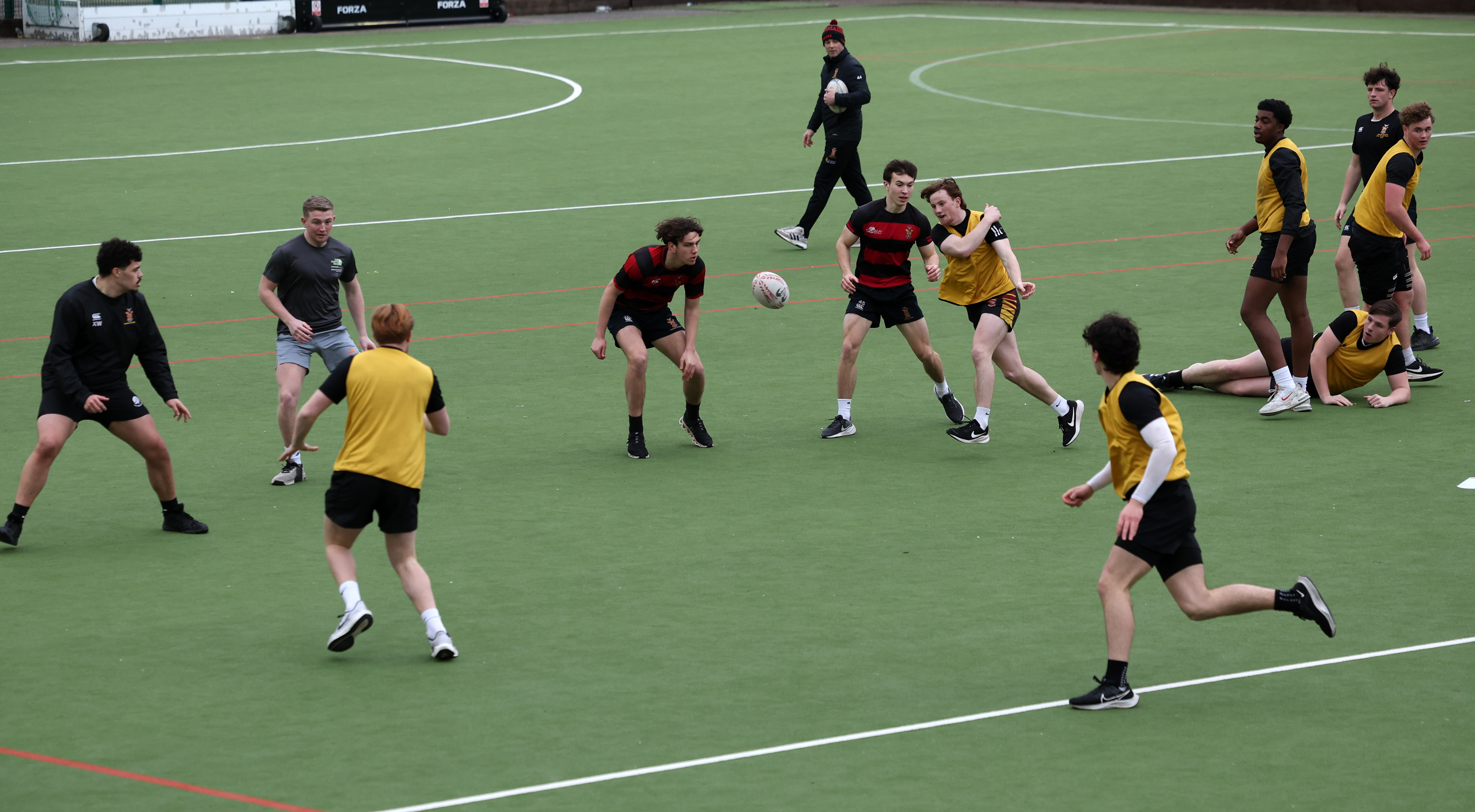
Facilities at Campion are limited compared with their fee-paying rugby rivals, but their spirit and discipline are second to none
SUNDAY TIMES PHOTOGRAPHER MARC ASPLAND
The aim is to raise £80,000 towards a tour to the southern hemisphere every two years, with any excess funnelled back towards balls, buses, referees, kit and other costs. McDarby dreams of finding £50,000 to revamp Campion’s fitness suite into a strength and conditioning centre. Because the first-team pitch is clay-based, boys train on a sandy Astro Turf — “4G? Try half a G” jokes McDarby — for most of the spring term. Installing a drainage system would set Campion back £2million.
There is a sense at Campion that state schools with exceptional rugby programmes, like themselves and NSB, who topped the Daily Mail Trophy standings, are left to their own devices rather than encouraged with additional funding from the RFU. Larner cites a “strange irony” that the Football Foundation, a charity run by the Football Association, is stumping up £700,000 for a 3G pitch that Campion will use for rugby.
There are other political challenges. Some independent schools ask for matches at first-team level, but cannot — or will not — organise block fixtures incorporating lower age-groups. McDarby and Squire stress that rugby is a late maturation sport and are frustrated when “rugby schools take from rugby schools” with underhand recruitment and scholarship offers.
“We need to stop celebrating schools who are buying in their whole team, or at least give them their own tournament,” McDarby says. “It’s like Manchester United dropping into a schoolboy comp, winning it and celebrating. What are you getting out of it?”
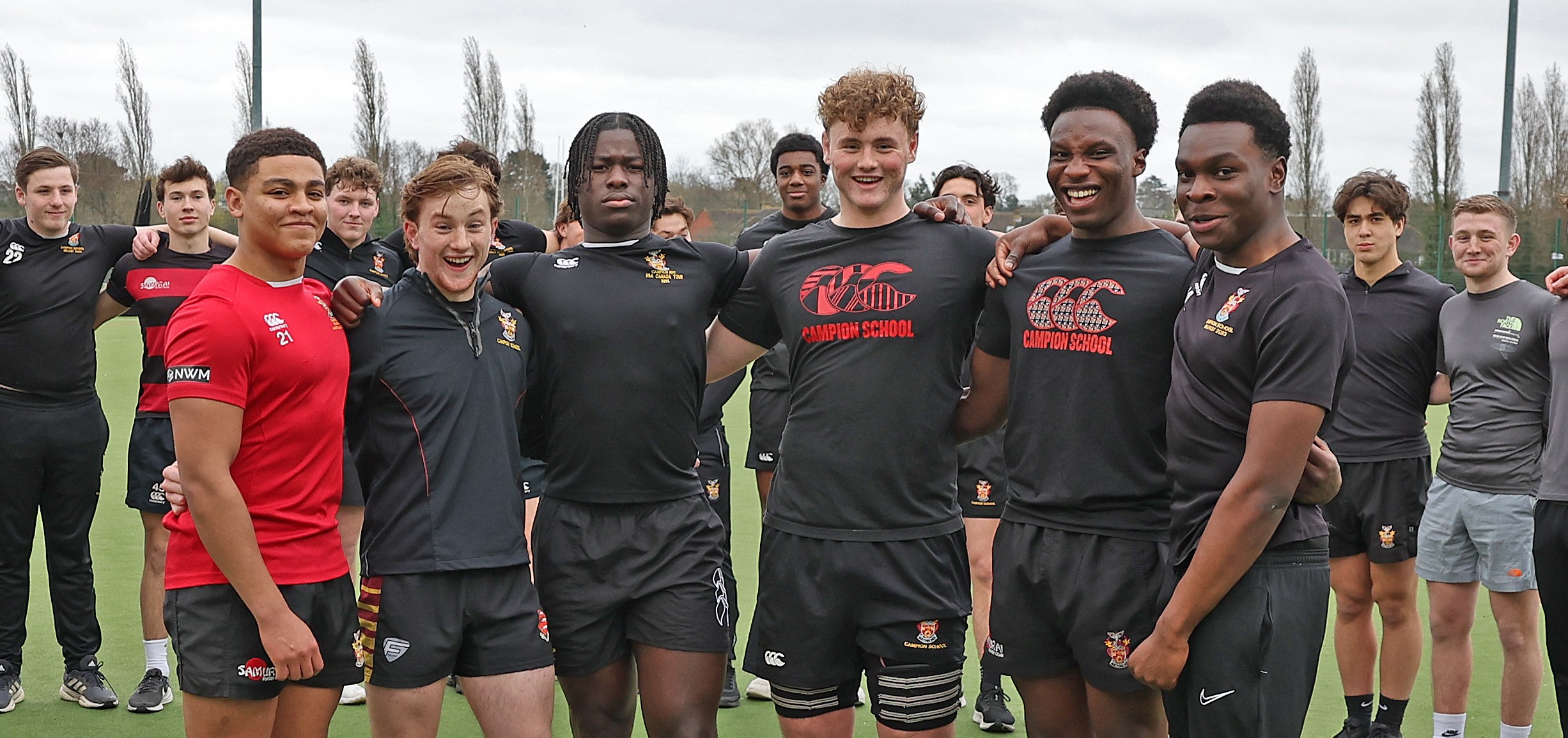
From left: Centre Zac James, scrum half Nat Smith, hooker Charles Rotimi, captain and back-row forward Joe Buscombe, back-row forward Mo Usman-Gambo and wing Prince Inyaba
SUNDAY TIMES PHOTOGRAPHER MARC ASPLAND
One solution proposed by McDarby would be a limit of three players to have joined the school after Year 9 in Daily Mail Trophy or Continental Tyres Cup matches. “I’m not anti-private school,” McDarby says. “We enjoy great relationships private schools at home and abroad, like King’s Parramatta from Sydney. I am anti the state of state school sport, which is pretty abysmal in comparison.”
Squire chimes in here. “I feel some people would rather have all the talent pooled between ten to fifteen schools with a small catchment so they can keep track of it,” he says. “Do they really want to open up rugby union for the masses, for people from different backgrounds and different socio-economic circumstances? I’m not sure they do.
“Rugby can be a melting pot that brings people together. That’s what we should be striving towards, to develop a better social fabric within the country. Unfortunately, when you go to Twickenham, rugby union still seems like a sport for the seven per cent who went to private schools.”
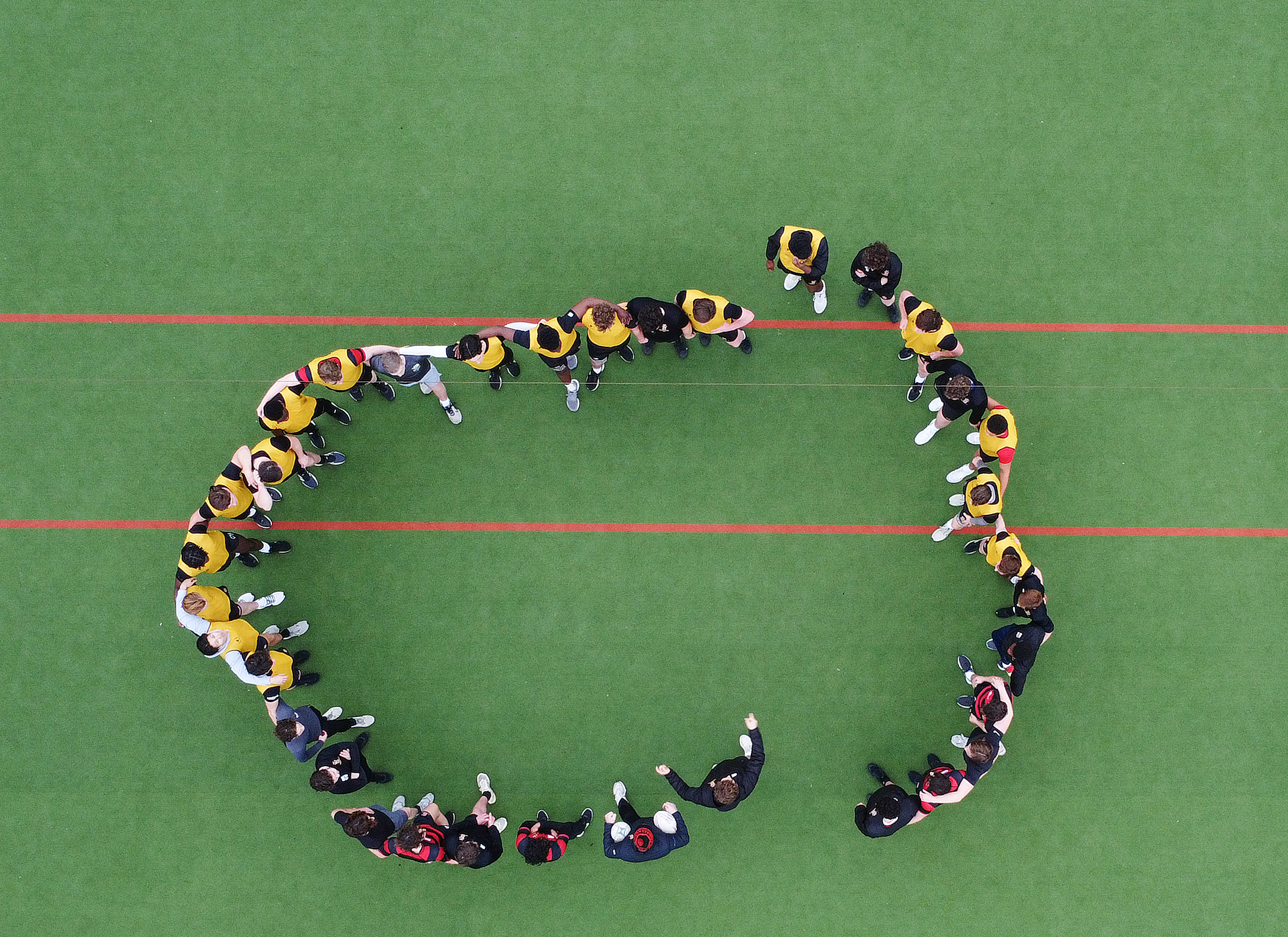
Such is the culture of togetherness at Campion, some former pupils get tattoos of the school motto after they leave
SUNDAY TIMES PHOTOGRAPHER MARC ASPLAND
Buscombe, Inyaba, James and Usman-Gambo all want to continue playing at university. Squire wants as many boys as possible, from the first team down to the thirds, to stay in rugby for a decade or more. Charles Rotimi, a hooker, has been involved with England under-18s this season and Dylan Jenkins, a loose-head prop, has represented Ireland at the same level.
In the shorter term, Campion’s countdown to NSB is almost over. “We’re playing for something bigger than ourselves,” Buscombe says. “If we can show state-school sport in a good light, it should mean there will be opportunities for other people.”
As McDarby says, his boys have already enjoyed a fine season. They have championed state-school sport in the process. Earning a place in the final would only reinforce that.