
$2,199.99/£2,150, yamaha.com
As a rule, people buy a Yamaha Pacifica because they’re feeling sensible. But there have been a couple of dangerously desirable options on the table since 2024: the Standard Plus and Professional. And now, just to get us in even more of a fluster, that table has been stacked a little higher with the return of Yamaha’s single-cutaway design.
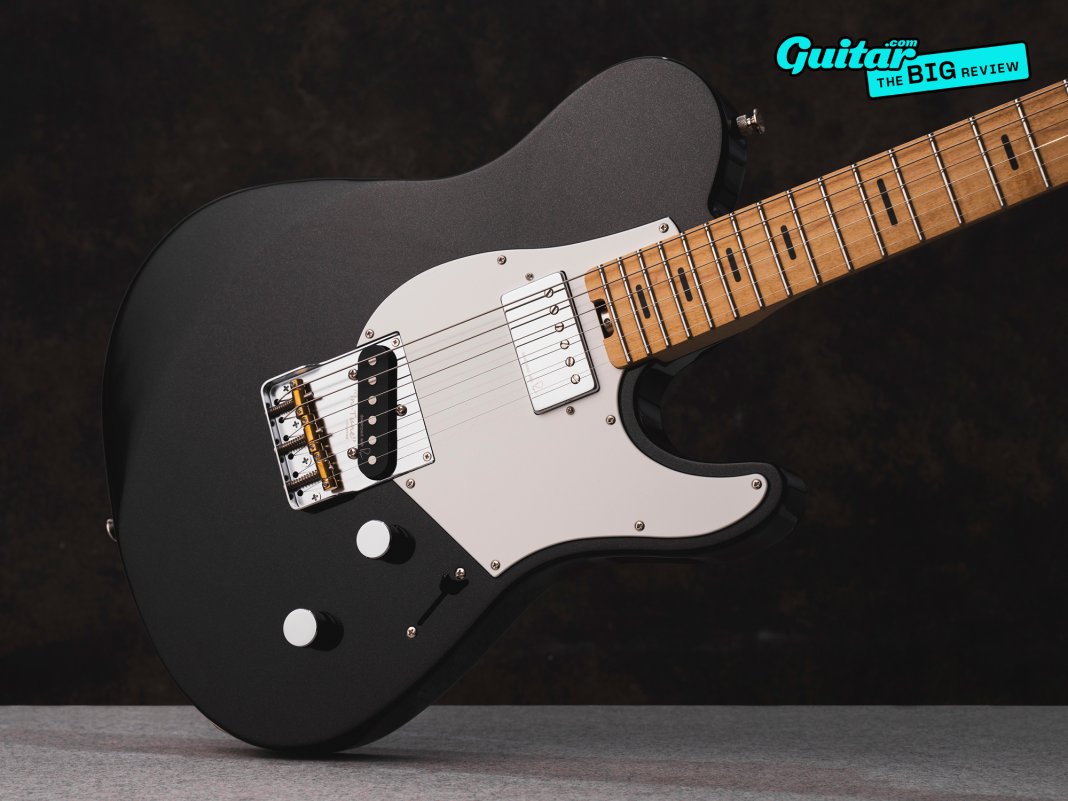
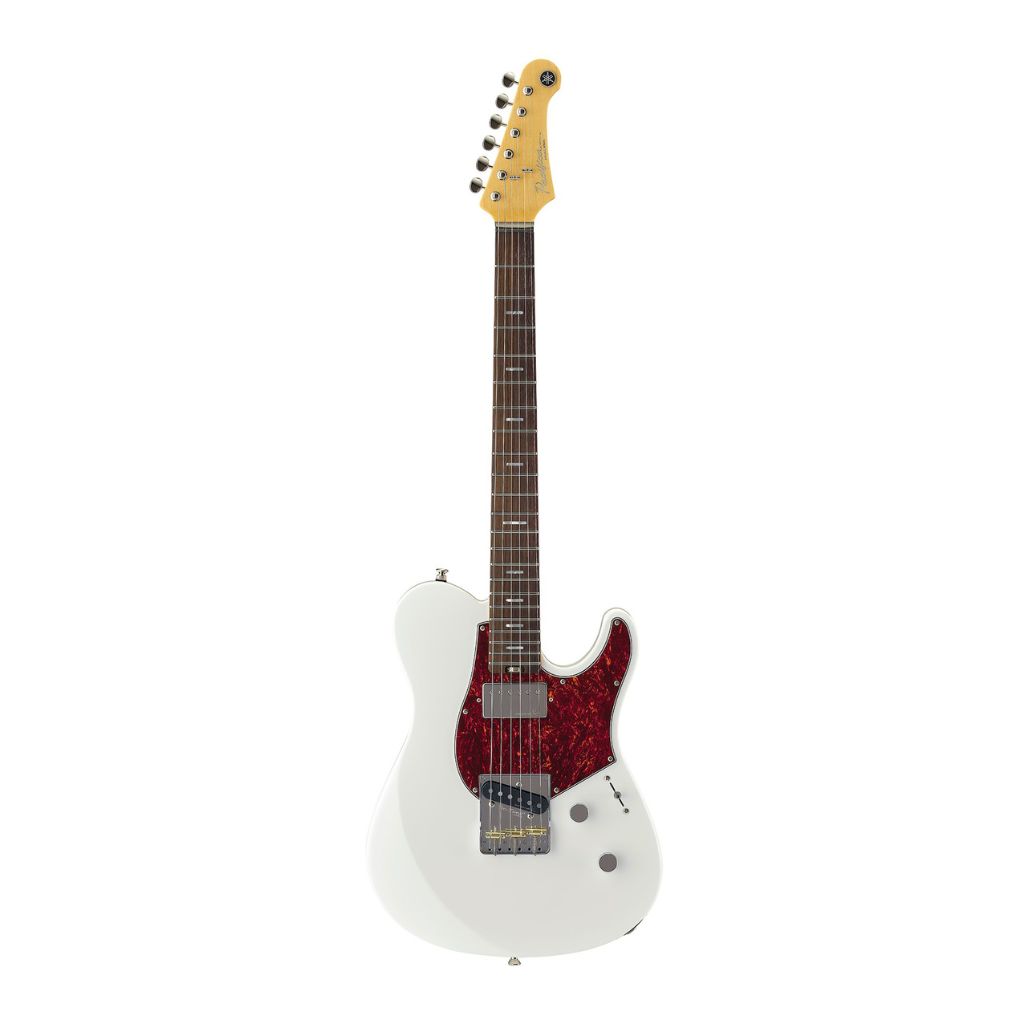
There were a bunch of single-cut Pacificas floating around in the late 90s, but since then – Mike Stern signature model aside – it’s been Strat-influenced double-cuts all the way. The Pacifica SC Professional marks a revival of the more Tele-like body style, with a fixed bridge and two pickups… but this Japanese-made instrument is far from being just another Fender-alike.
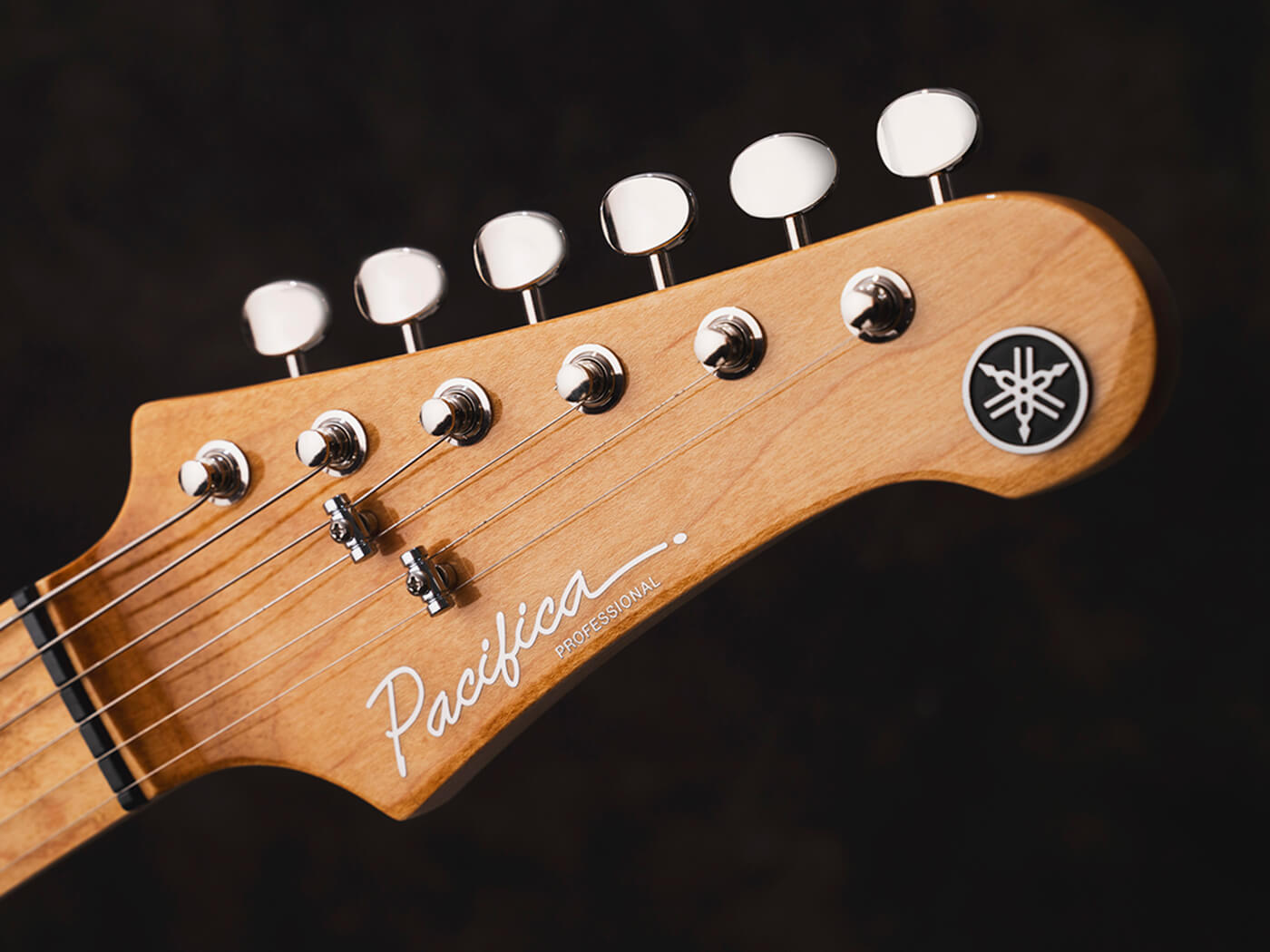 Image: Adam GassonYamaha Pacifica SC Professional – what is it?
Yamaha is, of course, a Japanese company – so when it decides to build a guitar at home, rather than outsourcing to somewhere with lower production costs, you know you’re dealing with the top of the line. Mind you, that much is obvious from the SC Professional itself: it’s as beautifully crafted in the hands as it is well appointed on the spec sheet.
The starting point is indeed a T-type design, with a very familiar-looking pickup mounted to the bridge plate next to a trio of compensated brass barrel saddles. But then things go wandering off from the template – starting with the neck pickup, which is a humbucker. Both pups are Yamaha’s Reflectone types, co-developed with Rupert Neve Designs.
As well as the standard three-way pickup selector, you get another distinctly non-standard feature borrowed from some of the Revstar models: a focus switch. This is a pull-out tone knob that engages a passive filter on the single-coil, opening up more tonal options.
There are no surprises in the other core specs – poly-finished alder body, bolt-on maple neck with maple or rosewood board, TUSQ nut, Gotoh locking tuners, 25.5-inch scale length, medium jumbo frets – but there are a few more notable features to mention before the artless thrashing begins.
The fretboard has a compound radius, going from 9.5 inches at the strummy end to a flatter 12 inches for easier string bends up top; the body has some chambering inside the lower horn for acoustic reasons; and, as you might expect at this price, it comes in a fancy hard case.
Oh, and one more thing: every guitar is subjected to Yamaha’s proprietary Initial Response Acceleration (IRA) treatment, which involves applying vibrations to simulate the tone-enhancing effect of years of ‘playing in’. In other words, it’s been sonically relic’d.
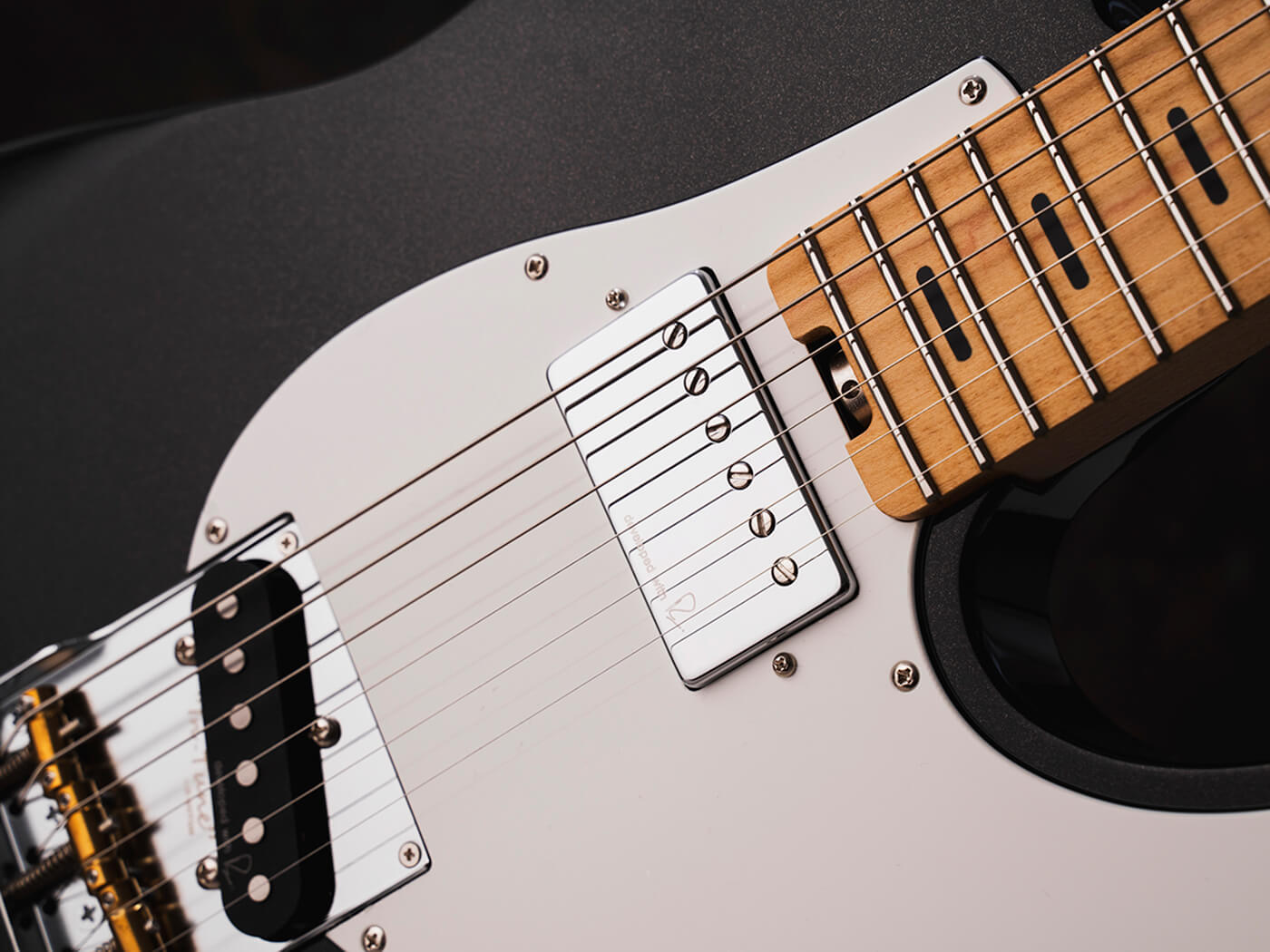 Image: Adam GassonYamaha Pacifica SC Professional – playability and build quality
This thing couldn’t be easier to play if it came with built-in hands that did it all for you and then gave you a back massage afterwards. There’s something supernaturally smooth about the frets, and the neck itself – on the rounded side but nothing too scary – is eminently huggable. The balance is good, while the contoured neck heel and upper-body chamfer make it an ergonomic dream.
Even the half-knurled volume and tone knobs feel nice, with a slick but sturdy ‘thunk’ when you pull up the latter for the focus switch. And the factory setup on my review instrument was close to perfect, though the shared saddles mean you might have to compromise a little on intonation.
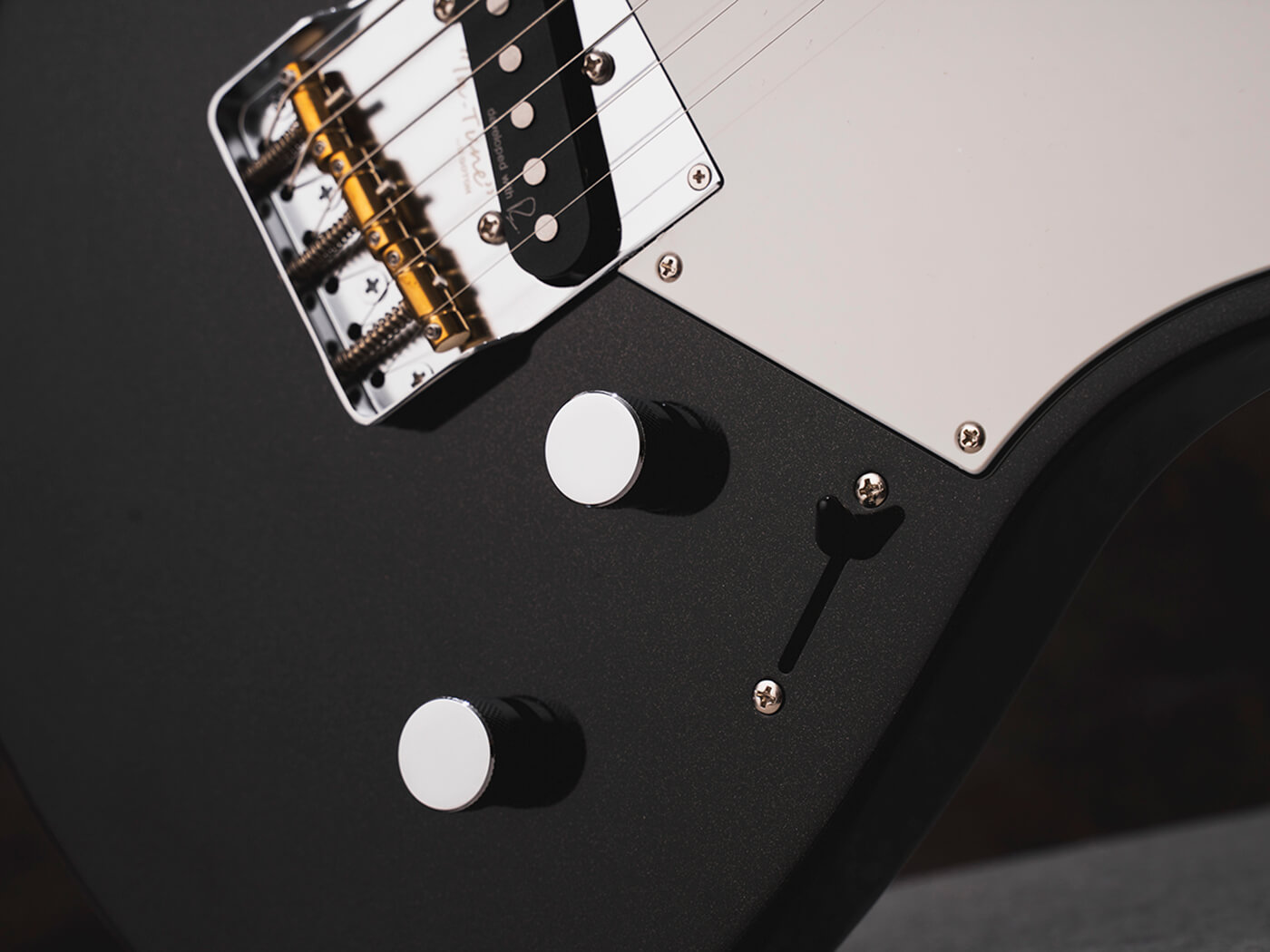 Image: Adam GassonYamaha Pacifica SC Professional – sounds
It’s impossible to pick up a guitar that looks like this and not expect it to sound like a Telecaster – and the Yamaha website isn’t exactly helping with its promise of “vintage twang” – but that really is not the deal at all. There’s twanginess on offer for sure, but as with the newer double-cut Pacificas, the Reflectone pickups go big on hi-fi clarity… in this case, bigly big.
What you do get from that three-way switch and pull-out knob is an array of five very distinct sounds covering a broad tonal spectrum. The humbucker on its own is full, smooth and breezy; the middle position brings plenty of sugary twinkle; and the bridge pickup has so much shimmering top end I found myself looking down to check it hadn’t secretly turned into a 12-string. Pulling up the focus switch has a mild softening effect on that middle setting, but it completely transforms the single-coil on its own, shaving off a lot of that over-eager treble and replacing it with a bucketful of midrange spank.
Even so, in all positions, this is that rare phenomenon: a guitar with a tone knob that you’ll actually want to use. And luckily it works well, taming the zing without turning everything muddy even when it’s down to halfway. All of that makes the Pacifica SC Professional a versatile electric guitar… but through a clean amp at least, it’s not especially likeable or characterful.
On goes the overdrive, then – and now those pickups find their natural home. The sustain is piano-like, the smoothness is never compromised, and if you’re a technically tidy player you’ll find the guitar’s solidity and snappiness make it a supremely capable partner for your fiddliest lead runs. Palm-muted chords are not so strong – with high gain all that bright resonance translates to a ringiness that can spill over into the gaps – but you’ve probably worked out by now that this is not a guitar for sweaty punk chuggers.
With distortion in the picture the tonal differences between the pickup settings are reined in to a more sensible range, but all five are balanced and articulate. Couple that with the effortless playability I was raving about earlier, and you have a Professional that absolutely lives up to its name.
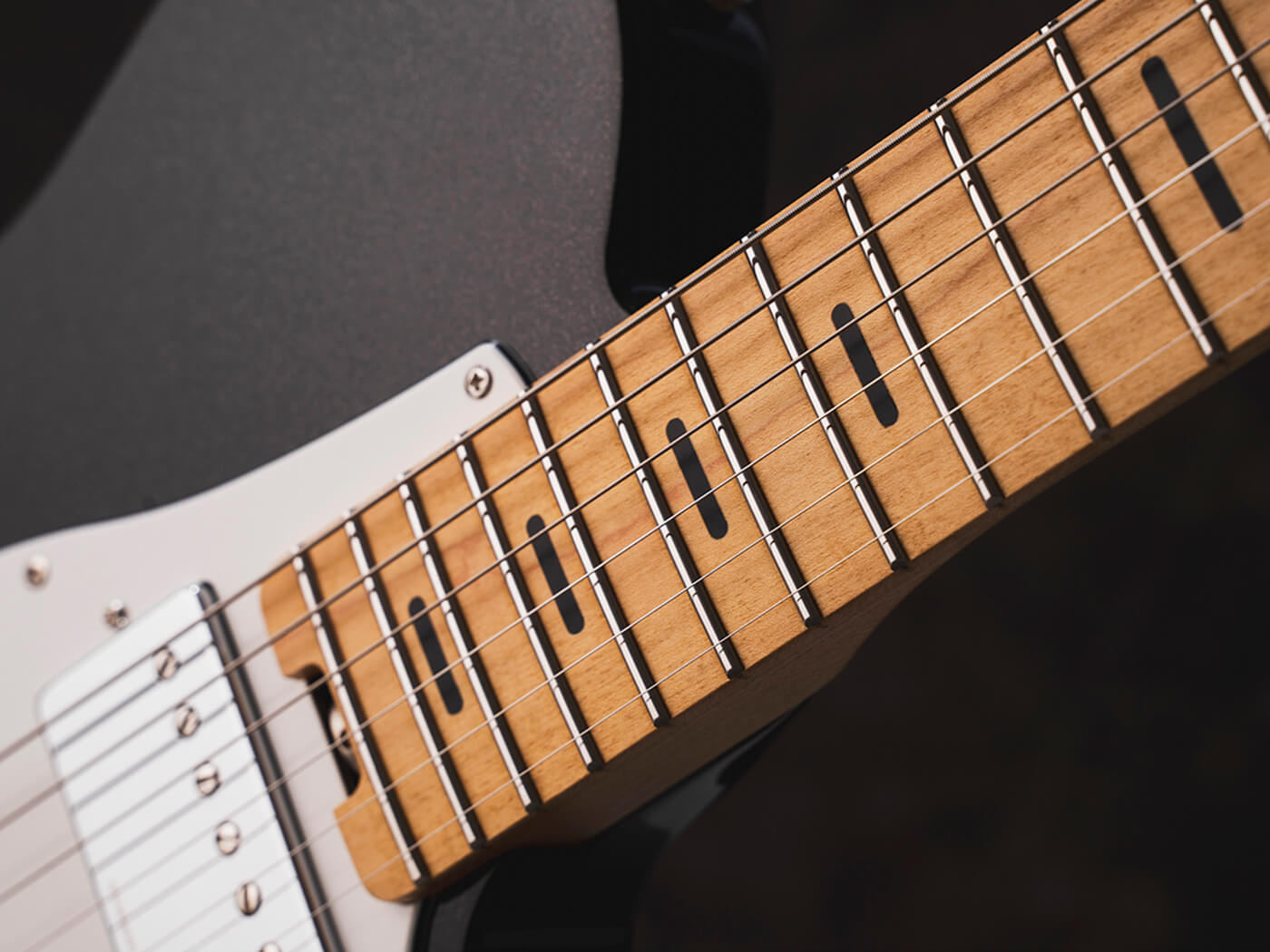 Image: Adam GassonYamaha Pacifica SC Professional – should I buy one?
It isn’t going to destroy any stereotypes about Yamahas not being very rock’n’roll, but there’s no denying this is a monumentally classy piece of work. And while the voicing of those pickups is hardly a recipe for instant mojo, they’ve clearly been designed to do a particular job – one that’s likely to involve an overdrive pedal or two – and they carry it off impeccably.
 Yamaha Pacifica SC Professional – alternatives
The obvious alternative for anyone who can’t stretch to this kind of money is the Yamaha Pacifica SC Standard Plus ($999/£992), which is made in Indonesia and has only minor spec differences. See also the Eastman FullerTone SC’52 ($899/£799) – or, for a more traditional T-type instrument with a neck humbucker, you might prefer the Fender American Vintage II 1977 Telecaster Custom ($2,599/£2,299).