
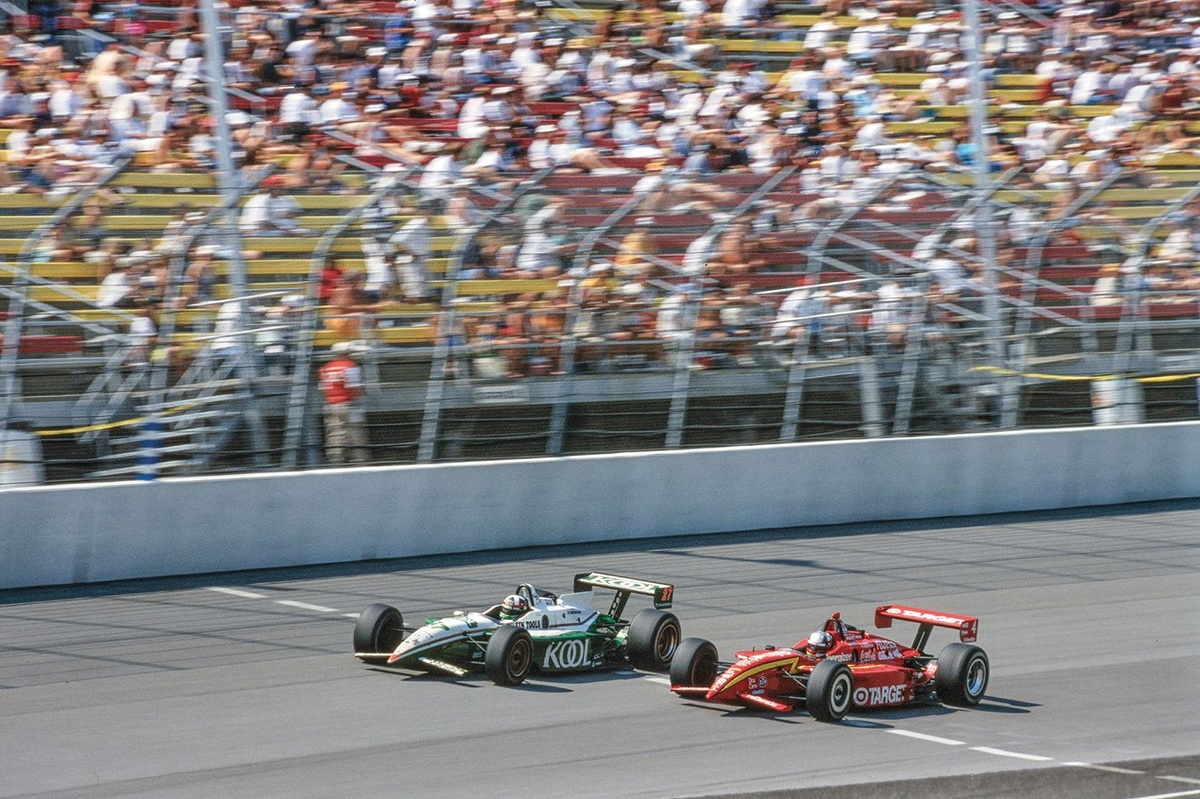
What makes a racing season compelling? A tense and close championship battle? Diverse competition between chassis, engine and tyre manufacturers? Would it include 900bhp cars and old-school circuits, with no SAFER Barriers or HANS Device and an ever-present element of danger? Veteran champions trying to fight off a group of motivated young chargers? And what if the distraction of political intrigue hovered like a storm cloud over the entire scene?
Indycar racing was entering the fourth year of the infamous CART-IRL ‘split’ in 1999, but the CART FedEx Championship Series was still flying high. There were five competing chassis manufacturers (Reynard, Lola, Penske, Swift and Eagle); four engine suppliers (Honda, Ford/Cosworth, Mercedes/Ilmor and Toyota); and a tyre war between Firestone and Goodyear. The championship featured 20 rounds (albeit not the Indianapolis 500), with international jaunts to Japan, Brazil and Australia in addition to the core North American events.
Perhaps most importantly, CART featured a stacked field, led by former champions Jimmy Vasser, Al Unser Jr and Michael Andretti; established veterans including Paul Tracy, Adrian Fernandez, Bryan Herta, Mauricio Gugelmin and Mark Blundell; and a host of up-and-comers – Dario Franchitti, Greg Moore, Gil de Ferran, Helio Castroneves, Tony Kanaan and Patrick Carpentier, among others. Twenty-three of the 24 drivers who ran the full 1999 CART season won an Indycar race at some point in their career.
Absent was Alex Zanardi, who elected to return to Formula 1 with Williams rather than establishing roots in America to defend his 1997 and 1998 CART championships. In his place at Chip Ganassi Racing was 23-year-old rookie Juan Pablo Montoya, the reigning FIA Formula 3000 champion.
“Montoya wasn’t quite ready for Formula 1 yet, so he came over here,” says Ganassi. “There was no iRacing in those days, and no place else you could learn things like pitstops and tyre management. I think Frank Williams realised if he had a driver in his stable that he wanted to keep long-term that Indycar was a good place to go for a couple of semesters, if you will, to keep him sharp. And that’s exactly what it turned out to be.”
Montoya expected to get the F1 seat that went to Zanardi: “I was disappointed, because I felt I did a really good job as a test driver for Williams. I was pretty pissed off about it, to be honest. But when I got the chance with Ganassi, it was really good. It was all orchestrated by Frank Williams at the time – I didn’t even know that. It ended up working really well and I made a lot of my career through Chip.”
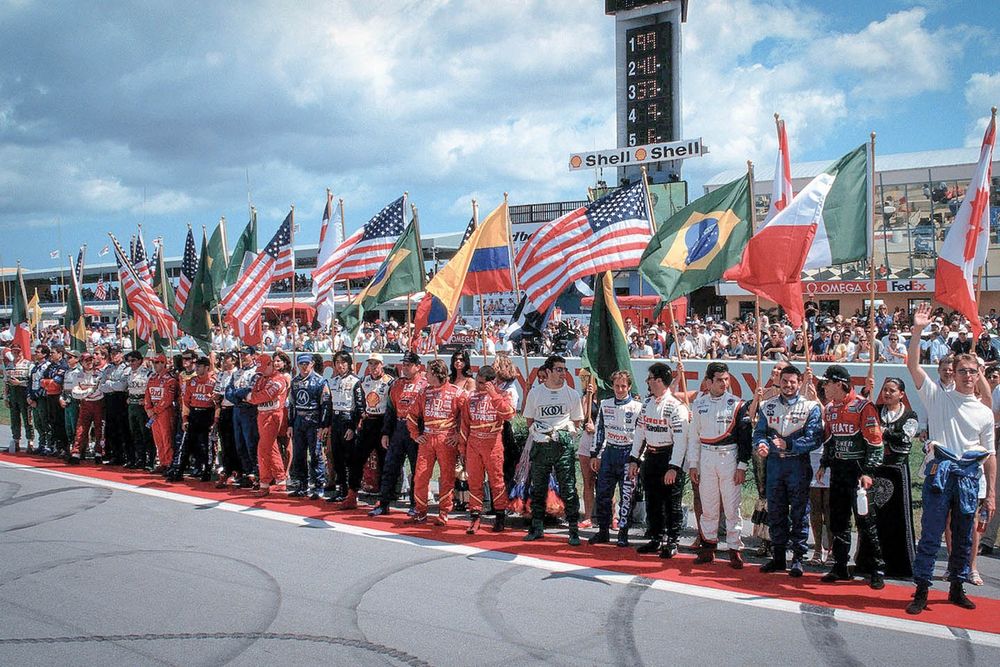
The 1999 CART grid was packed with quality, with 23 out of 24 going on to win at least one Indycar race in their career
Photo by: Getty Images
Although he was stepping into the champion’s car, few viewed Montoya as a championship threat. Zanardi predicted the title clash would be fought out between Vasser (who started Ganassi’s championship run in 1996), Franchitti and Moore. It was Moore who prevailed in the opening round at Homestead Speedway, a 1.5-mile oval that showcased the young Canadian’s talent from the very start of his career.
“When I won at the original Homestead track in 1996, I had a reasonable lead. I’m looking in my mirrors, and I see this blue car coming,” recalls Vasser. “They said, ‘Don’t worry, that’s Moore. He’s a lap down.’ It was his first Indycar race. A couple laps later he blows by me on the outside of Turn 3. I thought, ‘This guy’s got some stones.’ He really lived out there on the outside a lot.”
Montoya incurred the wrath of Andretti and legendary team owner Carl Haas when he and Michael crashed heavily in practice at the Twin Ring Motegi oval. But he settled down in the race, moving from 15th to second while dicing cleanly with Andretti prior to running out of fuel. For the second year in a row, Fernandez denied Honda a home win in Japan.
“He’s so quick, it’s scary. At first you think he’s a little arrogant, but I really don’t think that’s the case. His mind is just on winning and driving. All else doesn’t matter” Morris Nunn on Juan Pablo Montoya
On the more familiar terrain of the Long Beach street course, Montoya pressured Kanaan into a mistake and claimed his first Indycar win in just his third start. One of the most impressive aspects of Montoya’s 1999 season was that 16 of the 20 circuits including Long Beach were new to him. He had run only one oval race in his life (in 1994 in the Barber-Saab Pro Series), yet he dominated the next two events on the 1999 CART slate at Nazareth Speedway and the ‘Roval’ built from the Brazilian GP’s former Jacarepagua circuit to complete a three-race win streak.
Morris Nunn, the Ensign Formula 1 team founder who went on to a successful career in America race-engineering an A-Z of drivers from Andretti to Zanardi, worked with Montoya in 1999. Nunn had wanted to retire for the previous couple of years, but Ganassi flew him to Spain on Concorde in late 1998 – ostensibly to watch Zanardi test the Williams, but mostly to sell Nunn on Montoya, who was also testing. Nunn immediately saw the potential, and by mid-1999 was totally convinced.
“I’ve been absolutely astounded,” said Nunn, who died in 2018. “He’s so quick, it’s scary. At first you think he’s a little arrogant, but I really don’t think that’s the case. His mind is just on winning and driving. All else doesn’t matter. So far, I can’t fault him. He’s championship material. He’s got a career ahead of him brighter than anybody I know.”
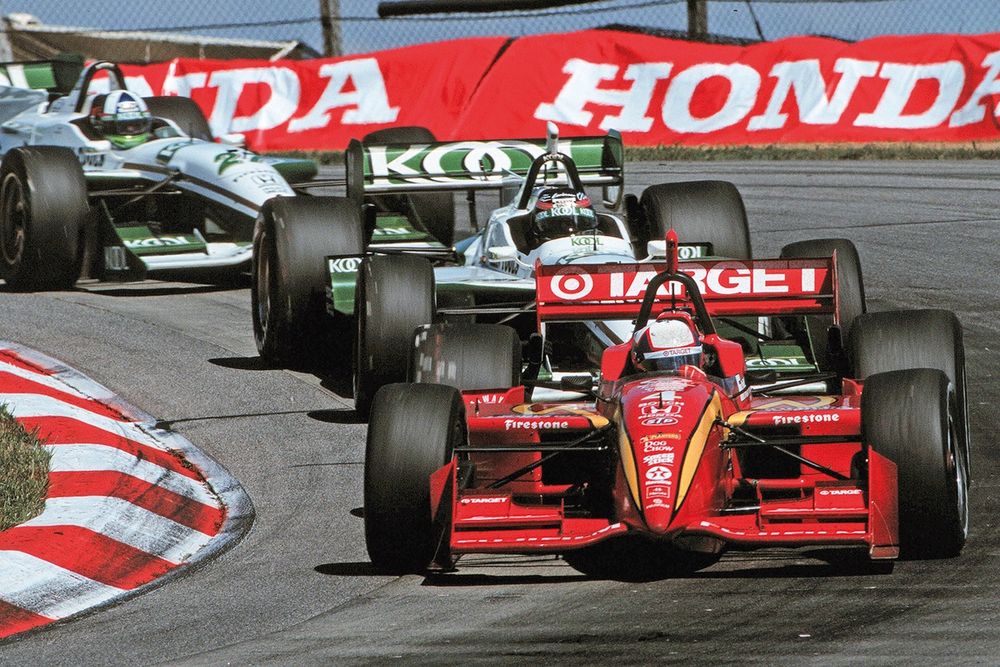
Montoya instantly impressed as a rookie despite his frustration at being overlooked by Williams for an F1 drive
Photo by: Michael L. Levitt / Lumen via Getty Images
Andretti, the 1991 champion, was still a frontrunner in his late thirties, and he notched his only win of the 1999 season on the Gateway oval. But Michael’s old pal Unser was swept into an accident in the Homestead opener, sustained a broken leg and missed two races. Saddled with uncompetitive Mercedes engines and Goodyear tyres at Team Penske and with his personal life in turmoil, Al Jr had sadly become a non-factor.
Meanwhile, Vasser thought life at Ganassi would be easier without Zanardi, but he too endured a winless 1999 campaign. “You’ve got to just accept that you’re having a lousy year, especially when you’re getting your ass kicked by your team-mate,” he said. “Sometimes there’s character building in life. It’s not always podiums and champagne.”
Tracy, rebounding from a frustrating 1998 season, took his first win in two years on the Milwaukee Mile. De Ferran then scored Goodyear’s only victory of the season, using a three-stop strategy to sprint to the win on the Portland road course over Montoya and Franchitti on fuel-saving runs.
It’s fair to say the first half of 1999 was a disappointment for Franchitti. But it turned for the better at Toronto, where he led Tracy in a Team Green 1-2 while Montoya crashed out. “I knew I had to get on with it if I was going to contend for the championship,” Dario relates. “I knew podiums weren’t going to cut it. Monty was really finding his stride.”
Kanaan lucked into his first career win at Michigan Speedway when Max Papis ran out of fuel on the last lap. A week later at Detroit’s Belle Isle, it was another Franchitti-Tracy 1-2, lifting Franchitti into the championship lead for the first time all season. But the big news was Roger Penske’s revelation that his 2000 drivers would be Greg Moore and Gil de Ferran. It was an undeniably strong future driver pairing that would combine de Ferran’s car development expertise with Moore’s youth and bravura.
The championship tables then turned as Montoya won the next three races at Mid-Ohio, Chicago Motor Speedway and Vancouver, where Franchitti made a rare mistake and crashed. “It was wet, I made a stupid move on Monty, tried to avoid hitting him, locked up, and spun,” says Franchitti. “We were at times hammer and tongs that year. But there was a respect there, and there was never contact, there was never bulls***, there were never mind games, and I loved it. It was such a pure fight.”
The momentum shifted back to Franchitti as he finished second to Tracy at Houston and won in style at Surfers Paradise, Australia. But those races were preceded by a tragic weekend at Laguna Seca where F3000 frontrunner Gonzalo Rodriguez, driving a second Penske entry, lost his life in a single-car practice accident.
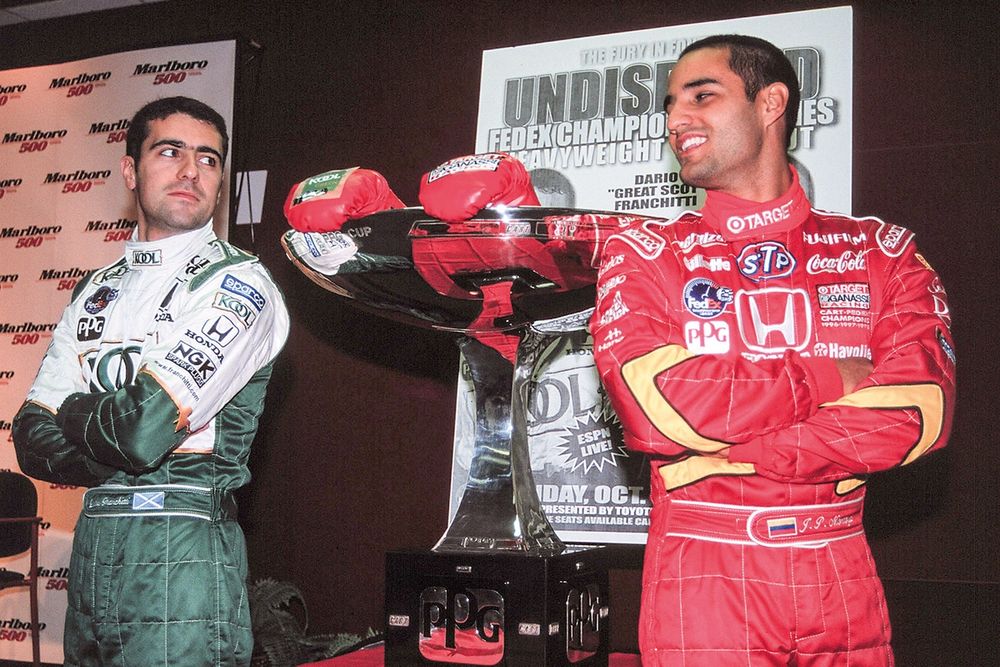
Franchitti was unable to hold on to his championship lead over Montoya in the closing rounds
Photo by: Michael L. Levitt / Lumen via Getty Images
The mood was still somewhat sombre seven weeks later when the protagonists gathered at California Speedway in late October to decide the championship. A 37-point swing in the previous two races had given Franchitti a nine-point advantage over Montoya and third place would deliver the crown to the Scotsman.
Due largely to engine performance, Moore had gone winless since the Homestead opener and was ninth in the standings. He was still a favourite on the two-mile superspeedway, but he injured his right wrist prior to qualifying when a van backed into a scooter he was riding through the paddock, putting his participation in doubt. With a splint and glove fabricated for his injured hand, Moore was given clearance to start from the back of the grid. He was his customary jovial self before the green flag.
“He sat right next to me in the drivers meeting, and I was asking him, ‘Why are you racing?’” says Fernandez. “I remember he said, ‘No problem, I’ll be at the front in however many laps.’ I said, ‘Well take it easy, it’s a long race.’ Greg had this confidence, maybe overconfidence in himself that you could not convince him from doing anything. Obviously, that was part of his attraction.”
Moore gained 12 places in the first three laps before a caution for Richie Hearn’s crash in Turn 2. Just after the restart, Moore lost control of his Forsythe Racing Reynard-Mercedes at almost the exact same place. Greg wasn’t as lucky as Hearn, because the transition between grass and a circuit access road launched Moore’s sliding car into a barrel roll that fatally smashed the top of the cockpit into an unprotected concrete wall.
“Halfway through, the flag goes to half-mast. That’s bad – that means somebody died. And obviously I knew the accident happened. I thought that was so inappropriate at the time, so disrespectful to us drivers still out there racing” Tony Kanaan
The accident occurred on lap 10 of 250, but the race was not stopped. Moore’s death was announced just past midway, and California Speedway’s flags were lowered to half-mast. Most of the drivers were unaware of their compadre’s demise.
“Halfway through, the flag goes to half-mast,” recalls Kanaan, a close friend of Moore’s. “That’s bad – that means somebody died. And obviously I knew the accident happened. I thought that was so inappropriate at the time, so disrespectful to us drivers still out there racing.”
A disastrous early pitstop in which a rear wheelnut was cross-threaded put Franchitti several laps behind. Dario never gave up and came home 10th, but it wasn’t enough to overcome Montoya’s fourth-place finish. They ended the year tied on 212 points, with Montoya declared the champion on countback with seven wins to Franchitti’s three.
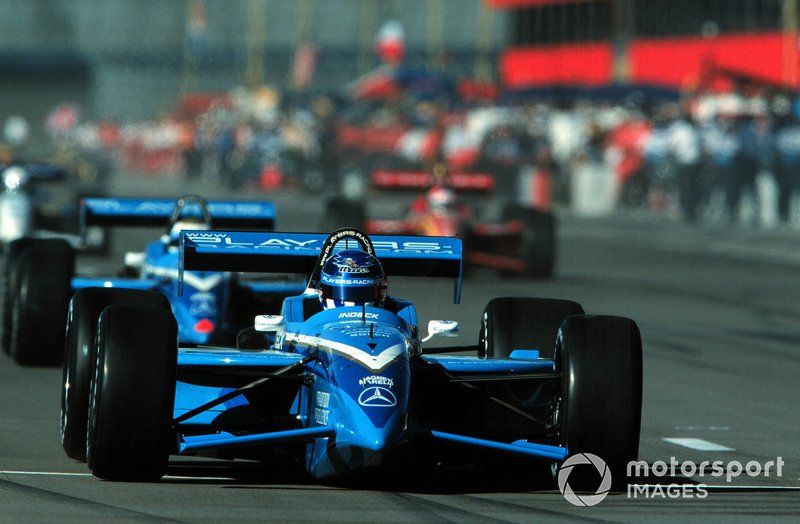
Moore lost his life as the season finale continued around him
Photo by: Michael L. Levitt / Motorsport Images
In the circumstances, the championship was virtually forgotten. “I never did really get to celebrate,” reflects Montoya. “I was kind of close to Greg – not as much as Dario and the other guys, but we got on really well. It was a tough break for Greg. But at the end of the day, you need to understand that in racing, it’s gonna happen whether you want it or not. That’s the reality of it, and you need to be comfortable with it. It sucks, but it’s the truth.”
From the time Moore and Franchitti met prior to Dario’s rookie season in 1997, they were best friends, part of a tight group that included Kanaan and Papis. They shared a kinship and a camaraderie that was foreign to most of Indycar racing’s greatest generation of drivers – men like AJ Foyt and Bobby Unser.
Franchitti was devastated by his friend’s death. “At that point, I was loving life; I was driving cars I loved to drive, doing all these crazy travels,” he says. “Greg was the one that led the charge. He showed us we didn’t have to hate each other. On the track, we could kick ass, but then off the track, we were going to have a lot of fun. We all bought into that, and we were very, very lucky. I think those two years, 1998 and 1999, were some of the happiest times of my life.
“And Gonzo got killed at Laguna, and then of course, Fontana, and it just ripped everything apart. To me, that’s when it stopped being fun. Right then [he snaps his fingers]. That’s a very selfish thing to say, I guess, but from that point on, it was just never the same. Greg was such a magnetic personality. I used to say he taught me to be more extrovert, and I taught him to think a bit more, so our personalities complemented each other.”
Franchitti, Papis, Kanaan and Vasser all believe that, had he lived, Moore would have rewritten the record books. Castroneves, who Penske hastily signed as Moore’s replacement, went on to a highly successful career that netted 31 Indycar race wins, including four at the Indianapolis 500.
“He was unbelievable in those cars,” continues Franchitti, who went on to claim four IndyCar championships and three Indy 500 wins between 2007 and 2012. “The CART cars would slide, and if they slid once and you didn’t catch it, if you allowed it to snap again, it would bite you. Greg could just hang that thing out there all day! He just drove the thing on the edge and I don’t know of anybody else that did that.
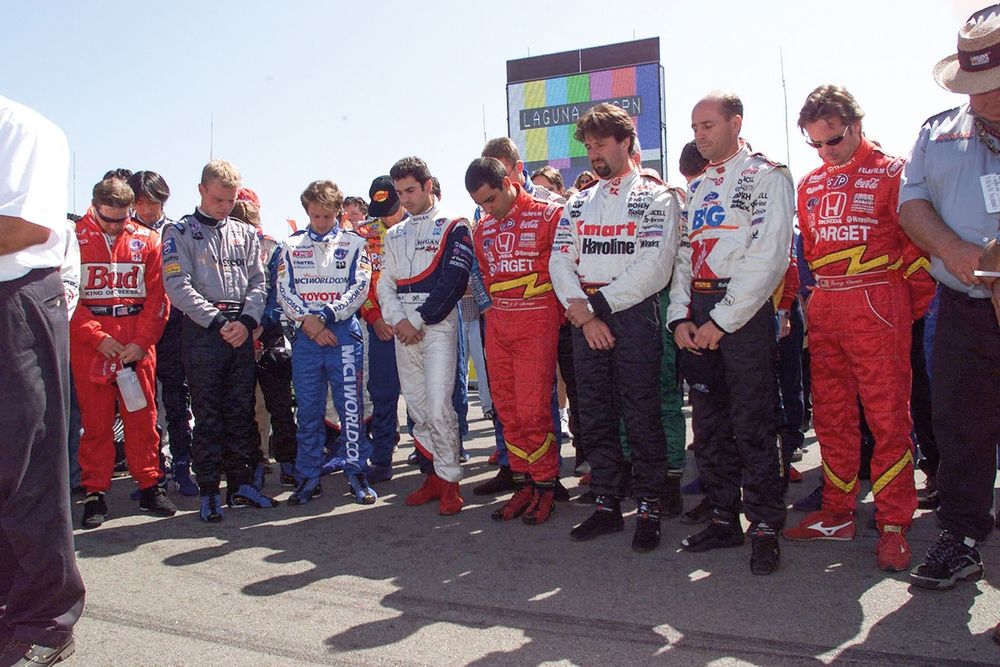
The drivers hold a minute silence for Rodriguez who died during practice – and would later do the same for Moore
Photo by: Getty Images
“Can you imagine Greg’s talent with Gil’s analytical approach – and his talent as well – in that Penske organisation? That talent in those cars would have been really special, and we’d have all been really, really struggling.”
“I can’t fathom that Greg Moore and Alex Zanardi never drove in the Indy 500,” adds Vasser, alluding to the CART-IRL split and the politics of the era. “That’s a tragedy to the sport. Taking away nothing from Zanardi’s oval prowess, but Greg Moore was arguably one of the greatest oval drivers of all time.”
Moore won just five Indycar races, but like Gilles Villeneuve – a six-time grand prix winner – his vivid personality and the memorable way he won those races give him the same kind of legendary status all these years later. It’s not outrageous to say that CART’s precipitous decline that culminated in its 2003 bankruptcy was triggered (or at least hastened) by Moore’s death at Fontana on 31 October 1999.
The Indy 500 is back on the schedule, but when you look at today’s IndyCar Series – with its six-month off-season and watered-down 15-year-old spec cars – and compare it to everything the CART championship had going for it up to the very end of the 1990s, the tragedy of 1999 isn’t just limited to the loss of a pair of human lives. Nobody knew it at the time, but that’s when Indycar racing lost its soul.
Read Also:
This article is one of many in the monthly Autosport magazine. For more premium content, take a look at the February 2026 issue and subscribe today.
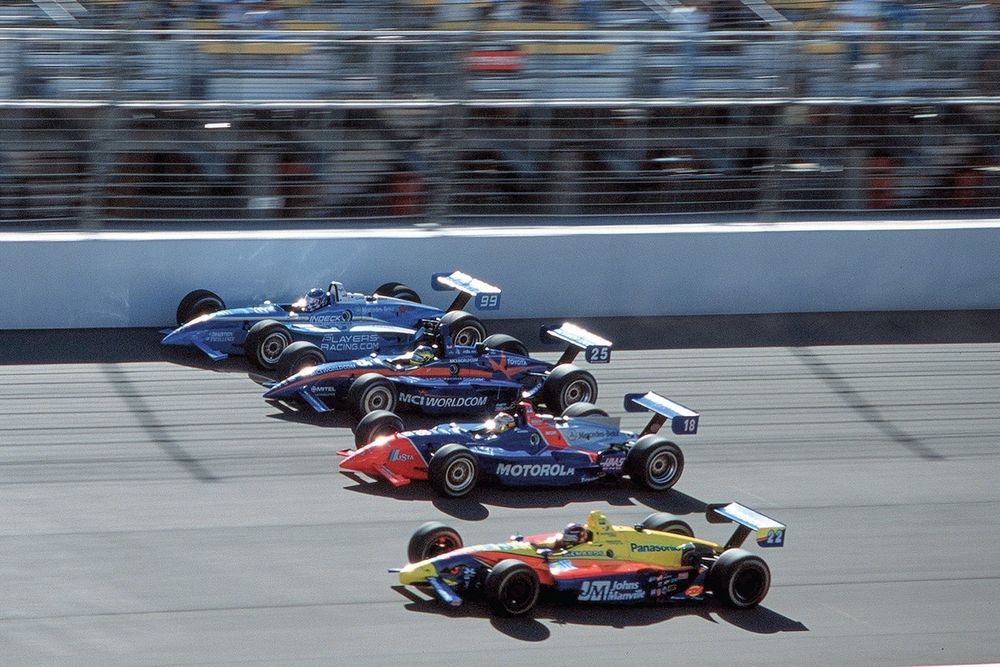
The 1999 CART season saw the best and the worst of what the series could offer
Photo by: Getty Images
We want to hear from you!
Let us know what you would like to see from us in the future.
– The Autosport.com Team