
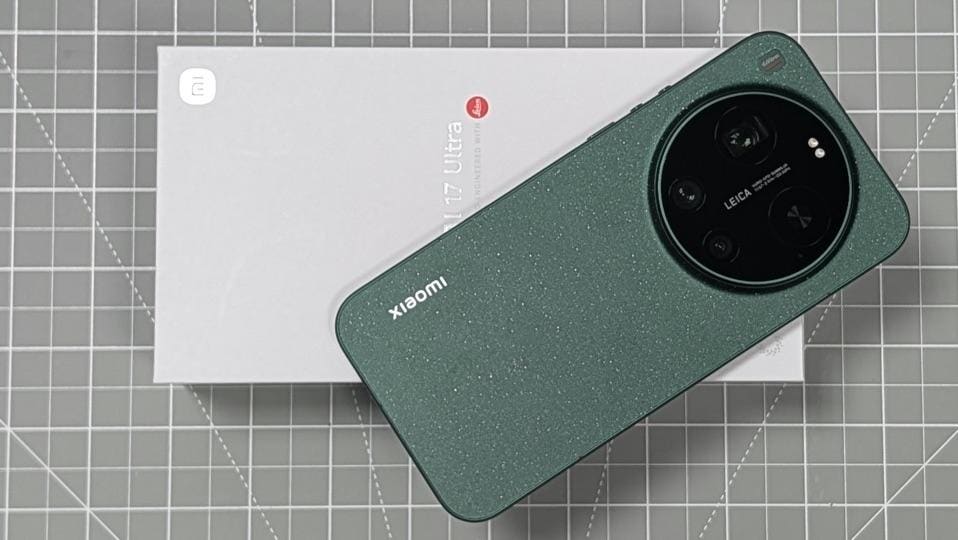
Xiaomi 17 Ultra
Ewan Spence
For a long time, the flagship smartphone was the ‘Pro’ smartphone, signifying high specifications and higher ambitions. But what happens beyond the flagship? For the average consumer, a ‘Lite’ or ‘Pro’ model provides more than enough utility; the former is a good daily runabout phone, while the latter offers a little more.
Yet the enthusiasts, be they creators, travellers or power users, the answer is ’Ultra.’ This tier is seeing some of the biggest innovations in the space, and manufacturers are focusing on different strengths to help their Ultra models stand out. In the case of the Xiaomi 17 Ultra, which is now available globally, Xiaomi’s design decisions position it as the best camera you will ever own.
Xiaomi 17 Ultra and the Power of 1-Inch LOFIC Technology
Xiaomi has paired a 1-inch sensor with LOFIC technology – lateral overflow integration capacitor. This allows image sensors to handle a wider dynamic range between light and shadow. Think of taking a picture of someone in shadow, but you still want to pick out both the detail of the face and the darkness and surround environment. That’s the dynamic range; the wider you can make it, the more natural the images can be.
With LOFIC, the 17 Ultra can handle much steeper gradients, as well as a face in the shadows; it can also handle bright sunlight in a normal scene. The bright light overflows, but doesn’t blow out the rest of the information collected by the sensor, allowing the scene to cope with both extremes, much as the human eye can manage.
Xiaomi 17 Ultra
Ewan SpenceHow the Xiaomi 17 Ultra Mastered Continuous Optical Zoom
Xiaomi is taking an interesting method for its zoom capabilities. While digital zoom has been a staple of many smartphones, it is now common to see optical zoom of x3 or x5 offered by manufacturers, with digital zoom providing additional reach. With the 17 Ultra, Xiaomi has a true continuous optical zoom. A motorised lens can move backwards and forward, much like an SLR zoom lens, allowing the focal length to move from 75mm to 100mm. That means a maximum zoom won’t lose a single pixel of resolution.
No doubt this is contributing to the relative bulk of the Xiaomi 17 Ultra compared to the svelte model that threatened to become the phnephone fashin last year, but this is where having an Ultra and a Pro in your range bears fruit. The 17 Ultra is about delivering an excess experience with fewer compromises. One of those is physical size. It’s an interesting trade-off – bigger zoom with a bigger phone – and it sits well within Xiaomi’s push of the 17 Ultra to be a photographer’s phone.
Xiaomi 17 Ultra
Ewan SpenceThe Professional Optics Driving the Xiaomi 17 Ultra
It’s also worth noting that Xiaomi is continuing its partnership with German camera company Leica, which has contributed throughout the optical chain, from the physical lenses through to the tuning of the software.
Does all of this technology pay off? Smartphone camera specialists DXOMark put the 17 Ultra through its paces, with only occasional issues with the autofocus holding it back from the very top spot:
“Overall, the camera operates almost flawlessly in photo mode, with excellent performance across the entire focal range, from ultra-wide to long tele zoom. Our testers only noticed some focus‑related decision errors and the naturally limited depth of field.”
Xiaomi 17 Ultra
Ewan SpenceXiaomi 17 Ultra Battery Life and Flat Display Upgrades
There are two other key areas of the Xiaomi 17 Ultra worth noting.
The first is the use of silicon-carbon battery technology that results in a 6,800 mAh battery. This isn’t unique; several other manufacturers have introduced the technology and are lifting battery capacity to 6,500-7,000 mAh. Samsung’s recently announced Galaxy S26 Ultra remains on the previous generation and features a 5,000 mAh battery. It will be interesting to see if Apple follows suit with the iPhone 18 in September.
The second is a flat display. The 17 Ultra has moved from a 2K curved panel to a 1.5K flat panel. This helps with palm rejection and screen protectors, but the lower resolution is certainly a design choice for an Ultra handset.
The flat screen offers thinner bezels, and the 120 Hz refresh rate can deliver 3,500 nits at peak brightness. It also has a full DCI-P3 color gamut. There’s just enough chamfer around the edges to make the whole package comfortable.
Xiaomi 17 Ultra
Ewan SpenceIs the Xiaomi 17 Ultra the Best Camera Phone of 2026?
The Xiaomi 17 Ultra is not a phone for someone who needs a lightweight, fashionable device. It is built around the optical physics needed to make the camera stand out in the market. It offers multi-day endurance through new battery chemistry and has a display that is one of the most accurate on the market
The Xiaomi 17 Ultra reflects Xiaomi’s view of the most critical elements of a smartphone for its most dedicated users: the camera.