
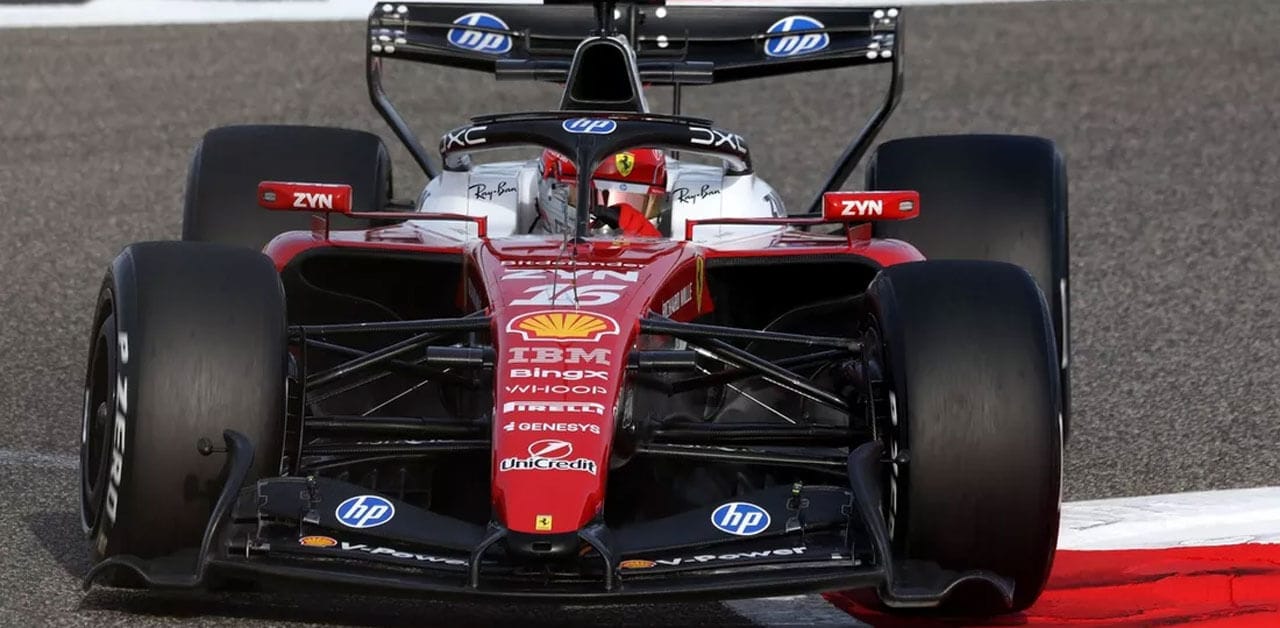
Charles Leclerc talks about his approach to the Ferrari SF-26, the car born from the new 2026 regulations, focusing on the key updates introduced this season. As the 2026 Formula 1 season is about to kick off, drivers have already logged many kilometers in their new cars. Leclerc seems to have found a good rhythm with the SF-26 during this early phase, but the real confirmation will come in Australia.
The regulation changes have affected every component of the car. The most significant updates involve the Power Unit and the fuels, meaning the driver will face a more challenging task. Energy management has become a crucial factor in performance optimization and will remain a complex puzzle for all teams.
Charles has explained what lies behind such a major regulation change from a driver’s perspective. Testing in Bahrain and Barcelona allowed him to get familiar with the car, but now the season truly begins with the Melbourne GP.
Leclerc and the preparation for the 2026 F1 season
Scuderia Ferrari has already impressed in early 2026 with some technical solutions that have caught the paddock’s attention. Leclerc, in a video shared by Ferrari, spoke about the focus and dedication the team put into the SF-26 project to fully understand the regulatory changes implemented this year.
“There has been a huge amount of work behind the scenes. There are many new systems. Certainly, there will be more meetings dedicated to the new features and how the car functions. As a driver, it is very important to understand how each system works to be as efficient as possible on track.”
Of course, the drivers have also spent many hours in the simulator. Initial approaches to the 2026 cars began last season, but there is still a need to build confidence. Moments like preparing a qualifying lap will be critical, and managing tires and battery simultaneously will not be an easy task.
In this context, the role of the track engineer becomes essential, communicating all the necessary maneuvers to ensure the flying lap is taken in the best possible conditions. Australia will provide the first real feedback and reveal who adapts fastest to these new 2026 cars.
 Energy management in 2026
Marco Adurno, head of Vehicle Performance, emphasized the importance of targeted practice to optimize the electrical component of the Power Unit during overtakes: “If you want to overtake a car and you have energy available, you can do it at any point of the lap. The problem is that after two or three corners, you have used up the energy and become an easy target.”
With the removal of the MGU-H, energy recovery will now depend primarily on braking. As Ferrari highlighted, the way the engine operates will also be crucial to conserve the necessary energy. During Bahrain testing, special attention was given to gear management. On straights, the eighth gear is sometimes skipped, and in certain corners, drivers even shift down to first gear to raise the engine RPMs and maximize energy recovery.
Charles Leclerc’s insights into the Ferrari SF-26 highlight the shift toward a more technical and strategic era of driving focused on complex energy recovery. As the team prepares for the Australian Grand Prix, the ability to balance the new Power Unit systems with raw on-track pace will be the ultimate test of Maranello’s winter development.