
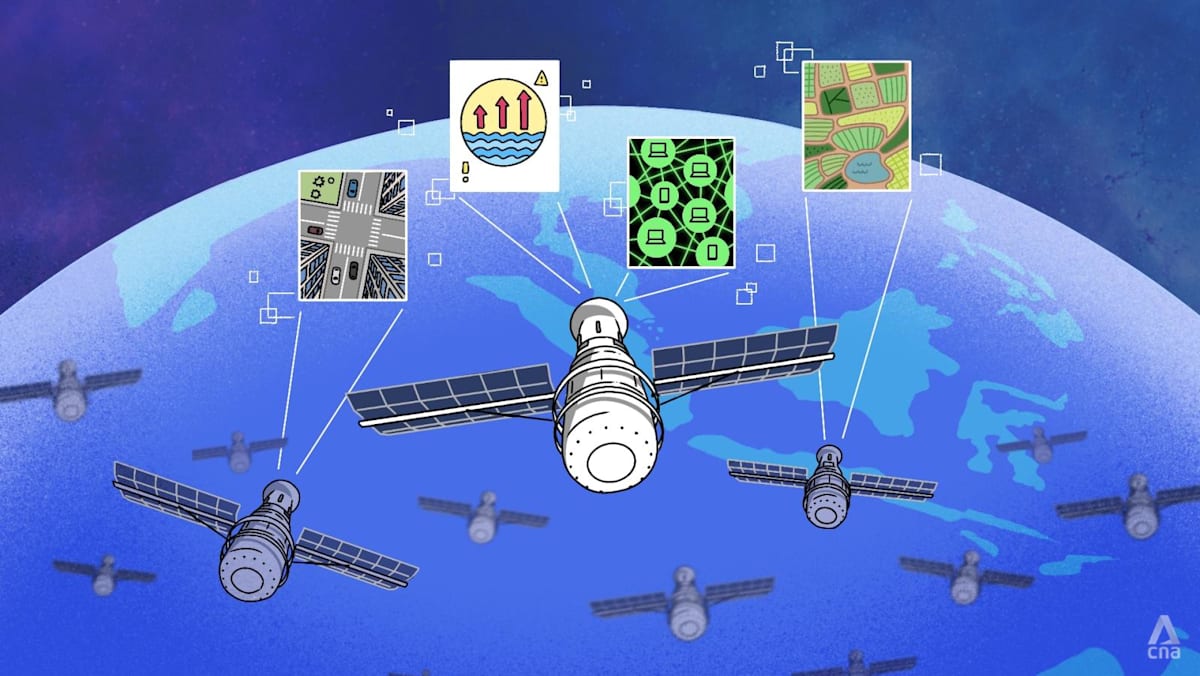
The bottom line, experts said, is that space leadership is no longer defined solely by who can build the biggest rocket.
The advantage increasingly lies in industrial depth, alliances, regulatory credibility, data control, and the ability to translate space data into economic and strategic value, said Ms Khoo.
Prof Koronios added: “The more important metric now is integration, specifically how nations embed space capabilities into their digital economy, climate strategy and industrial sectors.”
Countries like Australia, Singapore and other Asia-Pacific nations have the potential to take a leading role in certain areas, he said.
“For smaller economies, leadership may be defined by regional relevance rather than global scale. Providing critical equatorial climate data, for example, could represent a meaningful and strategic contribution,” added Prof Lansard.
Yet the expansion of space activity brings new risks. As more satellites are launched, particularly large commercial constellations, Earth’s orbit is becoming increasingly crowded.
The risk of collisions grows with every new deployment. A single accident can generate thousands of pieces of debris travelling at high speeds, threatening other spacecraft in a cascading effect.
The lack of universal agreements on the deployment and decommissioning of space objects such as satellites leaves the space environment open to exploitation and potential degradation, said Asst Prof Cole.
In developing complex national space plans, governments often seek ethical input in “piecemeal fashion”, with issues considered in isolation rather than in an integrated way, he added.
Mr Munro cautioned that without inclusive rules and well-designed governance, the space economy could become uneven, with concentration in a few powerful states and major enterprises.
Cybersecurity presents another vulnerability, since satellites and ground stations can be hacked, jammed or disrupted.