
The WA government has stepped up its fight to keep the GST deal it struck with then prime minister Scott Morrison in 2018, arguing that changes would discourage investment.
The Productivity Commission is reviewing the nation’s GST arrangement and was due to make recommendations to the federal government next year.
Under a 2018 deal, Western Australia was guaranteed a greater share of the Goods and Services Tax pool than it would otherwise get.
Both parties fear the Vengeful Diety Of The West
The state was forecast to receive $7.8 billion in GST payments this financial year, or about 8 per cent of the total pool, but without the 2018 changes, it would have got just $1.7 billion.
To compensate for WA’s increased payments, the Commonwealth has topped up other states to ensure they were no worse off, which has caused a more than $44 billion cost blowout over 10 years.
Western Australia established a GST “fairness fighter” team to mount its case during the inquiry, and spent $1 million on advertising its argument across the country.
WA contributes $32 billion
In its submission to the inquiry, WA has argued Australia should move from full horizontal fiscal equalisation (HFE) — which aims to create a level playing field across all states by compensating for areas with less earning capacity or higher costs — to partial HFE.
How does GST work?Goods and services tax (GST) is a broad-based tax of 10% on most goods, services and other items sold or consumed in Australia.The Australian Government helps put state governments in a position to provide their residents with comparable services by distributing revenue from the goods and services tax pool according to need.It is the job of the Commonwealth Grants Commission to advise the Australian Government on how the GST pool should be distributed.
Source: Australian Taxation Office and Commonwealth Grants Commission.
That would allow “states like Western Australia to continue investing in their economies, by allowing them to retain more of the benefits of policy decisions and investments”, the submission said.
It said other countries had adopted a partial HFE.
But economist Saul Eslake said that did not make it a good idea.
“We are a better country than the other federations in part because we do HFE more comprehensively,” Mr Eslake said, pointing to smaller gaps in living standards between Australian states.
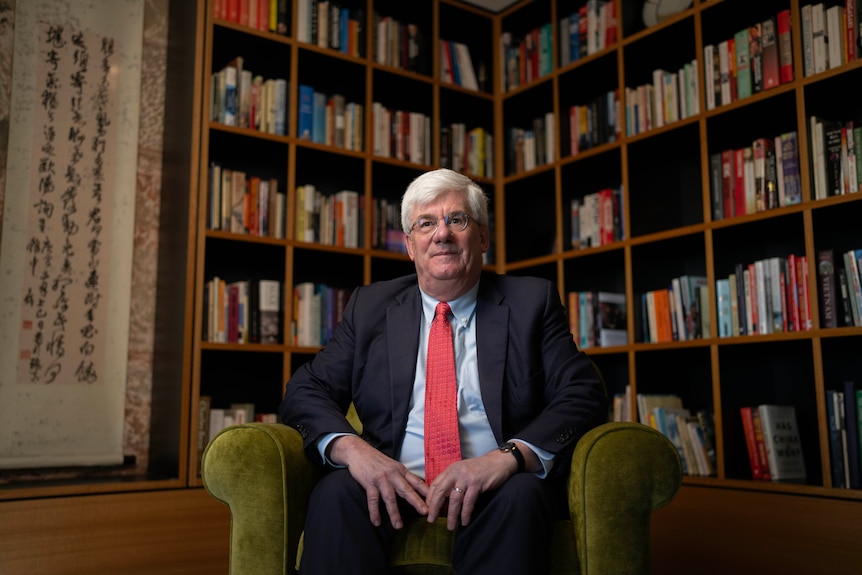
Saul Eslake has long been a critic of WA’s GST deal. (ABC News: Maren Preuss)
WA’s submission estimated since 1942-43, WA had made a net contribution of $32 billion to the federation.
It argued the previous GST system had “many perverse” outcomes, including that “New South Wales, Victoria and Queensland effectively received more of our iron ore, lithium and nickel royalties than we did”.
“In contrast, New South Wales effectively retained the vast majority of its coal royalties,” the submission reads.
Cost blowouts from the no worse off guarantee were because of higher-than-expected iron ore prices which had benefited the bottom line of the federal budget, according to the submission.
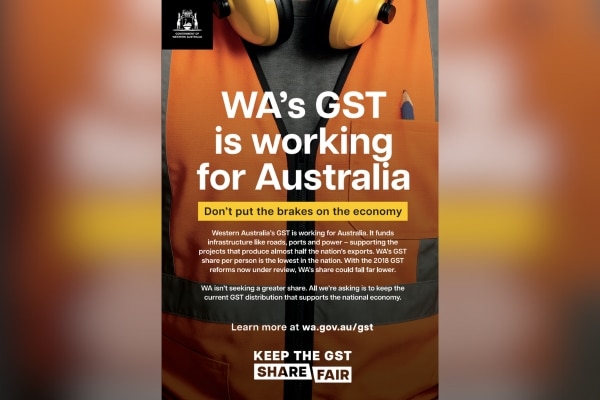
The state government has spent $1 million on an advertising campaign about WA’s GST deal. (Supplied)
“Indeed, we estimate that the benefit to the Commonwealth budget through increased company tax revenue alone is three to four times greater than the increased cost of the [guarantee],” it reads.
For those reasons — and many more argued across a 124-page submission — WA Treasurer Rita Saffioti said the current deal should, at the very least, be maintained.
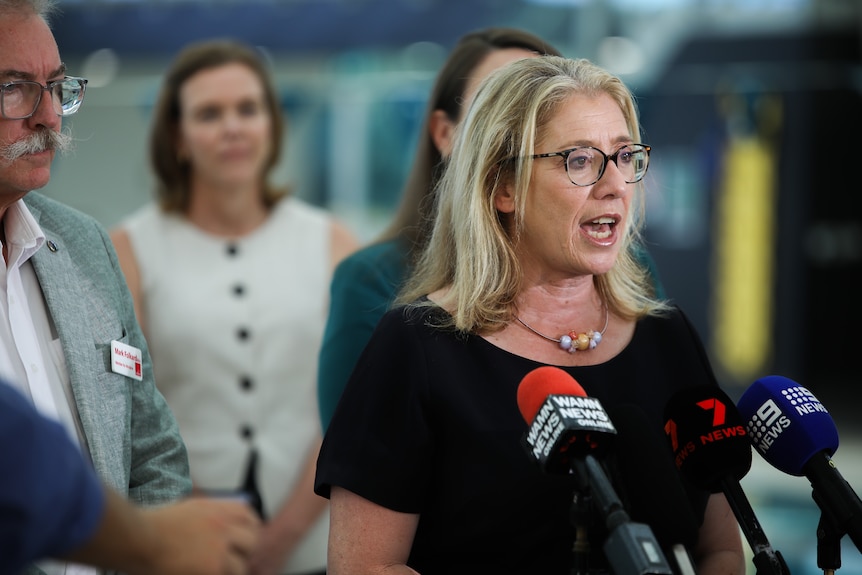
Rita Saffioti has warned against “undermining” the WA economy. (ABC News: Keane Bourke)
Partial mining exemption sought
WA wants a 25 per cent reduction on the value of mining revenue which factors into the GST distribution if changes are to be made, to “improve states’ incentives to grow their mining industries”.
That would halve the cost of the no worse off guarantee in the coming financial year and potentially eliminate the need for it by the end of the decade, it says.
Government vows to defend WA’s GST deal
Asked why Western Australia was arguing it should provide less support to less prosperous states, Ms Saffioti said partial equalisation allowed for greater “fairness” in the tax system.
“We deliver about 17 per cent of national economic growth,” Ms Saffioti said.
“We deliver 50 per cent of national exports.
“You undermine the WA economy, you undermine the national economy.”Victorian premier weighs in
Across the Nullarbor, Victorian Premier Jacinta Allan seemed unconvinced by WA’s case, saying she would “always advocate for Victoria to get its fair share”.
“We still collect less revenue per head of person than Western Australia,” Ms Allan said.
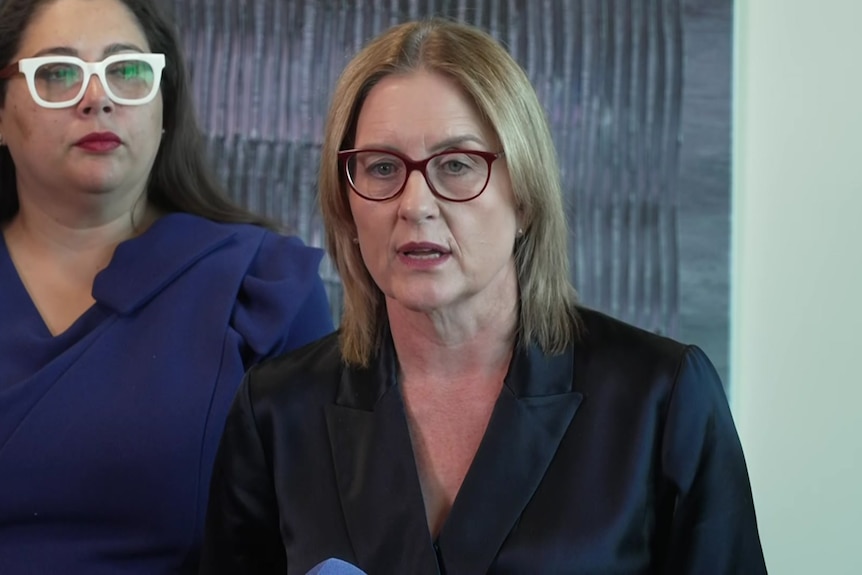
Jacinta Allan says she won’t stop fighting for her state to get more from the deal. (ABC News)
“We are a bigger state, a growing state, a state that is building the infrastructure for the future and delivering the services that working people and family need for our public health and public education systems.
“So that’s why I will continue to push for Victoria to get its fair share.”