
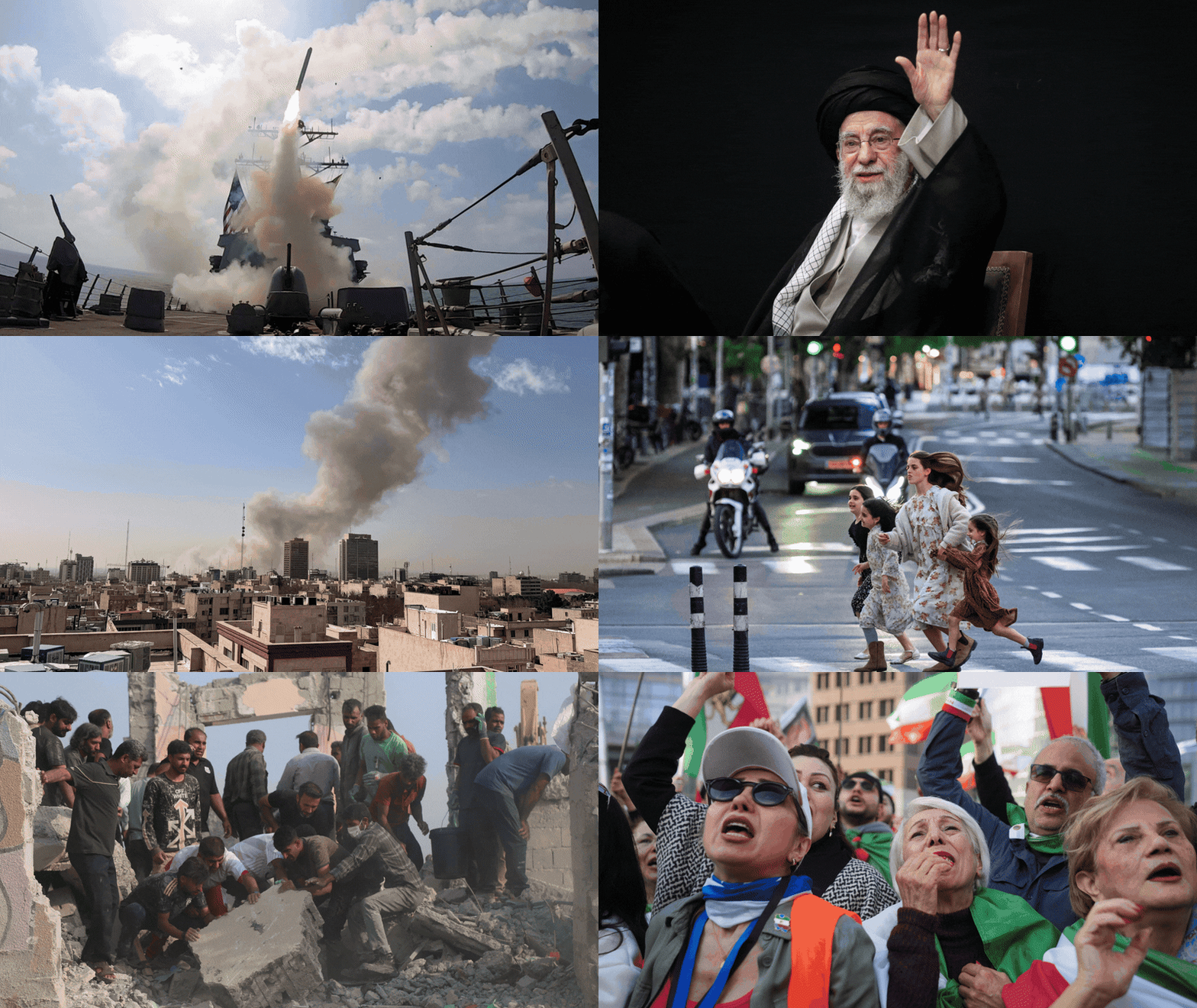
We are hearing that Iran believes it can appoint a successor to Ayatollah Ali Khamenei very soon, but it is hard to see this happening smoothly in the midst of the US and Israeli missile strikes.
The death of Khamenei has left Iran with a power vacuum that will severely weaken the Islamic Republic when many of its top leaders have also been targeted in the US and Israeli strikes.
We are now getting a clearer picture of the leaders killed over the first two days of this war. The losses will give confidence to those who hope the entire regime will collapse.
Khamenei, who was 86, ruled Iran for 37 years and shaped its policies to export terror and brutally suppress dissent. He became supreme leader in 1989, when the Berlin Wall fell and tanks rolled into Tiananmen Square. Nobody who rules that long is easily replaced. Under the Iranian constitution, the country is supposed to convene the 88 members of an Assembly of Experts to choose his successor – an immense challenge under attack.
On Sunday in Iran, foreign minister Abbas Araghchi said a new supreme leader would be chosen in “one or two” days. This is the same minister who said 24 hours earlier that Khamenei was still alive. For now, the Iranian military is technically leaderless. The supreme leader is also the commander-in-chief of the armed forces.
At least six top military and intelligence leaders have also been killed. How will the remaining leadership of the Islamic Republic respond? After seeing so many targets hit across Iran, they appear determined to strike civilian targets around the region – from Israel to Dubai and Doha. The leadership vacuum adds adds to the chaos and volatility of this war.
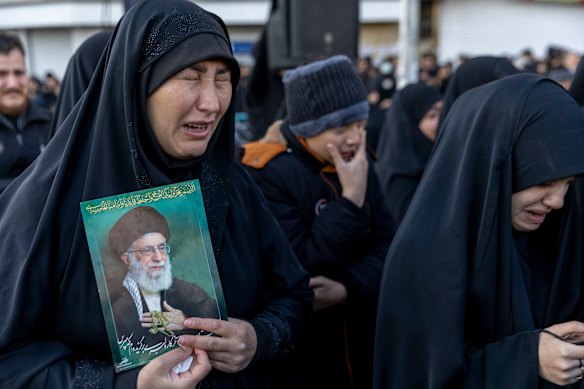 Women weep as thousands of people gather in Enghelab Square for a pro-government demonstration after Iranian state media confirmed the death of Ayatollah Ali KhameneiGetty Images