
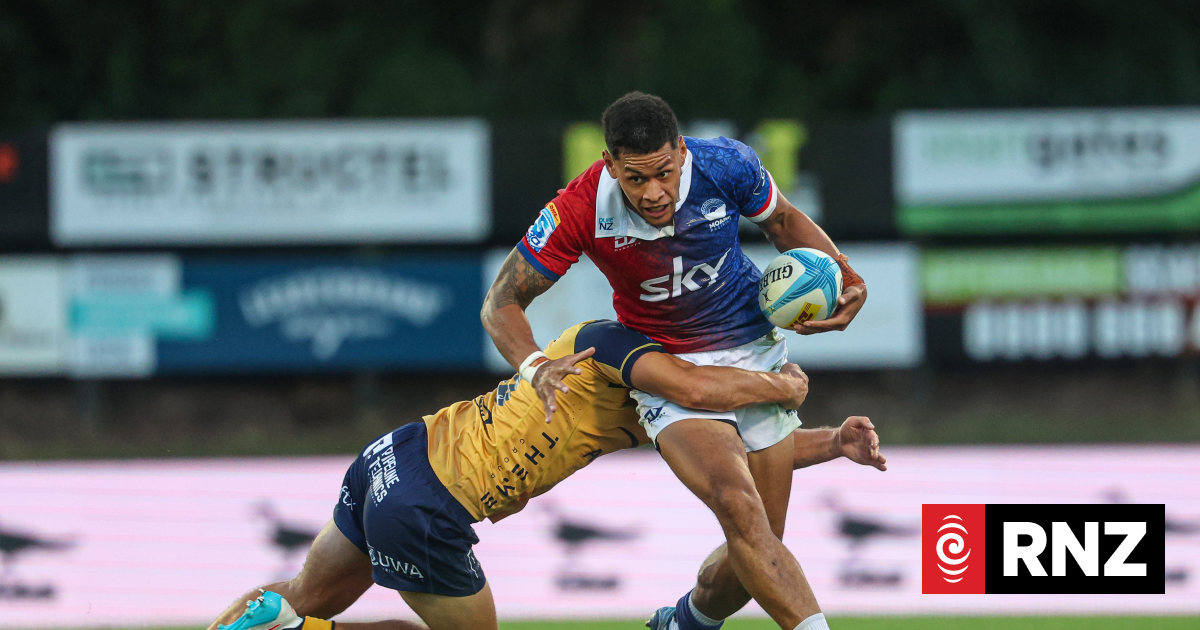
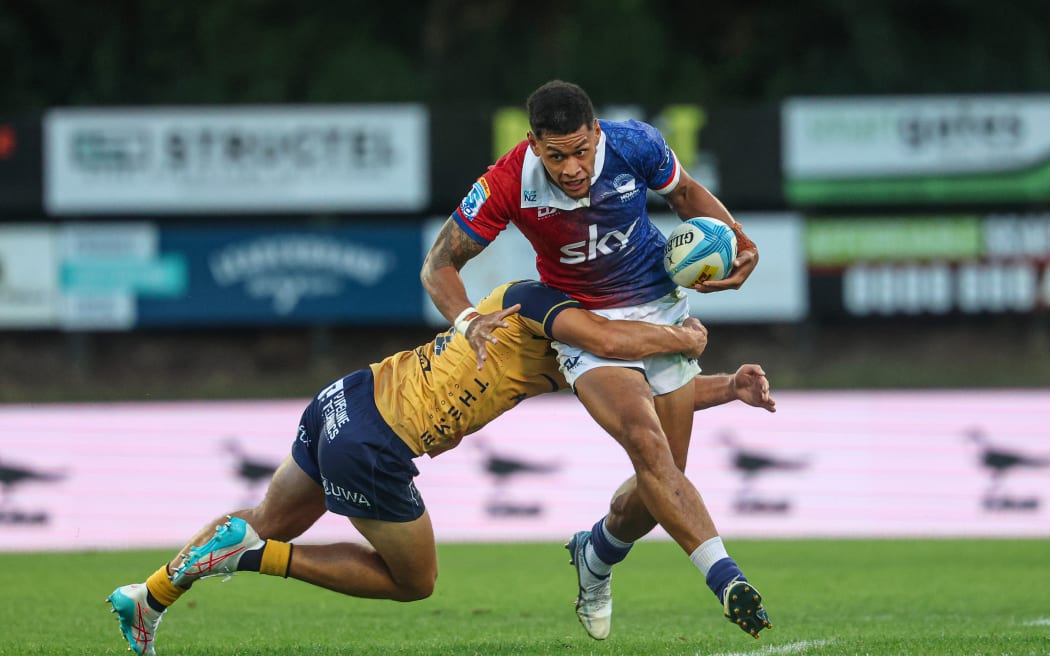
Moana Pasifika’s Solomon Alaimalo v Western Force at the Navigation Homes Stadium, Pukekohe. 27 February 2026.
Photo: Shane Wenzlick / www.photosport.nz
Spirited fightbacks marked Moana Pasifika and the Fijian Drua’s matches in round three of the 2026 Super Rugby Pacific competition over the weekend.
But the two Pacific Island franchise saw mixed results.
Moana Pasifika lost the plot for about 45 minutes of their game against the Western Force in Pukekohe on Friday night.
They came back strongly in the last 10 minutes and scored two tries – one just before the fulltime hooter from lock forward Allan Craig – but it was too little too late as they went down 19-35 in the end.
In Lautoka on Saturday, the Fijian Drua sailed through the Hurricanes, coming from behind twice to draw level before Wainuiomata resident Etonia Waqa clawed his way to the corner to score the winning try.
That sealed the Drua’s 25-20 victory at home on a wet and slippery Churchill Park.
Moana Pasifika and the Drua now have one win each from three matches.
They head into the new week with Moana Pasifika travelling to Chiefs territory for another Friday night game at the FMG Stadium.
The Drua have a bye, and time to recover, before they take on the Reds in round four.
Both camps have indicated they have learned a lot from their weekend matches, hoping those lessons can help them get better moving forward.
Here are five takeaways from their round three matches:
1. The game isn’t over until the final whistle
Both teams showed fighting until the end was critical if they needed to win.
Moana Pasifika left it a bit too late on Friday night, but the Fijian Drua celebrated with their own fight backs throughout the match in Lautoka.
While the results were contrasting, the message for both camps was clear: you can’t give up fighting until it is done at fulltime.
2. Consistency is critical
You can’t start well and hope to end well if you do not keep the momentum going throughout the game.
Moana Pasifika got back and claimed a try early in the first half against Western Force, but then they fell apart.
They lost a number of lineout throws, dropped balls along the way, and gave away soft penalties. Those stacked against them and while they came alive in the last 10 minutes the damage had already been done. Western Force had built too much of a gap on the scoreboard.
The Fijian Drua were also guilty of committing a lot of errors against the Hurricanes, but luckily for them the conditions also forced their visitors to commit basic mistakes. They stayed in the game close and were able to level terms two times before they finally got the winning try.
Their defence stood out in the last 10 minutes and they managed to hold on in the end to claim a famous win at their fortress.
3. Leaders need to shine
Moana Pasifika struggled in this area. When the chips were down and they were trailing against the Force, their marquee players were not as loud and clear as they needed to be. Their body language told the story: hands on hips meant they were tired and low.
While some of the big players such as captain Miracle Faiilagi continued trying, it was evident majority of the players were out of the game a long time before the final whistle blew. The side clearly missed the leadership of Ardie Savea.
Drua had some vocal players like captain Frank Lomani, who just get chipping away, number eight Elia Canakaivata, who kept talking throughout the game and replacement Inia Tabuavou.
Both team leaders will need to consistently show their worth moving forward, taking responsibility when the chips are down and motivate the players to move on to the next job.
4. Return to the basics
It is critical for any athlete, in whatever sport, to ensure they do the basics right.
Both teams were guilty of committing too many unforced basic errors like dropping the ball, wrong angles and levels of tackles, wrong timing in lineout throws and falling on the ball with knees on the ground. These mistakes affected their continuity in their matches.
5. Variation of game plans
The ability to change game plans to suit the conditions and the pace of the game is also critical for both teams. Lifting momentum, on the go forward and keeping possession or letting the ball flow freely.
The kicking game is also critical for rugby teams now, especially in gaining territorial advantage or keeping the pressure on.