
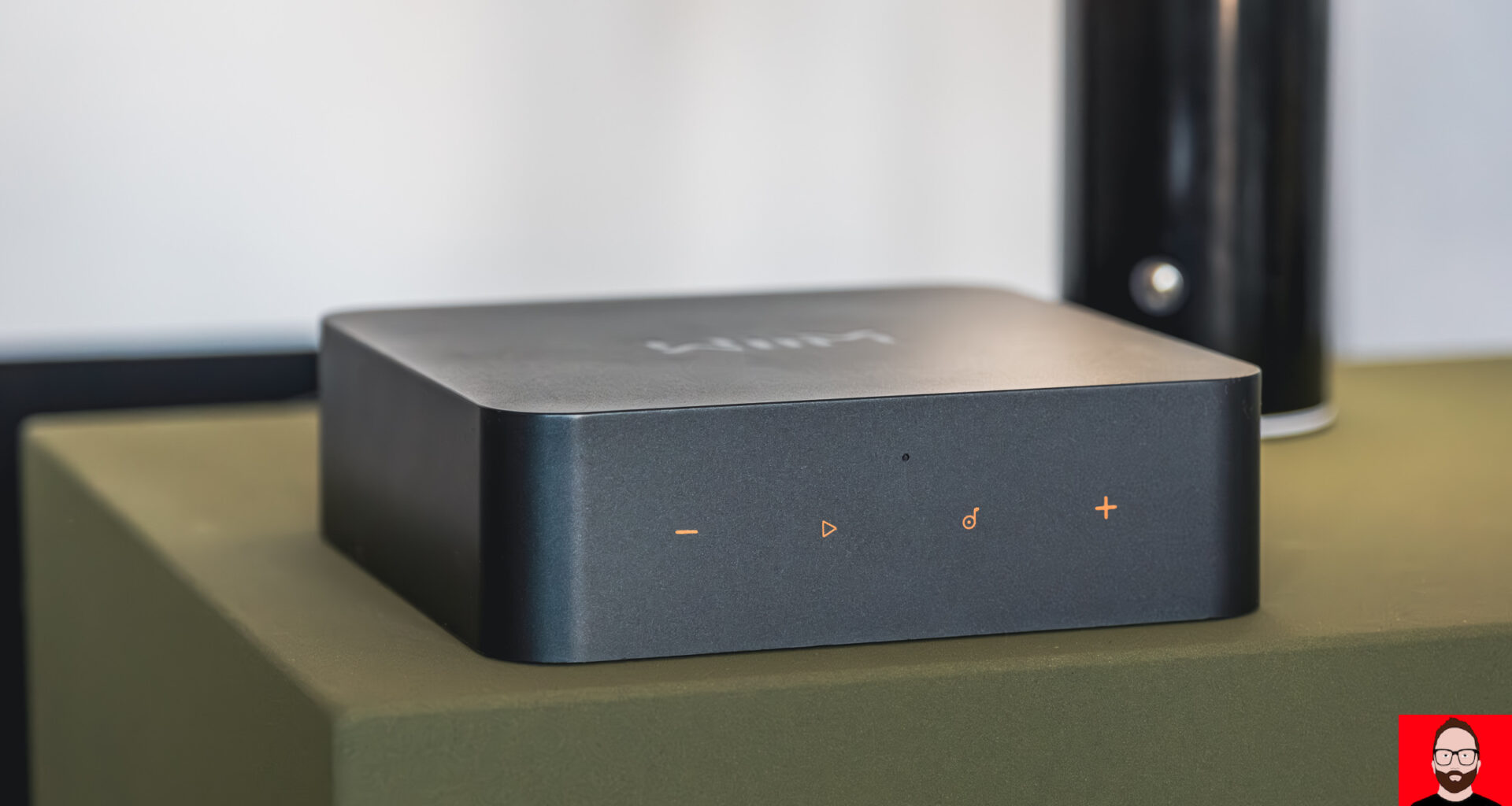
The WiiM Pro (US$149) and Pro Plus (US$219) are network streamers. That much we already know. But their back panels and associated WiiM Home app harbour a lesser-known trick: the ability to act as a digital-to-digital converter (DDC), a format translator that catches one type of digital signal and spits out another. I put this to work over the weekend, bridging my TV’s TOSLINK output to the Shanling SCD3.3’s coaxial input.
Here’s the problem I needed to solve: the Shanling SCD3.3 (US$3990) is a high-end CD/SACD player with a tube-buffered R2R DAC inside. Route external digital audio through it, bypassing the disc transport entirely, and the sonic payoff is considerable: dense, rich and spacious. The kind of presentation that makes YouTube and Netflix feel like more than background noise. Shanling has even designed the SCD3.3 to encourage this, providing coaxial and USB inputs for third-party devices. And yes, it’s a significant sonic step up from the FiiO Warmer R2R.
But here’s the wrinkle: the Shanling has no HDMI ARC input and no TOSLINK input. My television, like almost every television made in the last decade, outputs digital audio via one or both of those connections. Direct connection? Impossible.

The fix
A TOSLINK cable runs from the TV into the WiiM Pro Plus’s TOSLINK input. A coaxial cable runs from the WiiM’s coaxial output into the Shanling’s coaxial input. The physical hookup takes all of two minutes.
The crucial step lies in the software. Inside the WiiM Home app, I specified the TOSLINK connection as the active audio input and the coaxial connection as the active audio output. Once locked in, the WiiM catches the TV’s TOSLINK stream, translates the format and passes it cleanly to the Shanling via coax. The WiiM’s own internal DAC never enters the signal path. It’s acting purely as a digital relay.
I set this up on a Saturday afternoon using gear I already had on hand. No extra spend. No fuss. And the result? YouTube and Netflix now run through the Shanling’s tube DAC. That alone made it worth the fifteen minutes of cable swapping and app tapping.

Which WiiM works for this?
The standard WiiM Pro has the exact same digital I/O on its back panel as the Pro Plus: TOSLINK in, coaxial out. Because we’re bypassing the WiiM’s DAC entirely and using only its digital routing, the cheaper Pro handles DDC duties just as effectively. Save yourself the US$70 difference if this is all you need it for.
The WiiM Mini (US$89), though, is a non-starter. It lacks any digital input, so there’s nowhere to catch the TV’s TOSLINK signal. Its only digital output is TOSLINK. No coaxial. For DDC work, it’s missing the hardware on both ends.
The WiiM Ultra (US$329) takes a different approach entirely. It adds an HDMI ARC input to its back panel, which means it can pull audio directly from the TV’s HDMI port and route it out via coaxial to the Shanling.

The wireless workaround
Now for a scenario where running a TOSLINK cable from the TV to the hi-fi rack is a physical impossibility. If your video source is an Apple TV, it can beam audio wirelessly to any AirPlay receiver. The WiiM Pro and Pro Plus both support AirPlay, so they can catch the Apple TV’s wireless stream and pass it to the Shanling via coaxial. No cable between the TV and the streamer at all. The AirPlay protocol ensures that the audio and video remain in sync.
But the WiiM Ultra cannot do this. It doesn’t support AirPlay. For the wireless bridge method, the cheaper Pro and Pro Plus are, ironically, the better tools for the job.
Beyond the WiiM family
Outside the WiiM ecosystem, several other units can serve as a digital bridge between a TV and an external DAC. The FiiO R7 (US$699), FiiO R9 (US$1499) and the Eversolo DMP-A6 (US$859) can all accept a digital signal from a television and pass it along to a DAC like the Shanling. More money, more features and the same basic routing principle.

Why not a US$20 converter from Amazon?
Fair question. A quick search turns up a pile of cheap HDMI extractors and TOSLINK-to-coaxial converters for around twenty dollars. They’ll get a digital signal from A to B.
The issue is how they get it there. When chaining digital audio gear, the primary enemies are electrical noise and timing errors (jitter). A budget converter is unlikely to feature the clocking precision, isolated circuitry or noise rejection of a dedicated audio device. If you’re routing a signal into an R2R tube DAC that costs nearly four grand, feeding it a jitter-laden stream from a bargain-bin box is a false economy. You’re undermining the very thing you bought the Shanling to hear.
Reality check
The WiiM Pro and Pro Plus aren’t just streamers. Deployed as DDCs, they bridge the digital gap between a TV and a high-end DAC that lacks the right inputs. The physical setup is trivial, the app configuration takes a minute, and the sonic benefit, at least with the Shanling SCD3.3 on the receiving end, is immediately apparent.
For anyone already running a WiiM on their rack, this costs nothing to try. For anyone considering buying one specifically for DDC duties, the standard Pro at US$149 is all you need.
Further information: WiiM | Shanling
